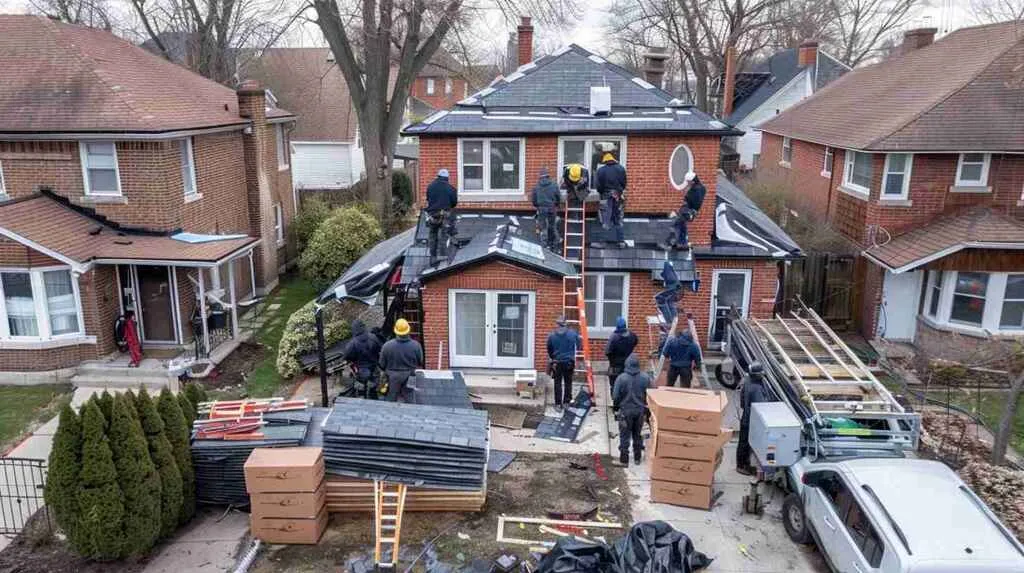
Wooden Shingle Roof Queens NY – Natural, Beautiful, High Maintenance
Maple trees overhead, humidity hanging thick in summer, wind tearing down the streets in January – Queens doesn’t mess around, and neither does the weather on your roof. Here’s the straight truth: a wooden shingle roof in Queens will either reward you for 25-30 years or punish you in 7-10, and the difference has almost nothing to do with “pretty shingles” and almost everything to do with how those shingles breathe and dry. My name’s Denise Romano, and after 19 years working on roofs in Queens – and two decades before that as a symphony cellist upstate – I’ve learned to read a roof the way I used to read a score: every section has to work in harmony, or the whole thing falls apart.
Wooden Shingle Roofs in Queens: 30-Year Reward or 7-Year Headache?
When I pop my ladder against a house with a wood roof and climb up for the first time, I’m not checking color or grain first – I’m watching how quickly that surface dries after rain. Water should move off the roof in a clean rhythm, like a melody flowing through an orchestra. If it stalls, if it pools, if the shingles stay damp for days after a storm, you’re looking at a roof that will rot out in under ten years no matter how expensive the cedar was. But when the slope, underlayment, shingle spacing, and attic ventilation are all orchestrated correctly – when all those sections are in tune – that same wood can weather gracefully and protect your home for three decades. It’s the drying time, the breathing room, and the airflow that decide everything.
One August afternoon in Forest Hills – 95 degrees, air so thick it felt like soup – I was halfway through replacing a rotten cedar shingle field when the homeowner’s teenage son came out and said, “My dad swears wood roofs always rot in five years.” I had just peeled back a section where the previous installer skipped the underlayment and jammed the shingles tight with no gaps. I sat him on the porch step, laid three shingles on the ground like a little orchestra section, and showed him how spacing, airflow, and slope decide if wood lasts five years or thirty. His dad ended up joining us, and we re-designed the whole roof on a notebook page. That conversation is the whole game: in Queens, summer humidity is brutal, winter freeze-thaw is relentless, and your design choices – not just shingle quality – decide whether you’ll be grateful or cursing yourself in a decade.
| Myth | Fact (From 19 Years on Queens Roofs) |
|---|---|
| Wooden shingle roofs in Queens always rot out in 5-10 years. | With proper spacing, underlayment, and ventilation, a wooden shingle roof here can realistically last 25-30 years. |
| If I buy the most expensive cedar shingles, the roof will be low maintenance. | Lifespan depends more on design, installation, and drying time than on sticker price alone. |
| A thick, shiny sealer will protect my wood roof from our weather. | Non-breathable sealers often trap moisture and speed up rot; breathable finishes and good airflow work better. |
| Wood roofs can’t handle Queens humidity and summer thunderstorms. | Queens weather is harsh but manageable if the roof is detailed to shed water quickly and dry between storms. |
| If one side of the roof ages faster, the shingles must have been defective. | Uneven aging usually comes from shade, poor ventilation, or drainage, not necessarily from bad shingles. |
Design and Installation: Getting the “Rhythm” Right on Your Wood Roof
On a typical Tuesday in Queens, when I pop my ladder against a house with a wood roof, the first thing I look for isn’t color – it’s how quickly that surface is drying after rain. A well-designed wooden shingle roof has a rhythm to it, almost a tempo, where water hits the surface, runs cleanly down into the gutters, and the wood begins breathing again within hours. Slope sets that tempo – steeper means faster shedding. Underlayment controls whether moisture can escape from below or gets trapped like humidity in a sealed room. Shingle spacing is like the gaps between notes in a phrase; too tight and everything blurs into mush, too loose and you lose the melody. Ventilation is the breath of the whole system, letting warm, moist air escape so it doesn’t bake the underside of your shingles all summer. In neighborhoods like Forest Hills, Bayside, and Maspeth, you’re dealing with older housing stock, mixed rooflines, valleys that collect leaves, and shade patterns that change season to season – so getting that rhythm right from day one is everything.
One crisp October morning in Astoria, I was inspecting a 12-year-old wooden shingle roof for a retired engineer who kept a notebook of every repair ever done on his house. He was furious because the north side looked twice as old as the south and he thought he’d been “sold bad shingles.” I brought a folding mirror up to the roof and angled the sunlight onto the shaded, mossy shingles, then had him look at the surface through a magnifying glass I carry. You could see tiny hairline cracks where frozen moisture had expanded over winters. We ended up trimming a maple tree, adjusting the attic vents, and only replacing the most fatigued shingles – his notebook got three new pages of notes. The point is, those shingles weren’t defective; the harmony between attic vents, tree shade, and shingle breathing was out of tune. Once we brought those sections back into balance, the whole roof started performing the way it should have from the beginning.
| Roof Design Element | What Works in Queens (Denise’s Approach) | Common “Out of Tune” Mistake |
|---|---|---|
| Roof Slope (Pitch) | Steeper slopes where possible to shed heavy rain and snowmelt quickly, especially on north and street-facing sides. | Flatter sections added for looks that end up holding snow and water against the shingles. |
| Shingle Spacing & Layout | Consistent gaps to allow wood movement and drainage, treating each course like a carefully spaced string section. | Tight joints like tile, which lock in moisture and cause cupping and early rot. |
| Underlayment Choice | Breathable underlayment that supports drying while still protecting the deck from wind-driven rain. | Generic synthetic underlayments that trap moisture and slow drying. |
| Attic Ventilation | Balanced intake and exhaust so warm, moist air doesn’t stall under the deck and overheat the shingles. | Undersized or blocked vents that leave the roof deck sweating year-round. |
| Nearby Trees & Shade | Thoughtful pruning and, if needed, selective removal to reduce constant damp shade on wood surfaces. | Letting trees overhang the roof, keeping the north sides damp and mossy. |
| Gutter & Downspout Setup | Sized to handle summer downpours, with clean outlets and proper discharge away from foundations. | Clogged or undersized gutters that let water sheet back over the wood. |
Maintenance: Treating Your Wood Roof Like a Living Instrument
If you won’t touch the roof for a decade, wood is the wrong choice.
When I sit at a customer’s kitchen table and they ask, “Can a wooden shingle roof really last here?” I answer with another question: “Are you willing to treat it like a living thing, not a countertop?” Wood breathes, moves, weathers, and ages. It needs inspections, gentle cleaning, and occasional breathable treatments to stay healthy. That doesn’t mean you’re up there every weekend with a bucket and brush – it means twice-a-year checks, prompt attention when you spot moss or loose shingles, and the discipline not to slap some bargain sealer on it when you get nervous. The insider tip I give everyone is this: the best money you’ll spend on a wood roof in Queens isn’t on a flashier stain – it’s on ventilation upgrades and properly sized gutters, the background pieces that keep the whole score in tune.
About seven years ago, after an all-day nor’easter, I got a call at 10:30 p.m. from a couple in Bayside with a “wood shingle emergency.” Turned out, the husband had tried to “re-stain” the roof himself that summer with some bargain-bin sealer that basically turned the shingles into sponges. When I climbed up in the cold drizzle with my headlamp, I could literally press my thumb into the saturated cedar and see water bead out. We had to strip a whole valley section in the dark to stop water from running straight into their bedroom. That night is why I’m borderline preachy now about breathable finishes on wood – the wrong product can destroy a perfectly good roof in a single season, and no amount of “waterproofing” marketing will change that.
| When | Maintenance Task | What Denise Checks (Keeping It In Tune) |
|---|---|---|
| Every Spring | Full visual roof check from ground and ladder, clear debris from valleys and gutters. | How fast surfaces dry after rain and whether water is flowing in a clean rhythm off the roof. |
| Every Fall | Inspect north-facing slopes for moss, check for cupping, cracking, and loose shingles. | Dark, persistently damp patches that suggest poor airflow or overhanging branches. |
| Every 2-4 Years | Professional inspection and cleaning; evaluate need for breathable protective treatments. | Finish condition, shingle flexibility, and any early signs of rot or fast weathering. |
| After Major Storms (Nor’easters, hail, high winds) |
Targeted inspection of ridges, valleys, and any areas where tree limbs or wind may have hit. | Missing or shifted shingles, fresh impact marks, and new leaks inside at ceilings or walls. |
⚠️ Warning: The Wrong Stain or Sealer Can Destroy Your Wood Roof
Non-breathable sealers, bargain “deck stains,” and glossy waterproofing products trap moisture inside cedar shingles instead of letting them breathe. That Bayside emergency I mentioned – where I had to strip a valley in a rainstorm at 10:30 at night – was caused by a well-meaning homeowner who applied the wrong product on a hot July day. The shingles looked great for about three weeks, then started acting like sponges. If you’re thinking about treating your wood roof, call a professional who knows breathable finishes and Queens weather before you pour anything out of a can. Don’t learn this lesson the hard way.
Is a Wooden Shingle Roof Really Right for You in Queens?
Here’s my blunt opinion: if you want a wooden shingle roof because you saw something in a magazine but you hate maintenance, choose a different material now and save yourself grief. Wood shingles are gorgeous – they age into a soft silver patina, they fit perfectly in historic neighborhoods, and when they’re done right they perform beautifully for decades. But they’re not a “set it and forget it” roof. They need regular attention, thoughtful design, and realistic expectations. If you love the idea of natural materials, if you’re willing to walk your property twice a year and call someone when you spot moss or a loose shingle, if you understand that a living roof requires care the way a garden does – then yes, wood can be an excellent choice. If you’d rather replace your roof once and not think about it for twenty years, you’ll be happier with architectural asphalt or metal.
If you’ve ever listened to an orchestra tune up, you know it sounds chaotic until everything locks into the same key; a wood shingle roof is the same way – structure, shingles, ventilation, and gutters have to be in tune. Once those foundational sections are designed correctly – once you’ve got the slope, spacing, underlayment, and airflow orchestrated to work together – the aesthetic decisions become easier and more enjoyable. Picking a stain color, deciding on exposure length, choosing whether to let the roof weather naturally or treat it with a breathable finish, all of that flows naturally when the technical fundamentals are in harmony. It’s like adding melody and dynamics once the rhythm section is locked in.
Should You Choose a Wooden Shingle Roof for Your Queens Home?
START: Do you love the natural look of wood shingles?
↓ YES → Continue
↓ NO → Consider asphalt, metal, or tile instead
Are you willing to inspect and maintain the roof 2-3 times per year?
↓ YES → Continue
↓ NO → Wood is the wrong choice – save yourself future regret
Does your roof have adequate slope, ventilation, and sun exposure?
↓ YES → Continue
↓ NOT SURE → Schedule inspection – design can often be modified
↓ NO → Major structural changes needed or choose different material
Can you budget for proper installation, ventilation upgrades, and periodic care?
↓ YES → ✓ Wood shingles are a strong fit – proceed with professional installation
↓ NO → Cutting corners on wood roofs leads to early failure – consider alternatives
| Pros | Cons |
|---|---|
| Warm, natural curb appeal that fits many Queens neighborhoods and historic homes. | Requires regular inspections and light maintenance; not a “set it and forget it” roof. |
| Excellent performance when properly detailed to breathe and dry between storms. | More sensitive to bad installation details than many synthetic options. |
| Can be selectively repaired, replacing only tired sections instead of full tear-offs. | Can weather unevenly on shaded or north-facing slopes without careful planning. |
| Ages into a soft, silver patina that many homeowners love. | Upfront costs are higher when done right, including proper ventilation and detailing. |
What to Expect When You Call Shingle Masters About a Wood Roof in Queens
The unglamorous truth is that the most beautiful wooden roofs I see in Queens are the ones with the least stuff done to them – no suffocating sealers, no cheap metal shortcuts, just smart design and consistent care. When you call me for a visit, I don’t start by pulling out shingle samples and talking about stain colors. I start by walking your property, checking slope and drainage, looking at how your gutters handle a heavy rain, climbing into the attic to see what your ventilation situation looks like, and asking about nearby trees and shade patterns. If you already have a wood roof, I’ll inspect the existing shingles for cupping, cracking, moss, and uneven weathering to understand what’s working and what’s not. Only after I’ve seen the structure, the airflow, and the water flow do we talk about shingle grade, finish options, and aesthetics – because all the pretty wood in the world won’t save a roof that can’t breathe.
From there, the process is straightforward: we’ll outline what needs to happen to bring your roof into harmony – whether that’s ventilation upgrades, tree trimming, gutter work, or a full replacement with properly spaced, breathable installation. I’ll walk you through realistic maintenance expectations, explain the timeline, and give you a clear estimate with no surprises. Shingle Masters is fully licensed and insured, and I’ve been working on roofs across Forest Hills, Bayside, Astoria, Maspeth, and all over Queens for nearly two decades. I treat every roof like a score I’m conducting – making sure every section works together so the whole thing can sing for 25, 30 years or more.
How a Wooden Shingle Roof Project with Shingle Masters Usually Goes
Initial Call & Site Visit
You call or email, we schedule a time, and I come out to walk your roof and property, checking structure, ventilation, drainage, and existing conditions.
Design Review & Recommendations
I’ll explain what I found, identify any issues with slope, venting, or shade, and recommend design changes to improve drying and longevity.
Written Estimate & Material Selection
You’ll receive a detailed estimate covering labor, materials, ventilation work, and any structural prep, along with shingle grade options and finish choices.
Scheduling & Prep Work
Once approved, we schedule the project, order materials, and complete any needed attic ventilation, deck repairs, or gutter upgrades before shingles go on.
Installation
We install your wooden shingle roof with proper spacing, breathable underlayment, and careful attention to valleys, ridges, and flashing – orchestrating every section to work together.
Final Walkthrough & Maintenance Guidance
After installation, we walk the roof together, answer your questions, and give you a simple maintenance schedule and care instructions so your roof stays in tune for decades.
Why Queens Homeowners Trust Shingle Masters for Wooden Shingle Roofs
- 19 years of roofing experience exclusively in Queens, NY
- Fully licensed and insured with all local permits and compliance
- Specialized expertise in wooden shingle design, installation, and long-term maintenance
- Serving Forest Hills, Bayside, Astoria, Maspeth, and all Queens neighborhoods
- Process-focused approach that treats every roof as a carefully orchestrated system, not just a cosmetic upgrade
A wooden shingle roof in Queens can absolutely “sing” for decades when it’s designed to breathe, installed with care, and maintained on a realistic schedule – but only if those fundamentals are in place from day one. If you’re ready to explore whether wood shingles are the right choice for your home, or if you already have a wood roof and want an honest assessment of its condition, call Shingle Masters to schedule an inspection or estimate. I’ll walk your roof, explain what I see in plain language, and lay out clear next steps so you can make a confident decision about one of the biggest investments you’ll make in your home.