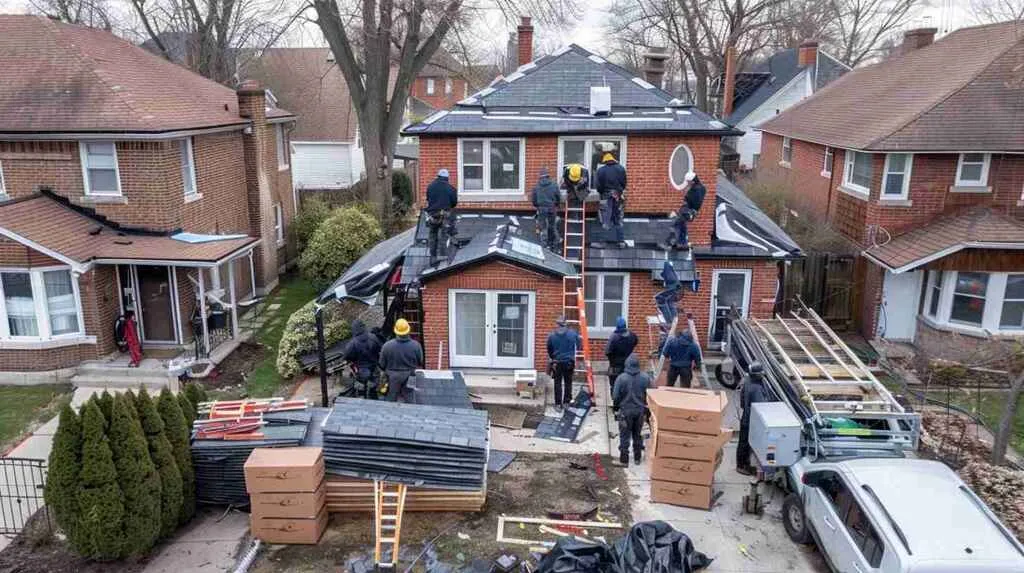
Can You Put Tile Roof Over Shingles Queens NY? Structural Check
Blueprint reality: in most Queens homes, stacking tile over shingles is a structural gamble that often violates load limits, and here’s why. Your roof framing is a balance scale, with the weight of the roofing on one side and the capacity of the wood holding it up on the other. When you throw heavy clay or concrete tile on top of old shingles without checking that scale, you can tip past the tipping point-and once joists start sagging or sheathing starts cracking, you’re looking at expensive damage that nobody’s excited to repair.
So here’s my honest opinion right up front: if your first question is “Can I put tile over shingles?” your second question should be “Will my house actually carry that weight?” On a typical block in Queens-think attached homes in Woodside or semi-detached in Glendale-your roof framing was never designed for barrel tile loads, and most of those pre-war rafters are already doing all they can to hold up existing shingles plus snow and the occasional HVAC guy. The short answer? Usually no, you should not layer tile over shingles without a structural check, and usually you’ll end up doing a full tear-off anyway once we run the numbers. The rest of this article walks through exactly how to know for sure, what I look for when I’m standing in your attic, and what safer options exist if your heart’s set on that tile aesthetic.
Can You Put Tile Roof Over Shingles in Queens, NY?
💡 Common Myths vs. Reality
| Myth | Fact |
|---|---|
| “Tile over shingles is always allowed if the roof isn’t leaking.” | Queens homes are built to specific load limits; many older rafters are already near capacity before you add heavy tile. |
| “Lightweight tile doesn’t really add much weight.” | Even so-called lightweight systems can double or triple the dead load compared to shingles alone. |
| “If my neighbor did it, my house can handle it too.” | Framing sizes, spans, and previous layers differ from house to house on the same block. |
| “If the inspector doesn’t say anything, it must be fine.” | Many load issues hide in the attic until sagging or cracking appears-by then, damage is done. |
| “Putting tile over shingles protects the wood sheathing.” | Layering can actually trap moisture against the sheathing and accelerate rot. |
How Much Heavier Is Tile Than Shingles on a Queens Roof?
If you’ve ever filled one grocery bag with cereal boxes and another with milk and canned soup, you already understand dead load versus live load. Dead load is the permanent weight sitting on your roof 24/7-the shingles, the sheathing, the tile-while live load is the temporary stuff like snow, wind pressure, and me standing up there with my toolbelt. Your roof framing was engineered decades ago for a certain total load, and if you stack heavy materials over old materials, you’re adding another “row” to that grocery bag until the handles start tearing. In older Queens neighborhoods like Jackson Heights or Rego Park, most homes were built with balloon framing or basic 2×6 rafters spaced 16 or 24 inches apart, and many of those spans are already near their limit when you account for one layer of asphalt shingles plus typical snow loads.
The older 2×4 and 2×6 rafters with long unsupported spans are especially vulnerable when you try to add tile over shingles. I still think back to a Ridgewood attic I stood in last winter, flashlight on the rafters, when the owner asked me the same thing you’re asking now-can we just layer the tile? The rafters were spanning 16 feet with no collar ties, already showing a slight bow in the middle, and when I explained that adding clay tile would be like putting another three or four full bookshelves on top of the shelves that were already bending, he got it immediately. That job turned into a conversation, then a tear-off, then a reframe-because the math just wouldn’t work any other way.
| Roof Material | Approx. Weight per Square Foot | Typical Use on Queens Homes |
|---|---|---|
| Single layer asphalt shingles | 2.5-3.0 lbs | Most 1-2 family homes built after 1960 |
| Two layers asphalt shingles | 4.5-5.5 lbs | Common on older re-roofed homes, not ideal |
| Lightweight concrete or composite tile | 5.5-7.5 lbs | Some retrofits where framing is upgraded |
| Traditional clay barrel tile | 9-12+ lbs | High-end installs with engineered structure |
| Tile over existing shingles (combined) | 8-15+ lbs | Often exceeds design loads on older Queens framing |
⚠️ WARNING: Overloading Older Queens Framing
Many pre-war Queens homes with 2×4 rafters at long spans were never engineered to carry the combined weight of old shingles plus new tile. Adding that extra “bookshelf row” of weight can push them from barely-adequate to structurally unsafe.
Structural Checks I Do Before I Ever Say Yes to Tile Over Shingles
When I sit down at your kitchen table, the first thing I sketch on that napkin is a simple balance scale: tile weight on one side, rafter capacity on the other. Then I tell you I need to go up into your attic with a tape measure, a level, and a flashlight before I’ll even quote the job. Here’s an insider tip: if you shine that flashlight along the bottom edge of the rafters, you can actually see whether they’re sagging-look for a gentle curve where there should be a straight line. Listen for old framing creaks when you shift your weight in the attic; that’s the wood telling you it’s already working hard. One August afternoon in Jamaica Hills, it was 95 degrees, and I was on a two-story colonial where the owner wanted Spanish clay tile over two layers of old shingles. While I was in the attic, sweat dripping onto my tape measure, I found 2×4 rafters spanning 16 feet with visible sag between the ridge and the exterior wall. When I laid my level across the bottom of the rafters, you could see daylight in the middle-classic sign they were already overstressed. That job turned into a full roof tear-off and partial reframing, and the client ended up thanking me later when his neighbor’s overloaded tile roof actually cracked joists that winter.
What I’m Looking for in Your Attic
Here’s the thing: I measure rafter size-2×4, 2×6, 2×8-and I measure the spacing between them, usually 16 or 24 inches on center. Then I pull out my tape and check the span, which is the distance from the ridge down to the exterior bearing wall without any support in between. I compare those numbers to the load tables in my code book and in the tile manufacturer’s specs, and I sketch a little stick-figure diagram so you can see where the weight actually travels-from the tile down through the battens, into the sheathing, then onto the rafters, then onto the walls and foundation. If you’ve got a ridge beam that’s undersized, or ceiling joists that aren’t properly tied to the rafters, or bearing walls that show cracks or past settling, I write that down. I also confirm how many layers of roofing you already have, because every layer adds weight and traps moisture. If I find spongy sheathing or soft spots where water’s been sitting, I mark that too-adding tile over rot is like stacking books on a cardboard box that’s already dissolving.
When the Answer Becomes an Immediate No
There are red-flag conditions where I won’t install tile over shingles, period. Visible sag in the ridge line or rafters means the structure is already overloaded. More than one layer of existing shingles means you’re starting from a heavier baseline. 2×4 rafters with long, unsupported spans are almost never adequate for tile without reinforcement. Spongy or water-damaged sheathing will only get worse under added weight. And if someone made unpermitted structural alterations in the attic-cut a rafter to run ductwork, removed collar ties, that sort of thing-I need an engineer to sign off before I touch the roof. I still remember a Saturday morning call in Howard Beach after a nor’easter-wind, cold rain, the whole mess. A landlord had let a handyman “layer” lightweight concrete tiles over existing shingles on a flat-ish roof a couple years earlier to save time. During the storm, part of the ceiling in the top-floor apartment bowed down and the tenant freaked out. When I got there, the sheathing was soaked and spongy because the shingles underneath were trapping moisture, and the added tile weight had pushed the whole system past its limit. We had to shore it from inside before we even dared to pull the tile off.
Luis’s Structural Check Process
-
1
Measure rafter size, spacing, and span in the attic, comparing them to load tables for tile systems. -
2
Check ridge beam, ceiling joists, and bearing walls for signs of movement, cracking, or past repairs. -
3
Confirm how many layers of roofing are already on the house and estimate the existing dead load. -
4
Probe the sheathing and framing for moisture, rot, or soft spots that could worsen under added weight. -
5
Review local code requirements and manufacturer specs for tile over existing roofing. -
6
Explain the findings to you with a simple sketch showing where the weight actually travels and where the weak points are.
Visible sag in rafters or ridge line
More than one existing shingle layer
2×4 rafters with long, unsupported spans
Spongy or water-damaged sheathing
Unpermitted structural alterations in the attic
Better Options for Queens Homes Wanting a Tile Look
$0 of design work is worth a penny if the framing can’t hold it. Once I know your structure isn’t up to stacking tile over shingles, I walk you through safer paths: a full tear-off with any necessary structural upgrades before we install tile, an engineered lightweight tile-look system that reduces the dead load, or high-profile architectural shingles that mimic the barrel-tile aesthetic without the weight penalty. One of the most nerve-wracking jobs I ever turned down was in Forest Hills Gardens around 7 p.m. in early winter-already dark, light snow falling. The homeowner had imported beautiful handmade clay barrel tiles from Spain and insisted they “had” to go over his existing architectural shingles to protect the wood sheathing. He even showed me Pinterest photos. I brought him into the attic with a flashlight and pointed out the undersized ridge beam and the 24-inch-on-center rafters. Then I pulled out my code book and showed him the dead load limits versus the weight of real clay tile. He got quiet, stared at the numbers, and finally said, “Okay, tear it all off. I’d rather have my kids safe than my dream roof.” That turned into a proper reframe with engineered trusses, and now he has the Spanish tile he wanted-installed the right way.
The right path for you depends on structural math and your budget. In some Queens neighborhoods with stricter design standards-Forest Hills Gardens, parts of Douglaston-you’ll end up coordinating with an architect or structural engineer anyway because the review boards require it. That extra step actually protects you, because you’ll have stamped drawings and a building permit that prove the roof was done to code. If your framing checks out adequate for tile but layering over shingles isn’t allowed, the tear-off route might cost more up front but it gives you proper ventilation, lets us inspect and repair the sheathing, and keeps moisture from getting trapped. If your framing is borderline, a lightweight tile-look product might split the difference and stay within your load limits without needing major reinforcement.
| Option | Pros | Cons |
|---|---|---|
| Tile directly over shingles | Lower upfront labor, faster install (when allowed) | High structural risk, moisture trapping, often not code-compliant in Queens |
| Full tear-off + tile with framing upgrades | Code-compliant, safer, long-lasting, better moisture control | Higher upfront cost, more planning and engineering needed |
| Lightweight tile-look systems over new underlayment | Reduces dead load, keeps tile aesthetic | Still heavier than shingles, may need structural review |
| High-profile architectural shingles | Lighter weight, simpler install, usually within existing load limits | Not a true tile, less dramatic appearance |
Should You Pursue Tile on Your Queens Home?
Start: Do you already have a structural evaluation for tile?
→ No: Schedule a structural check first. If framing is undersized or sagging → Do not add tile; consider tear-off and lighter options. If framing is adequate → Proceed to discuss full tear-off + tile with proper underlayment.
→ Yes: Does the report say your roof can handle tile weight with existing layers?
→ No: Plan for tear-off and any required framing upgrades before tile.
→ Yes: Confirm code and manufacturer approval for tile over shingles, then design details carefully.
Quick Self-Check and FAQs for Queens Homeowners
If you’re reading this after a storm or you’ve noticed ceilings starting to bow or crack, don’t wait-call somebody like me to get eyes on it now. Even if you’re just planning ahead, take a few minutes to do a quick visual check yourself so you can describe what you see when you call. After that Howard Beach nor’easter job where moisture and overload combined to bow the ceiling, I started asking every caller to look for a few specific warning signs before I even schedule the visit, because sometimes those signs mean we need to move fast instead of waiting two weeks for an estimate appointment.
✅ Before You Call Checklist
- ✅Look along the outside of your home for a wavy or sagging roof line.
- ✅Check inside top-floor rooms for new ceiling cracks or nail pops.
- ✅Peek into the attic (if safe) for dark stains, visible sag, or wet insulation.
- ✅Count how many roof layers you can see at the eaves or gutter edge.
- ✅Gather any past roof permits or inspection reports you have.
Frequently Asked Questions
Is it ever legal to put tile over shingles in Queens?
It can be, but only when the structure is engineered for the combined load and local code plus the tile manufacturer allow it. On most older Queens homes I inspect, we end up needing at least a tear-off, and often some framing upgrades, before tile is a safe option.
Will my homeowner’s insurance care if I add tile over shingles?
If a failure occurs and the work wasn’t to code or exceeded design loads, you can have claim headaches. That’s why I document loads and code compliance before installing any heavier roofing.
Can I just switch from shingles to tile without changing anything else?
Usually not. The jump in dead load is big enough that the rafters, sheathing, and connections all need to be checked, and sometimes reinforced, before you switch.
Are there tile options light enough for most Queens roofs?
There are lighter tile-look products that sometimes work within existing limits, but I still run the numbers against your actual framing so we’re not guessing.
With the right structural check, you can have a safe, good-looking roof that’ll protect your family and add real curb appeal to your Queens home. Don’t gamble on stacking heavy materials over old shingles without knowing the math. Call Shingle Masters and ask for Luis-I’ll come evaluate your specific framing, walk you through the numbers at your kitchen table with one of my pizza-box diagrams, and give you honest options that keep your roof solid for decades.