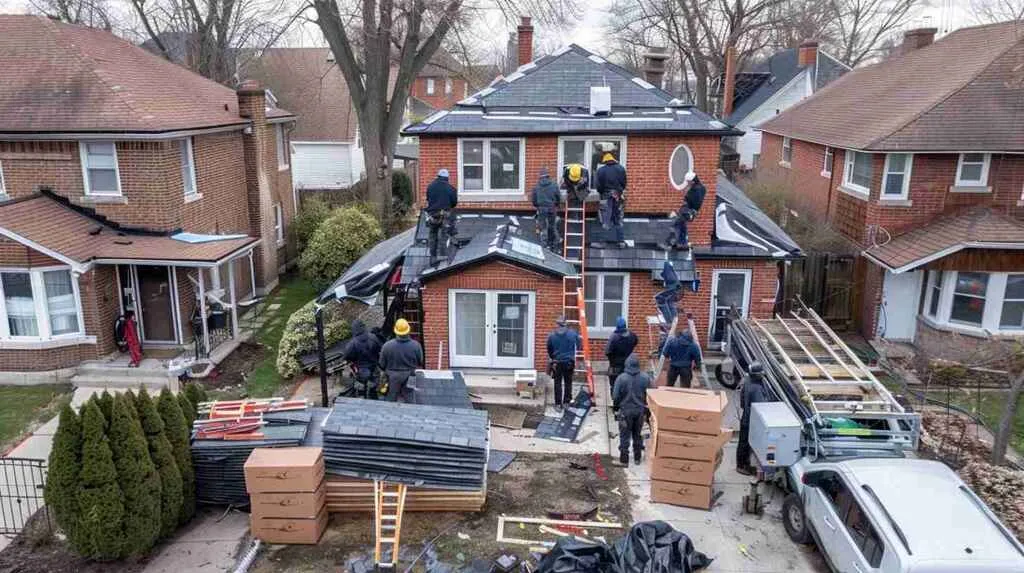
Under Shingle Roof Vent Queens NY – Intake vs Exhaust Explained
Train systems break down when the loop is incomplete – and so do attic ventilation systems on Queens roofs. Most roofs in this borough don’t need more vents slapped on top; they need the right intake-to-exhaust ratio, and I’m not exaggerating when I say unbalanced ventilation can cut shingle life by 20 to 25 percent.
Why Queens Roofs Don’t Need More Vents-They Need Balanced Vents
Here’s my honest take: most ventilation problems in Queens aren’t about the brand of under shingle roof vent – they’re about math. Picture your attic like the 7 train: air has to come from somewhere, move along a path, and exit, or the whole line backs up. If you install fancy exhaust vents near the ridge but don’t open enough intake at the soffits or eaves, that “train” of hot air just sits there cooking your shingles from underneath. Around here, I see that exact setup three times a week, and homeowners can’t figure out why their new shingles are already curling.
At 74th Street in Jackson Heights last summer, I showed a homeowner exactly what that looks like in real life. It was about 3:30 on an August afternoon, and his attic was so hot my tape measure felt soft. He’d installed two nice under shingle roof vents because a big-box store guy told him “more vents up top equals a cooler house.” Zero soffit intake, though. I explained his attic was basically a stalled E train – hot air with nowhere to go because no cool air was coming in at the bottom to push it out. We cut proper intake vents along the soffits and rebalanced the whole system, and his upstairs bedroom dropped eight degrees that same week without touching the A/C. The under shingle vents were doing their job the whole time; they just needed air to actually move through the loop.
Queens has a lot of older housing stock – colonials, capes, row houses with chopped-up attics, mixed dormers, low-slope add-ons tacked onto second floors. Those roofs often have airflow paths that make no sense when you draw them out. An under shingle roof vent placed perfectly on one slope might be worthless if the intake on that side is painted shut or buried under insulation. The roof shape doesn’t follow a simple gable diagram from a manual, so the ventilation can’t either. That’s where local knowledge matters: knowing which Queens neighborhoods have which roof quirks and how to make the air actually complete its route.
| Myth | Fact for Queens, NY Roofs |
|---|---|
| “More vents on the roof always means a cooler house.” | Without enough intake at the soffits or eaves, extra under shingle exhaust vents can actually stall airflow and overheat shingles, cutting life by 20-25%. |
| “Any vent near the top of the roof works the same.” | On Queens colonials and capes, placement and spacing of under shingle vents matter; too high or bunched vents can short-circuit airflow and trap hot pockets. |
| “If I add a powered fan, I don’t need to worry about under shingle vents.” | Fans can fight with passive exhaust and pull conditioned air from the house instead of from intake, raising energy bills and stressing shingles. |
| “My attic is small, so ventilation balance isn’t a big deal.” | Even small attics over row houses need the right intake/exhaust ratio or moisture from cooking and showers can frost, then drip through the ceiling. |
Intake vs Exhaust: Following the Air Like a Queens Subway Map
When a customer in Forest Hills asks me why their upstairs feels like a sauna, I ask them one question: can you draw the air route from where it enters to where it exits? Now, follow the air. Cool outside air should enter low at the soffits or eaves, travel under the roof deck between the rafters, pick up heat and moisture along the way, then exit through the under shingle roof vent positioned near the ridge. That’s the complete subway line. If you only have exits and no entrances – or entrances blocked by insulation or old paint – the whole system backs up, and hot air just sits there baking your shingles and warping your deck.
I’ll never forget a January job in Astoria, right after an ice storm, patching a “mystery leak” over a baby’s nursery at nine o’clock at night. The previous roofer had packed under shingle exhaust vents tight near the ridge but also jammed insulation right over the soffits, so frost was building inside the attic and melting on the nail tips. I was up there with a headlamp, my breath freezing, explaining to the parents how they had all exhaust and no intake – like having all exits and no doors in – and once we opened the intake and reduced the upper vents, the drips stopped for good. That baby slept dry, and the parents finally understood what “balanced ventilation” actually means when you follow the air like a transit map.
| Component | Typical Location on Queens Home | Role in Air “Subway Route” | Common Mistake |
|---|---|---|---|
| Intake vents | Soffits, eaves, sometimes low on front/rear overhangs | Start of the line: bring in cooler outside air to feed the system | Painted or insulated over, or missing entirely on older wood soffits |
| Under shingle roof vents (exhaust) | High on the slope, below ridge, spaced along the span | End of the line: let hot/moist air escape out the top | Installed without matching intake, or clustered so only part of the attic vents |
| Attic insulation | Floor of attic, knee walls, sometimes roof deck in finished attics | Keeps house heat separate from attic “subway tunnel” | Blocked into soffits so air can’t enter, or jammed against deck |
| Air path under roof deck | Between rafters from eave to under shingle vents | Tracks the train: continuous channel so air can move | Baffles missing, so insulation collapses into the channel and stops flow |
⚠️ WARNING: If your attic has strong exhaust from under shingle vents but little or no intake, the system will try to pull makeup air from your living space instead. That negative pressure can suck conditioned air out of your house, draw moisture into the attic, and accelerate shingle aging-especially in Queens’ humid summers and freeze-thaw winters.
Is Your Under Shingle Roof Vent Layout Helping or Hurting?
If you handed me a ladder and ten minutes on your roof, the first thing I’d check isn’t the shingles at all – it’s how the intake and exhaust are talking to each other. Most mystery leaks and weird attic odors start when the air loop is broken somewhere between the intake and the under shingle exhaust.
Quick Self-Check: Is Your Queens Attic Ventilation Balanced?
Start: Do you have visible soffit or low intake vents around most of your roof’s perimeter?
If NO: Your under shingle exhaust vents are likely starved for air. You probably need added or reopened intake before adding any more vents on top.
If YES: Next question: Are your under shingle roof vents evenly spaced near the upper third of the roof, not mixed with other exhaust types?
If NO: Mixed or scattered exhaust (box vents, power fans, plus under shingle vents) can short-circuit airflow. A pro should reconfigure to one consistent exhaust system.
If YES: Final question: Do you see signs of trouble-roof deck waves, shingle curling, attic frost, musty smell after rain?
If YES: You may have the right parts but the wrong ratio or blocked paths; time for a detailed inspection.
If NO: Your system is probably close, but a pro can still fine-tune intake vs exhaust for Queens’ climate loads.
How I Evaluate an Under Shingle Roof Vent System on a Queens Home
-
1
Walk the exterior to count and locate all visible intake vents along soffits and eaves.
-
2
Inspect the roof to map every under shingle exhaust vent, noting spacing, height on the slope, and interaction with chimneys and dormers.
-
3
Enter the attic to trace the airflow path-“follow the air”-looking for blocked soffits, missing baffles, and hot or stagnant corners.
-
4
Check for damage indicators: shingle curling, deck discoloration, rusty nails, or frost patterns that point to ventilation imbalance.
-
5
Calculate the intake vs exhaust net free area (NFA) and adjust the plan so the air can run like a complete subway route from intake to exhaust.
Real Problems I Fix with Under Shingle Roof Vents in Queens
There was a Saturday morning in Flushing when a landlord called because her tenants kept complaining about “roof smell” every time it rained. Turned out she had a low-slope shingle roof with under shingle vents installed too low on the slope, so they were acting half like intake, half like exhaust, and fully like water scoops when the wind hit from the east. I walked her through how wind-driven rain was short-circuiting the airflow path and pushing moisture into the insulation, then we reconfigured the system so the under shingle vents worked strictly as exhaust up high and added proper intake at the eaves. No more smell, no more wet insulation, and the tenants stopped texting her photos of ceiling stains. That’s what I mean by following the air: if the route doesn’t make sense – if the vents are acting like mis-routed trains stopping at the wrong stations – the system will fail, and you’ll keep chasing leaks and odors instead of fixing the root cause.
Here’s a practical check you can do from the driveway or a safe fire escape before you even call me. Stand back and count how many intake vents you see low on the house compared to exhaust vents high on the roof. If you’ve got five under shingle vents up top and maybe one little soffit vent over the front door, that pattern screams “call someone now.” Also look for dark, uneven patches on the roof where snow melts faster – that’s hot air escaping unevenly because the airflow isn’t balanced. You don’t need to climb; these clues are visible from the sidewalk, and honestly, noticing them early can save you thousands in deck and shingle replacement down the road.
Warning Signs Your Under Shingle Vents Are Misconfigured
-
✅
Musty or “roof” smell in top-floor rooms after heavy Queens rain. -
✅
Dark, uneven patches on the roof where snow melts faster than surrounding areas. -
✅
Under shingle vents installed unusually low on the slope, close to where water can drive under shingles. -
✅
No visible soffit vents or only a token vent over the front door, but multiple exhaust vents high on the roof. -
✅
Peeling paint or staining near the top corners of interior walls below the attic.
Before You Call: Quick Attic Vent Checklist for Queens Homeowners
Think of this as helping you get your “subway map” ready before I arrive – so we waste no time and you actually understand what you’re looking at when I point up into the rafters. Even if you can’t safely climb into your attic, most of these checks can be done from the ground, a window, or a hatch. The goal is to spot the big gaps in your intake and exhaust setup so you know whether you’re looking at a quick soffit-vent opening or a more involved rebalancing job.
These simple checks connect directly to longer shingle life and fewer mysterious leaks. When you can trace the air route and confirm it actually makes sense, your roof works the way it’s supposed to, and you’re not replacing perfectly good shingles early because the attic cooked them from underneath. If any of these checks raise a red flag, that’s when you call Shingle Masters and have us confirm the intake/exhaust math so your roof can breathe properly for the next 20 years.
Simple Checks to Do Before Calling About Your Under Shingle Roof Vents
-
✅
Walk around the house and count visible soffit or eave vents on each side. -
✅
From the sidewalk, note how many under shingle vents you can see and whether they’re all the same type and height. -
✅
Peek into the attic (if safe) and look for daylight along the eaves that would indicate open intake paths. -
✅
Check for any spots where insulation is clearly jammed tight into the eave corners, blocking air movement. -
✅
Make a quick note of any rooms that feel stuffy or hotter than the rest of the house, especially top-floor bedrooms.
Common Queens Questions About Under Shingle Roof Vents, Intake, and Exhaust
▸
Do I even need under shingle roof vents if I already have a ridge vent?
Usually you pick one continuous exhaust strategy, not both. On many Queens homes, a properly sized ridge vent with good intake is enough; adding under shingle vents on top of that can unbalance the system. I design the exhaust around your roof shape, not just what fits in a box.
▸
Can I add intake without touching the shingles?
Often, yes. We can open or add soffit vents, clear blockages, and install proper baffles from the attic side. That’s one of the most cost-effective ways to fix an underperforming under shingle exhaust system.
▸
How fast will I notice a difference after fixing intake and exhaust balance?
On hot August days in Queens, homeowners often feel attic and top-floor temperature changes within a week. In winter, you’ll notice fewer ice issues and less frost or moisture buildup over the season.
▸
Is this something I should DIY?
Light checks from the ground or a safe attic hatch are fine, but cutting vents into soffits or reworking under shingle vents on a pitched roof is pro territory. The risk isn’t just falling-it’s creating new leak paths or an unbalanced system that quietly damages your roof.
When the air can run its full subway route from intake to under shingle exhaust, your shingles last longer, your attic stays drier, and those mystery leaks disappear for good. Call Shingle Masters in Queens, NY so I can walk your roof and attic, map out the airflow, and dial in the right intake/exhaust balance – the kind that actually makes sense when you draw it on a pizza box.