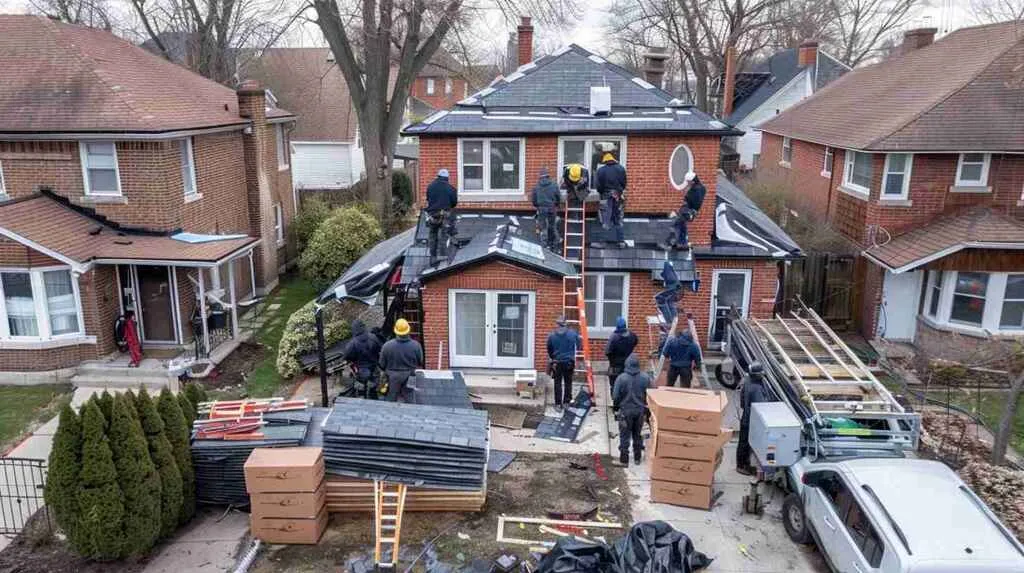
Shingle Roof Process Queens NY – From Tearoff to Cleanup | Free Estimates
Blueprint: a typical single-family shingle roof in Queens takes about 8 to 10 hours from first tearoff to final nail sweep-maybe two days if we hit surprises like extra layers or hidden rot. Most homeowners think it’s just “take the old shingles off, slap new ones on,” but the loud, messy middle of the day-the tearoff and inspection-is where the real work and all the risk live.
How Long the Shingle Roof Process Really Takes in Queens
At 7:15 in the morning, when my crew steps out of the truck on your block in Queens, the roof process really starts with one thing: protection. But here’s my honest take after 19 years doing this work: the schedule matters more than whatever flashy shingle brand your neighbor tried to sell you on. People focus on the wrong station. They underestimate how noisy and chaotic the middle of the day is going to be-the tearing, the dump truck, the debris chutes clanging, the sound of old plywood hitting metal-and they get rattled when it takes longer than the quick YouTube timelapse they watched. I’d rather give you a realistic timeline upfront than overpromise and leave you staring at a half-finished roof as the sun drops.
Queens-specific factors mess with timing more than you’d think. Jackson Heights and Woodside have those narrow driveways and shared side yards where you can’t fit a standard dumpster without blocking someone’s car, so we stage trucks differently and hand-carry debris. Bayside and Whitestone have wider lots, but the weather swings harder-an August afternoon can go from 94 degrees to thunderstorm in 20 minutes, and we’ve learned to stage tarps like the sky’s already turning on us. Astoria’s got tighter attached houses and sun-baked south-facing slopes that cook shingles faster. Think of it like a subway line: the inputs (your house style, your block layout, the weather forecast) directly affect the outputs (how fast we move, how many crew, how much staging space we need). And honestly, if one station backs up-say, we find rot during tearoff and have to stop for a plywood run-the whole line gets messy.
| Stage | Approx. Time | Duration | What You See/Hear |
|---|---|---|---|
| Protection & Staging | 7:00-7:30 AM | 30 min | Tarps over siding, plywood on landscaping, truck and chute setup, very little noise |
| Tearoff | 7:30-11:00 AM | 3.5 hours | Loudest part-shovels, pry bars, debris hitting metal chute, constant thudding |
| Inspection & Decking Repairs | 11:00 AM-12:30 PM | 1.5 hours | Walking the bare deck, some sawing if we replace plywood, quieter but steady work |
| Underlayment, Flashing, Shingle Install | 12:30-4:30 PM | 4 hours | Nail guns firing steadily, organized rhythm, crew moving across roof in sections |
| Cleanup & Final Walkthrough | 4:30-5:30 PM | 1 hour | Magnet sweeps, gutter clearing, driveway check, quiet wrap-up with you present |
Queens Shingle Roof Fast Facts
4-5 roofers for single-family home
1,200-1,800 sq ft (standard Queens house)
7:00-7:30 AM (noise ordinance compliant)
No work in steady rain, lightning, or winds >25 mph
From First Board Down: Protection and Tearoff Done the Right Way
At 7:15 in the morning, when my crew steps out of the truck on your block in Queens, the roof process really starts with one thing: protection. Before a single shingle comes off, we’re wrapping your siding in tarps, laying plywood over flower beds, covering window units, and checking with your attached neighbor about their deck furniture or grill. One August afternoon in Woodside, it was 94 degrees and the shingles were practically melting in my hands when a surprise thunderstorm rolled in mid-tearoff. The homeowner was panicking, staring at their half-naked roof, and I had my crew tarp that thing in under 12 minutes while the first drops were hitting the sidewalk. That job taught me to always stage tarps and plywood like we’re expecting the sky to turn on us-especially in the middle of a tearoff. Queens weather moves fast over Jackson Heights and Woodside, and attached houses mean your neighbor’s gutters are inches from your shingles. We adjust the protection game accordingly, because one wet attic or one scratched vinyl siding panel will cost us more than the 20 minutes we spent staging everything carefully.
Here’s something most folks don’t like to hear, but need to: the tearoff is the loudest, dirtiest part, and if it isn’t done right, the “pretty” shingles don’t matter. A clean, controlled tearoff means we section the roof into zones, pull shingles and old nails methodically, and send everything down a debris chute directly into the dump truck instead of throwing bundles off the edge onto your driveway. On narrow streets, we angle the truck so we’re not blocking your neighbor’s 8 AM commute, and we hand-carry debris when the chute won’t reach. Rushing this step-tearing too fast, missing nails, ignoring soft spots in the plywood-ruins the rest of the system. Think of it like a subway line: protection is the first station, tearoff is the second, and if you back up at station two because you skipped station one or rushed the process, the whole line shuts down. We don’t leave station two until the deck is bare, swept, and ready for inspection.
Protection and Tearoff Sequence on a Queens Block
- Truck arrival and street staging: Position dump truck or trailer to avoid blocking driveways; set up debris chute or hand-carry zones.
- Protect neighbors and landscaping: Tarps over siding, plywood on flower beds, move grills and deck furniture, communicate with attached neighbors.
- Stage tarps and backup plywood: Roll out emergency tarps near roof edges, have plywood ready in case weather turns mid-tearoff.
- Controlled section-by-section tearoff: Strip shingles in zones, pull old nails with magnet bar, send debris down chute directly to truck-no throwing or dumping on lawn.
- Mid-process weather checks: Monitor radar every 90 minutes during summer tearoffs; pause and tarp if storms approach within 30 minutes.
- Bare deck sweep and prep: Sweep all loose nails and granules, check for soft spots, mark any decking that needs replacement before moving to inspection.
⚠
What Happens When Tearoff Isn’t Done Right
Hidden rot missed under rushed tearoff: If the crew tears too fast and doesn’t inspect the bare deck carefully, soft plywood gets covered with new shingles-and you’ll pay twice to fix it in three years when leaks appear.
Nails and debris in shared driveways: In attached Queens houses, sloppy tearoff means your neighbor finds roofing nails by their car tires or shingle scraps in their side yard-and you’re the one who gets blamed.
Water intrusion if a storm hits mid-tearoff without tarps ready: A surprise thunderstorm over a half-stripped roof with no staged tarps can soak insulation, ceiling drywall, and attic framing in under 15 minutes-damage that costs thousands to repair.
Inspection, Repairs, and Installation: The System Behind a Solid Roof
Decking and Rot: The Roof Autopsy
I still remember the first time I saw plywood crumble under my boot because someone rushed past the inspection step. Once the shingles are off, we’re walking every square foot of that bare deck, checking for soft spots, bouncing on suspect areas, looking at how the sheathing is fastened, and inspecting flashing around chimneys and vents. A Saturday in March, just after sunrise in Bayside, I had a retired school principal who wanted to watch every move from her deck. Partway through, we uncovered three layers of old shingles that no one had mentioned on the home inspection, and I stopped the crew, brought her up to the ladder landing, and walked her through each layer like an archaeological dig. That experience cemented my habit of doing a slow, narrated “roof autopsy” with homeowners when we find surprises during the process. We check the gutters for clues-if they’re full of granules and shingle grit, it tells us the old roof was already shedding before we even started. We look at fascia boards for water stains. We poke chimney crickets for rot. This is where you learn the truth about what’s been hiding under the surface.
Hidden rot and lazy decking repairs are what separate a 10-year roof from a 25-year roof, and not gonna lie, this is where I get opinionated. If your roofer skips the deck inspection or rushes plywood replacement to “stay on schedule,” they’re setting you up for callbacks and leaks within five years. It’s like a bad station or a failed signal node in the subway system: if the foundation is compromised, everything downstream-your underlayment, your shingles, your ventilation-backs up and fails early. We replace any plywood that’s soft, delaminated, or water-stained. We sister in new fascia if the old board is punky. We don’t patch over rot with a single sheet and call it good. The deck is the system’s foundation, and it has to hold.
If the wood under your shingles is bad, I don’t care whose logo is on the bundle. The system fails from the bottom up, not the top down.
Shingles, Ventilation, and Final Nailing
Let me be direct: if your roofer can’t explain their ventilation plan in plain English, they don’t have one. Once the deck is solid and we’ve replaced any bad plywood, we lay down underlayment-usually synthetic in Queens because it handles temperature swings better than felt-and we install drip edge and step flashing around chimneys, skylights, and walls. Then comes the starter strip along the eaves, the first course of shingles, and row by row we work our way up to the ridge. Every input affects the output here: if your underlayment is cheap, your shingles will cook faster from underneath. If your ventilation is blocked or undersized, heat traps in the attic and shingles age out in 12 years instead of 20. If your ridge cap isn’t sealed properly, wind-driven rain sneaks in during nor’easters. I adjust the install system based on what I see in each Queens neighborhood-near the Whitestone Bridge and up in Bayside, we add extra ice and water shield along the eaves because ice dams are real when winter hits. In Astoria, those sun-baked south slopes need better ventilation and sometimes an extra layer of synthetic under the shingles to keep attic temps down in July. It’s not cookie-cutter. The system has to match the house.
What Gets Checked During Hector’s Roof Autopsy
-
✓
Decking condition: Walk every section, bounce on suspect areas, check for soft spots, delamination, water stains, and proper fastening. -
✓
Sheathing fastening: Confirm plywood is nailed properly to rafters-loose sheathing leads to buckling and nail pops. -
✓
Flashing around chimneys and walls: Inspect step flashing and counter-flashing for rust, gaps, or improper overlap-common leak sources. -
✓
Chimney cricket condition: Check the small saddle behind the chimney for rot or poor sealing-water pools here if it’s built wrong. -
✓
Gutters and fascia for clues: Granules in gutters = old roof already shedding; water stains on fascia = long-term leak or ice dam damage. -
✓
Attic ventilation openings: Confirm soffit vents aren’t blocked by insulation and ridge vents are clear-ventilation is half the battle in Queens summers.
| Myth | Fact |
|---|---|
| “You can just put new shingles over the old ones to save money.” | False. Layering traps heat, hides rot, voids most warranties, and shortens the new roof’s life by 30-40%. Tearoff is worth it. |
| “Attic ventilation doesn’t matter much in Queens.” | Wrong. Summer temps in Queens attics hit 140°F+ without proper ventilation-shingles cook from below and age out fast. |
| “All roofers replace bad decking automatically.” | Not true. Many skip the inspection or patch over rot to stay on schedule. Ask specifically about decking inspection and replacement policy. |
| “The job is quiet after tearoff and won’t bother neighbors.” | Nope. Nail guns fire steadily during install (4+ hours). It’s rhythmic and less jarring than tearoff, but it’s still loud. |
Cleanup, Nails, and Your Final Walkthrough
One winter evening in Astoria, we were cleaning up by headlamp because the sun dipped before we finished, and a neighbor came out furious, waving a roofing nail he’d found by his car tire. I pulled out my magnet roller, showed him how we do three separate passes in three directions, and invited him to walk the whole driveway with me. Since that night, I always end a job by asking the customer to do a final cleanup walk with me-it keeps us honest and makes them feel like we closed the loop properly. We run magnet sweeps north-south, then east-west, then diagonally, picking up every nail and metal scrap we can find. We check gutters for debris, rake flower beds where tarps were staged, and scan the driveway and sidewalk inch by inch. In attached houses, we walk the neighbor’s side too, because a nail in their yard is still our responsibility. Around here, I’m known as the guy who doesn’t leave nails in your lawn, and that reputation matters more to me than any shingle brand logo on my truck.
Think of cleanup as the final station where the system resets to normal. If protection was the first station and tearoff was the second, this is where the subway line completes the loop and everyone gets off safely. You should expect no debris in shared alleys, no torn tarps left behind on your hedges, a clear driveway so you can pull your car in that evening, and a simple, plain-English explanation of what we did and what to watch for over the first week-mainly just checking that no shingles lifted during the first rainstorm and confirming your gutters are draining properly. We don’t rush this part. I’ll walk you around the house, point out the new ridge cap, show you where we replaced plywood, explain the ventilation upgrades, and answer any questions before I load the truck and leave. That’s the walkthrough, and it’s non-negotiable.
What Hector Includes in Final Cleanup
-
1
Triple magnet sweep: Three passes in different directions (north-south, east-west, diagonal) across driveway, lawn, and walkways. -
2
Gutter clearing: Remove all shingle scraps, nails, and granules from gutters and downspout openings. -
3
Driveway and sidewalk scan: Walk every inch, pick up metal flashing scraps, check for tar drips or debris near storm drains. -
4
Neighbor-side check: For attached houses, magnet sweep the shared side yard and communicate with neighbor about any concerns. -
5
Flowerbed rake: Gently rake areas where tarps and plywood were staged, remove any crushed shingle granules or stray nails. -
6
Final homeowner walkthrough: Walk the property together, explain what was done, answer questions, and get your sign-off before we leave.
Why Queens Homeowners Trust Hector’s Cleanup
- ✓ Fully licensed in NYC – All required city permits and insurance for residential roofing work in Queens
- ✓ Insured for roofing work – General liability and workers’ comp coverage protects you and your property
- ✓ 19 years doing shingle roofs in Queens only – Every neighborhood, every house style, every weather pattern-seen it all
- ✓ Written cleanup guarantee – Triple magnet sweep and final walkthrough included in every contract, no exceptions
- ✓ Homeowner sign-off on final walkthrough – Job isn’t done until you’ve walked the property with Hector and approved the work
Planning Your Roof with Hector: Budget, Timing, and Next Steps
When I sit at your kitchen table for the estimate, the first question I’m going to ask you is simple: “How long do you plan to stay in this house?” That one question shapes everything-whether you go with 30-year architectural shingles or 50-year premium, whether we upgrade to synthetic underlayment or stick with standard felt, whether we add extra ridge venting now or wait. If you’re planning to sell in three years, I’m not going to upsell you on features the next owner won’t pay you back for. If you’re staying 15 years and this is your forever home, we’ll build a system that lasts and talk about timing-maybe we wait out the August heat wave, or we book now before winter so you’re not scrambling when nor’easters start rolling in. Planning the roof with me isn’t complicated, but it’s honest, and I’d rather have that conversation upfront than surprise you with change orders halfway through the job.
| Scenario | Neighborhood Style | Includes | Estimated Range |
|---|---|---|---|
| Small attached house | Jackson Heights, Woodside | Tearoff, standard architectural shingles, synthetic underlayment, ridge vent, cleanup | $6,500-$9,000 |
| Medium detached house | Bayside, Whitestone | Full tearoff, premium shingles, ice/water shield on eaves, step flashing around chimney, gutters cleared | $9,500-$13,500 |
| Large colonial | Flushing, Douglaston | Tearoff, upgraded ventilation system, 50-year architectural shingles, full soffit and ridge venting, fascia repairs | $14,000-$19,000 |
| Roof with multiple layers and rot | Any Queens neighborhood | Extra tearoff labor, plywood replacement (typically 8-15 sheets), new flashing, standard shingles, extended cleanup | Add $1,800-$3,500 to base price |
| Roof needing ventilation upgrade | Astoria, older Queens homes | Install continuous ridge vent, add soffit vents, attic insulation baffles, better airflow for shingle longevity | Add $900-$1,800 to base price |
Common Questions Queens Homeowners Ask About the Shingle Roof Process
How loud is the tearoff, and will it bother my neighbors?
Tearoff is the loudest part-shovels scraping, pry bars popping nails, debris hitting the metal chute. It lasts 3-4 hours. We start at 7:15 AM to comply with Queens noise rules, and in attached houses we give neighbors a heads-up the day before. The install phase (nail guns) is steady but less jarring.
Do I need to stay home during the roof work?
Not required, but helpful for the final walkthrough. If you’re leaving, make sure we can access all sides of the house, move any cars from the driveway, and leave a phone number in case we find surprises (rot, extra layers) that need a quick decision.
What happens if you find hidden rot or extra shingle layers mid-job?
We stop, take photos, and call you immediately. I’ll explain what we found, show you the options (replace plywood vs. reinforce vs. leave it), give you a price for the extra work, and wait for your approval before we proceed. No surprise bills at the end.
What if weather delays the job halfway through?
If rain or high winds hit mid-job, we tarp the exposed deck immediately and reschedule the install for the next clear day-usually within 24-48 hours. Your roof stays watertight under tarps, and we don’t charge extra for weather delays.
What kind of warranty and maintenance should I expect after the roof is done?
Shingle manufacturers offer 25-50 year material warranties (depending on the shingle grade you choose), and we provide a 5-year labor warranty covering installation defects. For maintenance: clear gutters twice a year, trim branches away from the roof, and call us if you notice lifted shingles or leaks after storms. Most Queens roofs need zero maintenance for the first 10 years if installed properly.
Think of your shingle roof process like the 7 train running from protection to tearoff, inspection, install, and cleanup-each station matters, and backing up at one station shuts down the whole line. Hector and the Shingle Masters crew run that system from first tarp to final magnet sweep, and we don’t cut corners in the messy middle just to make the schedule look good. Call Shingle Masters in Queens, NY today for a free, step-by-step shingle roof estimate, and we’ll sit at your kitchen table, ask the right questions, and build a plan that fits your house, your block, and how long you’re planning to stay.