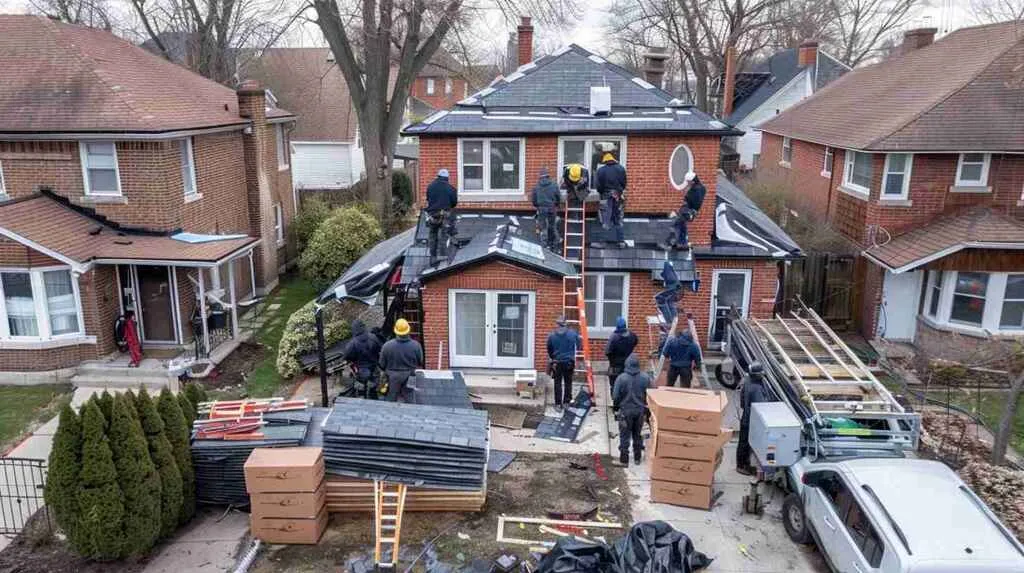
Install a Shingle Roof Cap Queens NY – Peak Protection Done Right
Blueprints don’t always show the part that fails first. On a typical Queens block, if I walk past ten roofs, at least four ridge caps are installed in a way that guarantees leaks within five years. The number-one mistake isn’t the shingles on the main field – it’s bad nailing and backwards overlap at that skinny line running along the peak. One February evening around 6:30 p.m., just after dark, I crawled onto a two-family in Jackson Heights where the owner swore the shingles were “brand new” but the hallway ceiling was still dripping. My headlamp caught the problem immediately: the “ridge cap” was nothing but three-tab scraps overlapped backwards, with nails driven right through the exposed section. The snowmelt was running under those caps like the 7 train through a tunnel, straight into the attic. I’ve torn off so many “brand new” roofs in Queens that fail first at the ridge because installers treat the cap like leftover trim instead of the main water and wind control detail it actually is.
Think of the ridge cap as the last train on the line and the ridge itself as the trunk route carrying all the water traffic off your roof. If the overlaps face the wrong way or the nails punch through in the wrong spot, water backs up and diverts like a stalled train at Queensboro Plaza, messing up everything behind it. A correct asphalt shingle ridge cap starts at the downwind end, overlaps each piece by at least 5-6 inches in the direction away from the prevailing wind, and gets nailed about 1 inch above the factory exposure line – never in the exposed tab where everyone can see shiny nail heads from the sidewalk. Get that detail right, and your whole roof system in Queens stays dry and stable through ice, wind, and thunderstorms.
The Ridge Cap Detail That Makes or Breaks Your Queens Roof
Correct vs. Wrong Ridge Cap Nailing and Overlap
✅ Do This on a Queens Ridge Cap
- Nail 1″ above the factory exposure line, never in the exposed section
- Overlap each cap shingle by at least 5-6″ in the direction of prevailing wind
- Keep nails 1″ in from each side to avoid blow-offs at the edges
- Stagger end joints so no two seams line up within 2-3 caps
❌ Never Do This
- Face-nail through the exposed tab and leave the nail heads visible
- Install caps backwards so the factory seal is pointing uphill
- Cut pieces so short that less than 3″ of overlap covers the joint
- Use random three-tab scraps with mismatched thickness as the ridge cap
Step-by-Step: How to Install a Shingle Roof Cap the Right Way in Queens, NY
If you can see shiny nail heads on your ridge from the sidewalk, your roof is already on borrowed time.
Prep, Layout, and Nailing Pattern
Let me be blunt: if you don’t understand where your ridge sits compared to your attic ventilation, you have no business laying a single cap shingle. In Queens, that matters even more because most multifamily and attached homes have tight attics that trap humid summer air, and a poorly capped ridge can seal that air in like a pressure cooker. One scorching 92-degree Saturday, I got a panicked call from a Flushing landlord: shingles were literally flying off the roof onto the sidewalk after a thunderstorm. When I got up there, the main field shingles were fine; it was the ridge cap that had been cut too short and face-nailed, with no sealant and no stagger. The wind hit that ridge like a gust down Roosevelt Avenue and peeled them one by one. I had to work fast, reframe a soft ridge board section that had gone spongy from the leaks, then reinstall the cap correctly with proper overhang and nails in the nailing zone – we beat the next storm by about an hour.
Prepping the ridge starts with stripping any old material down to bare decking so you can see what you’re actually working with. Snap a chalk line along the ridge peak to keep your caps straight, especially on long runs common in Queens multifamilies. Your starting point should be the end opposite the prevailing wind – and in Queens, that means paying attention to whether you’re near the East River, out by the Rockaways, or tucked behind taller buildings in Jackson Heights. Roofs near the water and open exposures by the Whitestone see stronger, more consistent gusts, so starting your cap sequence from the correct end and nailing it down with two fasteners per cap – 1 inch in from each side, 1 inch above the exposure line – keeps the wind from finding a loose edge to grab. The overhang on each slope should be consistent, about half an inch, and each cap should cover the nails of the one before it by at least 5 inches so water never meets a fastener head.
Field-Tested Sequence to Install a Queens Shingle Ridge Cap
Remove old ridge materials down to decking; probe the ridge board for softness or rot and replace any spongy sections before you go further.
Snap a chalk line along the ridge peak to keep cap shingles straight on long multifamily roofs common across Queens.
Cut a 1″ slot on each side of the ridge (leaving 12″ uncut at hips and transitions), set the vent centered, and fasten per manufacturer specs.
Use matching or dedicated ridge-cap shingles, cut to consistent length (typically 12″ from architectural shingles) for uniform coverage and clean appearance.
Begin capping from the end opposite the prevailing wind so overlaps face away from the main gusts – critical in open Queens exposures.
Place two nails per cap, about 1″ in from each side, 1″ above the exposure line, driving into solid decking or ridge board – never through the exposed tab.
At the final cap, trim for a clean fit, set nails slightly higher to keep them covered, and cover exposed heads with a small dab of compatible roofing sealant.
Tying the Ridge Cap into Ventilation
Think of your ridge vent as the exhaust fan for a packed subway car and your soffit vents as the station doors letting fresh air in. If the ridge is sealed tight with no vent opening, or if you smother an existing vent with solid caps or a thick layer of ice-and-water shield, hot air has nowhere to go. In a Queens attic during July and August, that trapped heat can push temperatures above 140 degrees, which bakes your shingles from below and turns the whole attic into a breeding ground for mold and moisture. Before I cap any ridge, I check that the soffit vents aren’t painted shut and that baffles are open in those tight Queens attics – otherwise the ridge vent becomes just a pretty plastic strip doing nothing while your attic chokes. The ridge cap should sit on top of the vent, overlapping just enough to shed water but leaving the vent slots open underneath. That way, air flows in through the soffits, travels up along the underside of the roof deck, and exits at the ridge, carrying heat and moisture with it like passengers leaving at the last stop on the line.
Ventilation, Breathability, and Why Your Ridge Can’t Be ‘Taped Shut’
When a homeowner in Queens asks me, “Can’t I just overlap some extra shingles on the top and call it a day?” I ask them if they’d tape their front door shut and still expect good airflow in the house. Sealing the ridge without a vent plan traps heat and moisture in your attic like a closed garage in summer, and in Queens – where humid air off the water mixes with temperature swings from fall to spring – that’s a fast track to mold, deck rot, and shingles that curl from the inside out. One Sunday morning in November in Astoria, a quiet street, an older Greek couple made me coffee while I checked a “mystery drip” above their icon wall. The roof looked perfect from the ground, but up top I found the problem: the previous roofer had woven the ridge using architectural shingles with no ridge vent, then driven nails through the very top of the ridge and smeared black mastic over the nail heads. After two summers, the mastic cracked, water followed the nails down, and the leak landed exactly above their icons. I rebuilt that ridge with a low-profile vent and proper cap shingles, explaining each step like a little engineering lesson while they watched from the attic hatch.
Picture the ridge vent as the exhaust grille at the end of a packed Queens Boulevard bus and the soffits as the front and rear doors. If you block the exhaust, passengers – in this case, hot, wet air – can’t leave, and the whole bus gets stuffy and miserable. A sealed, non-vented ridge does the same thing to your attic: in winter, warm air from your living space rises, hits a cold roof deck, condenses, and drips back down onto insulation and framing. In summer, solar heat bakes the shingles, radiates into the attic, and has no escape route, cooking everything below and shortening your shingle life by years. Never smother an existing ridge vent with solid caps or a continuous run of ice-and-water shield without a ventilation plan – and if you’re adding a ridge vent for the first time, coordinate it with open soffit baffles so air actually moves.
Common Queens Ridge Cap and Ventilation Myths
| Myth | Fact |
|---|---|
| ❌ “More overlap always means better waterproofing” | ✅ Too much overlap (10″+) can trap water and debris between layers; 5-6″ is the sweet spot for shedding water and allowing airflow |
| ❌ “You can reuse old ridge caps if they still look okay” | ✅ Old caps lose flexibility and sealant adhesion; reusing them almost always leads to blow-offs and leaks within one season |
| ❌ “Ridge vents make your roof colder in winter” | ✅ Proper ridge venting actually prevents ice dams by keeping the attic close to outside temperature; a sealed ridge traps heat that melts snow unevenly |
| ❌ “Coating the ridge in roof cement fixes any cap problem” | ✅ Mastic cracks in UV and temperature swings; it’s a band-aid that hides poor nailing and wrong overlap, not a real fix |
Peek inside the ridge: airflow explained like a Queens subway map ▼
A) Intake vs. Exhaust
Fresh air enters through soffit vents (your “stations” at street level), travels up along the underside of the roof deck through open rafter bays (the “tunnels”), and exits at the ridge vent (the “terminal” at the end of the line). If either end is blocked – painted-shut soffits or a sealed ridge – the whole route stalls and air sits stagnant in the attic.
B) What Happens When the Ridge Is Blocked
In winter, warm indoor air rises into the attic, can’t escape, condenses on the cold roof deck, and drips back down onto insulation and framing – leading to mold, rot, and ceiling stains. In summer, solar heat bakes the shingles, radiates into a sealed attic with no exhaust, and temperatures spike above 140°F, aging your shingles and making upper floors unbearable even with AC running.
C) Why Low-Profile Vents Work Best in Queens
High-profile ridge vents can catch wind like a sail on open Queens roofs near the water or tall buildings, and they stand out visually on low-slope roofs common in attached housing. Low-profile vents sit flush, resist wind uplift, meet code airflow requirements, and blend into the roofline – so you get full ventilation without the neighbors wondering why your ridge looks like an airport hangar.
Should You DIY Your Ridge Cap or Call a Pro in Queens?
Here’s the quiet truth nobody tells you: your entire shingle system is only as strong as the skinny line of material running along the peak. A careful DIYer with good balance, the right tools, and a solid understanding of wind direction and nailing zones can install a ridge cap on a simple gable roof and have it last. But most Queens homes aren’t simple gables – they’re cut-up two-families with party walls, complex hips with dormers, or steep pitches on narrow lots where one slip puts you on the sidewalk. Add in the fact that you need to coordinate ridge vent installation, check for rotted ridge boards, match existing shingle colors, and pull a permit if you’re doing structural work, and the complexity jumps fast. Safety is the big one: I’ve seen homeowners on 8/12 pitches in Astoria with a single ladder and no harness, trying to nail caps in 20-mph gusts. If the roof is steep, the ridge is long, or you’re already seeing leaks and soft spots, calling someone local who knows Queens housing stock and weather patterns is worth every dollar.
Most Queens owners underestimate ridge complexity on older housing stock because they think “it’s just a few shingles at the top.” But that top line controls water flow for the entire roof, and when hips, valleys, and old vents are involved, one wrong cut or backwards overlap can turn into a chronic leak that costs ten times the original repair. If you’ve got the skills, the safety gear, and a straightforward roof, go for it – but if there are active leaks, visible daylight from the attic, or any hesitation about whether your nailing pattern is right, call a local pro and get it done correctly the first time.
DIY Ridge Cap vs. Hiring a Queens Roofing Pro
DIY Ridge Cap
- Cost: Materials only (~$150-$300 for cap shingles, nails, vent), but hidden costs if you need ladder rental, safety gear, or redo after mistakes
- Risk: High on steep or complex roofs; fall hazards, incorrect nailing leading to leaks, no warranty if it fails in six months
- Time: Weekend project if straightforward; can stretch into multiple trips if you hit rot, need more materials, or weather doesn’t cooperate
- Quality: Depends entirely on your skill and whether you follow manufacturer specs; no third-party accountability if it leaks later
Pro Install (Shingle Masters)
- Cost: Higher upfront (~$800-$2,000+ depending on ridge length and vent install), but includes labor, materials, permits, and workmanship warranty
- Risk: Minimal; licensed pros carry insurance, use fall protection, and know Queens code requirements and wind exposure by neighborhood
- Time: Typically one day for standard ridge; crew handles tear-off, vent install, cap replacement, and cleanup without you climbing a ladder
- Quality: Backed by written warranty; experienced eye catches hidden rot, deck issues, and ventilation problems before they become expensive leaks
When to Call a Queens Roofer for Ridge Cap Work
🚨 Call Right Away (Urgent)
- Active leak at ceiling near center of house
- Shingles missing off ridge after recent storm
- Visible sagging along ridge line when viewed from street
- Daylight visible at roof peak from attic during daytime
⏳ Can Usually Wait a Week
- Minor granule loss on ridge caps but no exposed substrate
- Slight discoloration at ridge line but no interior stains
- Planning a full reroof within 1-2 years and ridge is stable for now
Quick Queens Checklist Before You Call Shingle Masters
A few quick checks from the sidewalk or attic can save you time and money when you reach out for help. Whether you’re in Jackson Heights, Flushing, Astoria, Woodside, or nearby, these simple home-owner observations give Luis a head start on diagnosing your ridge cap issue before he even pulls up to your block.
✓ Simple Home-Owner Checks for Ridge Cap Issues in Queens, NY
Queens Ridge Cap and Ventilation FAQs
Is ridge vent required by code in Queens?
NYC building code requires 1 square foot of net free ventilation area per 150 square feet of attic space, split between intake (soffits) and exhaust (ridge or other high vents). Ridge vent is the most common and effective way to meet the exhaust requirement, but it’s not the only legal option – gable vents or roof-mounted vents can work if sized and placed correctly.
How long should a properly installed ridge cap last in Queens weather?
A correctly installed ridge cap using quality materials (dedicated ridge shingles or cut architectural caps, proper nailing, correct overlap) should last 15-25 years in Queens – matching or slightly outlasting the main field shingles because the ridge sees more wind but less direct water flow. Poorly installed caps fail in 3-7 years from blow-offs, leaks, or ventilation damage.
Can you reuse old ridge caps after a repair?
No. Old ridge caps lose flexibility, the factory sealant adhesive dries out, and nail holes compromise waterproofing. Trying to reuse them almost always leads to blow-offs within one season and leaks at every old nail penetration. Always install new caps when you open up a ridge, even if the old ones “look fine” from the ground.
How do you handle winter ice and snow buildup at the ridge?
Proper ridge ventilation keeps the attic close to outside temperature, which prevents the freeze-thaw cycling that creates ice dams. If you already have ice buildup at the ridge, avoid chipping it off (you’ll damage shingles); instead, use calcium chloride in a fabric tube laid along the ridge to melt channels. Long-term, fix the ventilation and insulation so heat doesn’t escape through the roof deck and melt snow unevenly.
Why Queens Homeowners Trust Shingle Masters with Ridge Caps
Licensed & Insured in NYC
Full coverage and permits pulled for every ridge job
19+ Years Ridge Diagnostics
Specialized in finding why ridges leak when they shouldn’t
Rapid Queens Response
Astoria, Jackson Heights, Flushing, Woodside & nearby – often same-day inspections
Written Workmanship Warranty
Every ridge cap install and repair backed in writing
Your entire shingle system in Queens lives or dies by how well that ridge cap sheds water, resists wind, and allows your attic to breathe. Get the overlap backwards, nail in the wrong spot, or seal off ventilation, and you’ll be dealing with leaks, blow-offs, and premature shingle failure no matter how new the rest of your roof is. If you’re seeing missing caps, ceiling stains near the center of your house, or daylight peeking through at the peak, call Shingle Masters for a ridge inspection or full cap install. We respond fast across Queens neighborhoods, diagnose the real issue – not just the symptoms – and make sure your ridge is built to handle everything from summer storms to winter ice. Your roof’s peak is too important to trust to guesswork.