House Roof Shingles Queens NY – How to Choose the Right Ones | Free Quotes
Sideways might not be the direction you’d expect, but it’s exactly how heat sneaks into a Queens attic when you pick the wrong shingle color. The prettiest dark charcoal on the sample board can quietly cost you an extra $40 to $80 a month in cooling if you ignore how color, pitch, and sun exposure work together-and honestly, that’s like judging a cake only by its frosting without ever checking if it’ll hold up in the oven.
How the “Prettiest” Shingle Can Overheat a Queens Home
On 46th Avenue in Bayside last July, I watched a dark roof bake at 158°F while the neighbor’s lighter shingles sat at 132°F-and I know because I pulled out my infrared thermometer right there on the sidewalk. That 26-degree difference wasn’t just trivia; by the time we walked into the house with the dark shingles, the attic felt like the inside of a pizza oven and the AC had been running nonstop since noon. Heat doesn’t care how good your roof looks from the street-it crawls through sheathing and insulation and turns your third-floor bedroom into a place nobody wants to sleep in August.
Let me be blunt: most people in Queens pick house roof shingles the way they pick cupcakes-by how they look in the box, not how they hold up overnight. Color matters more than brand for energy bills, and pitch rating plus sun exposure on your specific block matter even more than what the contractor’s brochure says. We’re building the base layer of a lasagna-style roof recipe here, and if that first layer traps heat instead of reflecting it, the rest of the “dish”-your comfort, your electric bill, your ability to actually use your upstairs in summer-falls apart no matter how expensive the top shingles are.
| Shingle Color | Measured Roof Surface Temp (°F) | Estimated Attic Temp Increase vs Light Roof | Estimated Extra Cooling Cost/Month in Queens | Best For |
|---|---|---|---|---|
| Dark Gray / Black | 154-162°F on sunny July afternoon | +18-24°F hotter attic space | $60-$80/month extra in peak summer | Steep-pitched Victorians, homes with excellent attic insulation and ridge vents, north-facing slopes |
| Medium Brown / Charcoal | 138-146°F on sunny July afternoon | +8-12°F hotter attic space | $30-$45/month extra in peak summer | Most Queens capes and colonials, balanced choice for brick or siding, blended shades hide dirt well |
| Light Tan / Cool Gray | 128-136°F on sunny July afternoon | Baseline (coolest option) | $0 (baseline cost) | Low-slope additions, homes under heavy tree cover, south/west-facing roofs in full sun, older AC systems |
Match Your Shingles to Your Roof Shape, Not Your Neighbor’s
I’ll never forget a cold, windy evening in Bayside when a homeowner called me in a panic because shingles were literally sliding off his three-year-old roof. Turned out the crew he hired used architectural shingles designed for steep pitches on a low-slope section, and water had been creeping underneath like soup under a soggy bread crust-by the time he noticed, the plywood underneath was soft as sandwich bread left out overnight. We had to strip it all, install proper underlayment rated for low slopes, and switch to a shingle system actually designed for that pitch angle. In Queens you see every roof shape: flat-ish additions on Astoria rowhouses, steep Tudor peaks in Forest Hills, gentle 3:12 capes in Bayside, and those weird split-level combo roofs in Flushing where half the house is one pitch and the addition is another.
Here’s the thing-once you know your roof’s pitch and sun exposure, picking style within what’s structurally safe is like choosing the right pan and oven temp before you even think about frosting. If your pitch is under 4:12 or you’ve got a section that drains slowly, certain shingles just aren’t an option no matter how good they look on your neighbor’s steep colonial across the street. That’s not the contractor being picky; that’s physics and local building code keeping your ceiling dry through our slushy March freezes and August downpours.
Architectural Shingles on Proper Pitch
- Best for: Roofs with 4:12 pitch or steeper (most single-family capes, colonials, Tudors in Queens)
- Pros: Dimensional look adds curb appeal, great wind resistance (110+ mph ratings common), thick enough to hide minor roof imperfections, wide color selection
- Cons: Heavier (needs solid roof deck), costs 15-25% more than 3-tab, can trap water on low slopes if installed wrong
3-Tab / Low-Slope-Appropriate Shingles
- Best for: Roofs under 4:12 pitch, flat or gently sloped garage additions, older Queens rowhouses with shallow slopes
- Pros: Lighter weight (works on older decking), lower upfront cost, flatter profile reduces water trapping on gentle slopes when paired with proper underlayment
- Cons: Simpler look doesn’t add as much resale “wow,” shorter wind warranties (70-90 mph), fewer color options, thinner so any deck dips show through
Decision Tree: Choosing the Right Shingle for Your Queens Roof
Color, Style, and Streaks: Getting the Look Right for Your Block
I still remember the first time I saw algae streaks crawl down a light-beige shingle in Corona like espresso spilled on a white apron-the owner was heartbroken because she’d picked that soft cream color to match her trim, and three summers later the north side of her roof looked like someone had dragged a dirty mop across it. There was a Saturday in late October, just before Halloween, when I met an older lady in Flushing whose shingles were perfectly fine structurally, but she hated the way her house looked compared to the newly renovated ones on her block. We sat at her kitchen table with a pot of tea and I laid out three shingle sample boards, holding them up next to her brick color, her white trim, and even that big maple tree out front. We ended up picking a subtle blended shingle-medium brown with flecks of tan and charcoal-that made her old brick look warmer instead of washed out, and she called me after Thanksgiving to say her neighbors thought she’d redone the entire house when all we did was change the “flavor” on top.
Shingles are ingredients that change the whole façade, and small shifts in color or texture read completely differently from the sidewalk depending on your block. A dark charcoal that looks sharp on a Whitestone Tudor with white columns can make a red-brick Jackson Heights rowhouse look heavy and closed-in. The profile matters too-dimensional architectural shingles have shadow lines like thick knife cuts, which pop on simple ranch homes but can look busy on a house that already has lots of decorative trim. And if you’re on a street with big sycamores or plane trees dropping leaves and city soot, those ultra-light shingles you loved in the showroom are going to show every speck within a year.
✓ How to Pick Shingle Colors That Age Well on Queens Houses
-
✓
Match your brick or siding undertone: Cool gray brick pairs with gray or blue-gray shingles; warm red or tan brick looks better with brown, charcoal, or earth-tone blends -
✓
Hide future algae with blended mid-tones: Solid light colors show every streak; shingles with mixed granules (tan + brown, gray + charcoal) camouflage stains for years longer -
✓
Check your sun exposure: South and west-facing roofs in full sun benefit from lighter shades (cooling boost), while north-facing or shaded roofs can handle darker tones without overheating the attic -
✓
Respect HOA or landmark rules early: Some Queens historic districts limit color palettes-get that sorted before you fall in love with a sample you can’t actually install -
✓
Glance at your block’s palette: You don’t have to copy neighbors, but wildly different colors can stick out awkwardly-aim for “refreshed and coordinated” not “space station landed here” -
✓
Think resale appeal: Neutral earth tones (browns, grays, tans) appeal to the widest buyer pool; bold colors (deep reds, bright blues) can wow or turn off future buyers depending on taste
Warning: Ultra-Light Shingles Under Heavy Tree Cover
Very light cream or white shingles look stunning on suburban Long Island homes with open lawns and no street grime-but on Queens blocks lined with big maples, sycamores, or plane trees, those same shingles turn gray-streaked and dirty-looking within 18 months. Leaf tannins, city soot, and algae spores love light surfaces. If your house sits under heavy branches or you’re on a high-traffic street, a blended medium-tone shingle (think sandy taupe with brown flecks, or cool gray with charcoal) hides the inevitable staining and still gives you most of the cooling benefit without looking like you need a roof wash every spring.
Your Queens Roof Shingle Recipe: Steps From First Call to Final Cleanup
When I walk into a home and the owner says, “Rosa, I just want something I never have to think about again,” I already know we’re going to talk about warranty and wind ratings before color-but we’re also going to walk through the whole recipe, layer by layer, so nothing’s a surprise. The ingredients are your materials: shingles, underlayment, drip edge, ridge vents, flashing. The layers are how we stack them: ice-and-water shield at the eaves and valleys, breathable synthetic felt over the rest of the deck, then shingles nailed in the right pattern with the right exposure. The timing-the “baking”-is the installation itself, from tearing off old shingles one morning to sweeping the last nail off your driveway by late afternoon the next day, checking ventilation like you’d check oven airflow so heat escapes instead of getting trapped under the new roof.
Now that you understand that layer, here’s the part most roofers mumble through: a proper plan up front can save you $40 to $80 a month in summer cooling and reduce surprise repairs by catching small issues-rotted fascia, missing vent baffles, old flashing that’s about to leak-before they turn into ceiling stains. Not glamorous, but neither is mopping up drips or cranking the AC to arctic just to sleep upstairs in July.
How a Shingle Roof Project Works with Shingle Masters
You describe what you’re seeing-leaks, missing shingles, age of current roof-and Rosa asks about your roof pitch, home style, and whether you’ve noticed any attic heat or moisture issues.
Rosa climbs up, measures pitch with a digital level, checks flashing and vent condition, takes photos of any soft spots or rot, and confirms exactly what needs replacing vs what can stay.
Rosa brings sample boards, holds them up to your brick or siding in natural light, walks you through pitch requirements, and explains cooling impact of each color choice-no pressure, just clarity.
You get a breakdown showing material cost, labor, disposal, permits if needed, and any extras like new vents or fascia repair-one total price, no surprises when the crew shows up.
Most Queens shingle replacements don’t need permits if you’re not changing structure, but Rosa confirms with your local building department and schedules around your availability and the week’s weather forecast.
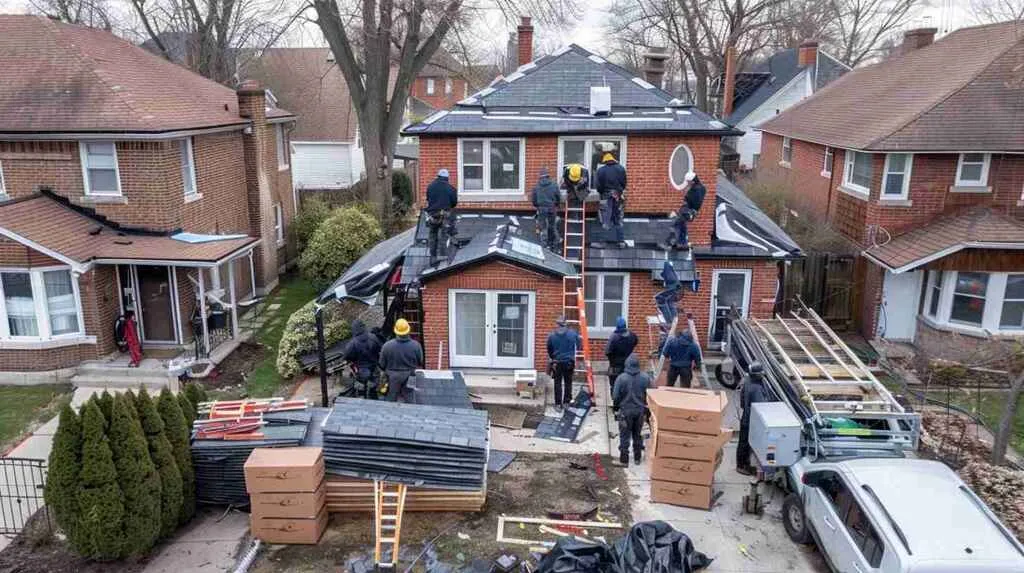
Crew arrives early, lays tarps to protect landscaping, tears off old shingles, inspects and repairs deck if needed, installs new underlayment and shingles section by section-most Queens homes finish in 1-2 days depending on size and complexity.
Magnetic roller picks up every nail from driveway and lawn, debris hauled same day, and Rosa walks you through what to watch for after big storms (lifted edges, loose flashing) so you know when to call vs when it’s normal settling.
Why Queens Homeowners Trust Shingle Masters
Licensed NYC Contractor – All work meets NYC building code and carries proper liability coverage
Fully Insured – Workers’ comp and general liability protect your property throughout the project
19+ Years in Queens – Rosa has installed and repaired shingles on every roof type from Astoria to Whitestone
Bilingual English/Spanish – Clear communication whether you’re more comfortable in English or Spanish
24-48 Hour Quote Turnaround – You’ll have a detailed written estimate in hand before the weekend
Manufacturer-Certified – Trained and certified to install major shingle brands to full warranty standards
Costs, Maintenance, and When to Call for a Free Queens Roof Quote
If you’ve ever overstuffed a lasagna pan and watched it bubble over, you already understand what happens when a roof doesn’t have the right ventilation under those shingles-heat and moisture build up, the “dish” (your roof deck and insulation) gets soggy, and eventually you’re looking at mold or rot instead of just a shingle that needs replacing. Cost ranges depend on whether we’re talking basic ingredients (standard 3-tab on a simple cape) or premium layers (architectural shingles with upgraded underlayment and new ridge vents on a multi-plane colonial), and Rosa breaks it down clearly on every quote so you know exactly what you’re paying for and why each layer matters. Ventilation isn’t an upsell-it’s letting steam out of the oven so the whole roof recipe doesn’t collapse from trapped heat.
Maintenance is simpler than most people think: a quick visual check in spring after freeze-thaw cycles, a pre-summer peek to make sure vents aren’t blocked by nests or leaves, a late-fall gutter and valley cleanup before snow season, and a walk-around after any major storm to spot lifted edges or missing granules. You can do the first look from the ground with binoculars; anything that looks off-curling, dark streaks spreading fast, shingles in the yard-call Rosa and she’ll tell you on the phone if it’s urgent or can wait a few weeks. And if you’re just starting to think about replacing those house roof shingles because they’re getting close to 20 years old or you’re planning to sell soon, now’s the time to get a free quote and see the color samples against your actual brick in daylight before you commit to anything.
| Scenario | Home Type & Roof Size (Approx.) | What’s Included | Typical Price Range |
|---|---|---|---|
| Small Rowhouse Front Slope Replacement | Attached rowhouse, 400-600 sq ft front-facing slope only | Tear-off, disposal, synthetic underlayment, architectural shingles, new drip edge, cleanup | $2,800-$4,200 |
| Full Roof on Semi-Detached Home | Semi-detached 2-story, 1,200-1,600 sq ft roof area | Complete tear-off both sides, ice-and-water shield at eaves/valleys, architectural shingles, ridge vent upgrade, new step flashing, debris removal | $7,500-$11,000 |
| Full Roof on Detached Cape or Colonial | Detached single-family, 1,800-2,400 sq ft roof with simple gable or hip design | Full tear-off, disposal, premium synthetic underlayment, architectural shingles (25-30 year warranty), all new flashings, ridge and soffit vent check/upgrade, magnetic nail cleanup | $11,000-$16,500 |
| Tear-Off & Replacement on Older Tudor with Multiple Planes | Tudor or complex multi-level home, 2,200-3,000 sq ft with steep pitches, dormers, valleys | Complete tear-off including old layers, deck inspection and spot repair if needed, ice-and-water in all valleys, high-end architectural shingles, copper or heavy-gauge step flashing, full ridge vent system, extra safety equipment for steep sections | $15,000-$24,000 |
| Repair / Partial Replacement After Wind Damage | Any home size, one section or slope damaged by storm | Remove damaged shingles, inspect and repair deck/underlayment if compromised, match existing shingle color/style as closely as possible, blend repair edges, cleanup | $800-$3,500 (depends on damage extent and shingle availability) |
Simple Maintenance Schedule for Queens Shingle Roofs
Quick Check After Freeze-Thaw: Walk around your house with binoculars and look for lifted shingle edges, ice-dam damage at eaves, or shingles in the yard. Homeowner can do: visual inspection from ground. Call Rosa if: you see daylight through any gaps or multiple shingles look damaged.
Ventilation & Attic Check: Make sure soffit vents aren’t blocked by insulation or wasp nests, and that your attic isn’t holding heat like an oven. Homeowner can do: peek in attic on a warm day to see if it feels hotter than it should. Call Rosa if: attic is 20+ degrees hotter than outside or you see moisture/mold on rafters.
Gutter & Leaf Cleanup: Clear gutters and valleys of leaves and debris before first snow so water drains properly and doesn’t back up under shingles. Homeowner can do: clean accessible gutters yourself or hire a handyman. Call Rosa if: you notice valleys holding water or sagging gutters pulling away from fascia.
Post-Storm Inspection: After high winds (40+ mph) or heavy hail, do a walk-around to check for missing shingles, dented vents, or new leaks inside. Homeowner can do: visual check and photograph any damage for insurance. Call Rosa if: you see bare patches, torn shingles, or water stains appearing on ceilings-these need immediate attention before the next rain.
Common Questions Queens Homeowners Ask About House Roof Shingles
▸ How long do shingles last in Queens weather?
▸ How long does a typical shingle install take?
▸ How noisy is it, and will you protect my landscaping?
▸ Can I stay home while you’re working on the roof?
▸ Does shingle color really affect my AC bills that much?
Here’s the truth nobody loves to hear: your neighbor’s beautiful new roof might be completely wrong for your house. The right house roof shingle in Queens is a custom recipe of color that won’t cook your attic, pitch rating that matches your actual roof slope, and ventilation that lets heat escape instead of building up like a forgotten pot on the stove. Rosa assembles that recipe for your specific home, puts a clear line-by-line quote on your kitchen table, and makes sure you understand every layer before any work starts-because picking shingles shouldn’t feel like guessing ingredients in the dark. If you’re ready to stop wondering and start planning, call Shingle Masters to schedule your free roof inspection and color-matching session, and let’s build the roof recipe that keeps your Queens home comfortable, dry, and good-looking for the next two decades.