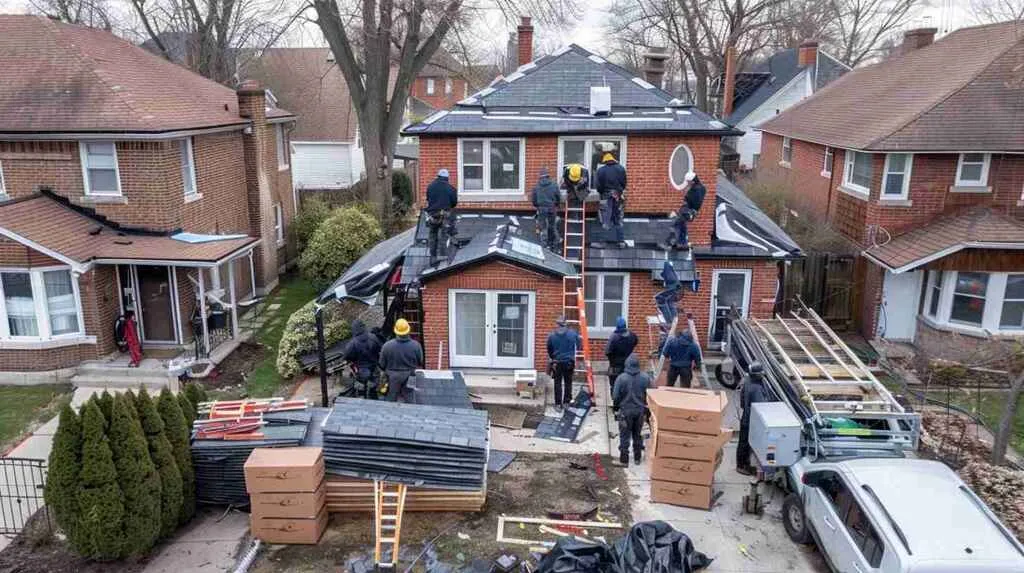
Roof Shingle Scraper Queens NY – Tools That Make Tearoff Clean | Call Today
Unexpectedly, the biggest difference between a disaster roof tear-off and a clean, fast one in Queens is usually a $75 roof shingle scraper, not a $20,000 dumpster truck. I’m Miguel Santos, and after 19 years of pulling shingles off Queens roofs in every neighborhood from Flushing to Woodhaven, I’ve learned that the tool in your hand decides whether you finish by 4 p.m. or 10 p.m.-and whether your neighbor’s driveway stays clean or looks like a nail minefield.
Why the Right Roof Shingle Scraper Matters on Queens Tear-Offs
On a narrow Maspeth driveway where you can barely swing a cat, the scraper you choose decides whether you finish by 4 p.m. or 10 p.m. I’m not gonna lie-good roof shingle scrapers are non-negotiable on Queens roofs, and I refuse to run a tear-off with just flat bars because that’s like trying to run a restaurant with one dull knife. Think of it this way: a scraper is to shingles what a spatula is to eggs stuck in a hot pan. You can hack at them with a fork and make a disaster, or you can slide the right tool under and lift them clean. Around here, where you’ve got shared driveways, tight fences, and neighbors three feet away, the scraper is what keeps the job from turning into a neighborhood dispute.
One August afternoon in Woodhaven, it was pushing 95 degrees and the homeowner kept worrying about her roses more than her roof. We were doing a full tear-off, two layers of old three-tabs, and if we’d used the wrong shingle scrapers we would’ve showered that yard with nails and crumbly asphalt. I remember pausing, sweat running into my eyes, to show her how the nail claws under the scraper blade lifted shingles clean so we could drop debris straight into the chute instead of all over her flowerbed. That’s exactly what a good roof shingle scraper does-the teeth grab under the shingle and the claw arm catches loose nails before they rain down. It’s like lifting stuck eggs off a pan: angle it right, and everything comes up together. Miss that angle and you’re scraping bits off the counter for an hour. She still sends me pictures of those roses every spring.
Quick Facts: Shingle Tear-Off with Proper Scrapers in Queens, NY
| Myth | Fact |
|---|---|
| “A flat bar is all you need to tear off shingles.” | Flat bars are like butter knives-fine for details, painfully slow for a full roof. Purpose-built roof shingle scrapers are designed to lift shingles and nails in wide passes. |
| “Scrapers just make a bigger mess and more dust.” | The right scraper teeth and angle pop shingles off in big sheets, which actually cuts dust and loose crumbs compared to random prying. |
| “Any cheap scraper from the big-box store will work the same.” | Professional-grade scrapers have heavier steel, better welds, and tuned tooth spacing that survive Queens roofs and speed the job up safely. |
| “A neat tear-off isn’t possible on tight Queens lots.” | With the right scrapers, staging, and chutes, we routinely keep nails and debris controlled even on rowhouses with barely a yard to spare. |
Types of Roof Shingle Scrapers We Use Around Queens
I’ll tell you straight: if your crew is still using only flat bars for tear-off, you’re wasting time, money, and your lower back. When I’m loading the truck in the morning, I bring at least three different styles of roof shingle scraper because Queens housing stock is all over the map-you’ve got older two-stories in Flushing with patched-over patchwork, newer architectural shingles in Bayside, and rowhouse runs in Jackson Heights where the last roofer clearly had no plan. My main categories are lightweight short-tooth scrapers (like flexible spatulas for delicate pancakes), heavier serrated models (think of a bread knife for tough crusts), and long-handle versions with deep claws (the equivalent of a long grill scraper for reaching the back of the griddle). Each one has a job, and I pick them the same way a line cook grabs utensils: by what’s on the plate in front of me.
There was this miserable November morning in Flushing where we started at 6:30 a.m. under a steady cold drizzle, thinking we’d be done by dark. The previous roofer had overlapped shingles in such a weird pattern that my guys were getting bogged down, prying pieces up one by one with flat bars. I stopped the job, went back to the truck, and pulled out a heavier serrated shingle scraper I usually reserve for commercial jobs-once we switched, you could hear the change: instead of constant pinging and cursing, it was this steady rip-rip as full sections came up clean with the nails. The serrations grabbed brittle shingle edges like a bread knife bites through hard crust, and we finished an hour before sunset and beat the heavier rain. Different scraper teeth work just like different knife edges-smooth for gentle lifts, serrated for stubborn layers, and sharp points for digging under tough overlap.
Here’s an insider tip: I always match the scraper style to the roof conditions before the first shingle comes up-if it’s a single layer of newer architectural shingles, I’ll start light and fast; if it’s three layers of old three-tabs with tar patches, I’m pulling the heavy artillery right away. It’s like choosing a gentle pan scraper for nonstick versus a heavy-duty grill scraper for burnt-on crud. On older Queens roofs, especially in neighborhoods like Astoria or Elmhurst where homes got patched repeatedly over decades, the wrong scraper can gouge the deck or leave nails half-buried in the plywood. The right one glides under, lifts the mess, and leaves a clean surface ready for felt and new shingles.
| Scraper Type | Kitchen Analogy | Best For | Typical Use in Queens |
|---|---|---|---|
| Lightweight Short-Tooth Scraper | Flexible spatula for delicate pancakes | Eaves and edges over walkways and landscaping, single-layer shingles | Controlling debris above driveways and gardens in Maspeth, Woodhaven, Bayside |
| Heavy Serrated Shingle Scraper | Serrated bread knife for tough crusts | Multiple layers, cold or brittle shingles, odd overlap patterns | Tough tear-offs on older homes in Flushing and Elmhurst with past patch jobs |
| Long-Handle Deep-Claw Scraper | Long grill scraper for the back of the griddle | Higher courses on larger roofs, reaching over obstacles, rowhouse runs | Moving fast across broader pitches in Middle Village or detached homes in Douglaston |
| Flat Bar & Detail Scraper | Paring knife for corners and tight spots | Chimney flashing, valleys, and around skylights or vent pipes | Cleaning up nail lines, stubborn tabs, and detail work on tight Jackson Heights roofs |
DIY vs. Pro Use of Roof Shingle Scrapers
Pros of DIY Shingle Scraper Use
- ✓ Save on labor cost if you have the time and stamina.
- ✓ Learn exactly what’s under your shingles and where past leaks started.
- ✓ Control the schedule if you’re working on a small outbuilding or porch roof.
Cons of DIY Shingle Scraper Use
- ✗ High risk of damaging plywood deck by prying wrong, especially on older Queens roofs.
- ✗ Hard to control nails and debris from falling into neighbors’ yards, driveways, or sidewalks.
- ✗ Slower tear-off increases the chance of weather catching you mid-project, especially in shoulder seasons.
How We Keep Your Queens Tear-Off Clean and Under Control
The funny part is, most of the mess people blame on “roofing work” is really just bad debris control because the scrapers aren’t doing half the job they could. When I stage a Queens tear-off, I bring tarps, chutes, magnetic sweeps, and four different roof shingle scrapers-it’s like setting up stations in a busy kitchen where every line cook knows their job and their tools. The one that really taught me respect for the right scraper was a co-op building in Astoria, third-floor walk-up, no elevator, in the middle of a January cold snap. The board president wanted everything “dust-free” because of tenants’ allergies, which sounded insane on a roof tear-off. I showed him how we staged four different styles of roof shingle scraper-lightweight with short teeth near the eaves, longer handles with deeper claws higher up-and how that let us keep material coming off in big, controlled chunks instead of pulverized bits. By the end, he’s up there with me, holding a scraper like a chef’s spatula and joking that he finally understood why I kept talking about “flipping pancakes” off his roof. That’s the secret: scrapers lift debris in sheets, chutes catch it, and we work high to low so gravity helps instead of fights us.
Here’s an insider tip I give every crew member: always plan scraper direction and drop zones before the first shingle comes up-I start where I can control the “landing zone” like a chef clears the counter before scraping a cutting board. On tight Queens lots, especially third-floor walk-ups or homes with small courtyards in Jackson Heights, you can’t afford random prying that sends nails flying into neighbors’ air conditioners or parked cars. I switch scraper types mid-roof the same way you’d swap utensils mid-recipe: if I hit a soft deck or patchy felt, I trade the heavy serrated scraper for something gentler; if we reach a stubborn ridge cap, I grab the detail tool. It’s all about reading the roof in front of you and adjusting your gear without stopping the flow.
A messy tear-off can add 45 minutes at the end of the day just for cleanup sweeps and neighbor apologies. If a contractor can’t show you their scrapers and debris plan on day one, you should think twice.
Our Roof Shingle Scraper-Based Tear-Off Process in Queens
- Site Prep & Scraper Selection: We walk the property, mark delicate areas (gardens, driveways, AC units), and load the truck with scrapers matched to your roof type and layer count.
- Stage Drop Zones & Protection: Tarps go down, chutes get anchored, and we map scraper paths from ridge to eave so debris flows into controlled zones, not your neighbor’s yard.
- High-to-Low Scraping Runs: Start at the ridge with long-handle scrapers, working down in sections-shingles lift in sheets, nails stay caught in the claws, and material drops straight into chutes.
- Detail Work & Deck Inspection: Switch to lighter scrapers around valleys, chimneys, and pipes; inspect plywood for soft spots or damage as we clear each section.
- Final Sweep & Magnetic Pass: Once all shingles are off, we do a full magnetic nail sweep of the ground, driveway, and walkways-then a visual check with the homeowner before we leave.
When to Call Shingle Masters for Shingle Tear-Off in Queens, NY
Call Today – Urgent
- Active leak with visible ceiling stains during or right after rain.
- Shingles curling, cracking, and shedding granules heavily into gutters.
- Soft or spongy spots underfoot on the roof surface.
- Storm damage where whole shingle strips are missing and nails are exposed.
Can Schedule Ahead
- Minor granule loss but shingles still lying flat and sealed.
- Isolated shingle tabs missing on an otherwise solid roof.
- Planning ahead for a full replacement next season and wanting a tear-off plan now.
- Replacing gutters or siding and wanting to coordinate roof tear-off later.
Costs and Planning for a Clean Shingle Tear-Off in Queens
When a homeowner in Queens asks me, “Why do you need so many different roof shingle scrapers?” I always answer with another question: “How many knives do you have in your kitchen drawer?” The scraper itself might only cost around $75, but bringing a full set of the right tools saves hours of labor, avoids damage claims from flying nails, and protects the landscaping and neighboring properties that matter to you. Think of it like spending a little more on the right kitchen knife so you don’t waste ingredients and time hacking at a steak with a dull blade. Queens properties are tight-shared driveways, close fences, flowerbeds inches from the foundation-and the efficiency and control you get from professional-grade roof shingle scrapers pays for itself in speed, safety, and cleanup every single time.
| Scenario | Approx. Tear-Off Cost Range | Scraper Impact |
|---|---|---|
| Small one-story rowhouse, 1 layer of shingles, easy access | $1,500 – $2,200 | Faster completion, less chance of debris in neighboring yards. |
| Small one-story rowhouse, 2 layers of shingles, tight shared driveway | $1,900 – $2,800 | Controls nail and asphalt drop zone in tight spaces, protecting cars and fences. |
| Typical two-story detached home, 1-2 layers, standard access | $2,400 – $3,400 | Reduces labor time by a half-day or more compared to hand prying. |
| Larger two-story home or semi-attached, 2-3 layers, more complex rooflines | $3,000 – $4,500 | Helps lift layered shingles cleanly without gouging deck, protecting your investment. |
| Three-story walk-up or co-op building, 2+ layers, limited staging area | $4,500 – $7,000 | Keeps material coming off in big, manageable sheets to control dust around residents. |
Before You Call: What to Check About Your Roof Shingle Scraper Tear-Off
-
1
Walk around your home and note any flowerbeds, patios, or vehicles close to the roof edges. -
2
Count how many stories your building has and whether there’s roof access from a deck or interior hatch. -
3
Look in the attic (if safe) for any signs of water stains or damp insulation. -
4
Check if your shingles appear to be single layer or double layer at the eaves. -
5
Snap a few photos from the street and backyard showing roof edges and neighboring properties. -
6
Make a short list of neighbors you may want us to coordinate with about debris and parking.
Straight Answers About Roof Shingle Scrapers and Tear-Offs in Queens
Think of an old double-layer shingle roof like a burnt lasagna stuck to the pan-there’s a gentle way and a brutal way to get it off, and the scraper is the utensil that decides which one you use. Over 19 years, I’ve learned that skeptical Queens homeowners are actually the smartest customers because they ask real questions instead of just nodding and hoping for the best. I’m happy to explain scrapers on the tailgate like showing utensils on a kitchen counter, and here are the questions I hear most often.
▸Do roof shingle scrapers damage the wood deck under my shingles?
▸Can you really keep my driveway, roses, and neighbor’s walkway clean during tear-off?
▸How loud is a shingle tear-off with scrapers?
▸Is it worth hiring a pro just for the tear-off if I want to install the new shingles myself?
▸What happens if it starts raining in the middle of tear-off?
▸How far in advance should I schedule a tear-off in Queens?
Why Queens Homeowners Trust Shingle Masters
If you’re a Queens homeowner who wants a fast, clean tear-off and you’re tired of contractors who show up with one dull flat bar and a prayer, call Shingle Masters and I’ll walk you through the exact roof shingle scrapers we’ll use on your home. We’ll schedule a visit, take a look at your roof and property layout, and give you a clear plan for tear-off that protects your landscaping and your neighbors’ peace of mind-because after 19 years, I know the scraper makes all the difference.