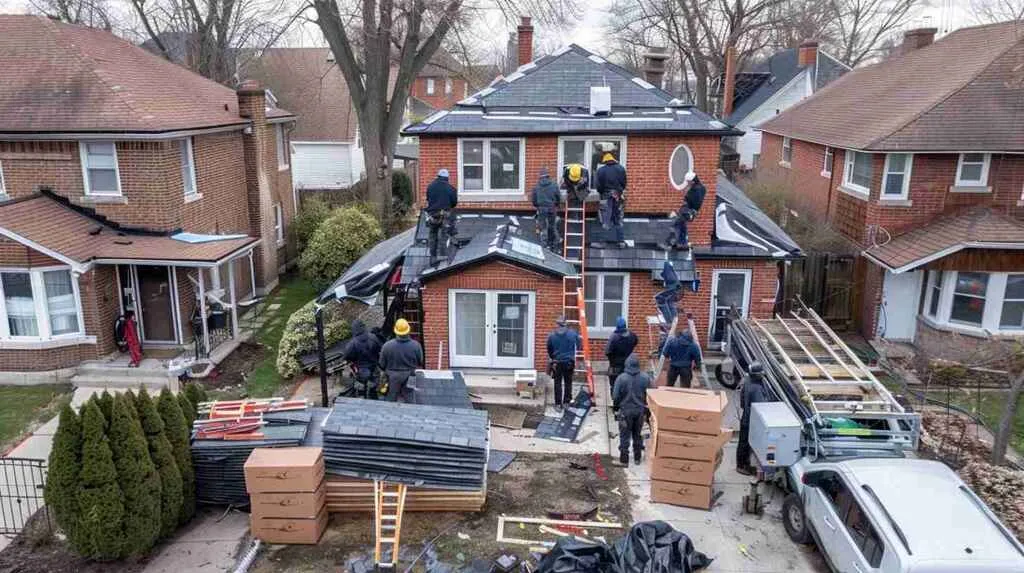
Oddly, most roof leaks blamed on “old shingles” in Queens actually begin along the ridge line, where homeowners rarely look and many installers cut corners. That’s the place Luis Ortega, a 17-year foreman based in Queens, checks first – he says one glance at the ridge tells him whether the last crew cared or just clocked out.
Oddly, Your Shingle Roof Ridge Is Where Most Queens Leaks Begin
On more Queens roofs than I can count, the ridge is the first place that tells me if the last crew cared or just clocked out. Think of your ridge like the zipper on a winter coat: it doesn’t matter how good the fabric is if the zipper fails in the middle of a blizzard. One July afternoon in Flushing, around 3 p.m., I was standing on a two-family house where the owner swore the leak was “somewhere near the bathroom.” The roof looked decent at first glance, but the ridge cap shingles were barely tacked down, and the ridge vent was cut too wide. When a gust of wind popped one cap while I was up there, I watched daylight shoot straight into his attic like a spotlight on a stage; that’s when I realized the entire “leak mystery” was just a badly done ridge from a rushed job two years earlier.
Here’s my honest take: if your ridge line is sloppy, I don’t trust the rest of your roof for a second. The ridge is vulnerable because it’s basically a cut in your roof deck, exposed to the strongest wind pressure, and it depends completely on precise nailing and clean overlap. Rushed crews treat it like an afterthought, using leftover shingles or skipping proper underlayment, and that’s how you end up with water running down hallway walls two winters later while everyone blames “old shingles” that are actually fine.
Myth vs. Fact: Shingle Roof Ridge in Queens
| Myth | Fact |
|---|---|
| “If the shingles look flat and even, the roof is fine.” | The ridge can be loose, under-nailed, or cut too wide even when the field shingles look perfect. |
| “Leaks near the bathroom must be from plumbing or skylights.” | In Queens multi-family homes, many of those ‘bathroom’ leaks start at a badly capped ridge above. |
| “A new roof automatically means the ridge was done right.” | Rushed crews often treat the ridge as an afterthought, using leftover shingles or skipping proper vent details. |
| “I’d see big gaps if the ridge was a problem.” | Plenty of failing ridges only show hairline openings that you won’t spot from the sidewalk, but wind-driven rain will. |
How the Ridge Lets Your Roof ‘Breathe’ in Queens Weather
Ventilation, Ice, and That Bayside Hallway Leak
In January, during that wet snow we got that turned to sleet overnight, I got a call from an older couple in Bayside at 6:30 a.m. The husband thought their gutters were overflowing, but when I climbed up, I saw ice dams forming right along the ridge line because someone had covered the ridge vent completely with regular shingles. The attic had no way to breathe, warm air was melting snow from inside, and it was refreezing right at the ridge – water was backing up under the caps and dripping down into their hallway light fixture. That’s Queens winter for you: wet snow turns to sleet, then freeze-thaw cycles hammer your ridge for weeks, and any blocked vent turns into an ice dam factory.
Think of your ridge vent like the throat of the roof: it’s supposed to let hot, moist air escape from the attic peak. When it’s working right, cool intake air flows up from soffit vents and exhausts at the ridge, keeping your attic dry and your shingles from cooking in summer. When someone blocks it or cuts the vent slot too wide, you either trap humidity (leading to mold and ice dams) or let driven rain blow straight into your attic. Here’s an insider tip: on a cold Queens day, go into your attic with a flashlight and feel for warm, stuffy air trapped near the ridge – if it’s noticeably warmer up there than near the eaves, your ridge venting isn’t doing its job.
Proper Ridge Ventilation Check: 5 Steps
- 1Inspect the ridge line from outside for proper cap shingles, straight alignment, and no visible buckling or sagging.
- 2Check that the ridge vent product (if present) runs consistently along the main ridge without random gaps or extra-lapped sections.
- 3From the attic, look up at the ridge for daylight showing only through the vent slot, not around nails or broken wood.
- 4Feel for temperature differences: hot, stuffy air trapped at the peak in winter usually means poor venting.
- 5Confirm soffit vents or other intake vents are open so the ridge can actually exhaust air instead of just looking good from the street.
⚠️ Warning: Ridge Vent Mistakes That Lead to Bigger Problems
- Covering a ridge vent with regular shingles traps moisture and heat, leading to ice dams and attic mold.
- Cutting the ridge slot too wide weakens the roof deck and lets driven rain and snow blow straight into your attic.
- Using non-vented ridge caps where a vented system is needed can void shingle manufacturer warranties.
- Mixing different vent types (box vents plus a ridge vent) without a plan can short-circuit airflow and reduce overall ventilation.
When a ‘Fine’ Ridge Is Secretly Rotting Your Attic
One fall evening in Astoria, close to sunset, I checked a three-story rental where tenants complained of a “moldy smell” in the upstairs bedrooms after every big rain. The field shingles were newer, but the ridge was original from the ’90s, nailed through cracked wood with no proper underlayment beneath it. I slid one cap shingle aside and found black fungus and soft wood running along the entire ridge line like a rotten spine; that building owner ended up paying twice – once for the ridge fix, and once to remediate the attic he’d ignored for years. When your ridge spine is weak, the whole roof body slumps.
Homeowners notice this stuff from inside before they see it outside: musty odor after rain, ceiling staining that runs along the center of the house instead of near exterior walls, uneven temperatures upstairs where one bedroom feels stuffy and another drafty. And honestly, you don’t need to climb the roof to check – grab binoculars from the sidewalk and look for uneven cap alignment, sagging sections, or a subtle dip in the ridge line. If the ridge doesn’t look crisp and straight, that’s your early warning before the mold and stains start.
Do You Need a Ridge Repair, Full Replacement, or Just an Inspection?
Start: Do you see or smell any signs of leaks or mold upstairs after heavy rain?
If YES → Do stains or smells appear mostly near the center of the house, not just at exterior walls?
- If YES → Schedule a ridge-focused inspection first; the problem may be localized to the ridge.
- If NO → Have a roofer check flashing, walls, and penetrations as well as the ridge.
If NO (no leaks/smells) → Is your shingle roof older than 15 years?
- If YES → Book a preventive inspection; the ridge caps and decking may be aging even if they look okay.
- If NO → Do you know if your roof has a working ridge vent?
- If YES → Plan a quick visual check every 1-2 years, especially after storms.
- If NO or NOT SURE → Ask a roofer to confirm; improper venting can shorten your roof’s life.
Queens Ridge Repair & Replacement Costs: What to Expect
$350 can stop a ridge problem before it becomes a $3,000 ceiling repair. Catching issues early matters, and on many jobs I sketch the ridges on cardboard to show homeowners exactly where their money is going so they aren’t just guessing.
Costs climb if you’ve got a multi-family building, steep slopes, or multiple ridges and dormers, because every ridge line needs its own careful attention. The blunt truth is, in Queens, the wind doesn’t attack your shingles evenly – it goes hunting for your ridge caps first, so don’t cheap out on the one place that holds everything together.
| Scenario | Roof Type in Queens | Included Work | Estimated Price Range |
|---|---|---|---|
| Basic ridge tune-up | Single-family, simple straight ridge | Inspect ridge, re-nail loose caps, seal minor openings, basic vent check | $350 – $650 |
| Ridge cap replacement only | One- or two-family, moderate pitch | Remove old caps, install new ridge caps, replace a short vent section if needed | $750 – $1,400 |
| Ridge repair with deck fixes | Older Queens home with soft or cracked ridge boards | Open ridge, repair/replace damaged wood, new underlayment, new caps or vent | $1,500 – $3,200 |
| Complex multi-ridge work | Multi-family, dormers and intersecting ridges | Full assessment, multiple ridge lines, vent redesign, caps on all ridges | $2,800 – $5,500 |
| Full roof replacement with upgraded ridge system | Typical Queens two-family house | Strip roof, new underlayment, shingles, ridge vent, and matching high-profile caps | $8,500 – $16,000+ |
*Ranges vary by roof size, pitch, accessibility, and material choices. These are rough estimates, not formal quotes.
Call Shingle Masters ASAP
- Fresh ceiling stains or active dripping after last night’s rain or snow, especially near the center of the house.
- Visible ridge caps missing, lifted, or flapping after a Queens windstorm.
- Persistent musty or moldy smell in top-floor rooms that returns after heavy weather.
- Water stains around attic light fixtures, junction boxes, or along the ridge boards.
Can Schedule Within a Few Weeks
- Roof is 10-15 years old with no visible leaks, but you’ve never had the ridge inspected.
- You’re planning to sell or refinance and want the ridge documented as sound.
- Uneven or wavy-looking ridge line that hasn’t yet caused interior damage.
- Curiosity about whether you have proper ridge ventilation and if it matches your attic setup.
Simple Checks Before You Call a Queens Ridge Specialist
When I climb down and talk to a homeowner, I usually start with this question: “Do you know where your roof actually breathes?” Most don’t, and that’s fine – but doing a few simple checks before you call makes the conversation more productive and helps you explain what you’re seeing. Just don’t climb a steep Queens roof yourself; think of the ridge like the collar on a shirt – when the collar’s wonky, the whole shirt feels wrong, and you’ll notice it from the ground.
Quick Ridge Checklist for Queens Homeowners
- ✓ Note any ceiling stains or bubbling paint on the top floor, especially away from exterior walls.
- ✓ Step outside and look at the roof ridge from the sidewalk or a safe distance: are the caps straight and evenly spaced?
- ✓ After a windy night, listen upstairs during the next gusty spell for any rattling or flapping noises near the peak.
- ✓ In the attic (if safely accessible), look along the ridge for dark streaks, damp spots, or visible daylight where it shouldn’t be.
- ✓ Check how old your roof is and whether you’ve ever had a roofer specifically mention the ridge vent or caps.
- ✓ Take a few photos from the ground of the ridge area to show Shingle Masters when you call.
Why Queens Homeowners Choose Shingle Masters for Ridge Work
- Licensed and insured roofing contractor serving Queens, NY
- 17+ years hands-on shingle and ridge experience
- Same-week ridge inspections available in most Queens neighborhoods
- Familiar with local building codes and multi-family roof setups
- Photo and written documentation of ridge conditions provided on request
I still remember a Ridgewood job where the whole roof looked brand new, but one missing nail at the ridge turned into four rooms of water damage. Catching ridge issues early is cheaper than repairing ceilings and mold, and it keeps your attic dry through every freeze-thaw cycle and thunderstorm Queens throws at you. Call Shingle Masters for a free shingle roof ridge inspection and a straight explanation of what your roof really needs – no guessing, no cardboard sketches unless they actually help, just honest answers from someone who’s seen it all.