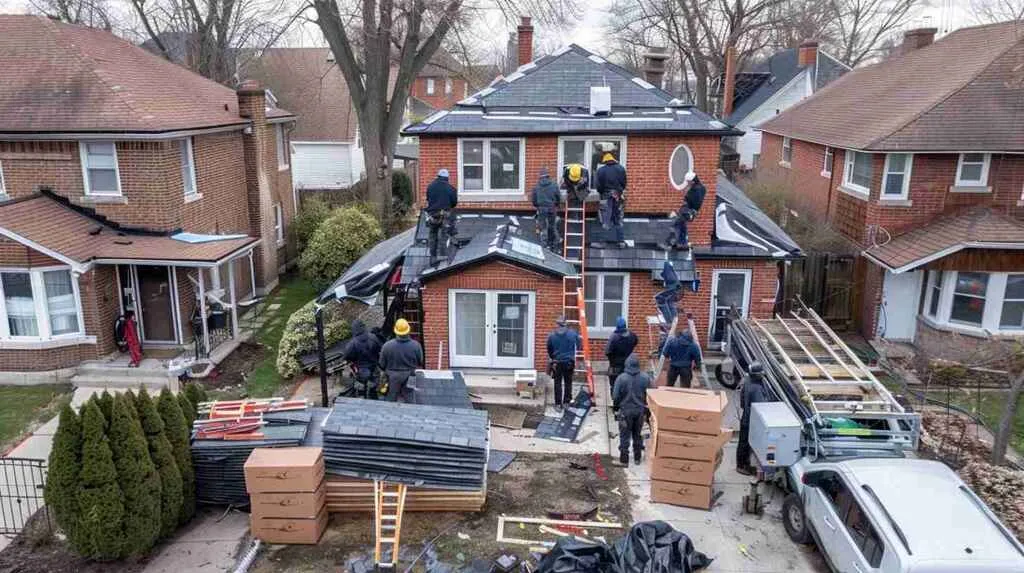
Roof Repair Without Replacing Shingles Queens NY – Is It Possible?
Underneath most Queens roof leaks, you’ll find a fixable problem that won’t cost you a new shingle bundle-but only sometimes. Across 19 years working these roofs, I’ve seen plenty of cases where a focused $450-$850 repair solves everything without touching your shingle pattern, and just as many where a homeowner wasted money on patches when they really needed a tear-off.
Here’s my honest opinion, even if it costs me a full replacement job today: when the water story is clear-vent collar cracked, chimney flashing bent, valley liner torn-and the shingles themselves aren’t brittle or curling, I’ll save your roof without ripping every course off. But if your deck is soft, or the shingles are crumbling in my hands, a “repair” is just throwing good money after bad, and I’ll tell you that straight.
Can You Really Repair a Roof Without Replacing Shingles in Queens?
Underneath every leak is a water story: where it starts, the path it takes across your roof, and where it finally shows up on your ceiling. On a rowhouse roof off 30th Avenue last winter, I showed a homeowner this simple truth: his leak wasn’t a missing-shingle problem at all. He’d been staring at one bald spot for weeks, convinced that was his enemy, but the real villain was a cracked vent collar and twenty-year-old sealant that had turned into dust. I spent the morning rebuilding flashing around the vent pipe, lifting only the shingles I had to, and re-sealing under the existing courses-not a single bundle replaced, and his leak disappeared. That’s when I really started pushing people to think of shingles as skin, not the whole body, and to focus on the skeleton and guts underneath.
One February morning around 7:15 a.m., I was on a two-family in Maspeth with my coffee freezing to the lid while the owner swore the “one missing shingle” was his only problem. I traced the stain line in his second-floor hallway, climbed up, and found the real issue: a hairline crack in an old metal vent collar and brittle sealant everywhere. I didn’t swap a single shingle-instead I rebuilt the flashing stack, re-sealed under the existing courses, and his “mysterious” leak disappeared. That whole morning taught me to zoom out first-look at the entire composition of slope, wind direction, and building style-then zoom back in to the exact detail that’s letting water through, the same way I used to frame a photograph by checking the broad light first, then the focus point.
Queens housing stock makes this approach work more often than you’d think. Most of the neighborhoods I work-Astoria rowhouses, Bayside capes, Forest Hills two-families-have chimneys, shared walls, older trim details, and roof planes that meet in valleys. Those features create specific water paths, and when you understand the story, you can often interrupt it with surgical flashing work, valley liner patches, or vent replacements that leave 90% of your shingles untouched. The trick is knowing when the shingles themselves are still doing their job and when they’re past救saving.
Typical Queens Roof Repair Costs: Reusing Shingles vs. Replacement Territory
How I Decide If Your Queens Roof Is a Candidate for No-Shingle Replacement Repair
One August evening, right before a storm, I got a panicked call from a younger couple in Astoria who’d tried a DIY “no-shingle” roof repair they saw on YouTube. They smeared black mastic all over a valley where two roof planes met, but never lifted the shingles or checked the underlayment. When I got there, the goo was soft in the heat, gutters were clogged with it, and water was already tunneling under the mess. I had to carefully slice and peel back sections, rebuild the valley liner, and then re-seat their existing shingles properly-90% rescue, 10% replacement-and I used that job as a story for every customer who thinks surface goop fixes structural problems. Astoria’s older valleys, especially the open metal ones from the ’70s and ’80s, cook in summer heat, and any thick coating just traps moisture and cooks the underlayment faster. The lesson: a true “no-shingle” repair still means opening things up to check what’s underneath, not just covering the surface.
When I sit at a kitchen table in Queens and someone asks, “Can you fix this without replacing shingles?”, I ask them back: where does the water story start, and where does it end? I zoom out first-roof age, overall shingle condition, slope steepness, and whether I’m seeing one wet spot or six-then I zoom back in to the exact entry point. My green-light criteria for a focused, no-bundle repair are pretty simple: the leak is tied to a specific feature (chimney, vent, skylight, valley), not random blotches all over; the shingles themselves are lying flat with granules intact and minimal cracking; the attic or ceiling damage is localized, not spreading across multiple rooms; and the roof is under 20 years old with decking that feels solid when I walk it. If any of those fail, I’m upfront that we’re entering replacement territory, or at minimum a hybrid repair where some shingle sections come off.
Should You Try a Focused Repair Without Broad Shingle Replacement?
START: Is your Queens roof a good candidate for repair without major shingle replacement?
Question 1: Is the leak coming from a specific feature (chimney, vent, skylight, valley) rather than random spots all over?
→ YES: Continue to Question 2
→ NO: Likely broader roof issue-inspection needed, repair-only may be a waste.
Question 2: Are most shingles lying flat, with granules intact and no widespread cracking or curling?
→ YES: Continue to Question 3
→ NO: Shingles at end of life-repairs will be band-aids; consider replacement.
Question 3: Does the attic/ceiling show damage in a localized area, not across multiple rooms?
→ YES: Continue to Question 4
→ NO: Water story suggests bigger problem-expect some shingle and possibly deck replacement.
Question 4: Is roof under 20 years old (as far as you know) and decking feels solid when walked?
→ YES: Strong candidate for targeted repair: we can often fix the water path and reuse most shingles.
→ NO: Borderline case-a pro needs to check deck and underlayment before promising a no-shingle solution.
What the Actual Repair Process Looks Like When We Reuse Your Shingles
A couple years back, on a windy October afternoon in Bayside, I misjudged a “simple patch” estimate on an older cape owned by an 82-year-old retired librarian. I thought we’d just re-seal around a chimney and be done in an hour. Once I opened it up, I found rotted decking down one side, but perfectly intact shingles that still had life left. Instead of upselling a full shingle tear-off, I cut in new plywood, installed fresh flashing, and floated the existing shingles back into place, supplementing only the ones that cracked during the lift. It wasn’t my most profitable day, but it’s the job that convinced me to specialize in surgical repairs, not automatic replacements. Here’s the insider reality: when you lift and re-seat older shingles in Queens weather-especially brittle ones on a cool October morning-you need patience, a flat bar with a gentle touch, and an understanding that maybe two out of ten will snap no matter how careful you are. That’s why I always budget a few replacement shingles even on a “no-shingle” job, and I explain upfront that we’re preserving the original roof character while fixing the structural issue underneath.
Step-by-Step: How a Targeted Queens Roof Repair Works Without Replacing Whole Shingle Runs
-
1
Walk-through & water-story mapping
Marcus meets you on-site, listens to where you see stains, then traces the likely water path outside, using slope and wind direction.
-
2
Zoom-out roof inspection
He checks overall shingle condition, age signs, soft spots in decking, and key details like chimneys, vents, and valleys.
-
3
Zoom-in leak opening
Carefully lifts only the shingles needed around the suspect area, preserving nails where possible and cutting sealant lines cleanly.
-
4
Decking & underlayment repair
Replaces any rotten plywood, installs fresh underlayment or valley liners, and corrects bad flashing or nail placement.
-
5
Reusing and supplementing shingles
Re-seats the original shingles in their old pattern, adds matching replacements only where shingles crack or are missing.
-
6
Final water-test & photo walkthrough
Checks the new water story path, takes after-photos, and shows you exactly what changed and why it should hold in Queens weather.
DIY Shortcuts to Avoid and Smart Prep Before You Call in Queens, NY
$50 of the wrong goop can easily cause $1,500 of damage on a Queens roof. I still remember one Tuesday in July, standing in brutal 92-degree heat over a “patched” skylight where the homeowner had globbed thick roof cement across every seam, trapping water underneath and forcing it sideways into the rafters. By the time I peeled back that mess, three roof joists had soft spots and the skylight frame was corroded. The Astoria valley disaster I mentioned earlier? Same mistake-people think if they cover everything in black mastic and caulk, they’re “sealing” the leak, but they’re really just creating a dam that redirects water into places it was never meant to go. Add clogged gutters to that mix, and you’ve got a roof that’s drowning itself from the inside out. Don’t walk on steep roofs in summer heat when shingles are soft, don’t seal over cracked metal without opening it up, and don’t assume YouTube knows your specific roof better than someone who’s been on a thousand Queens roofs.
Here’s the thing: you can’t rewrite a water story if you don’t know where it begins. Before you call, document exactly where you see stains or drips inside-room name, ceiling or wall, how big-and note when the leak happens: light rain, wind-driven storms, snowmelt, or all of the above. Take clear photos of interior damage and any visible exterior issues you can safely see from the ground, like missing shingles or rusted flashing. Check if your gutters flow freely during a storm, because clogged gutters make every roof leak worse. Dig up any info on roof age or past repairs-old invoices, contractor names, anything-and make a mental list of features near the leak: skylights, chimneys, vents, satellite dishes. When I show up, that prep lets me zoom in on the water story fast, and I’ll give you a straight answer about whether a targeted repair can fix it or whether we’re looking at broader work.
⚠️
Biggest Dangers of “No-Shingle” DIY Fixes on Queens Roofs
- Thick roof cement over valleys or around chimneys can trap water and force it under shingles.
- Sealing over cracked metal flashing without checking the decking just hides rot until it spreads.
- Walking hot, brittle shingles in summer can shatter the surface and turn one leak into five.
- Coating entire areas in black goop makes proper future repair slower and more expensive because we have to peel it all off.
Quick Checklist for Queens Homeowners Before Calling Shingle Masters
-
✓
Note exactly where you see stains or drips inside (room, ceiling, wall). -
✓
Write down when the leak happens: light rain, wind-driven storms, melting snow, or all of the above. -
✓
Take clear photos of stains and any visible exterior roof issues from the ground (missing shingles, rusted flashing). -
✓
Check if your gutters and downspouts are flowing freely during rain from the ground level. -
✓
Find any info you have on roof age or past repairs (invoices, contractor names). -
✓
Make a list of any skylights, chimneys, or roof additions (satellite dishes, vents) near the leak area.
Straight Answers About Roof Repair Without Replacing Shingles in Queens
Think of your shingles like the outer shell of a camera; the lens and sensor underneath are what really make the picture work. When people ask me if a no-shingle repair will actually last, I tell them the truth: if I’ve fixed the deck, underlayment, and flashing-the real machinery that controls the water story-then yeah, your repair can easily last another decade or close to the remaining life of the shingles. But if those shingles are already brittle and curling, no amount of flashing magic will make them stop failing. Here’s the honest, mildly sarcastic Q&A that covers what Queens homeowners actually want to know.
▸
If you don’t replace shingles, will my repair actually last?
When the deck, underlayment, and flashing are corrected, a repair can last many years-often close to the remaining life of the shingles themselves. If I rebuild a vent collar or chimney flashing and the shingles around it are still pliable with good granule coverage, that fix will hold through Queens winters and summer storms just fine. The catch is that if your shingles are already 18 years old and starting to curl, the repair will outlast the shingles by maybe a year or two, not a decade. I’ll always tell you upfront what the realistic timeline looks like based on shingle condition.
▸
Can you match my old shingles if a few have to be replaced?
I get as close as possible with current brands and colors, but older roofs-especially anything over ten years-may never be a perfect cosmetic match because manufacturers discontinue lines and colors shift with weathering. That said, small patches are rarely noticeable from the street, and if your roof is visible up close or from a neighbor’s window, I’ll show you samples beforehand so you’re not surprised. Function beats perfect color match every time, and honestly, most people forget about the slight shade difference within a month.
▸
Is it cheaper to keep patching instead of replacing in Queens?
Smart surgical patches on an otherwise healthy roof are absolutely cost-effective-one $750 valley repair can buy you five more years of a roof that would cost $9,000 to replace. But repeated band-aids on a failing roof add up fast and can end up costing more than a timed replacement would have. If I’m back at your house three times in two years fixing different spots, that’s a water story telling you the whole roof is aging out, and at that point I’ll recommend stopping the patch cycle and budgeting for a tear-off.
▸
How fast can you get to a leak in Queens?
For active leaks with real damage risk-dripping near electrical, sagging ceilings, multiple new spots-I’ll usually get there same-day or next-day if I’m in the area. For non-emergencies like a dried stain or a preventative inspection, typical scheduling is one to three days out, and weather plays a role since I’m not doing roof surgery in a downpour. I keep my schedule tight enough that I’m not making people wait a week, but loose enough that I’m not rushing through inspections and missing things.
▸
Do you work on all roof types in Queens?
My focus is asphalt shingle roofs, which covers the vast majority of single-family homes, two-families, and rowhouses across Queens. I also handle mixed-material situations-like a shingled main roof with slate trim or metal detail work near chimneys-but flat roofs are a different animal with their own repair methods and specialists. If you’ve got a full flat or rubber roof, I’ll point you to someone who lives and breathes that world instead of pretending I’m the expert.
Why Queens Homeowners Call Shingle Masters for Surgical Roof Repairs
-
✓
Licensed and insured in New York City for residential roofing. -
✓
19+ years of hands-on roof work in Queens neighborhoods from Astoria to Bayside. -
✓
Specializes in targeted leak repairs that reuse good shingles when it makes sense. -
✓
Typical initial leak assessment scheduled within 24-72 hours depending on urgency. -
✓
Clear photo documentation of issues and repairs so you see exactly what changed.
Blunt reality: if your roof deck is rotten, I don’t care how pretty your shingles look-we’re opening it up. The goal here isn’t to shuffle shingles around or slap goop over cracks; the goal is to fix the water story so it ends where it’s supposed to-in your gutters, not your living room. If a targeted repair can rewrite that ending and save you five grand, I’ll do it and sleep fine. If the whole roof is telling me it’s done, I’ll tell you that too, and we’ll talk replacement numbers without the runaround.
Call Shingle Masters for a straight-shooting inspection and a targeted repair plan-or an honest replacement quote if that’s what your Queens roof really needs. No sugarcoating, just the water story and what it’ll take to fix it right.