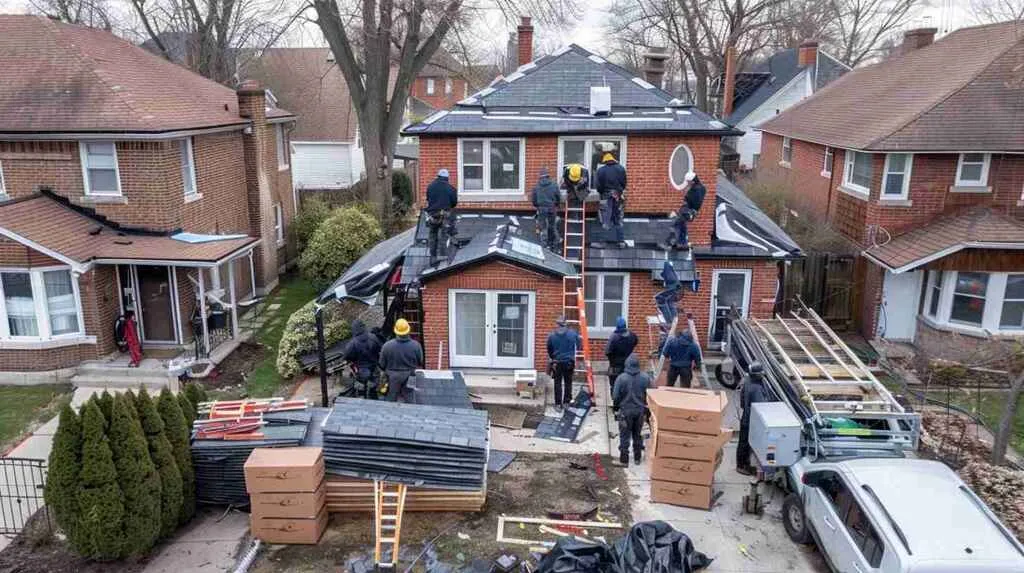
Can You Replace Shingles Yourself Queens NY – Honest Answer | Free Quotes
Honestly, the part of DIY shingle replacement that trips up almost everyone in Queens isn’t the shingle itself-it’s the hidden layers and exact nail patterns that keep wind-driven rain from running sideways into your bedroom ceiling. When a Nor’easter blows in off the East River or summer storms pound Jamaica Bay with wind-driven downpours, your roof doesn’t just shed water like you’re pouring it off a sidewalk; it depends on every fastener, every seam, and every inch of underlayment working together like a chain-link fence, and one weak link means water’s going exactly where you don’t want it.
This article is your straight answer: when you can replace a couple of shingles yourself, when you absolutely shouldn’t, and what actually happens under those shingles that makes the difference between “fixed it” and “flooded it.”
Can You Replace Shingles on Your Roof Yourself in Queens, NY?
Here’s my straight answer, the one most guys won’t say because they’re afraid to lose the sale: you can physically replace a shingle or two yourself if the damage is tiny, the roof is low-slope and easy to reach, and you truly understand how those layers stack and seal. But-and this is a big, honest “but”-most Queens roofs and most homeowners are better off treating shingle work like trying to fix your own car brakes: sure, it’s possible, but one mistake costs you way more than the original “savings,” and in Queens weather, that mistake shows up fast. Think of it like catching the wrong E train and ending up in the wrong borough-one small miss in your nail placement or underlayment handling, and water’s running sideways through your attic instead of off your eaves.
If you’ve got a single damaged tab on a walkable section, spare shingles that match, and you’re comfortable on a ladder in mild weather, a careful DIY patch might work. But the second you’re talking about steep pitches, two-story heights, multiple missing shingles after a storm, or damage near chimneys and vents, you’re not just swapping a piece of asphalt-you’re gambling on whether you understand roof systems well enough to protect thousands of dollars of interior structure, and most folks in Woodhaven, Flushing, Forest Hills, and Astoria don’t realize how high those stakes are until the ceiling’s dripping.
DIY Shingle Swap vs. Hiring Shingle Masters in Queens
DIY Shingle Swap
Upfront Cost: Materials only, but mistakes often lead to $500-$4,000 in later repairs.
Risk of Leaks: High if nail placement, flashing, or underlayment is off by even an inch.
Safety on Queens Roof Pitches: You’re on your own with ladders, slick shingles, and no harness.
Warranty / Insurance: No labor warranty, and you can void shingle manufacturer coverage.
Typical Time to Finish: Takes most homeowners a full weekend for a few shingles.
Pro Roofer (Shingle Masters)
Upfront Cost: Labor + materials, but we fix it right once and protect the interior.
Risk of Leaks: Low because we follow manufacturer patterns and local wind codes.
Safety on Queens Roof Pitches: Trained crew with safety gear, proper ladders, and roof experience.
Warranty / Insurance: Workmanship warranty plus protecting existing shingle warranties.
Typical Time to Finish: Usually 1-2 hours for a small patch, same-day on most calls.
When DIY Shingle Replacement in Queens Crosses the Line into Trouble
On a typical Saturday in Queens, when I see someone on a ladder with a bundle of shingles and no safety gear, I think back to that August afternoon in Forest Hills when it was 92° and the shingles were soft like tire rubber. The homeowner had replaced a few shingles himself, and every single nail was high-about an inch above the nail line-so when the first thunderstorm rolled through, water ran right under that whole row and into his bedroom ceiling. I ended up ripping out a 6×10 section he’d “fixed” the week before and redoing everything while the sun roasted the back of my neck. That’s when I started telling people: it’s not the shingle that’s hard, it’s where and how you fasten the thing, and in Queens, with wind gusts off the East River and sudden summer downpours that hit like they’re angry, every tiny fastening mistake turns into a leak path faster than you’d believe.
The ugly truth about “can you replace shingles on your roof yourself” is that the shingle is the easiest part of the whole system. What trips people up isn’t swinging a hammer-it’s understanding how the roof layers work together, where the nail line actually is (hint: not where it looks like it should be), how to lift cold shingles without cracking them, and when roofing cement is the right call versus proper mechanical fastening. Cutting corners on nails or underlayment is like taking the wrong subway line and ending up in the wrong borough-you don’t realize the mistake until you’re already way off course and it’s too late to just back up and fix it.
⚠️
Common DIY Shingle Mistakes That Cause Leaks in Queens Homes
- High Nailing Above the Nail Line: Nails driven too high don’t grip the shingle below, so wind lifts the whole piece and water runs under.
- Skipping or Slicing the Underlayment: Any rip, gap, or missing piece lets water hit bare wood the first time it rains hard.
- Lifting Cold or Brittle Shingles: Working in freezing weather cracks the shingle tabs, creating instant leak paths.
- Smearing Roofing Cement Everywhere: Thick blobs crack in freeze-thaw cycles and actually trap water instead of shedding it.
- Working on Steep or Multi-Story Roofs Without Fall Protection: Not just dangerous-your body position forces bad nailing angles and sloppy work.
A Quick Queens Reality Check: Should YOU Be on That Roof?
If you were standing next to me on your driveway, I’d ask you two questions before I let you near a shingle: one, are you actually comfortable up on a roof, not just “I think I can handle it” but genuinely steady and calm at height; and two, do you understand what’s under that shingle-the layers, the fastening pattern, the sealing strips, the way water moves when it gets past the surface? Because right after that surprise Nor’easter in late October 2019, I got a call in Flushing from an older couple whose grandson had tried to help them save money. He went up there at dusk, no harness, no proper ladder footing, and replaced three blown-off shingles using roofing cement like peanut butter on toast. Next morning, half-frozen, that cement cracked, wind caught the edge, and tore up an entire patch of roof-I remember standing there in a light freezing drizzle, explaining to them that the extra $300 they thought they saved just turned into a full-day repair plus interior drywall work. And here’s an insider tip nobody mentions: never do shingle work in extreme Queens temperatures-avoid blazing hot afternoons when shingles are too soft to walk on and seal wrong, and skip freezing evenings when they’re brittle as crackers and snap if you try to lift them.
After hearing all that, are you still sure you want to be the one standing on that roof?
Should You DIY or Call Shingle Masters?
Do you have only 1-3 damaged shingles on a low, walkable section?
→ NO? Call Shingle Masters
→ YES? Continue to next question ↓
Are you truly comfortable on ladders and understand roof layers (underlayment, nail line, sealing strips)?
→ NO? Call Shingle Masters
→ YES? Continue to next question ↓
Do you have matching spare shingles and is the weather dry and mild (not freezing, not blazing hot)?
→ NO? Call Shingle Masters
→ YES? Continue to next question ↓
Are there any signs of interior leaks, water stains, or damage near chimneys/vents?
→ YES (signs of damage)? Call Shingle Masters
→ NO (clean, dry)? Consider careful DIY with precautions
Bottom line: If you answered “NO” or “unsure” to any question above, or if the job feels even slightly over your head, call Shingle Masters for a free quote and honest assessment.
What Actually Happens Under Those Shingles (and Why Queens Storms Find Every Weak Spot)
Think of your roof like a layered sandwich from a good deli on Queens Boulevard-if you only swap the top slice of bread and ignore the soggy stuff in the middle, you still have a mess. Your roof isn’t just the shingles you see; it’s roof decking (the wood base everything attaches to), underlayment (the secondary water barrier under those shingles), starter course (the first row that seals the eave edge and backs up the first shingle course), field shingles (the main visible layer that sheds most of the water), and flashing (metal or flexible pieces that seal around chimneys, walls, and penetrations). When wind-driven rain comes off the East River or Jamaica Bay sneaks water uphill during a Nor’easter, it finds any gap, any lifted edge, any missing piece of underlayment, and runs sideways through your attic until it hits a ceiling joist and drips into your living room.
One Sunday morning in Astoria, I’m having coffee on my fire escape, and I see a guy two buildings over on a steep roof in gym shorts and sneakers, trying to nail down shingles after a windstorm-no underlayment, no starter strip, nothing, just bare wood and good intentions. I walked over, knocked on his door, and ended up spending half an hour explaining from his front stoop why his “YouTube method” was going to leak the first time the wind came in off the East River. He actually thanked me and booked us the next week to fix the mess before it even got finished, because I showed him on a scrap of cardboard how those nail patterns and sealing strips work: the nails have to go through the shingle you’re installing and catch the top of the shingle below it, hitting a sweet spot called the nail line, and if you’re even an inch high, wind lifts the whole thing like a sail and water runs under.
| Layer | What It Does | DIY Risk If Ignored | Queens-Specific Issue |
|---|---|---|---|
| Roof Decking | Wood base that everything else attaches to. | Nailing into rotten wood means shingles won’t hold in the next wind. | Old wood framed houses in Woodhaven, Corona, and Elmhurst often have soft spots. |
| Underlayment | Secondary water barrier under shingles. | Any rip, gap, or missing piece lets water hit bare wood. | Nor’easters push water uphill under loose shingles. |
| Starter Course | First row that seals the eave edge and backs up the first shingle course. | If you start with regular shingles instead, wind can lift the whole edge. | Strong gusts off the East River or Jamaica Bay test that first row hard. |
| Field Shingles | Main visible layer that sheds most of the water. | Wrong nailing or overdriving nails creates leak paths. | Summer downpours overwhelm roofs that don’t shed fast and clean. |
| Flashing | Metal or flexible pieces that seal around chimneys, walls, and penetrations. | Improperly tucked or sealed flashing leaks behind walls and ceilings. | Wind-driven rain finds gaps where roofs meet party walls and side additions. |
Myths vs. Facts About DIY Shingle Replacement in Queens
What a Proper Shingle Repair Looks Like (and What Shingle Masters Does for Queens Homes)
I still remember a roof in Woodhaven where a “simple” shingle swap turned into a $4,000 surprise. The homeowner had tried to replace a few wind-damaged shingles himself, but he’d used the wrong nails, skipped checking the underlayment, and didn’t notice the soft spot in the decking until I pulled back the patch and found bare wood turning gray from years of slow leaks. When a pro like us handles a shingle repair in Queens, we start with a real inspection-we check the decking for soft spots or rot, we look at how the existing shingles were laid and whether they match current wind-rating codes, we diagnose all the layers (not just the visible one), then we remove damaged material carefully without tearing the underlayment, prep the surface properly, install new shingles with the correct nail pattern and sealing method, and finish with a clean seal and inspection to make sure water’s going to shed the way it should. Calling a pro early is like paying for good brakes before you rear-end someone-it’s not glamorous, but it saves you from a much bigger, uglier bill down the road.
How Shingle Masters Handles Shingle Repairs in Queens
Inspection & Assessment
We check the roof decking for soft spots or rot, examine the underlayment condition, and look at how existing shingles were laid and whether they match current Queens wind-rating codes.
Diagnose All Layers
We don’t just look at the visible shingle-we check every layer from decking to flashing to make sure hidden damage isn’t lurking under that “small” problem.
Remove & Prep Properly
We carefully remove damaged shingles without tearing the underlayment, clean the area, and repair or replace any compromised underlayment or decking before installing new material.
Install with Correct Fastening
New shingles are installed using manufacturer-specified nail patterns, hitting the nail line precisely so each fastener grips both the new shingle and the one below it for proper wind resistance.
Final Seal & Clean-Up
We seal edges properly using appropriate materials (not globs of cement), inspect the entire repair area to confirm water will shed correctly, and clean up all debris so your property looks like we were never there.
Quick Facts: Shingle Masters Shingle Repair Service
Typical Small Repair Cost
$250-$750 for minor shingle replacement, depending on access and extent of hidden damage discovered during inspection.
Average On-Site Time
1-2 hours for a small patch repair; same-day service available on most non-emergency calls in Queens.
Service Area
All Queens neighborhoods including Astoria, Flushing, Forest Hills, Woodhaven, Jamaica, Corona, Elmhurst, and surrounding areas.
Emergency Response
Priority scheduling available for urgent leaks and storm damage throughout Queens, NY.
Common Questions About DIY vs. Pro Shingle Replacement in Queens
Q
Can I just nail a new shingle over the damaged one?
No, and here’s why: doubling up shingles creates a bump that prevents proper sealing, traps water between layers, and gives wind an edge to grab and lift. You need to remove the damaged shingle, check the underlayment and decking underneath, then install the replacement flush with the surrounding shingles so water sheds cleanly and the sealing strips bond correctly.
Q
What if my shingles are older and brittle?
Older shingles in Queens-especially ones that have been baking in summer heat and freezing in winter for years-get brittle and crack easily when you try to lift or nail near them. If your roof is 15+ years old, there’s a good chance that replacing one shingle will crack or loosen the ones around it, turning a small repair into a bigger problem. That’s when you really need a pro who knows how to work with aging material without causing collateral damage.
Q
Will a small repair affect my roof warranty?
Yes, it can. Most shingle manufacturers require that repairs be done by licensed contractors following their installation guidelines, and improper DIY work can void the material warranty. Plus, if your original roof installation came with a workmanship warranty, doing your own repair usually cancels that coverage too. When we handle it, you keep both warranties intact and get our own workmanship guarantee on top.
Q
Do you offer free quotes in Queens?
Absolutely. We come out to your Queens home, inspect the damage, give you an honest on-site assessment of what’s wrong and what needs fixing, and provide a clear, no-obligation quote. We’re not going to try to sell you a whole new roof if you just need a few shingles replaced-we’ll tell you exactly what you need and what it’ll cost, and you decide from there.
A couple of shingles done wrong can cost you more than a pro repair, and in Queens, where Nor’easters, summer thunderstorms, and wind off the water test every roof constantly, the margin for error is thin. If you’re reading this and thinking “maybe I should just get someone who knows what they’re doing,” you’re already making the smarter call.
Call Shingle Masters in Queens, NY for a free quote and an honest on-site look at whether you really should DIY or let our crew handle it the right way, the first time.