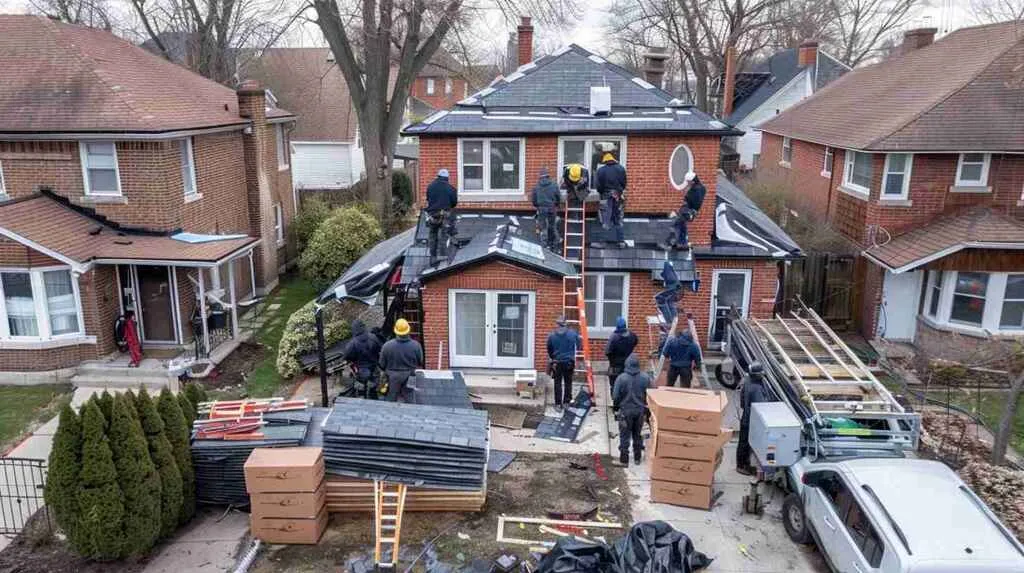
Restore Roof Shingles Queens NY – When It Makes Financial Sense
Honestly, on a typical Queens colonial with a 1,400-1,800 square foot roof, shingle restoration runs you somewhere between $2,800 and $6,500, while a full replacement is $9,500 to $16,000-and here’s the first hard rule before we talk math: if your shingles are severely curled, cracked like potato chips, or you’ve got big bald patches with no granules left, restoration isn’t even on the table. What I do is sit down with homeowners right on the porch and run the cost-per-year numbers like I’m mapping out subway routes-local, express, or a transfer in the middle-so you can see exactly when paying more now actually costs you less over time, and when trying to stretch a dying roof is just throwing money into a leak bucket.
What Roof Shingle Restoration Really Costs in Queens (Versus Full Replacement)
On a typical Queens colonial with a 1,400-1,800 square foot roof, the first number I look at is total cost divided by how many safe years you’re buying, and that’s where most people realize sticker price doesn’t tell the story. A minor restoration-patching valleys, replacing damaged sections, maybe applying a rejuvenator-runs $2,800 to $4,200 and can give you 3 to 6 years if your shingles are under 15 years old and the plywood’s solid. A full restoration-overlaying problem areas, sealing, fixing flashing, treating the whole field-is $4,500 to $6,500 and stretches you another 5 to 8 years on a roof that’s halfway through its life. But here’s the first hard rule I tell everyone in Jackson Heights or Astoria: if your shingles are curled at the edges, missing in wide swaths, or bald enough that you can see the mat through the granules, restoration is off the table-no coating or patch job is going to fix structural failure, and you’re just delaying an expensive emergency. A basic replacement with 30-year architectural shingles is $9,500 to $13,000 and buys you 20 to 25 years; an upgraded replacement with 50-year designer shingles and premium underlayment is $12,000 to $16,000 and gets you 30+ years of real peace.
When I’m at your kitchen table or out on the stoop, I do the math right in front of you: let’s say your 14-year-old roof needs work and a $5,200 full restoration will give you 6 safe years-that’s about $867 per year. Compare that to a $11,500 replacement giving you 22 years, which is $523 per year, and suddenly paying more today looks smarter if you’re staying put. But if you’re selling in two years or you just need to limp past an inspection, that $3,400 minor restoration at $567 per year for six years is your best subway route: the cheap local that gets you where you need to go without the express-train price. I use this subway-line metaphor all the time-patching is the local, restoration is the transfer, replacement is the express-and once you see your roof options laid out like a map, the right financial move gets a lot clearer.
Queens Shingle Restoration vs Replacement: Cost-Per-Year Breakdown
| Scenario | Upfront Cost (Queens, NY) | Expected Added Years | Approx. Cost Per Year | When This Makes Sense |
|---|---|---|---|---|
| Minor Restoration Patch valleys, replace damaged sections, seal trouble spots |
$2,800 – $4,200 | 3 – 6 years | ~$567 – $700 | Roof under 15 years, selling soon, passing inspection, or just need safe extra years before bigger budget opens up |
| Full Restoration Overlay problem areas, rejuvenator treatment, fix all flashing, seal entire field |
$4,500 – $6,500 | 5 – 8 years | ~$563 – $900 | Roof 10-18 years old, plywood solid, most shingles intact but showing age, and you plan to stay 5+ more years |
| Basic Replacement Full tear-off, 30-year architectural shingles, standard underlayment |
$9,500 – $13,000 | 20 – 25 years | ~$380 – $650 | Roof over 18-20 years, curling/bald spots widespread, plywood questionable, or you want long-term peace of mind |
| Upgraded Replacement Premium 50-year designer shingles, ice/water shield, synthetic underlayment |
$12,000 – $16,000 | 30+ years | ~$400 – $533 | This is your forever home, roof is failing badly, or you want top resale value and never want to think about it again |
Is Restoration Even an Option? (Quick Decision Tree)
YES → Restoration is off the table. You need replacement.
NO → Continue to step 2
YES → Restoration won’t work. Plan for replacement.
NO → Continue to step 3
YES → Likely structural issues. Replacement recommended.
NO → Continue to step 4
Call for an inspection to check plywood and confirm which restoration option (minor or full) makes the most financial sense for your timeline and budget.
How to Tell if Your Shingles Can Be Safely Restored (Without Climbing a Ladder)
When I’m standing in your driveway and you ask me, “Can we just freshen it up instead of replacing it?” here’s what I check first-and you can do most of this from the ground or a window before you even call. Look for granules piling up in your gutters or washing into the driveway after rain; that tells me the protective coating is wearing off and your shingles are aging fast. Check the edges of shingles for curling or cupping, especially on the south-facing slopes-those get hammered hardest by sun in neighborhoods like Corona, Astoria, and South Ozone Park, and wind off the water in spots like Rosedale can peel back edges prematurely. Dark patchy spots or streaks usually mean algae or moisture, which isn’t automatically a death sentence but changes the cost-per-year math if it’s paired with granule loss. And here’s the local knowledge piece: Queens has a ton of two-families and older colonials where one slope gets cooked all day while the back stays shaded, so you’ll often see uneven wear that looks worse than it really is-don’t panic if one side looks rough and the other three are fine, because that might mean a targeted restoration instead of tearing everything off.
One windy November morning in Astoria, we were supposed to do a full tear-off, but once we opened it up, I saw the plywood was solid and the shingles were only about 11 years old-storm damage made it look worse from the ground. I stopped the crew, called the owner out on the sidewalk, and showed her-piece by piece-what was actually still good. We pivoted to a targeted repair plus a shingle rejuvenator treatment instead of a full replacement, and it cut her bill in half without gambling on leaks. That’s the thing: storm damage-missing shingles after a Nor’easter, one battered valley, loose flashing-can look catastrophic but isn’t the same as a roof that’s reached end of life. My personal opinion? In Queens, too many homeowners get pushed into full replacements 5 or even 10 years too early because nobody takes the time to explain that a numbers-first, focused restoration might be the smarter move for the next chapter of your house, especially if you’ve got other repairs to fund or you’re planning a bigger renovation down the line.
Before You Call: Quick Ground-Level Checks for Queens Homeowners
-
✓
Check gutters and downspouts: Look for granules (look like coarse sand) collecting in gutters or washing onto your driveway after rain-heavy granule loss means shingles are aging fast
-
✓
Look at shingle edges from the street: Stand across the street and look at the roof line-curled, cupped, or lifted edges catching shadow are a red flag, especially on south-facing slopes
-
✓
Scan for sagging or dips: A roof line that looks wavy or sags in spots could mean plywood rot underneath-restoration won’t help you here
-
✓
Notice dark streaks or moss: Black or green streaks are usually algae or moss, common in humid Queens summers-cosmetic if shingles are intact, but a sign of trapped moisture if paired with curling
-
✓
Inspect visible flashing and vents: From a second-floor window or the ground, look at chimneys, vents, and valleys-rusty, lifted, or missing flashing is often the real leak source, not the shingles
-
✓
Check the attic after a heavy rain: Go up with a flashlight and look for wet spots, stains, or daylight coming through-this tells you where water’s getting in and if it’s widespread or isolated
⚠️ Don’t Confuse Storm Damage with End-of-Life Shingles
After a big Nor’easter or summer squall, you might see scattered missing shingles, one beat-up valley, or lifted edges on one slope-that doesn’t mean your whole roof is toast. If the rest of the field is intact and the plywood underneath is solid, you’re often looking at a targeted repair plus possibly an insurance claim, not a full replacement. Before you panic and commit to a $12,000 tear-off, get someone to check the actual structure and walk you through what’s cosmetic damage versus what’s structurally failed.
When a Focused Shingle Restoration Beats a Full Tear-Off
$2,100 versus $12,000-which would you pick if both got you safely through the next five winters?
Let me be blunt: if your shingles look like potato chips, we’re not “restoring” anything. But if you’ve got a 10- to 18-year-old roof with isolated wear, bad past patch jobs, or valleys and penetrations failing while the main field is mostly sound, a focused restoration can make serious financial sense. I still remember a roof in South Ozone Park where the owner almost spent triple what he needed to because nobody explained this one basic test: is the damage widespread and structural, or is it localized and fixable? In his case, a home inspector flagged “roof at end of life,” but when I got up there on a drizzly Sunday evening around 6 p.m., I saw the real problem was a botched vent patch and one brittle valley that was letting water run sideways under the shingles. We did a valley rebuild, replaced shingles in the key trouble sections, resealed all the penetrations, and walked him through why that $2,100 focused restoration made way more sense than a $12,000 full replacement right before winter-it bought him five to seven safe years, let him save up for the big job later, and cost him about $300 to $420 per year instead of $545 per year if he’d jumped straight to replacement and financed it.
Here’s my insider tip when you’re talking to any roofer about this: ask them to physically point out or mark on a diagram which areas are structurally compromised versus which are just cosmetic or showing normal age. Then ask, “If this were your mother’s house and she planned to stay here another 8 years, would you restore or replace?” That question smokes out the scare tactics and upsells real fast, because a guy who’s honest will tell you that in Queens, where money’s tight and houses are lived in for generations, getting 5 to 8 safe extra years out of a decent roof can fund your new boiler, your kitchen refresh, or your kid’s college semester-whatever matters more right now. The math is simple: if restoration costs half what replacement does and gives you two-thirds the lifespan, you’re winning in cost-per-year terms, and you’ve got flexibility to tackle other priorities first.
Focused Shingle Restoration vs Full Replacement: What’s Right for You?
| Option | Pros | Cons |
|---|---|---|
| Focused Shingle Restoration (targeted repairs, rejuvenator, valley/flashing fixes) |
• Costs 40-60% less than full replacement • Minimal disruption (1-2 days vs 3-5) • Buys you 5-8 safe years if done right • Lets you fund other home priorities first • Great if you’re selling in a few years or just need to pass inspection |
• Shorter warranty (usually 3-5 years) • Only works if plywood and most shingles are sound • Won’t help resale value as much as new roof • Higher risk of hidden issues emerging later |
| Full Replacement (complete tear-off, new shingles, underlayment, flashing) |
• 20-30+ year lifespan with transferable warranty • Fixes all hidden plywood and structural issues • Major boost to resale value and curb appeal • Peace of mind-you won’t think about it for decades • Better for insurance and inspections |
• Costs $9,500-$16,000+ in Queens • More disruption (3-5 days, dumpster, noise) • Overkill if you’re moving soon or roof is only 10-15 years old • Ties up budget you might need elsewhere |
When to Call About Shingle Restoration in Queens
Call Now (Urgent)
- Active leaks during or right after rain-water stains spreading on ceilings
- Ceiling sag or soft spots in drywall beneath roof areas
- Wet or compressed insulation visible in your attic
- Widespread missing shingles after a storm-10+ gone or flapping loose
Can Wait a Few Weeks
- Minor granule loss in gutters but shingles still have good coverage
- A few cracked or curled shingles scattered on one slope
- Small attic stains that haven’t grown in the last year
- Loose flashing around chimney or vent that’s not actively leaking
The Plywood Question and Why It Changes the Whole Money Math
The ugly truth about “miracle” shingle restorations you see online is that they almost never talk about your plywood. No coating, rejuvenator spray, or fancy sealing treatment is going to fix rotten, spongy, or delaminated decking underneath those shingles, and in Queens-where we get freeze-thaw cycles all winter, humidity all summer, and sudden temperature swings in spring and fall-bad plywood can turn your cheap “local train” restoration into an expensive detour a year later when you’re calling me back about water pouring into your dining room. When I’m up on your roof doing the estimate, I’m not just looking at shingles; I’m stepping on the decking, checking for soft spots, looking at the underside from the attic if I can, and making sure the bones of your roof are solid before I even offer restoration as an option. If I find widespread sponginess, water stains on the underside, or plywood that’s starting to delaminate, I’m going to be straight with you: restoration isn’t going to work, and trying to patch over structural rot is like putting new paint on a house with a cracked foundation.
One July afternoon around 3 p.m., I was on a two-family in Jackson Heights, 94 degrees, shingles hot enough to burn your hand, and the owner kept asking if a coating would “save” his 23-year-old roof. I sat with him on the stoop, showed him how the granules were mostly gone and the shingles curled at the edges, and we ran the numbers: $4,200 to “restore” it and maybe get 2 risky years, or $9,800 for a full replacement and 25 years of peace. When I asked him if he’d want his tenants calling him about leaks every heavy rain, he just shook his head and said, “Alright Luis, let’s do the big job.” That’s the simple logic right there: spending thousands to stretch 1 to 2 risky years when your plywood’s compromised makes zero financial sense compared to paying more once for 20 to 25 predictable, leak-free years. And here’s the thing-bad plywood doesn’t always announce itself from the ground, so don’t assume your roof is restoration-ready just because the shingles look okay; you need someone to actually check the decking before you commit.
How Plywood Condition Changes Your Decision
| Plywood Condition | Can You Restore? | Risk Level | Smart Recommendation in Queens |
|---|---|---|---|
| Solid and Dry No soft spots, no water stains, firm underfoot, no delamination |
Yes | Low | Restoration is a smart option if shingles are decent and roof is under 18 years old-run the cost-per-year math and pick your subway line |
| Minor Soft Spots 1-3 small spongy areas around old leaks, valleys, or vents |
Maybe | Medium | You can restore if you replace those bad plywood sections first-adds to cost but still cheaper than full tear-off if damage is isolated |
| Widespread Rot or Sag Multiple soft areas, visible sag, water stains throughout attic, delaminating sheets |
No | High | Restoration won’t help-you need full replacement with new decking. Trying to patch over this is throwing money away and risking a collapse or major leak |
Myth vs Fact: Shingle Restoration in Queens
| Myth | Fact |
|---|---|
| “You can restore any roof with a good coating or rejuvenator spray.” | Coatings and rejuvenators only work on shingles that still have structural integrity-if they’re curled, cracked, or missing big patches of granules, no spray is going to fix that. And they won’t touch bad plywood underneath. |
| “Restoration will add 10-15 years to any roof.” | Realistically in Queens climate, a good restoration on a roof that’s 10-15 years old with solid plywood might give you 5-8 years. Anything promising double digits is overselling-age, weather, and existing wear all limit what’s possible. |
| “If the shingles look okay from the street, the plywood must be fine.” | Plywood rot often hides under shingles that look decent from the ground. You need someone to actually walk the roof, check for soft spots, and look at the underside from the attic-there’s no way to know without inspecting. |
| “I can just patch it myself with some roofing cement and save thousands.” | DIY patches with roofing cement can stop an emergency leak, but they’re temporary and often make the real repair harder later. On Queens colonials and two-families, improper DIY work voids warranties and creates new leak paths when cement shrinks or cracks in our weather. |
Choosing Your Roof “Subway Line”: Patch, Restore, or Replace
Think of your roof budget like choosing between an unlimited MetroCard and paying per ride-same city, totally different math. Patching is the cheap local train: it gets you from point A to point B, takes a little longer, makes more stops, but costs way less if you’re only going a short distance. That’s your $800 to $1,500 emergency fix for a leaky valley or a few blown-off shingles after a storm-it buys you 1 to 3 years, maybe gets you past an inspection or through to your next big budget window, and it’s the right move if you’re selling soon or genuinely can’t swing anything bigger right now. Full replacement is the express train: costs more upfront ($9,500 to $16,000), skips all the intermediate headaches, and gets you to your destination-20 to 30 years of leak-free living-fast and direct. That’s what you want if your roof is over 20 years old, you’ve got curling and bald spots everywhere, or you plan to stay in your house for the long haul and never want to think about this again. But restoration? Restoration is the transfer line-it’s the middle route where you take the local partway, switch trains, and still save money compared to the express while getting closer to where you need to go. A $4,500 to $6,500 full restoration on a 12-year-old roof with solid plywood gives you 5 to 8 safe years, which might be exactly what you need if you’re planning a kitchen reno next year, sending a kid to college, or just want to spread out your big expenses instead of hitting them all at once.
Here’s how I’d break it down if you were my neighbor in Corona or standing on your stoop in South Ozone Park: if your roof is under about 15 years old, the shingles still have decent granule coverage, and the plywood checks out solid, look hard at restoration-you’re getting cost-per-year value that beats replacement in the short to mid term, and you’re buying yourself time to save up for the big job later when you’re really ready. If your roof is over 20 with curling edges, bald spots where you can see the mat, or a history of leaks that keep coming back, put your money into a full replacement and sleep easy for the next two decades. And if you’re somewhere in between-16 to 19 years old, some wear but not catastrophic, plywood mostly good-call someone like us at Shingle Masters and ask for the numbers-first breakdown: we’ll map out your local, express, and transfer options right at your kitchen table, show you the real cost per year for each route, and let you pick the one that makes sense for your timeline, your budget, and how long you’re planning to stay in your house.
Shingle Masters at a Glance
Experience
19 Years in Roofing
Response Time
1-2 Days for Inspections
Restoration Price Range
$2,800 – $6,500
Areas We Serve
Astoria, Corona, Jackson Heights, Rosedale, South Ozone Park & All Queens
Common Questions About Restoring Roof Shingles in Queens, NY
Can I restore a 20+ year-old shingle roof?
It depends on the shingles and plywood. If a 20-year-old roof still has good granule coverage, no widespread curling, and the plywood’s solid, you might be able to do a focused restoration and get another 3 to 5 years. But most 20+ year roofs in Queens have enough wear-especially on south-facing slopes-that replacement makes better financial sense. The key is having someone actually check the decking and run the cost-per-year math for you, not just look from the ground.
How long does shingle restoration really last in Queens weather?
In our climate-freeze-thaw cycles, summer humidity, nor’easters, temperature swings-a quality restoration on a roof under 15 years old with solid bones can give you 5 to 8 years. If the roof’s older or the plywood has issues, you’re looking at 2 to 4 years max. Anyone promising 10+ years from a restoration in Queens is overselling; our weather’s too tough on roofs for that kind of guarantee unless you’re doing a full replacement.
Will restoration help me pass a home inspection if I’m selling?
Yes, if it’s done right. A focused restoration that fixes active leaks, replaces damaged shingles, and seals penetrations can get you through a standard home inspection and keep the sale moving. But if the inspector finds soft plywood or widespread curling that restoration can’t fix, you’ll still have issues. If you’re selling within a year or two, a minor restoration is usually the smart financial play-spend $2,800 to $4,200 instead of $12,000 on a new roof the next owner might replace anyway to their taste.
Is shingle rejuvenator spray worth it here in Queens?
On the right roof, yes. If your shingles are 8 to 15 years old, still have decent flexibility, and just need help with minor granule loss or brittleness, a rejuvenator treatment can extend life by a few years and costs around $1,200 to $2,500 depending on your square footage. But if shingles are already curled, cracked, or heavily worn, rejuvenator won’t do much-it’s not magic, it’s preventive maintenance. Think of it like an oil change for your roof: great if you’re in decent shape, pointless if the engine’s already seized.
How do I know a roofer isn’t just pushing replacement to make more money?
Ask them to show you, in writing or on a diagram, which specific areas are structurally failed versus which are just cosmetic or aging. Then ask the “mother’s house” question: “If this were your mother’s house and she was staying here another 8 years, would you restore or replace?” A roofer who’s honest will walk you through the cost-per-year math for both options and explain the tradeoffs without pressure. If they refuse to show you the details or jump straight to scare tactics about your roof collapsing, get a second opinion-there are plenty of us in Queens who’ll give you the straight numbers.
If your roof is under 15 with mostly solid shingles and good plywood, restoration can be the smarter short-term play-but if you’re over 20 with curling, bald spots, and leak history, putting your money into a full replacement saves you more per year and eliminates the drama. Call Shingle Masters for a no-pressure, numbers-first inspection where we’ll map out your local, express, and transfer options right at your kitchen table, show you the real cost per year for each route, and let you decide which subway line makes sense for your house, your budget, and how long you’re planning to stay in Queens.