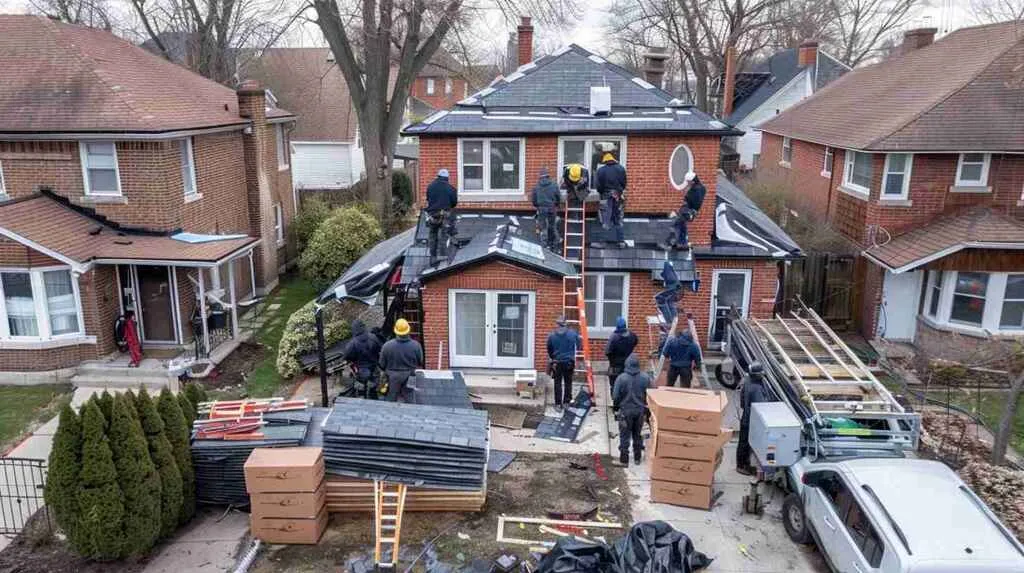
Shingle Roof Rejuvenator Queens NYC – Do They Actually Add Years?
Honestly, a shingle roof rejuvenator can add about three to five years to a mid-life roof in Queens when the shingles are still flexible and the product is applied under the right weather conditions-but it won’t magically reverse brittle, cracked shingles that are already due for replacement. The actual benefit you get depends entirely on what condition your shingles are in right now, how the application is timed around humidity and temperature, and whether your contractor treats it like a precision treatment instead of a magic fix.
How Many Years Can a Shingle Roof Rejuvenator Really Add in Queens?
Here’s my honest opinion: most of the marketing around shingle roof rejuvenators sounds like anti-aging cream commercials. You’ll see claims about “restoring” decades-old roofs or “adding ten years” without anyone explaining that those numbers only work when you’re treating the right shingles at the right age. A rejuvenator works by reintroducing oils into asphalt that’s started to dry out but still has flexibility and structural integrity. On the wrong roof, it’s just an expensive layer of shine that washes away without doing anything useful.
One August afternoon, about 3:30 pm, I was on a two-family home in Corona, sun bouncing off the shingles so hard my phone kept overheating. The homeowner had already paid someone to spray a “shingle roof rejuvenator” the year before, and he was furious because the granules were still washing into the gutters. I took a putty knife, lifted a tab, and the whole thing cracked like a stale cookie-the product had just made the surface shiny without fixing the brittleness underneath. That was the job that made me start treating rejuvenators like prescription medication: right dosage, right patient, or don’t bother.
| Roof Condition at Time of Treatment | Realistic Extra Years in Queens | Risk Level | Renee’s Medical Analogy |
|---|---|---|---|
| 10-14 years old, still flexible, no major curling or granule loss | 3-5 years | Low | Medication / preventive treatment |
| 15-18 years old, some curling on south slope, moderate granule shedding | 2-3 years | Medium | Physical therapy / buying time while you save |
| 18-22 years old, widespread curling, exposed black mat in spots | 0-1 year | High | Aspirin for a broken leg / delaying the inevitable |
| 22+ years old, brittle tabs that crack when bent, active leaks | 0 years | Very High | Surgery required / replacement only |
Myth vs Fact: Shingle Roof Rejuvenators in Queens
| Myth | Fact |
|---|---|
| A rejuvenator can add ten years to any roof | Realistic range is 3-5 years on mid-life shingles; older or damaged roofs get little or no benefit |
| It replaces the need for roof replacement | It delays replacement for the right candidate roof, but never eliminates the need for eventual surgery |
| It comes with a warranty extension automatically | Most shingle warranties don’t recognize aftermarket treatments, and some explicitly void coverage if applied |
| It works on roofs of any age or condition | Brittle, cracked, or curled shingles won’t absorb oil properly; you’re just coating the surface |
| All rejuvenator products work the same way | Formulas vary widely in oil content, penetration ability, and performance in humid coastal climates like Queens |
On a Typical Queens Two-Family Roof, What I Check Before Saying Yes
On a typical two-family roof in Queens, what I look at first isn’t the color of the shingles-it’s how they feel when I bend a corner. I’ll gently lift a tab on the south-facing slope and see if it flexes back into place or snaps like old plastic. Then I check for granule loss-are the gutters packed with what looks like coarse sand, or just a light dusting? I’m looking at whether the edges are starting to curl, whether there are any soft spots where moisture has gotten under the decking, and how much direct sun and wind exposure each slope gets. In Jackson Heights, you’ve got tightly packed row homes where one building shades another, so a north-facing slope might still look almost new while the south side is cooked. In Astoria and Ridgewood, you get more variation because of how the blocks are laid out and where the prevailing wind hits.
One windy November morning, I was on a narrow row house in Ridgewood, squeezed between two taller buildings that created a wind tunnel. The owner, an older lady on a fixed income, had read about rejuvenators online and asked if it would “add ten years” like the ad said. As I checked her shingles, I noticed the north side still had decent flexibility, but the south-facing slope, cooked by the sun, was already curling. We ended up treating only the still-healthy sections with rejuvenator and replacing the worst slope, and three years later she still calls me every fall to report how her heating bill changed. That’s the kind of mixed solution I recommend when half the roof is a good medication candidate and half needs surgery.
Good Candidate for Rejuvenator
- Shingles 10-15 years old with flexibility still present
- Light to moderate granule shedding, not widespread bare spots
- No active leaks or water damage inside
- Edges lie flat or have only minor lifting on high-wind slopes
- Owner planning to stay 3-5+ years and wants to delay replacement
Bad Candidate – Save for Replacement
- Shingles crack or break when gently bent
- Exposed black asphalt mat visible across multiple shingles
- Existing leaks, ceiling stains, or soft decking areas
- Widespread curling, cupping, or clawing across entire roof
- Roof older than 18-20 years or past warranty period
Renee’s On-Roof Evaluation Process
Weather, Timing, and Technique: Why Some Treatments in Queens Fail
The blunt truth is, if your shingles are already cracking like potato chips, no oil in a spray bottle is going to turn them back into rubber. But even on good candidate roofs, poor weather timing can wreck the whole treatment. A rejuvenator needs to penetrate into the asphalt layer, and that only happens when the shingle surface is dry, the temperature is moderate-ideally between 50°F and 85°F-and humidity isn’t so high that moisture blocks absorption. If the roof is damp from dew or recent rain, the product just sits on top like water on a waxed car. If it’s too hot, the oils can evaporate before they soak in. If it’s applied right before a storm, you’ll watch your investment wash into the gutters.
During a spring thunderstorm rolling in over Flushing-one of those weird days where it’s 2 pm but looks like 7 pm-I was inspecting a roof right before we were supposed to apply a rejuvenator. The forecast said “light showers,” but the humidity was like soup, and I watched a little test patch bead up instead of soaking into the shingle. I canceled the application on the spot, ate the cost of rescheduling my crew, and came back two days later when the roof was dry and cooler; if I’d gone ahead, most of that expensive treatment would’ve washed off with the first downpour. That experience is why I get almost superstitious about surface temperature and moisture when it comes to rejuvenators. My insider tip: always ask your contractor what the surface temperature is, when the last rainfall was, and whether they’re willing to do a test spot before they start spraying the whole roof.
⚠️ Weather Mistakes That Ruin Rejuvenator Treatments
Applying in high heat (90°F+ surface temp): The oils evaporate or flash off before they can penetrate, leaving only a thin surface coating that wears away fast
Treating a damp or dewy roof: Moisture blocks absorption, so the product beads up and never soaks into the asphalt where it needs to work
Ignoring incoming rain within 24-48 hours: Product washes off before it cures, wasting money and potentially leaving streaks down siding and into landscaping
Working in high humidity (above 70%): Slows down absorption and curing time, reducing how much oil actually bonds with the shingle
Ideal Timing for Inspections and Rejuvenator Treatments in Queens
Year 10-12 (Baseline Inspection)
Schedule your first detailed inspection to assess flexibility, granule condition, and whether early treatment makes sense
Year 12-15 (Rejuvenator Window)
This is usually the sweet spot for mid-life rejuvenation if shingles still flex and have good granule coverage
After Major Storms (Any Age)
Inspect within weeks after hurricanes, nor’easters, or heavy wind/hail events to catch damage before it spreads
Year 18+ (Stop Treating, Plan Replacement)
Beyond this age, most Queens roofs are past the rejuvenator benefit zone-start budgeting for full replacement
Should You Rejuvenate, Repair, or Replace Your Queens Shingle Roof?
When I sit at a customer’s kitchen table, I usually start with this question: “Are you trying to squeeze a few safe years out of this roof, or are you trying to avoid replacement forever?” That answer tells me whether we’re having a checkup conversation, a medication conversation, a physical therapy conversation, or a surgery conversation. A rejuvenator is medication-it’s a treatment that works for the right patient at the right stage, but it’s not a cure, and it’s definitely not a way to dodge surgery when surgery is what the roof actually needs.
Think of It Like Medication vs Surgery
Here’s how I break it down. A checkup is your regular inspection-climb up, look around, take notes, but no intervention yet. Medication is the rejuvenator applied to a mid-life roof with good bones, designed to slow aging and buy you three to five more years. Physical therapy is targeted repairs-replacing a few bad shingles, fixing ventilation, sealing a small leak-combined with ongoing maintenance to keep the roof functional. Surgery is full replacement when the structure underneath is compromised or the shingles are beyond salvaging. I’ll be straight with you: I see too many contractors trying to sell rejuvenator as a substitute for surgery, and it’s not fair to homeowners who think they’re solving the problem when they’re just postponing the phone call. My personal opinion is that rejuvenator marketing has gotten out of hand-it’s sold like it’s anti-aging cream for roofs, and some customers are shocked when I tell them it won’t magically reverse twenty-two years of sun damage.
What Makes Financial Sense in Queens Right Now
The cost logic depends on your timeline and your property goals. If you’re planning to sell in two to three years, and your shingles are in that 12-15 year sweet spot, a rejuvenator treatment can make sense-it keeps the roof looking healthy for inspections without the expense of full replacement that you won’t recoup anyway. If you’re on a fixed income and just need the roof to last until you downsize or move in with family, extending its life by even three years can be huge. But if you’re already seeing leaks, if the decking is soft in spots, or if you’re planning to stay another ten to fifteen years, putting money into a rejuvenator is like paying for aspirin when you need surgery. I’ve seen folks in Far Rockaway and Corona make very different choices even with similar roofs, because flood risk and storm exposure change the math. In Flushing, where property values have climbed and people are staying put longer, I’m seeing more investment in full replacements. It all comes back to matching the treatment to the patient.
Decision Guide: Rejuvenate, Repair, or Replace?
Typical Queens Roof Scenarios: Rejuvenate vs Repair vs Replace
| Queens Roof Scenario | Rejuvenate (Relative Cost) |
Repair Only (Relative Cost) |
Replace (Relative Cost) |
Renee’s Typical Recommendation |
|---|---|---|---|---|
| Small row house, 13 years old, shingles still flexible, planning to stay 5+ years | $ | $ | $$$ | Rejuvenator-medication buys you time and defers big expense |
| Two-family, 16 years old, south slope curling badly, north slope still good | $ | $$ | $$$ | Partial replacement on bad slope + rejuvenator on healthy sections |
| Large multi-family, 21 years old, widespread granule loss, some leaks starting | $ (wasted) | $$ | $$$ | Full replacement-past the medication window, needs surgery |
| Bungalow near Rockaway, 14 years old, heavy wind/salt exposure, minor storm damage | $ | $$ | $$$ | Targeted repairs + improved ventilation, then rejuvenator next season |
| Older homeowner on fixed income, 15-year roof, light wear, selling in 2-3 years | $ | $ | $$$ (won’t recoup) | Rejuvenator-extends life through sale without major investment |
Before You Call About a Shingle Roof Rejuvenator in Queens
In five minutes from your sidewalk, you can learn enough about your roof to know whether a rejuvenator is even worth discussing. A few quick checks from the ground-looking for curling edges, missing shingles, dark streaks, or granules piling up near your downspouts-can help you have a much more productive conversation with any contractor and avoid being sold the wrong “treatment” for your roof’s actual condition.
✓ Ground-Level Roof Checklist for Queens Homeowners
Look for these signs from your yard or sidewalk before calling about rejuvenator treatment:
Why Queens Homeowners Call Shingle Masters
Renee has been diagnosing and treating Queens roofs since 2004, with deep expertise in shingle aging patterns
Our team speaks English and Spanish fluently and understands the specific housing stock across all Queens neighborhoods
Fully licensed, bonded, and insured with all required NYC permits and liability coverage
Familiar with row houses, two-families, bungalows, and multi-family buildings specific to Queens construction patterns
Typically schedule on-roof inspections within 3-5 business days; emergency storm damage assessments available sooner
I still remember a bungalow in Far Rockaway where a rejuvenator made sense on exactly half the roof and would’ve been a waste of money on the other half. That’s the kind of honesty you need when someone is trying to sell you a treatment-not a one-size-fits-all pitch, but a real evaluation of what’s actually going to work for your specific shingles, your timeline, and your budget. A rejuvenator is a smart medication for the right patient-roof, but it’s not magic, and it’s not a substitute for replacement when replacement is what you actually need. If you want Renee to come do an on-roof checkup and lay out your three clear options-rejuvenate, repair, or replace-so you’re not just guessing from the sidewalk, give Shingle Masters a call and we’ll get you scheduled.