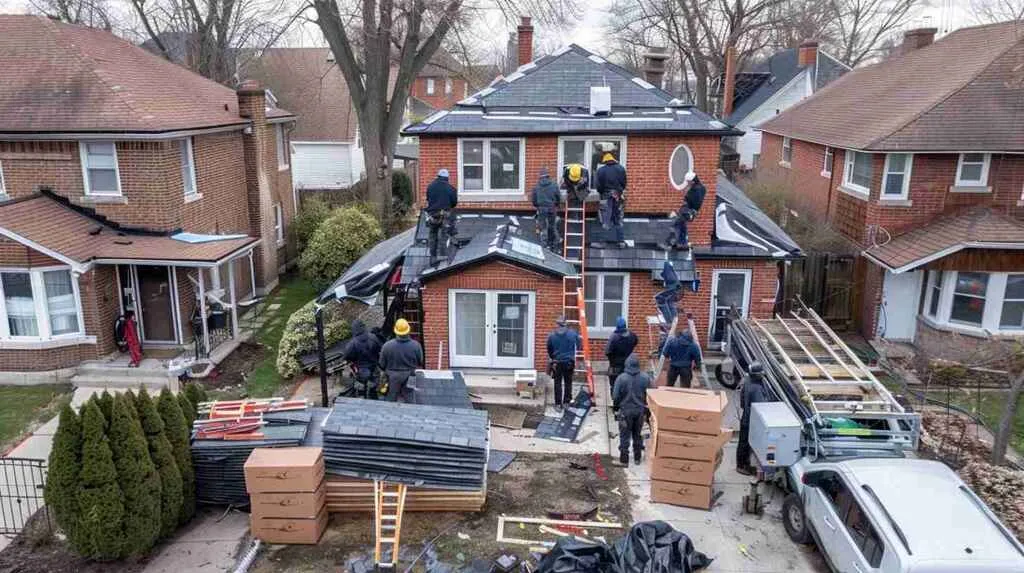
How Warm to Shingle a Roof Queens NY – Temperature Requirements
Thermometer says 42°F and sunny-should you shingle? In Queens, that depends on wind, cloud cover, and how fast your roof can absorb sunlight. I’ll take a calm, sunny 38° afternoon on a dark shingle over a breezy 45° morning with clouds every time, because it’s not the thermometer that seals the adhesive, it’s the actual shingle surface temperature. Think of installing a roof like tuning a piano before a concert-if the temperature’s off, everything sounds wrong the first time weather slams it.
The Real Temperature Range to Shingle a Roof in Queens, NY
Here’s my unfiltered opinion: manufacturers print “40°F and rising” on the bundle wrappers, but in Queens I want shingle surface temps around 45-65°F before we start nailing. That’s the sweet spot where the self-seal adhesive activates fast enough to bond before evening temps drop, and the shingles stay pliable enough to lay flat without cracking. Any roofer who can’t explain their minimum working temperature and why it matters for your specific block isn’t tuning your roof-they’re just banging nails and hoping.
Back in October 2016 in Bayside, I had a landlord pushing me hard to “just get it done” before the 1st because his tenants were moving in. It was 42 degrees at noon, sunny but windy, and he didn’t understand why I refused to start shingling at 8 a.m. when it was still in the low 30s. I sat on his stoop with a cup of deli coffee, drew out how the sun angle and dark shingles would gain enough surface temperature by late morning, and we started at 11:15 instead. Those shingles sealed tight before sundown and that roof is still bone-dry today. The difference? I waited for Queens’ fall sun to warm the roof deck and shingle surfaces into the mid-40s, not just the air around us, and accounted for wind coming off the bay that would steal heat faster than a forecaster could predict.
Contrast that with the “above freezing is fine” mindset I see from weekend warriors. Sure, technically you can nail shingles at 33°F-they won’t shatter on impact. But in Queens, where overnight temps swing 15-20 degrees in spring and fall, I want a forecast that gives me a few solid hours in the mid-to-upper 40s so the adhesive grabs before the sun sets and everything cools back down. Otherwise you’ve got a roof that’s installed but out of tune, and the first nor’easter will start peeling tabs and opening seams like loose piano keys rattling during a fast song.
| Thermometer Air Temp (°F) | Typical Shingle Surface Temp on Dark Roof (Sunny, Light Wind) | Dennis’ Verdict | Notes for Queens, NY |
|---|---|---|---|
| 28-35°F | 32-42°F (struggling to warm) | ❌ No-go, even with sun | Too cold; adhesive won’t activate, shingles stay brittle, and wind chill makes it worse near the water |
| 36-41°F | 43-50°F (slow warm-up) | ⚠️ Only with hand-sealing plan | Borderline; you can install but must hand-seal critical courses (valleys, ridges, rakes) or risk late adhesion |
| 42-48°F | 50-60°F (gaining heat) | ✅ Workable with care | Good window if you start late morning and finish before temps drop; ideal for March/April or October/November in Queens |
| 50-65°F | 58-75°F (sweet spot) | ✅ Perfect range | Adhesive activates fast, shingles pliable, sealing happens naturally; this is the “in-tune” zone for Queens roofs |
| 68-85°F | 75-100°F+ (very hot) | ⚠️ Tricky-risk of over-softening | Shingles can get gummy, stick during handling, and adhesive can activate too early; best to work early mornings in summer |
Myth vs. Fact: Shingle Temperature Beliefs in Queens
| Myth | Fact |
|---|---|
| “If it’s above freezing, you can shingle.” | Shingles need surface temps in the mid-40s minimum for adhesive to bond; air temp alone doesn’t tell you if the roof is warm enough. |
| “Winter roofing is always a bad idea in Queens.” | Late winter sunny windows (February/March) with calm air can hit the right surface temps if you time it right and hand-seal critical zones. |
| “The weather app says 45°, so we’re good to go at sunrise.” | That 45° is air temperature; at 7 a.m. your shingles might still be in the 30s. Wait for sun to warm the deck for a few hours. |
| “Darker shingles don’t make a difference in cold weather.” | Dark shingles absorb more heat and can gain 10-15°F over air temp on sunny days, making marginal weather suddenly workable. |
How Queens Weather Tricks Your Roof Temperature
On a 41-degree Tuesday in Flushing last March, I watched the thermometer climb but the shingles stay stubborn and cool. Light breeze coming off the East River, scattered clouds blocking the sun every ten minutes, and even though the air said 41°F by 10 a.m., the roof deck was still hovering around 38° when I pressed my hand flat on it. That’s when I pulled out the infrared thermometer-because your hand can lie, but physics won’t. Sun, wind, and humidity change everything, and in Queens you’ve got microclimates on every block that’ll fool you if you only trust the weather app. One January morning in Woodhaven, about 7:10 a.m., I watched a guy on the next block trying to nail down shingles at 25 degrees while his compressor kept freezing. Two months later, the homeowner called me because every third shingle had cracked corners that curled up like old sheet music-the brittle edges never bonded, and she ended up stripping a roof that technically wasn’t even out of its “warranty” yet.
Specific Queens conditions matter more than the borough-wide forecast. Wind off the East River steals heat faster than you’d think, so a roof in Astoria or Long Island City with northern exposure can stay 5-8 degrees cooler than a sunny Bayside roof facing south, even when the thermometer reads the same. Shadowed blocks between tall buildings in Woodside or Elmhurst trap cold air longer, while open residential streets in Whitestone or Douglaston let the sun hit the deck early. I’ve had a 38°F sunny, calm afternoon on a dark shingle roof feel more workable than a cloudy 42°F day with gusty wind, because the surface temp-the only number that actually matters for adhesion-was higher in the first case. It’s like tuning a piano in different churches: same instrument, but the room changes how it sounds, and if you don’t adjust your technique to the space, everything’s going to ring out of tune.
Quick Facts: Queens Micro-Climate Impact on Shingle Temperature
| Factor | Impact on Shingle Temperature in Queens |
|---|---|
| Sun Exposure | South-facing roofs in Bayside or Whitestone can gain +12-18°F over air temp on clear winter days; north-facing roofs in LIC stay closer to ambient |
| Wind Off Water | East River breezes and bay winds can drop effective shingle temp by 5-10°F compared to inland Flushing or Forest Hills blocks |
| Roof Shingle Color | Dark charcoal or black shingles absorb heat fast and can hit workable temps 30-45 minutes earlier than light-gray roofs on the same street |
| Building Height & Shade | Multi-story buildings in Astoria or Elmhurst can shade neighboring roofs until 10-11 a.m., delaying warm-up by 1-2 hours compared to single-family zones |
Why Trusting Just the Weather App Can Get Your Roof “Out of Tune”
The weather app shows air temperature at the nearest airport or weather station-not your actual shingle surface temp on your specific Queens block. I’ve seen roofs in Jackson Heights installed on “perfect 50° days” that never actually warmed above 42° on the deck because of wind and cloud cover. Those shingles didn’t seal properly, and by the following winter the tabs were flapping loose and cracking at the edges. Check sun, wind, roof color, and time of day before you let anyone start nailing, or you’re gambling with a roof that sounds good on paper but plays out of tune the first time weather hits it.
Minimum Temperatures, Hand-Sealing, and Cold-Weather Workarounds
When a customer in Forest Hills asks me, “Isn’t above 32 enough?” I always answer with another question: “Do you want it installed or do you want it to last?” There’s a big gap between those two things. I’ll never forget a Saturday in early April in Jackson Heights when I misjudged a spring cold snap-forecast said upper 40s, but by the time we had the old roof torn off, clouds rolled in and it hovered at 36-38 all afternoon. We could technically install, but I knew the seal strips might not activate properly. So I told the owner we’d hand-seal the vulnerable courses-valleys, rakes, ridge-and I was up there at 5:30 p.m. with a heat gun and roofing cement, warming each tab like I used to warm piano strings before a winter recital. That’s the insider tip: any roofer working below the ideal 45-50°F range should be hand-sealing critical zones with heat and roofing cement, not just banging nails and leaving. If they’re not doing that, it’s a red flag that they care more about getting off the job than making sure your roof stays sealed when the next storm rolls through.
For Queens, my real-world floor is a forecasted daytime high of about 42°F with sun and light wind if we’re going to shingle and sleep at night.
Below that-especially anything under mid-30s-it’s usually a no-go for a full shingle install, because even with hand-sealing you’re fighting physics. Adhesive needs warmth to flow and bond, and shingles need flex to conform to the deck without snapping. If you skip the hand-sealing step on borderline days, you’re basically playing a fast song with half the piano keys loose-everything falls apart in the first storm, tabs lift, water sneaks under, and suddenly you’re looking at leak repairs on a roof that’s barely six months old. The practical minimum is low 40s air temp with direct sun and low wind, and only if you or your roofer is committed to hand-sealing every valley, every rake edge, and every ridge cap before calling it done.
How Dennis Handles Borderline-Cold Shingle Jobs in Queens
| Step | What Happens | Why It Matters in Cold Weather |
|---|---|---|
| 1 | Check forecast and surface temp at 9 a.m. | Confirms whether the day will actually warm into the mid-40s by late morning, or if we need to postpone |
| 2 | Tear-off old shingles and prep deck while waiting for sun | Uses early-morning cold hours productively without risking brittle shingle installation |
| 3 | Start shingling only when deck surface hits ~44-46°F | Ensures adhesive has enough warmth to start bonding as shingles go down, not hours later |
| 4 | Hand-seal valleys, rakes, and ridge caps with heat gun + cement | Critical zones that see the most wind and water stress get extra adhesion insurance in borderline temps |
| 5 | Finish install by 3:30-4 p.m. so shingles seal before evening cool-down | Gives the roof a few hours of warmth to activate adhesive before temps drop again overnight |
DIY vs Pro: Who Should Be Tuning Your Roof in Cold Weather?
The way I explain it is like tuning a piano in a drafty church-temperature swings will knock it out of tune if you don’t plan for them. Shingling a Queens roof when you’re dancing around the temperature edge takes more than a nail gun and good intentions; it takes experience reading conditions, knowing when to wait, when to hand-seal, and when to walk away until the weather cooperates. A pro roofer-someone who’s been doing this through 30+ Queens winters-knows how sharp or flat the conditions are on your specific block, adjusts nail placement and sealing technique accordingly, and doesn’t just trust the thermometer reading from LaGuardia. DIYers, on the other hand, tend to check the weather app, see “above 40,” and start banging away at 8 a.m. when the shingles are still brittle and the deck’s stone cold. Not gonna lie, that’s how you end up with a roof that looks finished but plays out of tune the first time a nor’easter tests it-tabs lift, adhesive never grabbed, and suddenly you’re patching leaks on a roof you thought was brand new.
DIY in Cold/Borderline Temps
- Relying on weather app air temp without checking actual shingle surface warmth
- No infrared thermometer or experience judging when the deck is truly ready
- Skipping hand-sealing critical zones because you don’t know they need it
- High risk of tab lift, cracking, and poor adhesion leading to leaks within months
Pro Install (Dennis & Shingle Masters)
- Monitors surface temp with IR tools and decades of hands-on Queens experience
- Waits for sun and warmth, even if it means delaying start by a few hours
- Hand-seals valleys, rakes, ridges with heat gun and cement when temps are borderline
- Roof stays sealed, bonded, and “in tune” through Queens winters for 20+ years
When to Call a Pro Roofer in Queens for Temperature-Sensitive Shingle Work
Call Shingle Masters Now
- Active leak and forecast shows temps hovering in the upper 30s to low 40s
- You need the job done in late fall, winter, or early spring when timing is tight
- Previous roofer installed in cold weather and tabs are already lifting or cracking
- You’re unsure whether current conditions are safe and need an expert surface-temp check
Can Usually Wait for a Better Temperature Window
- No active leaks and you have time to schedule for late April/May or September/October
- Forecast shows consistent 50°F+ days coming within a week or two
- Routine maintenance shingle replacement with no urgent water damage
- You want to avoid any risk of borderline-temp adhesion issues by waiting for ideal conditions
Queens-Specific Temperature FAQs About Shingle Roofing
This is the speed-round where I answer the things I get yelled across driveways in Queens all winter-what’s too cold, what’s too warm, and whether you can roof in March or November without “detuning” the whole thing. Here’s the real talk, no fluff.
What’s the absolute coldest temperature you’ll shingle a roof in Queens?
+
I won’t start a full shingle install if the forecast high is below 42°F and there’s no strong sun or calm wind to push surface temps higher. Even at that number, I’m hand-sealing every critical zone-valleys, rakes, ridge caps-with a heat gun and roofing cement. Anything under upper 30s is a hard no, because the adhesive won’t bond and the shingles stay too brittle to flex properly on the deck.
Can you shingle a roof in Queens in November or March?
+
Absolutely, if the timing’s right. November in Queens can give you sunny 50-55°F days that are perfect for shingling, and March often has late-morning windows when surface temps climb into the mid-40s or higher. The key is checking the actual forecast for your specific week-looking for calm, sunny stretches-and being flexible with start times. I’ve done plenty of November and March roofs that are still sealed tight 15 years later because we waited for the right conditions instead of rushing just to get it done.
Does it matter if my roof is in the shade most of the day?
+
It matters a lot. A roof that’s shaded by taller buildings or trees in Astoria, Elmhurst, or Forest Hills can stay 8-12°F cooler than a fully exposed roof in Bayside or Whitestone, even when the air temp is identical. If your roof only gets direct sun for a couple hours a day, we need to time the install for that narrow window, or wait for warmer overall temps so the deck can stay workable even in shade. Blunt truth: Queens winds off the East River will wreck whatever the thermometer says if your shingle adhesive never gets warm enough to grab.
How do you know when shingles are warm enough to install?
+
I use an infrared thermometer to check the deck and shingle surface temps, not just the air around me. If the shingles feel cold and stiff when I press my hand flat on them, they’re not ready. I’m looking for surface temps around 45-50°F minimum, which usually means waiting until late morning or early afternoon on borderline days. Your hand can give you a rough sense, but the IR gun tells the real story-and that’s the number that determines whether the adhesive will bond or just sit there hoping for warmer weather that never comes.
What happens if shingles are installed too cold?
+
The adhesive strip on the back of each shingle needs warmth to get tacky and bond to the shingle below it. Install too cold-say, mid-30s or even low 40s without sun-and that adhesive never activates properly. A few months later, especially after your first big windstorm, tabs start lifting, corners crack and curl, and water sneaks under. Imagine each shingle tab as a little key on a keyboard-if half the keys aren’t glued down, the whole song falls apart when the first nor’easter hits. You end up with a roof that looks done but isn’t actually sealed, and that’s when the leaks start.
Before You Call: What to Check About Temperature for Shingle Work
Before you pick up the phone, take a quick look at these factors so Dennis can give you better advice on timing and scheduling:
- Check the 7-day forecast for your Queens zip code-look for stretches of sunny days with highs above 45°F, not just one warm afternoon
- Note what time of day your roof gets direct sun-shadowed roofs need warmer overall temps or mid-day scheduling
- Observe wind conditions-steady breezes off the bay or river can keep shingles cooler even on “warm” days
- Know your shingle color-dark shingles warm faster and can make borderline temps workable; light shingles need more time
- Be honest about urgency-if you have an active leak, Dennis can work with tighter temp windows using hand-sealing; if not, waiting for ideal conditions is smarter
Installing a roof at the right temperature isn’t about what the weather app says at LaGuardia-it’s about reading your specific Queens block, your sun exposure, your wind patterns, and knowing when the shingles are actually warm enough to seal properly. A properly tuned roof depends on timing the temperature window right, and that’s where experience counts. If you’re ready to get your roof done without gambling on borderline conditions, call Shingle Masters so Dennis can look at your specific situation, check your sun and wind exposure, and schedule the job in a weather window that’ll keep your roof sealed and in tune for the next 20+ years. Don’t let anyone shingle your roof out of tune-reach out today for a free inspection and timing consult.