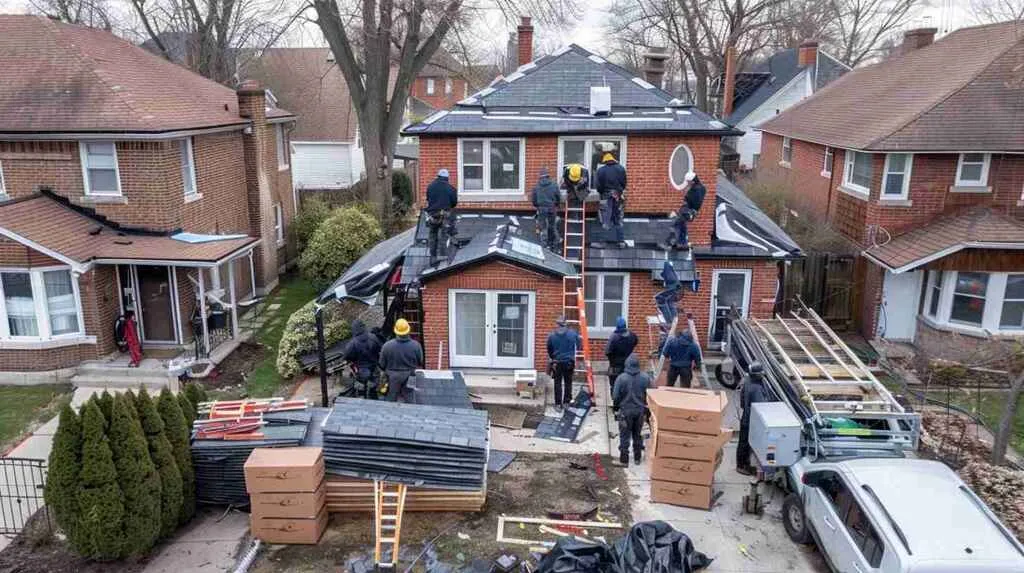
Cupping Shingles Queens NY – What Causes It and What to Do | Free Estimates
Sideways is usually how people first notice cupping shingles-they’ll catch the wavy, potato-chip look from the street and wonder what the hell happened to their roof overnight. But here’s what I’ve learned after 19 years on Queens roofs: cupping almost never starts on the storm side where you’d expect wind and rain to beat things up. It starts on the hottest, sunniest slope-usually south-facing-where relentless UV and trapped attic heat slowly warp the shingles like bending a piece of cardboard over a radiator. That matters, because where you see the cupping tells me whether we’re dealing with a ventilation disaster, cheap materials that couldn’t handle our summers, or a roof that was installed wrong from day one.
What Cupping Shingles Really Mean on a Queens Roof
On a typical Queens block, the first place I look for cupping is the south-facing slope, because that’s where the sun does its worst work. When people ask me “what does cupping up mean on shingle roof,” I tell them it’s not just about the shingles getting old-it’s a sign that your whole roof system is out of balance. The edges curl upward because heat, moisture, or poor materials have distorted the layers underneath, kind of like when you draw a straight line on wet paper and watch it bow and bend as it dries. That visible cupping you see from your driveway is the surface effect of a deeper problem: trapped attic heat baking the underside of your shingles, moisture stuck between layers with nowhere to go, or shingles that were never rated for Queens’ humid summers and freeze-thaw winters.
I still remember one August afternoon in Woodhaven, it was pushing 95 degrees, and I was on a small Cape roof where the shingles were cupping so bad they looked like potato chips. The homeowner swore it started “overnight” after a storm, but when I pulled a few shingles and checked the attic, the insulation was packed tight over every soffit vent. No air was moving. I showed him with my infrared thermometer how his attic was 138°F at 2:30 p.m., and you could see the moment he realized the roof wasn’t the only thing cooking-his shingles had been slowly warping for years. Most people think cupping happens suddenly, but it’s been redrawing your roof the wrong way for a long time before you notice. And honestly, ignoring attic ventilation is like erasing the ventilation line off a roof plan and expecting the rest of the drawing to hold-it won’t.
⚡ Fast Facts About Cupping Shingles in Queens, NY
| Fact | Detail |
|---|---|
| Typical age when cupping starts | Usually 8-15 years, but can be as early as 3 years with poor ventilation or cheap shingles |
| Which slope shows it first | South and west-facing slopes in Queens-maximum sun exposure during afternoon heat |
| Why Queens heat + humidity matter | Our summer attic temps can hit 140°F+ with high humidity, which accelerates shingle distortion and traps moisture |
| What cupping usually signals | Either trapped attic heat/moisture, poor quality materials, or multiple roof layers blocking airflow |
Myth vs. Fact: What Homeowners Believe About Cupping
| Myth | Fact |
|---|---|
| “Cupping just means my shingles are old and worn out.” | Cupping usually means heat or moisture is trapped under or between layers-age alone doesn’t cause that warping pattern. |
| “The storm last week caused my shingles to cup up.” | Cupping takes months or years of heat/moisture damage. A storm just made it obvious, but it didn’t cause it overnight. |
| “I can just replace the cupped shingles and move on.” | Replacing shingles without fixing ventilation or moisture issues means you’re just painting over a crooked drawing-you’ll see cupping again. |
| “Cupping is normal in Queens summers and not a big deal.” | Properly installed, ventilated roofs don’t cup even in our heat. If yours is cupping, something in the system is wrong. |
Main Causes: Heat, Attic Moisture, and Bad Roof Layering
I’ll be honest with you: most cupping problems I see didn’t start on the roof; they started in the attic. There are three main reasons shingles cup up, and they all tie back to the roof system being out of balance. First, trapped heat from poor ventilation-this is the big one in Queens, especially in Capes, attached row houses in Jackson Heights and Elmhurst, and multi-family buildings with small, poorly vented attics. When soffit or ridge vents are blocked or never installed right, your attic becomes an oven, and the shingles cook from below. Second, moisture trapped under or between shingle layers-this happens when rain or condensation can’t escape, usually because there’s no proper underlayment, the old roof wasn’t torn off, or bathroom and kitchen fans dump humid air straight into the attic instead of outside. Third, cheap or mismatched shingles that can’t handle our climate-discount three-tabs with no brand name, shingles rated for cooler climates, or mixing old and new products that expand and contract at different rates.
I’ll never forget a winter morning in Bayside, right after a freeze-thaw cycle. A retired teacher called me because her “shingles were bending up like they were trying to fly away.” Turned out the previous contractor had layered a new roof over two old ones, and moisture was trapped between the layers. The edges of the top shingles were cupping up and catching ice. When I peeled back the first few rows, water literally ran out like opening a soda can. That job taught me how often cupping is just the visible tip of a bigger moisture mess-like seeing a crooked line on the top layer of tracing paper while three sheets underneath are already warped and wet. In Queens, freeze-thaw cycles make this worse because trapped moisture freezes, expands, and pushes shingles up from underneath, then melts and does it all over again. Layering over two old roofs is especially risky here because you’re stacking weight, blocking airflow, and creating pockets where water sits all winter.
⚠️ Dangers of Adding New Shingles Over Old Layers
Layering might save money up front, but here’s what you’re risking on a Queens roof:
- Trapped moisture – Water gets between layers with no way out, feeding mold and rot
- Faster cupping and curling – Extra heat builds up under multiple shingle layers, warping the top layer quicker
- Hidden leaks – You can’t see damage to the old layers or decking until it’s already rotted through
- Voided warranties – Most shingle manufacturers won’t honor warranties if you layer instead of tear off
- Extra weight on older structures – Queens has a lot of 60+ year-old houses; adding 600+ pounds of shingles can stress rafters and walls
Is It Just Cupping or a Roof System Problem?
I still remember one homeowner in Jackson Heights who thought the shingles were “breathing” because the edges kept lifting every summer. When I got up there, I could feel the shingles crunching under my boots-they were dry, brittle, and cupping on every south-facing slope. But then there was a job in Astoria where a landlord tried to save a buck by buying discount three-tabs off the back of a truck-no warranty, no brand label I recognized. Two summers later, around 5 p.m. on a breezy day, I walked that roof and felt the shingles crunching under my boots. Every tab edge was curling and cupping up, especially on the south-facing side. I cut one shingle out, bent it gently, and it snapped clean in half. I laid it on the hood of my truck next to a sample from a reputable brand so he could see the difference in flexibility. He never bought “mystery shingles” again. Here’s my insider tip for reading cupping patterns quickly: if it’s only the sunny side and the shingles still have some flex, you’ve got heat and ventilation issues that were slowly redrawing the roof over years. If cupping is on multiple slopes, the shingles are brittle or cracking, or you see random patches instead of uniform waves, the materials were likely wrong from day one or there’s active moisture damage. I look at it like layered drawings-one crooked line might be fixable, but if the whole sketch is distorted from the foundation up, you’re looking at a system that needs to be redrawn.
🤔 Do You Need Repair, Ventilation Fix, or Full Replacement?
START: Are shingles cupping on more than one slope?
→ NO (only one sunny slope):
Is your roof over 15 years old?
YES: Plan for full replacement within 0-12 months; cupping will spread
NO: Check attic ventilation now; likely just needs ventilation and moisture corrections
→ YES (multiple slopes cupping):
Do you have multiple layers of shingles, or do shingles snap/crack easily?
YES: Full roof replacement needed-system was wrong from the start
NO: Check for active leaks and attic moisture; if dry, monitor + minor repair for now, but budget for replacement soon
What I Recommend Next for Cupping Shingles in Queens
Here’s the part nobody likes hearing: sometimes cupping doesn’t mean “repair”; it means “this whole system was wrong from day one.” But I don’t say that to scare you-I say it so you can make a smart decision with all the facts. When I write an estimate for cupping shingles, I prioritize in this order: safety and active leaks first (if water is coming in or the decking feels soft, we fix that immediately), then stopping the heat and moisture problems that caused the cupping (ventilation upgrades, attic insulation pulled back from soffits, fixing exhaust fans), and finally deciding on timing for a full replacement if the shingles are too far gone. I think of it like zooming the drawing out-patching a few shingles might fix the leak you see today, but if the attic is still 140°F every August and moisture is still trapped between layers, you’re just redrawing the same crooked line. I want you to see the whole picture so you know what can wait and what can’t, and how each fix fits into keeping your roof solid for the next 20 years.
In neighborhoods like Flushing, Elmhurst, Astoria, Woodhaven, and Bayside, I see a lot of Cape Cods and older colonials where the attic space is tight and ventilation was an afterthought when the house was built in the 50s or 60s. If you’ve got mild cupping on one sunny slope, the roof is 12-15 years old, and there are no leaks or signs of moisture in the attic, you can probably monitor it and plan a replacement in the next year or two without rushing. But if I see severe cupping-shingles crunching underfoot, brittle and cracking, or clear water stains and damp insulation in the attic-that’s not something you can kick down the road. The roof structure and your ceilings are at risk. And if you’ve got two or three layers of shingles like that Bayside job where water literally poured out, we’re talking about a tear-off and rebuild, not a patch. I won’t sugarcoat it, but I also won’t push you into anything you don’t need. I’ll walk you through what I see, sketch it out if it helps, and give you the honest timeline and cost so you can decide what makes sense for your house and your budget.
💰 Typical Cupping-Related Roofing Scenarios and Cost Ranges in Queens, NY
| Scenario | Description | Estimated Range (Queens, NY) |
|---|---|---|
| 1. Small sunny-slope cupping, no leaks | Inspection + minor repairs on one slope; shingles still flexible, no attic moisture | $400-$1,200 |
| 2. Moderate cupping + poor ventilation, single layer | Ventilation upgrades (ridge vent, soffit work) + targeted shingle replacement on affected slopes | $2,800-$6,500 |
| 3. Severe cupping on 15-20 year roof, one layer | Full roof replacement with proper ventilation, ice & water shield, and quality architectural shingles | $8,000-$14,000 |
| 4. Cupping with two or more layers (like Bayside example) | Full tear-off to decking, repair any rot, rebuild with new underlayment, ventilation system, and shingles | $10,500-$18,000+ |
| 5. Landlord building with discount shingles failing early | System replacement with quality GAF or Owens Corning shingles rated for NYC climate, proper ventilation install | $9,000-$16,500 |
Ranges vary by roof size, pitch, accessibility, and extent of decking or structural repairs needed. All estimates include materials, labor, permits, and cleanup.
🚨 Call Now (Urgent)
- Visible water leaks inside your home
- Soft, spongy decking when you walk on the roof
- Widespread cupping on multiple slopes
- Shingles snapping or crumbling when touched
📅 Can Schedule Soon (Can Wait a Bit)
- Light cupping on one sunny side only
- No leaks, but shingles look wavy from the street
- Roof is 10+ years old and you’re planning ahead
- You want a second opinion on another contractor’s diagnosis
Check These Things Before You Call Me Onto Your Roof
Think of your roof like a layered drawing-structure, underlayment, shingles, ventilation; if one line is off, the whole picture warps. Before you call, there are a few simple checks you can safely do from the ground and inside your house that’ll help me give you a sharper estimate faster. Don’t climb up-just take a walk around your block, grab your phone, and look inside your attic for a few minutes.
✅ Safe Homeowner Checks for Cupping Shingles
-
1.
Note which side of the house (street, backyard) you see cupping – Sunny south and west sides mean heat; all sides mean moisture or bad materials -
2.
Take clear phone photos from the ground – Get close-ups of the cupping pattern and wide shots showing which slopes are affected -
3.
Look in attic during daytime for daylight streaks or damp insulation – Light coming through means gaps; wet or moldy insulation means moisture is trapped -
4.
Feel for stuffy, overly hot attic air – If your attic feels like a sauna even on a mild day, ventilation is blocked or missing -
5.
Check if bath or kitchen fans dump air into attic – Follow the duct; if it ends in the attic instead of outside, that’s adding moisture to your roof system -
6.
Locate any past roof paperwork (age, layers) – Knowing when the roof was done and whether they tore off or layered saves time on the estimate
❓ Cupping Shingles and Queens-Specific Questions
Is cupping always an emergency?
No. If cupping is mild, limited to one sunny slope, and there are no leaks or soft spots, you can usually schedule an inspection within a few weeks and plan repairs or replacement on your timeline. But if you’ve got widespread cupping, brittle shingles, active leaks, or visible moisture in the attic, that’s urgent-call right away.
Can a Queens winter make cupping suddenly worse?
Absolutely. Freeze-thaw cycles are brutal on already-cupped shingles. Trapped moisture between layers freezes, expands, and pushes the shingle edges up even more. Then it melts, seeps deeper, and freezes again. If your shingles are cupping going into winter, expect them to look worse by spring-and potentially start leaking.
Will new shingles stop cupping if I don’t fix the attic?
No. If the attic is still a 140°F oven every summer and moisture is still trapped, the new shingles will start cupping within a few years-maybe faster. Fixing ventilation and moisture issues is the only way to stop the cycle. Otherwise you’re just replacing shingles over and over without solving the real problem.
How long does a typical cupping inspection and estimate take with Shingle Masters?
Usually 45 minutes to an hour. I’ll walk the roof, check the attic, take photos, and then sit down with you to explain what I found-often with a quick sketch on cardboard so you can see exactly what’s going on. You’ll get a written estimate the same day or within 24 hours, with line-item costs and a clear timeline.
🏆 Why Queens Homeowners Call Shingle Masters
-
✓
Licensed and insured in NYC – Fully compliant with all city permits and safety regulations -
✓
19+ years on roofs in Queens – I know your neighborhood’s housing stock and climate challenges -
✓
Familiar with local housing types – Capes, row houses, colonials, multi-family-I’ve worked on all of them -
✓
Free cupping inspections and written estimates – No obligation, no pressure, just honest answers -
✓
Photos and simple sketches included with every estimate – You’ll see exactly what I see and understand your options
Cupping shingles aren’t just an “old roof” thing-they’re a visible distortion of the whole roof drawing, showing you that heat, moisture, or bad materials have thrown the system out of balance. If you’re seeing wavy, potato-chip edges on your Queens roof, don’t wait until it turns into leaks or structural damage. Call Shingle Masters for a free on-roof inspection and written estimate. I’ll walk you through exactly what your roof is doing, why it’s doing it, and what to do next-no jargon, no pressure, just a simple sketch and honest advice from someone who’s been on Queens roofs for 19 years.