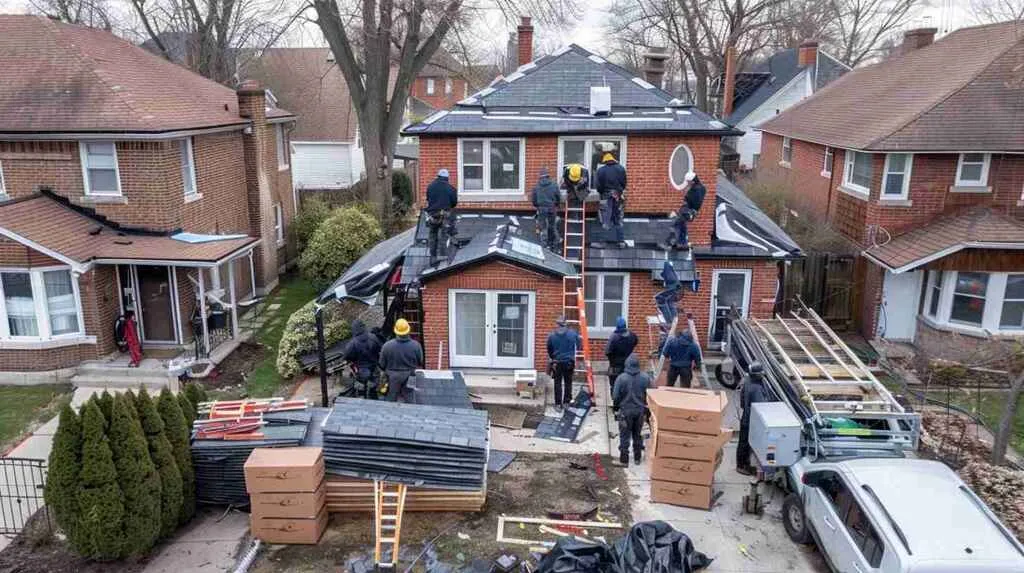
Replace Slate Roof with Shingles Cost Queens NYC – What to Budget
Sticker shock is real when you start asking around about swapping your beautiful old slate roof for asphalt shingles in Queens. Most two‑family or single‑family homes will land somewhere between $22,000 and $45,000, though large or architecturally complex roofs push higher-and here’s the thing that drives homeowners crazy: your neighbor’s nearly identical brick colonial might get a quote $15,000 lower or higher than yours, and both numbers could be completely accurate for entirely different reasons.
Sticker Shock in Queens: What Slate-to-Shingle Really Costs
Think of your roof like a lasagna tray you’re rebuilding from scratch-the shingles are just the top cheese layer, but you’re also paying for the parchment paper (underlayment), the pan (decking), and all the little strips around the edges (flashing) that keep everything from leaking all over the oven. Labor to pull off slate, haul away debris, replace rotten boards, seal vulnerable spots with ice & water shield, and install new shingles all adds up, and each ingredient changes the final price. I’ll be blunt with you: I’d rather be honest about the real bill now than watch someone panic when the final invoice shows up or-worse-watch them hire the cheapest guy who skips half the recipe and leaves them with a leaky mess in two years.
One February morning, about 6:15 a.m., I was standing in front of a 1920s brick two‑family in Astoria, staring at a slate roof that had more patches than original tiles. The owner, an older Greek gentleman, handed me a tiny coffee and said, “Miguel, just tell me if I need to sell a kidney.” By the time we stripped the slate, we found two layers of ancient wood shake under it, all wet and crumbling. The job went from a clean slate-to-shingle swap to a full deck replacement, and the final bill was almost double what he’d expected-because his budget didn’t account for hidden layers and rotten wood. That’s the day I started insisting everyone set aside 10 to 20 percent of the base quote as contingency money on any slate-to-shingle project in Queens.
💰 Queens Slate-to-Shingle Price Calculator: Budget Scenarios
All ranges assume full slate tear-off, architectural asphalt shingles, proper underlayment, and flashing. Numbers are approximate for Queens, NY as of 2024.
| Scenario | Home / Roof Description | Roof Area (Approx.) | Existing Condition | Estimated Total Cost |
|---|---|---|---|---|
| Simple Rowhouse | Sunnyside or Woodside attached brick, gable roof, one chimney | 1,200 sq. ft. | Slate intact, deck solid, good access | $22,000-$28,000 |
| Small Tudor | Forest Hills or Kew Gardens detached, some dormers, two chimneys | 1,800 sq. ft. | Moderate steepness, suspected old shake layer | $30,000-$38,000 |
| Bayside Colonial | Large two-story, multiple roof faces, tight driveway | 2,400 sq. ft. | Steep pitch, known water damage in one valley | $38,000-$48,000 |
| Corner Multi-Family | Jackson Heights or Astoria brick, wrap-around roof, three chimneys | 2,800 sq. ft. | Multiple dormers, turret detail, rear section hard to reach | $45,000-$60,000+ |
| Complex Historic | Forest Hills Gardens or Douglaston estate, multiple turrets and slopes | 3,500+ sq. ft. | Very steep, hidden layers common, scaffolding required | $60,000-$85,000+ |
💡 Contingency Note: Add 10-20% to these ranges if your home was built before 1940 or if you’ve never seen the decking-hidden layers and rotten wood will blow up your budget faster than you can say “I should’ve planned for this.”
Two Numbers Matter First: Size and Roof Complexity
Two numbers matter first when you’re trying to budget a slate-to-shingle conversion: square footage and complexity. Square footage is straightforward-bigger roof, bigger bill-but complexity is where Queens roofs get interesting. Steepness, dormers, valleys, turrets, chimneys, and the weird little mansard sections some architect thought looked charming all drive labor costs up. In Astoria or Jackson Heights, you’ve got a lot of multi-families with straightforward hip roofs and maybe one chimney; head to Bayside or Forest Hills, and suddenly you’re looking at Tudors and colonials with five different roof planes, three chimneys, and slopes so steep my crew jokes about needing climbing gear. Same square footage, wildly different labor and safety setup.
One August afternoon, hot enough that my tape measure felt like a frying pan, I was working on a slate roof conversion in Bayside for a young couple who’d just bought a “charming” Tudor that charmed exactly nobody once it rained. Halfway through the tear‑off, a surprise thunderstorm rolled in, and I watched a crew member slip on loose slate and slide down to the scaffolding-no one hurt, but he scared ten years off my life. We had to tarp the open sections fast, pay overtime, and rent an extra chute the next day to catch broken slate safely. That job taught me to factor weather delays and tricky slate removal into both the schedule and the cost estimate, especially when your roof is steep or has a lot of hard-to-reach sections where one wrong step ends very badly.
| Roof Type (Queens Example) | Approx. Size | Complexity | Cost per Square (100 sq. ft.) | Est. Total Range |
|---|---|---|---|---|
| Sunnyside rowhouse, gable roof | 1,200 sq. ft. | Low | $1,850-$2,300 | $22,000-$28,000 |
| Forest Hills small Tudor with dormers | 1,800 sq. ft. | Medium | $2,100-$2,600 | $30,000-$38,000 |
| Bayside colonial, steep multi-plane | 2,400 sq. ft. | High | $2,400-$2,900 | $38,000-$48,000 |
| Jackson Heights corner multi-family, turret | 2,800 sq. ft. | High | $2,500-$3,100 | $45,000-$60,000 |
⚠️ Warning: If your Queens home has steep slopes, turrets, multiple dormers, or a rear section that’s nearly impossible to reach from the street, any realistic quote will include extra labor, staging equipment, scaffolding rental, and safety costs. A quote that’s suspiciously low probably means corners cut on safety measures or weather protection-and that’s how someone ends up in the ER or with a tarp blowing off in a nor’easter while half your ceiling comes down.
Here’s the Part TV Shows Never Tell You: Hidden Layers and Disposal
Here’s the part TV shows never tell you: tearing off slate is slower, heavier, and way more dangerous than peeling up old asphalt shingles. Slate tiles can weigh 800 to 1,500 pounds per square (that’s per 100 square feet), and many Queens roofs-especially the ones built in the 1920s through 1940s-still have old wood shake or even multiple layers of asphalt under the slate that someone installed decades ago as a “repair.” Each hidden layer adds hours of careful tear-off, more dumpsters (slate disposal is charged by the ton or by the size of the debris container), and often the discovery that the decking underneath has been soaking up moisture for years and needs replacing. You can’t shingle over rotten plywood or cracked boards, so suddenly your $35,000 quote becomes $42,000 because no one saw the wood until the slate came off.
There was a job in Forest Hills Gardens-right near the station-where the homeowner had three contractor quotes to replace her slate with shingles, all wildly different. She brought me into her dining room at 8 p.m., laid them on the table like bad report cards, and said, “Explain this to me like I’m five.” One quote didn’t include proper disposal of slate, another skipped ice & water shield, and the cheapest one assumed they’d reuse the original copper flashing that was already pinholed through. When we broke each line item down and I showed her photos from similar jobs, she realized the “cheap” price would cost her more in five years when leaks started. Now, here’s where this really hits your budget: insist on seeing line items for tear-off, disposal of slate (by ton or dumpster count), new decking allowance if needed, and all new flashing and underlayment in the written estimate-no vague lump sums that let a contractor hide what they’re skipping.
✅ Line Items That Should Always Appear in a Real Slate-to-Shingle Quote
-
✅
Complete slate tear-off: Labor to remove all slate tiles safely, not just the loose ones-cutting corners here means your new shingles sit on a time bomb. -
✅
Safe debris handling & chutes: Slate is heavy and sharp; proper equipment protects your crew, your landscaping, and your neighbor’s parked car. -
✅
Slate and decking disposal fees: Dumpster rental or hauling charges by the ton-don’t let someone lowball the quote then hit you with a surprise “debris fee” at the end. -
✅
New plywood or board replacement allowance: A realistic estimate assumes at least 10-30% of the deck will need new wood once the slate comes off, especially on pre-1950 Queens homes. -
✅
Full ice & water shield in vulnerable areas: Valleys, eaves, around chimneys, and along sidewalls-skipping this to save $800 now means a $5,000 leak repair later. -
✅
All new flashing (chimneys, walls, valleys): Old copper or galvanized flashing looks pretty but if it’s pitted or cracked, reusing it is like putting new tires on a car with a rusted frame.
| Choice | Pros (Short-Term) | Cons (Long-Term) |
|---|---|---|
| Reusing old flashing | Saves $800-$1,500 on materials and labor; quote looks lower and more competitive; can claim “original historic copper” if selling the house soon. | Pinholes and cracks you can’t see from the ground will leak within 2-5 years; moisture gets into walls and chimneys; repair costs 3× what new flashing would’ve cost; voids most shingle warranties because manufacturers require new step and counter flashing. |
| Installing all new flashing | Leak-free seal around chimneys, walls, and valleys; meets manufacturer warranty requirements; you sleep through rainstorms without wondering if water is pooling in your attic. | Higher upfront cost; takes an extra day or two of labor; you have to explain to your neighbor why your quote is $2,000 higher than the “guy who did his roof cheap.” |
Think of Your Roof Like a Lasagna Tray: Budgeting and Contingency
Think of your roof like a lasagna tray you’re rebuilding from scratch: the shingles are just the top layer of melted cheese-pretty, important, but useless if everything underneath is wrong. The underlayment is the parchment paper that keeps things from sticking and burning; the decking is the pan itself; and flashing is all the little strips around the edges that keep the sauce (water) from leaking all over your oven (walls and ceilings). If the pan is rusted or burnt through-rotten decking, cracked boards-you’ve got to replace it, and that’s not a line item anyone can predict until the slate comes off. That’s exactly why you need to add 10 to 20 percent to whatever base quote you get as contingency money, especially on Queens roofs that are 80 to 100 years old and have seen more patches, leaks, and “my cousin fixed it” repairs than anyone wants to admit.
$3,000 set aside in a contingency fund is what keeps a Queens homeowner from calling me at 9 p.m. in a panic because we found two more layers under the slate and the deck looks like Swiss cheese. That cushion is the difference between finishing on schedule and scrambling to find emergency cash while half your roof is open to the sky.
🛠️ Queens Slate-to-Shingle Contingency Calculator
Follow the tree to find your recommended contingency percentage
Start: Is your home older than 1940?
➜ No: Your roof is likely simpler construction with fewer hidden layers. Recommended contingency: 10% of base quote.
➜ Yes: Continue to next question below ⬇️
If Yes above: Has the roof been fully replaced (not just patched) in the last 30 years?
➜ Yes, full replacement within 30 years: Decking is probably in decent shape. Recommended contingency: 12-15% of base quote.
➜ No, original slate or only patches: Expect hidden wood shake, rotted boards, and surprises. Recommended contingency: 18-20% of base quote.
Bonus Question: Do you have known water stains, sagging areas, or visible rot from the street?
➜ Yes: Add an extra 5-10% on top of the recommendations above-you’re almost guaranteed deck replacement and structural repairs.
💡 Quick Example: $35,000 base quote on a 1928 Astoria two-family with original slate and no known replacement? Set aside $6,300-$7,000 (18-20%) so you’re ready when we find those hidden layers and rotten boards-because we will.
If We Were Standing on Your Sidewalk: Next Steps Before You Call
If we were standing on your sidewalk right now, I’d ask you to look up at your roof with me and count a few things: how many different slopes or faces do you see, how many dormers stick out, how many chimneys poke through, any obvious sagging or dips in the ridgeline, and how tight your driveway or alley access is for hauling debris and bringing in materials. I’d also want to know if you can see peeling paint or water stains on the soffits or fascia from the street, because that tells me your decking is probably compromised before we even climb up. Do this same quick scan yourself before you pick up the phone to call Shingle Masters or any other contractor-being able to describe your roof shape, complexity, and access in the first call helps us give you a ballpark number that’s actually realistic instead of a vague “we’ll have to see” that wastes everyone’s time.
📋 Before You Call Shingle Masters: Your Pre-Quote Checklist
Gathering this info helps us give you a tighter estimate faster-and shows you know what matters.
-
✅
Age of the home and any known roof replacement history: “Built 1935, slate original as far as I know” is way more useful than “it’s old.” -
✅
Visible number of roof faces/slopes: Count from the street-front, sides, rear if you can see it-more faces mean more valleys and flashing complexity. -
✅
Any dormers or turrets: Each one adds labor, flashing, and careful work around windows-they’re cost drivers, not just charming details. -
✅
Number of chimneys and brick sidewalls touching the roof: Every chimney needs step flashing and counter flashing; sidewalls need careful integration with the new shingles. -
✅
Obvious sagging or soft spots seen from the street: If you can see a dip or bow in the roofline without climbing, we’re almost certainly replacing decking-budget accordingly. -
✅
How trash/dumpster access would work on your block: Tight driveways, no-parking zones, narrow side alleys-all affect setup costs and debris removal logistics. -
✅
At least 3 photos: front, back, and close-up of the worst area: Clear photos let us spot complexity and damage before the site visit, tightening our ballpark estimate.
❓ Common Questions About Slate-to-Shingle Cost in Queens, NY
Q
Is replacing slate with shingles cheaper than repairing slate in Queens?
Almost always, yes-if your slate is already failing in multiple areas. Individual slate tile replacement runs $15-$30 per tile installed, but if you need 200+ tiles, new flashing, and structural repairs underneath, you’re looking at $12,000-$20,000 just to patch an old system that’ll need more work in five years. A full conversion to quality architectural shingles gives you 25-30 years of warranty-backed life, often for similar money or just a bit more, and you’re done worrying. The math tips toward repair only if you have fewer than 50 broken tiles and solid decking.
Q
How long will my new shingle roof last compared to the old slate?
Slate, when it’s in good shape and properly maintained, can last 75-100+ years. Architectural asphalt shingles typically last 25-30 years in Queens, sometimes a bit longer if you keep trees trimmed and gutters clean. You’re trading century-long durability for modern warranties, lower weight (no structural stress), easier repairs, and a price that doesn’t require a second mortgage. Most Queens homeowners replacing slate are doing it because the slate has already outlived the underlayment, flashing, and deck underneath-at that point, paying to “restore” 100-year-old materials doesn’t make financial sense.
Q
Can I leave one layer under the new shingles to save money?
Absolutely not when you’re coming off slate. Building codes and manufacturer warranties require a clean, solid deck for new shingle installation. Leaving old wood shake or deteriorated layers under your new shingles voids warranties, traps moisture, hides structural rot, and gives you a lumpy, uneven surface that’ll telegraph through the shingles and look terrible. Any contractor who suggests leaving old material “to save time” is either inexperienced or cutting corners you’ll pay for later. The whole point of replacing slate is to start fresh with a known-good foundation.
Q
How long does a typical Queens slate-to-shingle job take?
Plan on 5-10 working days for a typical single- or two-family home, depending on size, complexity, and weather. Slate tear-off is slower and more dangerous than asphalt removal, so we can’t rush it. If we find extensive deck damage or hit a stretch of rainy days, add another 2-4 days. Complex roofs with turrets, steep pitches, or multiple dormers can stretch to two weeks. We’ll give you a realistic schedule up front and keep you posted if surprises pop up-the last thing anyone wants is a half-done roof sitting open for weeks because the contractor “forgot” to order materials.
Q
Do I need permits in Queens to replace slate with shingles, and who handles them?
Yes-NYC Department of Buildings requires a permit for a full roof replacement, even when you’re going from slate to shingles on the same structure. A licensed roofing contractor (that’s us) pulls the permit, submits the application, pays the fees, and schedules inspections. Permit costs are usually rolled into your quote as a separate line item-expect $400-$900 depending on the size and borough processing times. If a contractor says “we can skip the permit to save you money,” walk away: unpermitted work can kill your home sale, void your insurance, and leave you personally liable if something goes wrong. We handle all permitting as part of the normal job flow.
You should now have a realistic picture of what it costs to replace a slate roof with shingles in Queens-$22,000 to $60,000+ depending on size, complexity, and what we find underneath-and you understand why two similar-looking houses can get quotes that are $20,000 apart. You know the big cost drivers (square footage, roof complexity, hidden layers, disposal, new decking, flashing), you’ve got a decision tree for setting aside contingency money, and you have a checklist to walk your own roof before you pick up the phone. If you’re ready to stop guessing and get a detailed written estimate that breaks down every layer of your roof “recipe” line by line, give Shingle Masters a call-we’ll walk your Queens home with you, explain what we see, and give you a budget you can actually trust instead of a vague number that explodes halfway through the job.