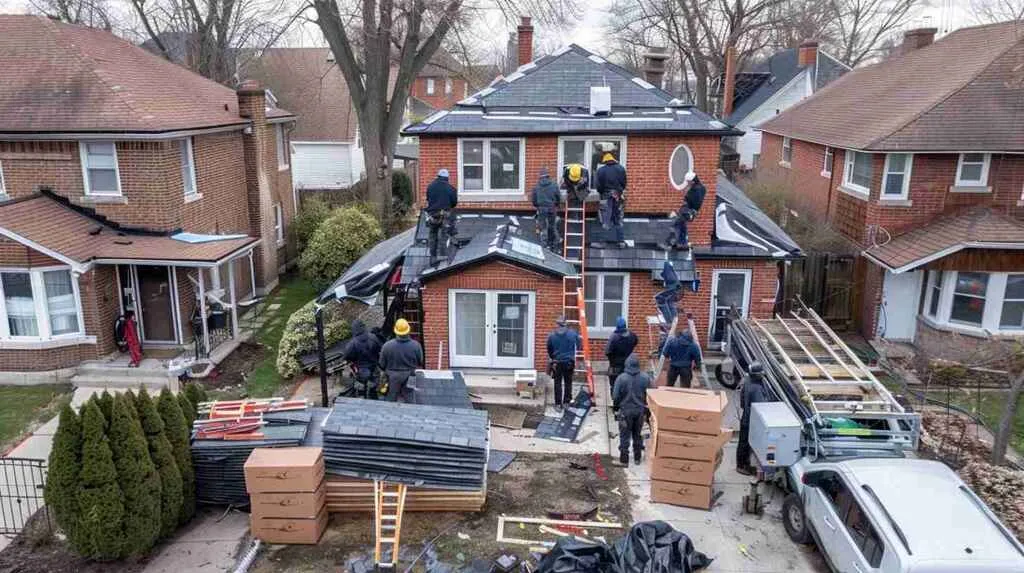
Asphalt Roof Maintenance Queens NY – Keep It Performing Longer | Call Today
Quiet roofs don’t make the news, but most Queens asphalt roofs could quietly gain 5-8 extra years with a few hundred dollars a year in maintenance instead of a $12,000-$18,000 early replacement. I’m Luis, and after 19 years of climbing onto roofs from Jackson Heights to Howard Beach, I’ve seen too many homeowners spend replacement money on a roof that just needed the equivalent of routine oil changes and a brake pad swap-simple, scheduled upkeep that keeps you off the shoulder of the BQE.
Asphalt Roof Maintenance in Queens: Oil Changes, Not Engine Rebuilds
Most Queens homeowners can add 5-8 years to their asphalt roof’s life with a few hundred dollars a year in maintenance instead of a $12,000-$18,000 early replacement. Think of asphalt roof maintenance the same way you think about your car: regular oil changes and tire rotations cost you maybe $300-$600 a year, but they keep you from needing a full engine rebuild at 90,000 miles. In my opinion-and I’ll say this plainly-jumping straight to a replacement when careful maintenance would safely buy you more time is like junking a car that just needs new brakes and fresh fluids. I’ve walked roofs in Corona and Astoria where the shingles had plenty of life left, but nobody had cleaned the gutters in three years or resealed the flashing around the chimney, and now water’s creeping into the attic.
$12,000 to $18,000 is what I see Queens homeowners spend on a full asphalt roof replacement-money that could stay in your pocket for another five to eight years if you treat the roof you already have like the piece of protective machinery it is.
Here’s the thing: Queens-specific conditions beat up asphalt roofs faster than you’d think. Wind off the East River lifts shingle tabs, freeze-thaw cycles in January crack sealant around vents, and brutal July heat bakes granules off the surface. But proper maintenance changes the timeline-it’s the difference between a roof that limps to 18 years and one that cruises past 25. The rest of this page walks you through what maintenance actually looks like on a typical Queens two-family or row house, what it costs, and how to know if you’re past the point where tune-ups make sense-or if you’re one of the many homeowners who could safely skip a tear-off for years by scheduling regular upkeep.
Asphalt Roof Maintenance vs. Early Replacement: Cost Scenarios in Queens, NY
Ballpark ranges for typical Queens single- and two-family asphalt roofs. Your actual costs depend on roof size, complexity, and current condition.
| Scenario | Roof Type & Condition | Typical Annual Maintenance Range | Estimated Replacement Cost Range | Extra Years Gained With Maintenance |
|---|---|---|---|---|
| Light Maintenance | 12-year-old single-family, minimal tree cover, good shingle condition | $250-$450 | $9,000-$14,000 | 6-8 years |
| Moderate Maintenance | 15-year-old two-family, some overhanging trees, minor wear at eaves | $450-$700 | $12,000-$18,000 | 5-7 years |
| Active Maintenance | 18-year-old row house, complex flashing, moss in shaded areas, curling starting | $600-$900 | $13,000-$19,000 | 4-6 years |
| Intensive Maintenance | 20-year-old two-family, heavy tree coverage, prior neglect, valleys clogged | $800-$1,200 | $14,000-$20,000 | 3-5 years |
Shingle Masters: Serving Queens, NY With Experience You Can Trust
| Licensing & Insurance | Fully licensed and insured for all roofing work in New York City |
| Hands-On Experience | 19+ years specializing in asphalt shingle roofing throughout Queens |
| Response Time | Typical maintenance inspection scheduled within 3-5 business days; emergency stabilization same-day or next-day |
| Key Neighborhoods Served | Astoria, Jackson Heights, Elmhurst, Corona, Woodside, Howard Beach, Forest Hills, Flushing, and all surrounding Queens areas |
What We Actually Do During Asphalt Roof Maintenance in Queens
On a typical two-family in Elmhurst, the first place I look isn’t the shingles-it’s the gutters. Clogged gutters mean water backs up under the eaves, and that’s how you get rot in the fascia and lifted shingle tabs along the edge. From there, I walk the roof methodically: checking flashing around chimneys and vents, looking for nail pops where wind has worked shingles loose, scraping moss off shaded sections near tree branches, and clearing debris from valleys where leaves pile up and hold moisture against the underlayment. On Queens two-families and row houses, the layouts are tight and the wind-driven rain during nor’easters pushes water sideways, so I’m always tracing how water moves across the roof plane and where it wants to sneak under a lifted tab or cracked sealant bead. One January morning around 7:30, I was on a two-family in Corona with my coffee freezing in my hand while I traced a mysterious leak that only showed up during wind-driven rain-the owner had already paid twice for “repairs” that were just sloppy smears of cement. I finally found the problem: a tiny crack in an old asphalt shingle right where the wind was pushing water sideways under a lifted tab. We replaced a small section, sealed the flashing properly, and I set them up on a maintenance schedule so that kind of slow, hidden damage wouldn’t sneak up on them again.
Think of roof maintenance like a full multi-point inspection on your car: we’re checking belts, fluids, and brakes instead of just listening for a rattle and hoping nothing falls off. Common issues I find on Queens asphalt roofs include nail pops where freeze-thaw has worked fasteners loose, cracked sealant around pipe boots that’s been baked brittle by summer sun, early shingle wear at the eaves from ice dam cycles, and moss creeping along the north-facing or heavily shaded sides where moisture lingers. Here’s the thing: catching these issues early-before you see water stains on the bedroom ceiling-costs you a fraction of what you’ll spend once the leak has been running for six months and the plywood underneath is rotted. Not gonna lie, I’d rather spend an afternoon replacing a few shingles and resealing flashing in Woodside than tearing out soaked insulation and fixing ceiling drywall because someone waited until the drip became a pour.
✓ Standard Asphalt Roof Maintenance Visit Checklist – Queens, NY
-
✓
Gutter clearing and downspout flow test to ensure water drains away from the roof edge and foundation -
✓
Flashing inspection and resealing around chimneys, vents, skylights, and roof penetrations -
✓
Shingle condition assessment for granule loss, curling, cracking, and lifted or missing tabs -
✓
Nail pop repair and tab re-securing in areas where wind or freeze-thaw has loosened fasteners -
✓
Moss and debris removal from shaded sections, valleys, and areas near overhanging tree branches -
✓
Valley and drainage channel clearing to prevent water pooling and underlayment damage -
✓
Attic ventilation check (when accessible) to confirm proper airflow and prevent premature shingle aging from trapped heat
⚠️ DIY Mistakes That Cost You More in Queens
Avoid these common DIY roof “fixes” that are like dumping the wrong oil in your engine or riding your brakes until the pads are metal-on-metal:
Smearing roof cement over problems: Slapping black goop over a crack or lifted tab hides the issue for a few months, traps moisture underneath, and makes a proper repair harder and more expensive when it inevitably fails.
Pressure-washing asphalt shingles: High-pressure water blasts granules off the surface-those granules are what protect the asphalt from UV damage. You’ll age your roof by five years in an afternoon.
Walking on cold, brittle shingles: In Queens winters, asphalt shingles get stiff and crack under foot traffic. If you absolutely need to inspect something, wait for a mild day above 50°F or call someone who knows where to step.
How Often Should You Service an Asphalt Roof in Queens?
On my tool belt, the most underrated “tool” for asphalt roof maintenance isn’t metal or plastic-it’s a simple, consistent schedule. In Queens, where we get freeze-thaw cycles all winter, wind-driven rain in spring, blazing July heat, and fall leaves clogging every gutter from Astoria to Howard Beach, you’ll want at least an annual check-up-and if you’ve got trees overhead or a complex roof with multiple valleys and dormers, twice a year makes more sense. Skip those regular inspections and you’re basically ignoring the oil-change light on your dashboard: the engine keeps running for a while, but you’re shaving years off its life. One brutal August afternoon, a retired firefighter in Howard Beach called me almost yelling-water had poured through his kitchen light fixture during a thunderstorm the night before. When I climbed up, I saw his asphalt roof was only eight years old but completely choked with moss and packed gutters; the shingles were curling along the eaves from trapped heat and moisture. I remember scraping gunk out of those gutters in the blazing sun, explaining to him that if we’d done simple seasonal maintenance, he probably would have added another decade to that roof instead of flirting with an early replacement.
Seasonal Asphalt Roof Maintenance Schedule for Queens, NY
Think of this like your car’s maintenance intervals-spring tune-up, pre-winter prep, and spot-checks after anything major hits.
| When | Key Tasks | Why It Matters in Queens |
|---|---|---|
| Spring (April-May) | Clear gutters and downspouts; check for winter damage (lifted shingles, cracked sealant); inspect flashing around chimneys and vents; test drainage after first heavy spring rain | Winter freeze-thaw cycles crack sealant and pop nails; spring rains reveal leaks that developed over the cold months. Catching these early is like spotting brake wear before the rotors get scored. |
| Late Summer/Early Fall (Aug-Sept) | Remove summer debris and check for heat damage (curled shingles, blistering); clear gutters before fall leaves arrive; reseal any areas that softened in July/August heat | Queens summer heat bakes asphalt shingles and can soften sealant; prepping before fall storms and winter is like rotating tires before a long road trip-cheap insurance against bigger problems. |
| After Major Storms | Walk the property for visible damage (missing shingles, downed branches); check attic for new leaks or stains; inspect from ground if unsafe to climb; schedule pro inspection if anything looks off | Nor’easters and summer thunderstorms lift tabs, crack sealant, and drop tree debris onto Queens roofs. Catching storm damage within days instead of months prevents small issues from spreading-like pulling over when the check-engine light comes on instead of driving until the engine seizes. |
Insider tip: Schedule maintenance right after the first heavy fall rain or winter snowmelt-issues that only show under real water load become obvious, like test-driving a car after repairs instead of just idling it in the driveway.
🚨 Urgent – Call Shingle Masters ASAP
- Active leak with water coming through ceiling or walls
- Large section of shingles missing after storm or high winds
- Visible sagging or buckling in the roof deck
- Flashing completely separated or chimney/vent left exposed
These are your dashboard warning lights-pulling over now saves the engine.
📅 Can Usually Wait a Few Weeks
- Minor granule loss on shingles in high-traffic areas
- Gutters clogged but draining slowly and no overflow stains
- A few lifted shingle tabs spotted from the ground
- Moss starting to grow on shaded sections of the roof
These are minor noises under the hood-worth fixing, but you’re not stranded yet.
Do You Need Maintenance or a New Asphalt Roof?
Let me be clear: asphalt roofs in Queens don’t usually die of “old age”; they die of neglect. I’ve seen 12-year-old roofs that need replacement because nobody ever cleaned the gutters or resealed the flashing, and I’ve walked 22-year-old roofs that still had five more years in them because the homeowner stuck to a maintenance schedule. The difference between a roof that responds well to maintenance and one that’s truly at the end of its life comes down to how much underlying damage has already happened-if the plywood deck is rotted in multiple spots, the shingles are curling across more than 30% of the surface, and granule loss is severe everywhere, then yeah, you’re past the point where tune-ups make sense and you’re looking at replacement. A spring evening around 6 pm in Astoria, I met a young couple who had just bought their first place; they were worried because the home inspector wrote “roof at end of life” in big red letters. Their asphalt shingles were 17 years old, but when I walked the roof I saw good granule coverage in most areas-just nail pops, some cracked sealant around vents, and debris in the valleys. I showed them each issue with my headlamp as the sun went down, laid out a maintenance plan, and we ended up giving that “end of life” roof another solid five years with targeted repairs and consistent upkeep.
Here’s how I approach it, like a trusted mechanic: I show you the condition, explain your options-maintenance versus replacement-with the pros and cons of each, and I’ll never push a full tear-off if a tune-up will safely get you more years. Now, here’s the part nobody tells you: many Queens roofs are replaced early simply because nobody offered a thorough maintenance plan. Contractors make more money on replacements than repairs, so the pitch is always “you need a new roof”-but if your shingles still have decent granule coverage, the deck underneath is solid, and the main issues are isolated to flashing, a few worn sections, and drainage problems, then you’re a candidate for maintenance, not replacement. I’d rather spend an afternoon fixing what’s actually broken and setting you up on a schedule than rip off a roof with years of life still in it, because that’s how I’d want to be treated if I were the one writing the check.
Should You Maintain or Replace? Simple Decision Guide
Start here and follow the path based on your roof’s current condition:
→ YES: How many separate leak locations have you found?
• One or two spots: Likely repairable with targeted maintenance → Maintenance & repairs with Shingle Masters are likely enough
• Multiple areas (3+) across different roof sections: Indicates widespread failure → Time to plan a replacement-we’ll still stabilize things first
→ NO: How old is your asphalt roof?
• Under 15 years old: Almost certainly a maintenance candidate → Maintenance & repairs with Shingle Masters are likely enough
• 15-20 years old: Check shingle condition next ↓
• Over 20 years old: Check for widespread curling, cracking, or granule loss ↓
• Less than 20%: Isolated wear, likely from specific exposure or debris → Maintenance & repairs with Shingle Masters are likely enough
• 20-40%: Moderate wear; maintenance can extend life 3-5 years if deck is solid → Maintenance & repairs with Shingle Masters are likely enough (but start budgeting for replacement)
• Over 40%: Widespread shingle failure across most of the roof → Time to plan a replacement-we’ll still stabilize things first
• No visible deck issues: Structure is sound; surface maintenance is effective → Maintenance & repairs with Shingle Masters are likely enough
• One or two small areas of soft deck: Can be repaired during maintenance → Maintenance & repairs with Shingle Masters (with localized deck repair)
• Widespread sagging or rot across multiple areas: Structural failure; deck needs replacement → Time to plan a replacement-we’ll still stabilize things first
Still not sure? Call us for a no-pressure inspection-we’ll walk you through exactly what we see and give you honest options, not a sales pitch.
Extending Your Current Roof vs. Replacing Early
| Option | Pros | Cons |
|---|---|---|
| Continue Targeted Maintenance |
|
|
| Replace Early |
|
|
Quick Answers About Asphalt Roof Maintenance in Queens, NY
These are the questions I hear on almost every maintenance call in Queens, answered the way I’d explain them on your front porch with a coffee in hand-no jargon, no scare tactics. Google can’t see your attic or check your flashing, but I can, so if any of these answers leave you wondering “what does my roof actually need,” just call and we’ll figure it out together.
How much does asphalt roof maintenance cost in Queens, NY?
For a typical single-family or two-family home in Queens, expect $300-$900 per year depending on roof size, complexity, and current condition. A basic annual inspection with gutter clearing and minor repairs runs around $300-$450, while more intensive maintenance on an older or complex roof (tree debris removal, multiple flashing repairs, shingle replacements) can hit $600-$900. That’s still a fraction of the $12,000-$18,000 you’d spend on an early replacement.
Can I do asphalt roof maintenance myself, or should I hire a professional?
You can safely handle ground-level tasks like clearing debris from gutters (using a ladder stabilizer and working on mild days) and checking for obvious issues from your attic-stains, daylight through cracks, moisture. But walking on asphalt shingles, especially in cold weather or on steep pitches common in Queens row houses, risks cracking tiles and personal injury. Flashing repairs, sealant work, and diagnosing hidden leaks require experience and the right tools. Think of it like changing your car’s air filter (DIY-friendly) versus diagnosing a transmission issue (call the pro).
How long does a maintenance visit take on a Queens asphalt roof?
A standard maintenance visit on a typical Queens two-family runs about 2-4 hours, depending on what we find. If it’s just an inspection, gutter clearing, and minor sealant touch-ups, we’re usually done in two hours. If we need to replace a few shingles, reseal multiple flashing areas, or clear heavy moss and debris, plan on closer to four hours. Complex roofs with dormers, multiple valleys, or heavy tree coverage take longer-but I’ll give you a time estimate before we start so you know what to expect.
What’s the difference between maintenance and a roof repair in Queens?
Maintenance is scheduled, preventive work-clearing gutters, inspecting for early wear, resealing before leaks start, replacing a few worn shingles before they blow off. It’s your oil change and tire rotation. A repair is reactive: you’ve got a leak, missing shingles after a storm, or flashing that’s completely separated, and we’re fixing damage that’s already happened. Maintenance is cheaper and keeps you out of emergency-repair territory; repairs are necessary when something breaks. Ideally, consistent maintenance means you rarely need emergency repairs.
Will regular maintenance really add 5-8 years to my asphalt roof in Queens?
In most cases, yes-if the roof is structurally sound and the shingles aren’t already at end-of-life. Queens weather (freeze-thaw, wind, summer heat, heavy rain) accelerates wear on asphalt roofs, but catching issues early-clearing debris so water drains properly, resealing flashing before leaks start, replacing worn shingles before the underlayment is exposed-prevents the kind of cascading damage that forces early replacement. I’ve seen it dozens of times: a 15-year-old roof that gets consistent maintenance sailing past 23 years, while a neglected 12-year-old roof needs replacement because small problems were ignored until they became big, expensive ones.
✓ Before You Call Shingle Masters: Simple Checks You Can Do Safely
Grab a notepad and check these items from the ground or inside your home-do not climb onto your roof-then share what you find when you call.
-
✓
Check your attic for water stains on rafters, daylight visible through cracks, or damp insulation -
✓
Look for ceiling stains or peeling paint inside your home, especially near chimneys, vents, or exterior walls -
✓
Walk around your home and look up at the roof edge-do you see overflowing gutters, sagging sections, or missing shingles? -
✓
Estimate your roof’s age if you know when it was installed, or check home inspection reports from when you bought -
✓
Take photos from the ground of any visible issues-curled shingles, moss, damaged flashing-so we can see what you’re seeing
Safety note: Don’t climb ladders in wet, icy, or windy conditions, and never walk on your roof yourself-that’s what we’re here for.
A small, scheduled asphalt roof tune-up in Queens beats a surprise $15,000 tear-off bill every time, and Shingle Masters can inspect, maintain, or stabilize your roof so you know exactly where you stand-whether that’s adding five more years with simple upkeep or planning a replacement on your timeline instead of the roof’s. Call Shingle Masters today to book an asphalt roof maintenance visit anywhere in Queens, NY, and let’s keep your roof performing longer without breaking the bank.