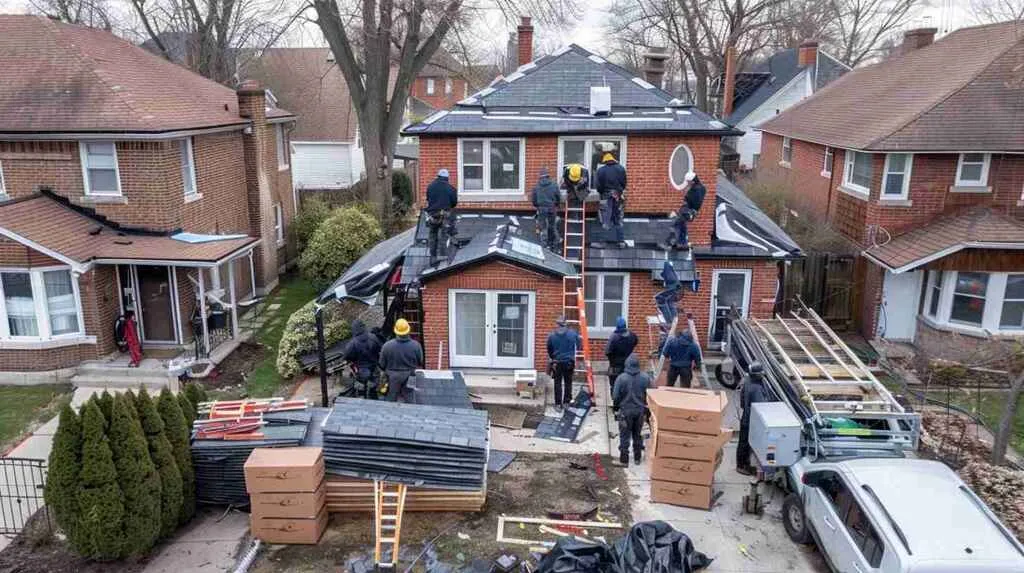
Pressure Wash a Shingle Roof Queens NY? Roofers Say No, Here’s Why
Quiet afternoons in Queens have a way of turning into expensive disasters when a homeowner decides to blast their shingle roof with a pressure washer. What starts as a $600 cleaning can end up a $9,000 premature roof replacement, and I’ve watched that exact sequence play out across Jamaica Estates, Howard Beach, and Bayside more times than I care to count. Let me walk you through exactly what happens when high-pressure water meets asphalt shingles-step by step, like a recipe that goes horribly wrong when you crank the heat too high.
Why Pressure Washing Shingle Roofs in Queens Is a $600 Mistake That Becomes a $9,000 Problem
Blasting a Queens shingle roof with a pressure washer is one of the fastest ways to waste the life you’ve got left on that roof, and I’ll tell you straight: it’s almost never worth the risk. After 19 years of climbing onto roofs across this borough, I’ve seen too many homeowners turn an 8-year-old roof into something that behaves like it’s over 20 years old-all in a single Saturday afternoon. Think of those shingle granules like the seasoning crust on a perfectly seared steak: you wouldn’t scrape it off with a spatula, and you definitely shouldn’t blast it off with 2,000 PSI of water. Your roof is built in layers-like a good lasagna, every component has a job-and when you strip away the top protective layer, everything underneath starts to break down faster. Here in Queens, where we get strong sun over neighborhoods like Jamaica Estates, thunderstorms rolling off the Rockaways, and that salty coastal air near the water, your shingles are already fighting a tough battle; pressure washing just hands the elements an easy win.
At 34th Avenue and 165th Street in Flushing last fall, I ran my hand along a gutter and came up with a palm full of black grit-that’s your first clue pressure washing went wrong. The homeowner had hired a weekend warrior with a big machine, and by the time I showed up, the gutters looked like someone had dumped ground black pepper along the entire perimeter. Those weren’t dirt particles; they were the ceramic-coated granules that protect asphalt shingles from UV rays and weather. Losing them is like scraping all the seasoning off a cast-iron pan and expecting it not to rust. The roof itself was only 8 years old-should’ve had a decade of solid life left-but after one aggressive cleaning, it was already curling at the edges and showing bald spots where the black asphalt base was exposed. I walked him through it like explaining why you can’t salvage a dish once you’ve burned the crust: the damage was done, and no amount of patching would bring back what was stripped away.
So can you pressure wash a shingle roof? The blunt answer for asphalt shingles in Queens is no. Here’s why: asphalt shingles are designed as a multi-layer system-there’s a fiberglass or organic mat base, asphalt coating, and those granules on top, all bonded together and laid in overlapping courses like lasagna noodles stacked to shed water downward. When you hit them with high-pressure water, especially at an upward angle or too close, you’re not just cleaning algae; you’re forcing water under the shingle laps, loosening the adhesive seal strips, and physically tearing granules off the surface. In a place like Queens, where summer sun bakes the shingles brittle, winter freeze-thaw cycles crack weakened spots, and coastal storms drive wind-blown rain sideways, every bit of damage you cause with that wand gets amplified ten times over the next few seasons.
DIY Pressure Washing on Asphalt Shingles in Queens
- Stripping granules and voiding manufacturer warranty: Most shingle warranties explicitly state that high-pressure cleaning voids coverage, and you’ll lose the protective granule layer that keeps UV from degrading the asphalt beneath.
- Forcing water under laps and into attic/ceilings: On two-story homes especially, angling the wand upward drives water backward under the shingle overlaps, bypassing the waterproof design and creating pathways straight into your living space.
- Turning an 8-10 year old roof into a 20+ year old roof in one afternoon: Accelerated granule loss and compromised seals mean your roof ages faster than it should, cutting its effective life in half or worse.
What Actually Happens When You Blast a Shingle Roof (Queens Climate Edition)
Granules, Water Intrusion, and Queens Weather Working Against You
Let me be blunt: if your plan is to stand on a ladder and “just lower the pressure a bit,” you’re already flirting with a leak. A few summers back, right after a thunderstorm rolled off the Rockaways around 6 p.m., I inspected a rental in Howard Beach where the landlord had hired a handyman to “clean the black streaks” with a power washer. The guy got a little too close under the edge of the shingles and drove water up under the laps; two weeks later, I was tracing mysterious bedroom ceiling stains back to that cleaning job. The shingles themselves were curling prematurely on just the side that had been pressure washed, almost like they’d been scalded-which, in a way, they had been. Here in Queens, we get storms that sweep in fast from the coast, pushing rain horizontally against siding and up under roof edges. When you’ve already loosened the shingle seal with a pressure washer, that wind-driven water finds every new gap you’ve created and works its way into places it was never supposed to reach. Add in the salt air near neighborhoods close to the water, and you’re basically handing moisture an engraved invitation to rot out your roof deck.
The damage unfolds like a bad recipe where you turned the heat up too high and now you can’t undo it. First, you remove the granules-that’s your protective “crust” gone, exposing the soft asphalt underneath to UV and weather. Second, the high-pressure stream opens pathways: it loosens nails slightly, lifts shingle edges, and forces water under laps that were designed to shed water down and out, not accept it from above. Third, Queens climate takes over. The strong summer sun over areas like Jamaica Estates bakes that newly exposed asphalt until it gets brittle and cracks. Then our freeze-thaw cycles in late fall and winter expand any water that’s seeped into those tiny cracks, turning hairline damage into full leaks over bedrooms and living rooms. What started as “I just want to clean the algae” becomes a cascading failure-like forgetting salt in bread dough and then trying to fix it by adding more flour; you’re just compounding the original mistake until the whole thing is ruined.
Top 4 Hidden Problems Pressure Washing Can Cause
-
❌
Micro-cracks in shingles you can’t see from the ground: The force creates hairline fractures in the asphalt that only show up months later as leaks or accelerated aging. -
❌
Loosened nails and exposed fastener heads: Water hitting the underside of shingle tabs can shift nails upward or sideways, breaking the waterproof seal around each penetration. -
❌
Water pushed into soffits and wall cavities: Overspray and misdirected streams can send gallons into areas with no drainage path, leading to mold and rot inside walls. -
❌
Voided shingle manufacturer and workmanship warranties: Most warranties explicitly exclude damage from improper cleaning methods, leaving you on the hook for the full replacement cost.
Safe Ways to Clean a Shingle Roof in Queens Without Destroying It
Soft Washing and Low-Pressure Methods That Target Algae, Not Shingles
I still remember the first time I saw wand marks burned into shingles; it looked like someone had dragged a grill brush across the roof, leaving parallel scars where the granules used to be. Fast forward to one cold November morning, breath fogging in the air in Bayside, and I met an elderly couple who’d been mailed a coupon for discount roof pressure washing. They called me first because, in their words, “we don’t buy anything off a postcard until Luis looks at it.” I walked the roof and showed them, shingle by shingle, where their older asphalt still had enough granules to last 7-10 more years-if nobody blasted them off. We cancelled the coupon crew on the spot, and I set them up with a gentle, low-pressure soft wash targeted only at the algae, not the shingles. The whole process used manufacturer-approved cleaners applied at garden-hose pressure, letting the chemistry do the work instead of relying on brute force. Here’s my insider tip from nearly two decades on Queens roofs: if your shingles are over 10 years old, always have a roofer inspect granule coverage and shingle flexibility before agreeing to any cleaning-and if someone suggests high pressure, walk away. On older roofs, I’ll refuse aggressive methods outright because the risk of turning a cosmetic issue into a structural disaster is just too high.
Think of a safe roof cleaning like following a proper recipe: you need the right ingredients, the correct method, and you can’t skip steps or crank up the heat to save time. The “ingredients” are manufacturer-approved algae and mildew cleaners-usually a diluted bleach or zinc-based solution that kills organic growth without harming asphalt or granules. The “method” is low-pressure application, often with a pump sprayer or soft-wash system that delivers the cleaner at 60-100 PSI (about the same as a garden hose with a spray nozzle), not the 1,500-3,000 PSI of a pressure washer. You let the solution dwell for 10-15 minutes to break down the algae, then rinse gently with controlled water flow, always working downward and never blasting upward under the shingle laps. Around vulnerable details-flashings at chimneys, valleys where two roof planes meet, plumbing vents-you use even less pressure and more hand work, because those are the spots where water intrusion starts. In Queens, where storms and coastal conditions already test every weak point, protecting those details during cleaning is the difference between a roof that lasts and one that leaks by next spring.
How a Professional Soft Wash Roof Cleaning Works in Queens
- Roof inspection: Check shingle age, granule coverage, and weak spots-especially ridges, valleys, and areas near the water side of the house where wind-driven rain and salt air cause the most wear.
- Protect landscaping: Wet down plants thoroughly and cover sensitive shrubs, flowers, and grass with breathable tarps so the cleaning solution doesn’t harm anything below.
- Apply cleaning solution: Low-pressure application of algae-killing mix at manufacturer-safe concentrations, using a pump sprayer or soft-wash rig to coat the affected areas without physical scrubbing.
- Dwell time and gentle rinse: Let the solution work for 10-15 minutes to break down organic growth, then rinse with garden-hose-level pressure, never blasting upward under the shingle laps or into valleys.
- Final check: Verify gutters are clear of debris, look for any pre-existing damage that might need repair, and document before/after photos for the homeowner’s records.
When to Call a Pro Instead of DIY
Call a roofer like Shingle Masters now
- You already pressure washed and now see granules piled in the gutter like black sand-damage is done and you need to know how much life is left.
- There are new ceiling stains or damp attic smells within weeks of cleaning, indicating water got past the shingles during the wash.
- Your roof is over 10 years old and has visible curling or bald spots where granules are missing-cleaning might do more harm than good.
Can usually wait for a scheduled soft wash
- Light algae streaks but no missing granules-cosmetic issue that responds well to gentle chemical treatment.
- Roof under 10 years old with solid shingle coverage and no curling-good candidate for preventive soft washing.
- You’re planning a cleaning 2-3 weeks before a big event like a backyard party in Forest Hills and the roof just needs to look better, not be saved from disaster.
Should You Ever Pressure Wash a Shingle Roof? A Simple Queens Decision Guide
$9,000 later, most homeowners tell me the same thing: “I wish I’d called you before I touched that pressure washer.” In Queens, the answer for asphalt shingles is effectively no-you should not pressure wash them, period. Run through this quick mental checklist before you even think about it: Is the roof over 8 years old? Are you seeing actual missing granules or just cosmetic algae streaks? Have you had any leaks or attic moisture in the past year? If any of those answers raise a red flag, don’t gamble. The risk of stripping protective granules, forcing water under shingle laps, and turning a repairable roof into a replacement project is just too high when you’ve got safe alternatives like soft washing. When in doubt, call a roofer to inspect the shingles and lay out a safe cleaning or repair plan-because once you blast those granules off, you can’t put them back, and the clock starts ticking faster on your roof’s remaining life.
Can You Pressure Wash Your Queens Shingle Roof?
START: Is your roof asphalt shingles in Queens, NY?
If YES → Is any company suggesting pressure washing over 1000 PSI?
If YES → Do NOT pressure wash. Ask for soft wash method or call Shingle Masters for an inspection.
If NO → Confirm the method is soft wash/low-pressure and approved by your shingle manufacturer. Verify they won’t exceed garden-hose pressure.
Final answer for asphalt shingles: Do not pressure wash. The risk of granule loss, water intrusion, and voided warranties is too high.
If NO (not asphalt shingles):
You may have a different roof type-metal, tile, slate, or rubber. Get a professional inspection before any cleaning to determine safe methods for your specific material.
Queens-Specific Roof Care: Keep It Clean Without Killing It
Here’s the question I always ask homeowners: do you want the roof to look clean for next month’s barbecue, or do you want it to last five more winters? It’s the same logic as plating a dish beautifully versus cooking it properly-one is for show, the other is for actual nourishment and longevity. Short-term curb appeal means nothing if you’ve stripped away the protection your roof needs to survive Queens weather. In neighborhoods like Flushing, you’re dealing with strong summer sun that bakes shingles brittle; over in Bayside, you’ve got tree cover that holds moisture and encourages algae; down in Howard Beach, the coastal air carries salt that accelerates corrosion on exposed fasteners. Each of those exposures demands a different level of care, but they all share one rule: don’t blast away the very thing keeping your roof alive. A little patience, the right cleaning method, and regular maintenance will always outlast a quick pressure-wash fix that looks good today and costs you a fortune two years from now.
Think of roof maintenance like the ingredients in a long-life recipe-skip one and the whole thing falls apart faster than it should. Start with regular gutter cleaning, at least twice a year in spring and fall, because clogged gutters back water up under the shingle edge and rot out fascia boards. Do periodic visual checks from the ground, looking for curling, missing shingles, or piles of granules in downspouts. After big storms roll off the Rockaways-especially those late-summer thunderstorms and winter Nor’easters-walk around the house and check for lifted shingles, debris impacts, or downed branches that might’ve punctured the roof. If you spot algae streaks forming, schedule a soft wash before they spread across the entire roof, but don’t wait until the shingles themselves are compromised. And here’s the final ingredient: call for a professional inspection every 3-5 years, or immediately if you’ve had any leaks, ceiling stains, or attic moisture. That proactive approach-checking, maintaining, and addressing small issues before they become expensive disasters-is what keeps a Queens roof performing for its full expected life instead of dying early because someone thought a pressure washer was the answer.
Queens Shingle Roof Maintenance Schedule
Spring
Inspect after winter, check for missing shingles and clogged gutters. Look for ice-dam damage along eaves and any granules that washed down during snowmelt.
Early Summer
Look for algae streaks forming and schedule soft wash if needed. Check attic ventilation to prevent heat buildup that bakes shingles from below.
Fall
Clean gutters before leaves pile up and Nor’easter season hits. Check flashing around chimneys and penetrations for gaps or rust that could let water in.
After Major Storms
Quick walk-around check for lifted shingles, debris impacts, or downed branches-especially near the water in neighborhoods like Howard Beach and the Rockaways where wind hits hardest.
Common Queens Roof Cleaning Questions
Can you pressure wash a shingle roof if you stay far away with the wand?
Distance lowers the effective pressure, but it doesn’t eliminate the risk-you’re still delivering high-velocity water that can strip granules and drive moisture sideways under shingle laps if the angle is wrong. Even from 10 feet away, a 2,000 PSI stream focused on one spot will do damage. The safer answer is to skip the pressure washer entirely and use a soft-wash system designed for roofs.
How often should I clean the black streaks off my roof in Queens?
Typically every 3-5 years with soft washing, depending on shade, tree cover, and proximity to the water. Roofs in heavily shaded areas like parts of Forest Hills or near coastal moisture in Howard Beach may see algae return faster. The key is to address it before the streaks spread across the entire roof, but don’t obsess over every little spot-algae is cosmetic until it gets so thick it holds moisture against the shingles.
Will a soft wash harm my plants?
Not if it’s done correctly. A responsible crew will pre-wet all landscaping, cover sensitive plants with breathable tarps, and rinse everything thoroughly after the cleaning is done. The cleaning solutions are diluted and applied at low pressure, so runoff is minimal if you’re working with a pro who knows what they’re doing. I always wet down the flower beds and foundation plantings before I start, then rinse them again when I’m finished-it’s part of the recipe.
My roof is already 20 years old. Is cleaning even worth it?
Sometimes no. If the shingles are brittle, curling, and already losing granules in large patches, your money is better spent planning for replacement rather than cleaning. A 20-year-old roof in Queens is near the end of its expected life anyway, and cleaning won’t add enough years to justify the cost. I’ll walk the roof and be honest with you: if I see widespread damage, I’ll tell you to start budgeting for a new roof instead of wasting money on cosmetic fixes.
Do you need to walk on the roof to clean it?
Often yes, but carefully. For soft washing, a pro will walk strategic paths-usually along ridges and valleys where the sheathing is best supported-to apply cleaner evenly and check for pre-existing damage. We use proper footwear with soft soles and avoid stepping directly on brittle or curling shingles. On steep or fragile roofs, some cleaning can be done from ladders or with extension wands, but a thorough job usually means getting up there and moving around safely.
In Queens, the smart move for keeping your shingle roof clean and functional is soft washing combined with regular maintenance-not pressure washing that strips away years of life in an afternoon. If you’ve got algae streaks forming, curling shingles, or any doubt about whether cleaning is safe, call Shingle Masters to inspect your roof and lay out a plan that targets the algae without destroying the shingles. We’ll walk you through exactly what your roof needs, what it doesn’t, and why touching a pressure washer to asphalt shingles is almost never the right answer. Don’t gamble with a $9,000 mistake when a simple inspection and the right cleaning method can keep your roof performing for years to come.