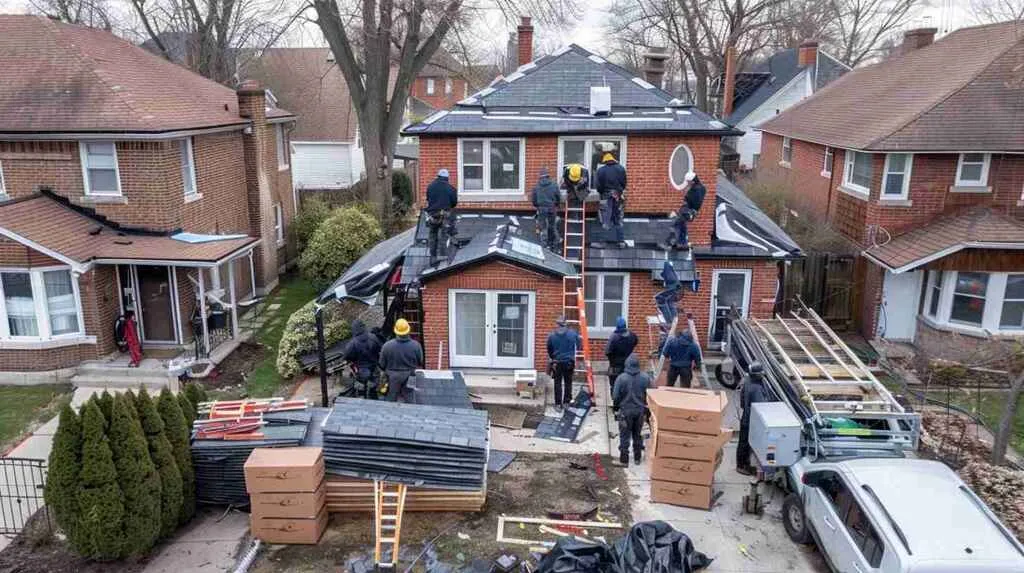
Shingle Roof Cleaning Services Queens NY – Professional Treatment
Unexpected fact: in Queens, a proper professional shingle roof cleaning usually costs less than one month of average rent, yet can safely add 5-10 years of life to many shingle roofs that homeowners are already pricing for replacement. In my voice, I’ll tell you straight: gentle, professional soft-wash cleaning treats your shingles like you’d treat your favorite non-stick pan – you don’t blast it with a pressure washer or attack it with industrial-strength bleach – and the difference between doing it right and doing it wrong is literally the difference between extending your roof’s life and ending it early.
Unexpected Value: What Professional Shingle Roof Cleaning Really Does for Queens Homes
Here’s my honest opinion: most shingle roofs I’m asked to “replace” in Queens just need a serious cleaning and treatment, not a funeral. When I talk about gentle soft-wash cleaning versus pressure washing or DIY bleach mixes, think about it this way – your roof is like a non-stick pan, not a burnt baking tray you scrape with steel wool. The soft-wash process uses low-pressure water (about the same as a garden hose) and roof-safe cleaners designed to kill algae, moss, and mold at the root without stripping off the protective granules that actually keep your shingles waterproof. I’ve seen countless Queens homeowners spend $15,000 on a replacement when a $900 cleaning would’ve bought them another decade, and honestly, that’s the cost vs rent comparison that drives me a little crazy – you’re talking one month of average Queens rent to potentially save a roof most contractors already gave up on.
On a typical block in Queens, if you stand across the street and look up, you’ll see at least three roofs that look “old” but are really just filthy. One July afternoon in Astoria, right after one of those quick, violent thunderstorms, I was on a three-story row house where the customer swore they needed a full replacement. The shingles were black-streaked, green with moss, and honestly, from the sidewalk, it did look bad. Halfway through the gentle chemical soft-wash, the sky cleared and the sun hit the cleaned section – it looked like someone peeled ten years off the house in thirty minutes. The homeowner came up to the top-floor window and yelled, “You’re kidding me, that’s the same roof?” That job is exactly why I tell people: dirty doesn’t mean dead. Those black algae streaks are like grease on a stove hood – they look terrible, they spread, and if you let them sit long enough they’ll damage the surface underneath, but the surface itself is often still perfectly good. I’m the guy who can often save roofs others give up on, and that Astoria job is my go-to proof.
Typical Shingle Roof Cleaning Costs vs. Queens Rent
| Home Type / Roof Size (Queens Example) | Roof Condition Description | Estimated Cleaning & Treatment Range | Notes vs. Local Rent |
|---|---|---|---|
| Small attached row house (Woodside, Elmhurst) – 1,200 sq ft roof | Light algae streaks, no moss, accessible pitch | $650-$900 | Less than half of one month’s rent in most Queens neighborhoods |
| Medium detached colonial (Bayside, Forest Hills) – 2,000 sq ft roof | Moderate black streaks, some green moss on north slope | $1,100-$1,600 | Approximately one month average rent; adds 5-8 years roof life |
| Large two-story with steep pitch (Douglaston, Little Neck) – 2,800 sq ft roof | Heavy algae coverage, moss clusters, some clogged valleys | $1,700-$2,400 | Comparable to 1 month rent; far cheaper than even partial replacement |
| Flat-roof section on older multi-family (Astoria, Jackson Heights) – 1,500 sq ft | Dark stains, ponding debris, concerns about leaks | $800-$1,200 | Often prevents emergency repairs costing 3-4× as much |
| Victorian or complex roof (Flushing, Whitestone) – 3,200+ sq ft, multiple angles | Extensive algae and moss, multiple valleys needing attention, tree overhang | $2,200-$3,200 | Still less than two months’ rent; typical replacement quote $18K-$28K |
Note: These are ballpark ranges for gentle soft-wash cleaning and protective treatment only, not repairs or full replacements. Actual cost depends on roof access, pitch steepness, and amount of buildup.
How Safe Shingle Roof Cleaning Works (And Why Pressure Washing Is Like Scrubbing a Teflon Pan with Steel Wool)
Here’s my honest opinion: most shingle roofs I’m asked to replace in Jackson Heights, Woodside, Bayside, and across Queens just need cleaning and treatment, not a funeral. Proper shingle roof cleaning uses low-pressure soft-wash – we’re talking garden-hose pressure, maybe 60-80 PSI tops – combined with roof-safe chemical cleaners that kill algae, moss, and mold spores at the biological level, not by blasting them off and taking half your roof with them. Think of it like cleaning a well-seasoned cast-iron pan: you don’t attack it with dish soap and a scouring pad because you’ll strip the protective layer; you clean it gently with the right method so it lasts another generation. The same logic applies to shingles. I see the same pattern in typical Queens neighborhoods over and over – homeowners get a replacement quote because their roof looks “shot,” when really it’s just covered in organic growth that makes a perfectly good 12-year-old roof look 25 years old.
I’ll never forget a Sunday morning in December in Flushing, 28 degrees out, when a customer called in a panic because water was dripping into their baby’s room. Turned out the problem wasn’t a hole – it was a thick, frozen layer of roof gunk: moss, wet leaves, and sludge packed under the shingles near the valley. The water had nowhere else to go but sideways, under the shingles and into the house. We did an emergency clean, careful de-icing, and a protective treatment, and by that evening they had no more drips and didn’t need a single new shingle. That’s when I started talking about roof cleaning as “drain unclogging for your house’s hat” – because that’s exactly what it is. When valleys and low spots get clogged with organic debris, water backs up just like a sink with a grease-packed trap. Routine cleaning and treatment prevent leaks by keeping those drainage pathways clear, and that’s something you can’t accomplish by tearing off shingles and starting over.
Step-by-Step: Soft-Wash Shingle Roof Cleaning Process
-
1
Initial roof inspection and debris removal: We walk the entire roof to check for loose or damaged shingles, clear gutters and valleys of leaves and sticks, and document problem areas with photos – like clearing crumbs off your cutting board before you start actually cleaning it. -
2
Pre-soak with roof-safe cleaner: We apply a biodegradable, pH-balanced cleaning solution designed to penetrate algae and moss without harming shingles or your landscaping below. This step is like soaking a dirty pan overnight – you let the chemistry do the work so you don’t have to scrub aggressively. -
3
Dwell time (15-30 minutes): We let the cleaner sit and break down organic buildup at the root level, killing spores so growth doesn’t immediately return. During this time, we protect plants and landscaping with tarps and light watering. -
4
Low-pressure rinse from top down: Using garden-hose pressure (never a pressure washer), we rinse the roof starting at the ridge and working down, letting gravity and gentle water flow carry away dead algae and loosened debris without blasting off granules. -
5
Spot treatment for stubborn areas: If any moss or algae clusters remain (common on north-facing slopes or under tree branches), we apply a second targeted treatment and gently brush or rinse those specific spots without aggressive scrubbing. -
6
Protective treatment application: We finish with a preventative coating that inhibits new algae and moss growth for 2-3 years, similar to seasoning a clean cast-iron pan so food doesn’t stick next time – it’s the step that makes the cleaning last.
⚠️ Dangers of Pressure Washing or Harsh DIY Bleach on Shingle Roofs
-
•
Stripping protective granules: High-pressure water (anything over 1,000 PSI, which most pressure washers deliver) blasts off the ceramic granules that shield asphalt shingles from UV rays and weather – once those granules are gone, your shingles age rapidly and lose their waterproofing. -
•
Forcing water under shingles: Pressure washing drives water sideways and upward under shingle edges, which can soak underlayment, rot decking, and create leaks where none existed before – it’s like power-washing the seal on your refrigerator door. -
•
Voiding manufacturer warranties: Almost every major shingle manufacturer (GAF, Owens Corning, CertainTeed) explicitly states that pressure washing voids the warranty – it’s treated the same as physical damage, which means if your roof fails afterward, you’re on your own. -
•
Discoloration and uneven appearance: DIY bleach or harsh chemicals can bleach shingles unevenly, leaving permanent white or faded spots – think of it like attacking a non-stick pan with oven cleaner and a wire brush; you’ll definitely remove the grime, but you’ll also destroy the surface in the process.
DIY vs. Pro Roof Cleaning in Queens: Where a Garden Hose Stops Being Enough
Blunt truth: if someone’s first tool for “cleaning” your shingle roof is a pressure washer, you should politely walk them back to the sidewalk. A homeowner can safely do very light maintenance – gently rinsing gutters from below, using a leaf blower from the ground to clear visible debris from the roof edge, or carefully brushing loose leaves off with a soft broom if you’re comfortable on a ladder – but the moment you’re talking about chemical cleaning, thick moss removal, or anything involving standing on the roof itself, you need a licensed pro with the right equipment and insurance. There was a late spring job in Bayside where a previous “cleaning” company had blasted a roof with a pressure washer so hard they carved grooves into the shingles. When I got there, the south side of the roof looked like someone took sandpaper to it – granules gone, edges curling, almost like salt scraped clean off a cutting board. The owner was furious because they just wanted the black algae stains off. I had to explain that aggressive cleaning can destroy a shingle roof faster than a storm, and we ended up carefully treating what we could save and documenting the damage so they could go after the other company. That day cemented my rule: if the hose can strip paint, it doesn’t belong on a shingle roof. Here’s an insider tip: ask any contractor, “What PSI will you use on my shingles, and what mix are you spraying?” and if they can’t explain a low-pressure soft-wash process in simple terms or they dodge the question, walk away.
Is Your Queens Shingle Roof Ready for Cleaning or Replacement?
The first question I usually ask a homeowner is simple: “When’s the last time anyone was on your roof for anything other than an emergency?” When I evaluate whether a roof is a good candidate for cleaning versus needing replacement, I look at four key things: age (most asphalt shingles are rated 20-30 years, so if yours are past that, we’re in different territory), missing or visibly curling shingles (a few here and there can be patched, but if you’re missing whole sections, that’s a structural issue), granule loss (check your gutters – if they’re filled with what looks like coarse black sand, your shingles are shedding their protective layer), and soft spots when you walk the roof (any sponginess means the decking underneath is rotting, which no amount of cleaning will fix). Think of it like overcooked pancakes versus just-burnt-on-the-bottom ones: if the whole pancake is charcoal, toss it and start over; if it’s only dark on one side, you can scrape and salvage. Most Queens roofs I see fall into the “just burnt on the bottom” category – they look terrible because of algae and moss, but the underlying shingles still have plenty of life left once you clean off the organic buildup.
Think of your roof like a cast-iron pan – you don’t attack it with steel wool and bleach if you want it to last; you clean it the right way, at the right time, with the right stuff, and then you maintain it with a little regular care. Ongoing maintenance means periodic cleaning (every 3-5 years depending on tree cover and sun exposure), keeping valleys and gutters clear after big storms, and watching for new black streaks or green patches so you can treat them before they spread. In my personal opinion, being a little fussy about roof cleanliness beats paying for premature replacement by a long shot. Those black algae streaks are basically grease on a stove hood – they build up slowly, look awful, and if you ignore them long enough they’ll damage the surface underneath, but catching them early and cleaning properly extends the life of the whole system. Moss buildup works like a clogged sink trap: it holds moisture against your shingles, lifts edges, and creates pathways for water to sneak under and rot the decking. And when I’m up on a roof inspecting granule loss, I compare it to salt or crumbs scattered on a cutting board – a few here and there is normal wear, but if the whole board is covered and you can see bare wood underneath, that’s a sign the protective layer is gone. One bit of local knowledge: Queens weather – humid summers, nor’easters dumping rain sideways, tree-lined blocks in neighborhoods like Forest Hills and Douglaston – accelerates algae and moss growth faster than you’d see in drier climates, so roofs here need more frequent attention even if they’re relatively new.
When you picture your shingles right now, do they look burnt to a crisp – or just like a pan that needs a good soak?
Do You Need Cleaning, Repairs, or Replacement?
START: Is your roof actively leaking right now?
- → YES → Is the leak widespread (multiple rooms) or is there visible sagging?
- → YES → Get a Replacement Quote
- → NO → Is the roof under 15 years old with minimal visible damage?
- → YES → Cleaning + Minor Repairs
- → NO → Get a Replacement Quote
- → NO → Are you missing more than 10-15 shingles, or do you see large bare patches?
- → YES → Cleaning + Minor Repairs
- → NO → Are your gutters filled with dark granules, or do shingles look “bald” in spots?
- → HEAVY granule loss → Get a Replacement Quote
- → LIGHT granule loss, mostly algae/moss → Cleaning & Treatment
⚠️ Call ASAP (Urgent)
- Water stains spreading on your ceiling or dripping into rooms
- Visible sagging or soft spots when you walk on the roof
- Large sections of shingles missing after a storm
- Gutters completely clogged and overflowing, causing water to pool near the foundation
- Heavy moss or ice dam that’s actively causing water backup
- Flashing around chimneys or vents visibly rusted through or separated
- Roof is older than 25 years and showing multiple problems at once
📅 Can Wait a Bit (Schedule Soon)
- Black algae streaks or green moss patches on north-facing slopes but no leaks
- Light granule accumulation in gutters but shingles still look intact
- A few curling or cracked shingles in isolated spots
- Debris buildup in valleys or around chimneys that isn’t causing immediate water issues
- Gutters draining properly but showing some organic buildup
- Roof looks “tired” or discolored but no structural damage you can see
- Planning to sell or refinance in the next 6-12 months and want better curb appeal
Keeping Your Shingle Roof Clean Longer in Queens’ Weather
After a professional cleaning, the simple habits that keep your roof looking good longer are the same ones you’d use to maintain a clean stove: trim back tree branches so they’re not constantly dropping leaves and holding moisture against the shingles, keep gutters clear so water drains properly instead of backing up under edges, and after big nor’easters or heavy storms, take a quick walk around your house to check valleys and low spots for debris pileup. Think of it like wiping the stove regularly so you don’t have to power-scrub baked-on grease later – a little ongoing attention prevents the big, expensive problems. Queens humidity and those beautiful tree-lined blocks in neighborhoods like Forest Hills make some roofs absolute algae magnets, so even with a protective treatment, you’ll want to stay on top of it.
Roof Cleaning & Checkup Schedule for Queens Shingle Roofs
| Task | Recommended Frequency | Why It Matters (Kitchen Analogy) |
|---|---|---|
| Clear gutters and downspouts | Spring and fall, plus after major storms | Like cleaning your sink strainer regularly – clogs force water to back up and go where it shouldn’t |
| Visual inspection from the ground | Every 6 months (spring and fall) | Same as checking your stove for spills before they burn on – catch small issues before they become disasters |
| Professional soft-wash cleaning and treatment | Every 3-5 years (or sooner if algae reappears) | Like deep-cleaning your oven before grease builds up to the point where it’s baked on permanently |
| Trim overhanging branches | Annually, ideally in late fall | Prevents constant leaf drop and shade, which is like keeping food debris off your counters so bacteria doesn’t grow |
| Post-nor’easter or heavy storm check | Within 48 hours of any major weather event | Like checking your dishwasher filter after running a load with heavy food scraps – storms dump debris that needs clearing fast |
Common Questions About Shingle Roof Cleaning in Queens, NY
How long does a typical shingle roof cleaning take in Queens?
Most residential shingle roofs in Queens take 3-6 hours for a complete soft-wash cleaning and treatment, depending on size, pitch, and how much buildup we’re dealing with. A small row house might be done in half a day, while a large colonial with steep angles and heavy moss could take a full day. We work efficiently but never rush – doing it right the first time is always faster than fixing damage from doing it wrong.
Will the cleaning chemicals damage my plants or landscaping?
No, because we pre-wet all plants and landscaping, cover delicate shrubs with tarps, and use biodegradable, plant-safe roof cleaners that are specifically formulated not to harm vegetation. After the cleaning, we rinse everything thoroughly from the ground up. Think of it like washing a pan with dish soap – the soap is strong enough to cut grease but safe enough that you’re not worried about it touching your hands or draining into the sewer.
How long will the cleaning results last before algae comes back?
With our protective treatment, most Queens roofs stay clean for 2-4 years, sometimes longer if the roof gets good sun and isn’t shaded by trees. Roofs on heavily wooded blocks or north-facing slopes in humid areas may see light regrowth sooner, but even then it’s much slower than before the initial treatment. Regular gutter cleaning and trimming back branches extends those results significantly.
Does professional roof cleaning void my shingle warranty?
Not if it’s done correctly with low-pressure soft-wash – in fact, most manufacturers recommend periodic gentle cleaning to remove algae and debris. What will void your warranty is high-pressure washing or using harsh chemicals not rated for asphalt shingles, which is why it’s critical to ask contractors about their methods and PSI before hiring. We provide documentation of our cleaning process and products for warranty purposes.
Can you clean shingle roofs in colder months, or is it summer-only work?
We can clean roofs year-round in Queens as long as it’s above freezing (ideally above 40°F) and dry, because the cleaning solutions need liquid water to work properly and we need safe, non-icy conditions. I’ve done plenty of December and January jobs when homeowners had urgent algae or moss issues causing leaks. The colder months sometimes work better because there’s less pollen and dust in the air, so the cleaned roof actually stays cleaner longer – like washing your car right after a rainstorm clears the air.
Why Queens Homeowners Trust Shingle Masters
-
✓
19+ years working exclusively on Queens shingle roofs – I grew up in Jackson Heights and learned roofing fixing leaks for my neighbors -
✓
Licensed and fully insured in New York State with liability and workers’ comp coverage on every job -
✓
Photo documentation of every job – before, during, and after – so you can see exactly what we did and why it mattered -
✓
Same-week estimates available – I’ll come out, walk your roof, and give you a clear, written quote with no pressure -
✓
Gentle soft-wash only – no high-pressure equipment ever touches your shingles, and we use roof-safe, biodegradable cleaners rated for asphalt shingles
Gentle shingle roof cleaning can often revive a stained Queens roof, stop leaks caused by organic buildup, and add years of life without the cost and disruption of premature replacement. If you’re looking at black streaks, green moss, or clogged valleys and wondering whether your roof is ready for the landfill or just ready for a good cleaning, call Shingle Masters for a photo-documented inspection and soft-wash shingle roof cleaning estimate in Queens, NY – I’ll walk you through what your roof really needs before you spend replacement money, and if cleaning isn’t the right answer, I’ll tell you that honestly too.