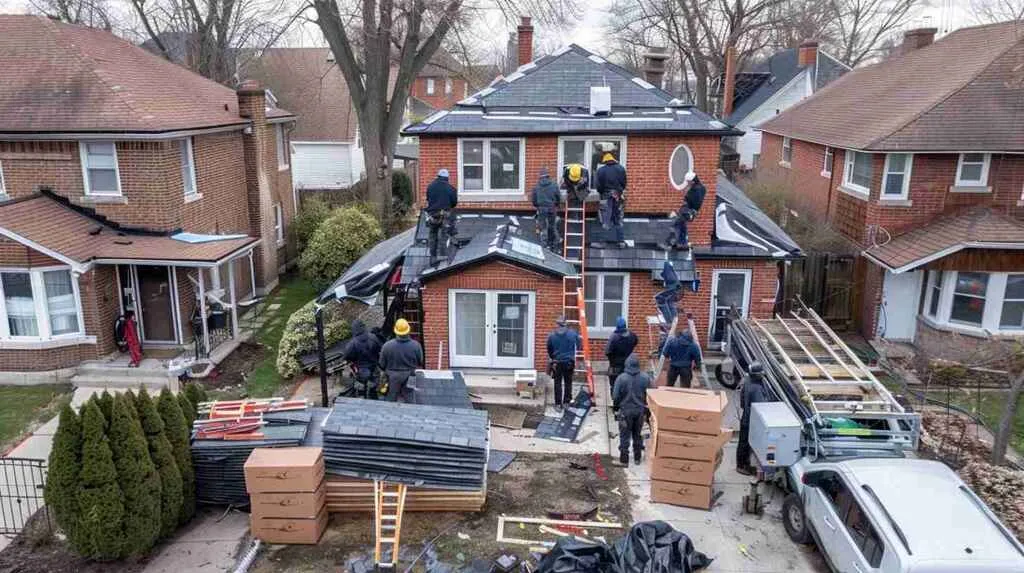
How Much Wind Can Shingle Roofs Take Queens NY – Wind Ratings | Free Quotes
Whipped by a nor’easter or summer thunderstorm, most common shingle roofs in Queens carry a factory rating somewhere between 60 and 130 mph. Here’s the thing, though: those numbers don’t mean what you think once you mix in tight corners, high-rises funneling gusts down the block, and the reality that half the installs in this borough cut corners on nail patterns and starter strips.
How Much Wind a Shingle Roof Really Handles in Queens
On a windy corner in Astoria, I can usually tell within five minutes if a roof’s going to lose shingles in the next big storm. The printed wind rating-60, 90, 110, even 130 mph-is just a best-case lab number. It assumes perfect installation, fresh sealant, calm mid-block conditions, and a house that doesn’t sit in a wind tunnel between taller buildings. In Queens, though, you’ve got microclimates everywhere: Rockaway Beach gets hammered by ocean gusts, Corona’s tight rows funnel wind like alleyways, and Astoria corners turn into mini wind tunnels when northwest storms blow down the avenue. That same 110 mph-rated shingle behaves completely differently depending on which block it lives on.
One November afternoon around 3:30, the sky over Rockaway turned that steel gray I don’t like. I was finishing a re-roof on a two-story right off Beach 116th when a gust slapped an unsecured bundle of shingles and sent one sliding down the deck. The homeowner came out nervous, asking if her new shingles would “just fly off like that.” That’s when I walked her through the wind rating: her old three-tabs were rated around 60 mph on a good day, and we’d just put on 130 mph architectural shingles with six-nail fastening. Two months later, a nor’easter hit, neighbors lost tabs, hers held like a champ. That contrast taught me to always explain what the numbers mean once you factor in install quality and the specific block.
Here’s my realistic take for Queens homeowners: if you’ve got older or builder-grade three-tab shingles installed with a basic four-nail pattern, you’re probably safe to around 50-70 mph in actual gusty conditions, maybe less on exposed corners or near the water. Modern architectural shingles installed with six nails per shingle, proper starter strips, and sealed edges can genuinely handle 110-130 mph on calmer mid-blocks-but drop that by 10-20 mph if you’re on a corner lot or right off the bay. Don’t just trust the wrapper; think about a specific storm night you remember, the one where branches came down or you heard things banging outside, and ask yourself whether your roof passed that test without drama.
| Shingle Type & Install | Factory Wind Rating (mph) | Realistic Queens Mid-Block (mph) | Realistic Windy Corner / Waterfront (mph) |
|---|---|---|---|
| Old three-tab, 4-nail pattern | 60 mph | 50-60 mph | 40-50 mph |
| Standard architectural, 4-nail | 90 mph | 70-80 mph | 60-70 mph |
| Architectural, 6-nail + starter strip | 110 mph | 95-105 mph | 80-90 mph |
| Premium architectural, 6-nail + sealed edges | 130 mph | 110-120 mph | 95-105 mph |
Why the Number on the Shingle Wrapper Lies to Your House
The installer matters more than the label
Let me be blunt: the number printed on the shingle wrapper is just the starting point, not a guarantee for your particular house. I’ll never forget a July night in Corona, about 11 p.m., thunder rolling and wind whipping between those tight rows of houses. A landlord called me in a panic because shingles were flapping like cards in a bike wheel. When I got up there the next morning, I could see plain as day: four-nail pattern, high-nailed, and cheap builder-grade shingles rated to maybe 70 mph. The storm winds had gusted over 80. I used that job for years as a teaching example-if the manufacturer says one thing but the install is sloppy, the real-world wind resistance drops fast. Nail placement matters, nail count matters, and whether the roofer bothered with proper starter strips and hand-sealed the first course matters just as much as the brand name on the bundle.
Across Queens-whether it’s tight rows in Corona and Elmhurst or more open blocks in Jackson Heights-the same shingle rating plays out differently depending on how wind flows around your specific house. Roof pitch changes uplift forces, attic ventilation affects pressure differentials, and nail pattern literally determines whether tabs peel up or stay stuck down. If your roofer nailed too high (above the adhesive strip), used only four nails instead of six, or skipped the starter strip to save a few bucks, your 90 mph shingle might only be good for 60 mph in real gusts. That’s why I always tell people: ask your roofer for the exact nail pattern and starter-strip details, not just the shingle brand. The install is what decides if that wrapper number holds or falls apart in the first big blow.
| Myth | Fact |
|---|---|
| “My shingles are rated to 110 mph so I’m safe.” | That rating assumes perfect install and calm mid-block conditions-corners, high-rises, and bad nailing can drop the real limit by 20-40 mph. |
| “All architectural shingles handle wind the same.” | Architectural shingles vary wildly; a budget brand with four nails can fail at 70 mph while a premium six-nail install holds past 120 mph. |
| “If my roof survived one storm, it’ll survive them all.” | Every storm weakens sealant and loosens nails slightly; a roof that barely made it through one 80 mph gust may not survive the next. |
| “Wind only affects roofs near the ocean.” | Queens corners, gaps between buildings, and higher elevations create mini wind tunnels miles inland that can match waterfront gusts. |
| “Newer shingles don’t need inspections after wind.” | Even brand-new roofs can have install defects; a single missed starter strip or bad nail line leaves a weak point waiting for the right gust. |
⚠️ Warning: Assuming your roof meets its printed wind rating
Bad nailing, missing starter strips, and aging sealant can drop your roof’s real wind resistance by 20-40 mph below the printed rating-especially on exposed corners and near taller buildings that funnel gusts. If your install was done fast or cheap, or if your roof is more than five years old, don’t trust the wrapper number without a professional inspection. Those weak points are where wind gets under tabs and starts peeling them back like a deck of cards.
Queens Microclimates: Same Shingle, Different Outcome
On a cold, clear morning in Astoria, I inspected a roof over a little café right on a busy corner where the wind funnels down the avenue. The owner complained about shingles always lifting on the same edge, even though they were “supposed to be good up to 110 mph.” When I got there at 7 a.m., coffee in hand, I saw the problem: no starter strip with proper seal, and the fascia detail basically turned that edge into a sail. The shingles themselves were fine-installed on a calmer block, they’d meet their rating-but the local wind tunnel meant I had to redesign the edge and upgrade nail pattern so it could survive those corner gusts. That’s Queens in a nutshell: the same shingle can be bulletproof on one block and a disaster three streets over.
If you think of your roof like a big sail on a boat, the shape of your house and where it sits in the neighborhood matter just as much as the shingles themselves. Rockaway waterfront homes take constant ocean wind that pushes from the same direction and tests the same roof edges over and over. Forest Hills mid-blocks sit lower, surrounded by trees and neighboring houses that break up gusts, so even a modest shingle install can hold for years. Astoria and Bayside corners get unpredictable cross-winds funneled between taller buildings, creating sudden pressure spikes that peel tabs you wouldn’t expect to fail. I always tell corner-lot owners and anyone near open water: pay extra attention to eaves and ridges, because those are the first places wind gets under and starts lifting. A roof that’s rated for 110 mph on paper might need reinforced edges and six-nail patterns to actually survive 90 mph in your specific microclimate.
Rockaway Waterfront Blocks
Ocean-facing homes take steady, strong prevailing winds from the southwest and southeast, often 10-20 mph higher than inland Queens. Salt air also ages shingles faster, weakening sealant. Roofs here need premium architectural shingles with six-nail patterns, sealed starter strips, and reinforced ridge caps. Even with proper install, expect the realistic wind limit to be 10-15 mph below the factory rating because of constant exposure and corrosive salt spray.
Forest Hills & Mid-Block Residential
Quiet mid-blocks surrounded by mature trees and neighboring two-story homes create natural windbreaks. Gusts here are typically 15-25% lower than on corner lots or open areas. A standard architectural shingle with four-nail pattern can often meet its factory rating in these calmer pockets, though six nails and proper starter strips are still worth doing for long-term durability. These roofs usually fail from age and sun exposure before wind ever becomes the main problem.
Astoria / Bayside Corner Lots & High-Rises
Corner lots near busy avenues and homes next to taller apartment buildings face unpredictable wind-tunnel effects-gusts suddenly spike when storms blow down the corridor between structures. These microclimates can match waterfront wind speeds even miles inland. Roofs here absolutely need six-nail patterns, sealed edges, and upgraded starter strips, especially on the corners facing the open street or building gap. Realistic wind limits drop 15-20 mph below factory ratings without these upgrades.
⚡ Fast Facts: Wind and Queens Roofs
- Typical storm gusts in Queens: Summer thunderstorms 50-70 mph, nor’easters 60-80 mph, rare intense storms 80-100+ mph.
- Common failure wind for older three-tabs: Around 55-65 mph in real conditions with aging sealant and basic four-nail pattern.
- Six-nail pattern improvement: Can boost real-world wind resistance by 15-25 mph over standard four-nail installs.
- Where shingles lift first: Eaves, rakes (side edges), corners, and ridge caps-anywhere wind can get underneath the tab.
How to Tell if Your Roof Is at Risk in the Next Big Wind
Street-level signs you can spot from the sidewalk
Here’s my honest take: most people wildly overestimate what their shingles can handle. After every windy night, you should do a quick visual check from the ground-walk around your house and look for curled edges on tabs, especially at the eaves and corners. If you see shiny nail heads poking through or lifted tabs that aren’t lying flat, that’s wind damage starting. Flapping ridge caps or loose shingles that move when you poke them with a broom handle from a ladder are huge red flags. Granules piling up in your gutters after a storm mean the surface is wearing down and sealant is failing. And if you noticed drafty spots in your attic or heard loud flapping or banging noises during the storm, don’t ignore it-that’s wind getting under the roof deck.
Think back to the worst windy night you remember in Queens-how did your roof sound and look the next morning?
When I walk into a house in Queens and someone asks, “So how much wind can my shingle roof take?”, I flip that question around. I ask them to remember the most intense storm they’ve lived through-maybe that Halloween nor’easter a few years back, or a summer thunderstorm that knocked out power and sent branches flying. Then I walk them through what their roof should’ve looked and sounded like if it was holding up properly, versus what they actually experienced. If you heard loud banging, saw shingles on the lawn, or spotted water stains on your ceiling afterward, your roof didn’t pass that test. Use the checklist and decision tree below to match your memory against what a healthy roof does in those conditions, and you’ll know whether it’s time to call Shingle Masters for an inspection.
✓ Before You Call: What to Look for After a Windy Night in Queens
- Missing or torn shingles: Check your lawn, gutters, and driveway for pieces of shingle; scan the roof from the ground for obvious gaps.
- Lifted corners or tabs: Look at eaves and rakes-tabs should lie flat; if corners are curled up or flapping, wind got under them.
- Debris lines on the roof: Leaves or twigs piled along certain edges can show where wind is catching and creating uplift.
- Interior ceiling stains or drips: New water marks after a windy rainstorm mean wind-driven rain is getting past damaged shingles.
- Granules in gutters: A handful is normal; clumps or piles mean the shingle surface is breaking down and losing its seal.
- Flapping or banging noises: If you heard loud noises during the storm, loose shingles or ridge caps were moving-they need immediate attention.
- Drafty attic or increased attic temperature: Wind pulling at the roof can create gaps; check if your attic feels windier or hotter than before.
🔀 Decision Tree: Do You Need a Wind Damage Inspection or Emergency Repair?
YES →
Are pieces of shingle visible on the ground or is the roof deck exposed?
NO →
Did you hear loud flapping or see granules in gutters?
Deck exposed = URGENT
Call Shingle Masters same-day for emergency tarp and repair quote.
Granules/flapping = CAN WAIT
Schedule a non-urgent inspection within 1-2 weeks to assess damage and plan repair.
🚨 Call Shingle Masters ASAP (same day)
- Pieces of shingle on the ground or in the street
- Visible roof deck or underlayment exposed
- Active leaks or dripping from ceiling during/after rain
- Large sections of ridge cap missing or hanging loose
📅 Schedule an Inspection (within 1-2 weeks)
- Curled or lifted tabs but no missing shingles yet
- Granules in gutters or scattered on driveway
- Flapping noises during storms but no visible holes
- Neighbors’ roofs lost shingles but yours looks okay from the ground
Wind-Resistant Upgrades and What They Cost in Queens
If you think of your roof like a big sail on a boat, the shape of your house and where it sits in the neighborhood matter just as much as the shingles themselves. The most impactful upgrades for wind come down to switching from three-tab to architectural shingles, using a six-nail pattern instead of four, installing storm-rated starter strips with better adhesive, reinforcing edges and rakes with doubled underlayment, and making sure your attic ventilation is balanced so pressure doesn’t build up and push tabs from below. Not gonna lie, these details add cost upfront, but cutting corners is what makes roofs fail early in Queens storms. I’ve seen too many homeowners pay for a cheap re-roof only to call me two years later after a nor’easter peeled half their new shingles off because the crew skipped the starter strip and nailed everything high to go faster. Spend the money on the right install the first time, and your roof will actually live up to those wind ratings on the wrapper.
| Scenario | What’s Included | Typical Queens Price Range |
|---|---|---|
| Minor wind repair | Replace 10-20 lifted or missing shingles, re-seal tabs, inspect surrounding area | $400-$900 |
| Edge/starter strip upgrade | Remove and replace starter strips on eaves and rakes, add drip edge, hand-seal first course | $1,200-$2,500 |
| Partial slope re-shingle (6-nail) | Replace one damaged slope with architectural shingles, six-nail pattern, new underlayment | $2,800-$5,500 |
| Full architectural re-roof (mid-block) | Complete tear-off, ice & water shield, synthetic underlayment, 110 mph architectural shingles, six-nail pattern, ridge vents | $9,000-$16,000 |
| Full architectural re-roof (exposed corner/waterfront) | Everything above plus reinforced edge details, storm-rated starter strips, sealed ridge caps, premium 130 mph shingles | $12,000-$22,000 |
🔧 Our Wind-Focused Roof Inspection and Upgrade Process
- Initial call and scheduling: We ask about your address, recent wind damage, and the storm you remember most-then schedule a same-week visit for urgent cases or next available slot for routine checks.
- On-site wind evaluation: Hex or a senior crew member walks your block to assess microclimate, checks surrounding buildings and trees, then inspects your roof for nail patterns, starter strips, edge details, and existing damage.
- Customized recommendation: We explain exactly what your roof can handle in its current state, what upgrades would match your specific block’s wind conditions, and provide a detailed written quote with options.
- Installation tailored to your exposure: If you move forward, we use the nail pattern, starter strips, and edge reinforcements your location actually needs-not the bare minimum the manufacturer allows.
- Final inspection and cleanup: Before we leave, we walk you around the property, show you the upgraded details, confirm every nail and seal is right, and sweep/magnet the entire yard so you won’t find fasteners in your tires.
✓ Why Queens Homeowners Call Shingle Masters After Every Big Wind
- NYC licensed and fully insured – all work meets or exceeds NYC building code wind-load requirements
- 19+ years roofing in Queens – Hex has seen every microclimate and storm pattern this borough can throw at a roof
- Same-week inspections – we prioritize post-storm damage assessments and get to you fast
- Emergency tarp service – if your roof is open to the weather, we’ll secure it same-day while you decide on permanent repair
- Manufacturer-approved wind-rated installations – we follow the enhanced nail patterns and sealing specs required for high-wind warranties
- Honest assessments – if your roof can be repaired instead of replaced, we’ll tell you; we don’t upsell full tear-offs when a patch and upgrade will do the job
Frequently Asked Questions: Wind Ratings & Queens Roofs
What’s the actual mph limit I should trust for my shingle roof in Queens?
It depends on your shingle type, install quality, and block location. Old three-tabs with basic four-nail pattern realistically handle 50-65 mph in gusty Queens conditions. Modern architectural shingles with six nails, proper starter strips, and sealed edges can genuinely hit 110-130 mph on calmer mid-blocks but drop to 80-105 mph on windy corners or near the water. Don’t just trust the wrapper-ask your roofer how it was installed and whether your specific block changes the equation.
Will my homeowners insurance cover wind damage to my shingle roof?
Most Queens homeowners policies cover sudden wind damage-missing shingles, torn tabs, or structural damage from falling branches-but they won’t cover wear-and-tear or gradual deterioration. If a storm rips off a section of your roof, file a claim right away and call us for an inspection and documentation. We’ll work with your adjuster to make sure the damage estimate matches what actually needs repair. Just know that policies often have wind/hail deductibles, and if your roof was already in rough shape before the storm, the insurer may only cover part of the replacement.
Should I repair wind damage or just replace the whole roof?
If the damage is limited to one slope or a specific area and the rest of your roof is less than 12-15 years old with decent shingles, a targeted repair usually makes sense. We’ll match the existing shingles and upgrade the nail pattern in the repair zone so it holds better next time. But if you’ve got widespread lifted tabs, aging three-tabs all over, or the roof is already 18+ years old, it’s smarter to budget for a full replacement with modern wind-rated shingles and proper install-you’ll spend the money eventually, and doing it now means the next storm won’t catch you with an emergency.
How fast can Shingle Masters respond after a major storm in Queens?
For active leaks or exposed roof deck, we offer same-day emergency tarp service-typically within 4-8 hours of your call if the storm has passed and it’s safe to work. For non-emergency post-storm inspections, we usually schedule within 2-5 business days depending on how many calls we’re handling. After big borough-wide events like nor’easters, our wait time can stretch to a week, but we prioritize cases where water is actively getting in. Call us as soon as you spot damage; the earlier you’re on our list, the faster we can get to you.
Can I upgrade my roof’s wind resistance in phases, or does it have to be all at once?
Absolutely-if budget is tight, start with the most vulnerable areas: upgrade your eaves and rakes with storm-rated starter strips and hand-sealed tabs, reinforce the corners and edges where wind hits hardest, and re-nail any loose sections with the six-nail pattern. Those targeted upgrades can buy you a few more years and significantly improve wind resistance without the cost of a full tear-off. When you’re ready for the full re-roof, we’ll credit any recent work we did and make sure the whole system is cohesive. Just know that patchwork upgrades work best on roofs that still have 5-10 years of life left; if the shingles are already shot, phasing won’t help much.
Your roof’s true wind limit isn’t just about the number on the shingle wrapper-it’s about your specific Queens block, the way wind flows around your house, and whether your roofer actually followed the install specs that make those ratings real. A calmer mid-block in Forest Hills and a wind-tunnel corner in Astoria will treat the same shingle completely differently, and bad nailing or missing starter strips can drop your resistance by 30 mph or more before the first storm even hits. Call Shingle Masters for a free wind-focused roof inspection and quote, and we’ll walk your block, check your install, and tell you exactly what your roof can handle before the next big blow comes through.