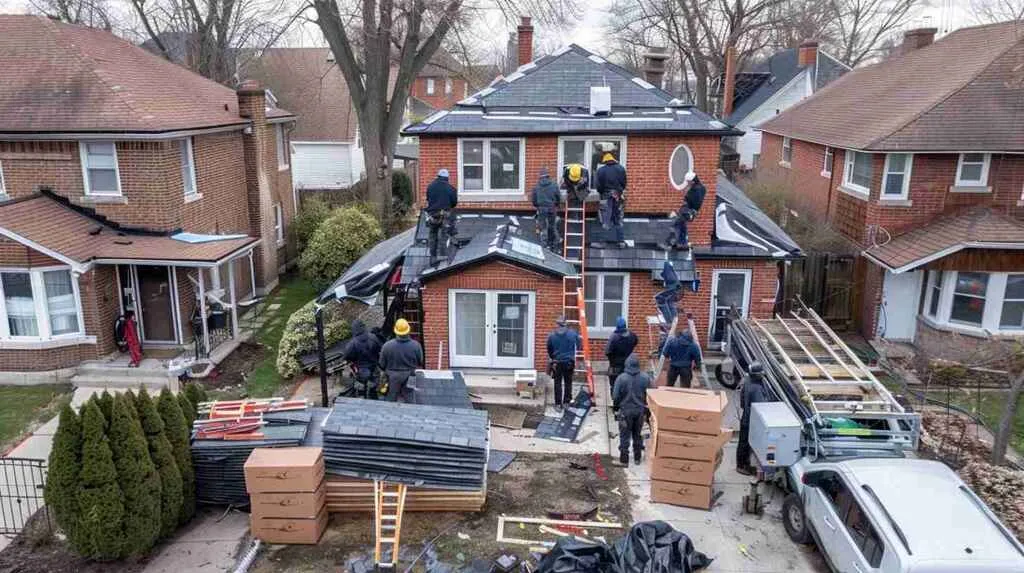
Shingle Roof Life Expectancy Queens NY – What to Realistically Expect
Honestly, if you’ve got a shingle roof in Queens, you should plan on 15 to 25 years of real life-not the 30 or 40 years printed on the wrapper. That gap between what the label promises and what Queens weather, attic heat, and installation quality actually deliver is where most homeowners get caught off guard.
What Shingle Roof Life Expectancy Really Looks Like in Queens, NY
On a typical block in Queens, from Flushing to Ridgewood, I’ll see roofs of the same age that look 10 years apart in wear. One February morning around 7:00 a.m., I was on a two-family in Maspeth with wind chills in the teens, looking at a 7-year-old shingle roof that already had bald spots. The owner kept insisting, “But they told me 30 years!” while I held an actual shingle in my hand that had lost half its granules. That day I walked him through how the wrong installation and no attic ventilation turned his “30-year” roof into a 10-year roof at best, and he still brings it up whenever he sees me at the bakery on Grand Avenue. Think of your shingles like subway brakes or car tires on Queens Boulevard-they’re rated for a certain lifespan under perfect conditions, but every stress cycle, every freeze-thaw, every summer heat wave is grinding away at those granules and wearing them down faster than the manufacturer calculated in a lab.
What pushes a Queens roof toward 15 years instead of 25 comes down to six main things: how well it was nailed down in the first place, whether your attic can breathe or if it’s a sauna in July, how much direct sun and wind your roof takes, whether you’re near salt air if you’re coastal, how many old layers are buried underneath, and whether anyone’s touched it since the day it went on. Now, here’s where that really matters for you: a roof with poor ventilation in a hot attic can lose 5 to 10 years right there, and layering new shingles over old ones without addressing heat buildup can cut another 5 years off what you thought you were buying.
| Queens Roof Situation | Realistic Life Expectancy | Biggest Influences |
|---|---|---|
| Ideal install & ventilation, mid-block, no trees removed, single layer | 22-28 years | Proper nailing, good underlayment, ridge vent, no prior layers |
| Average Queens home, decent install, some attic heat, minor issues | 18-22 years | OK nailing, partial vents, some seasonal debris, occasional maintenance |
| High-heat attic or layered roof, busy avenue exposure | 12-16 years | Trapped attic heat, multiple layers, heat from dark siding, traffic soot |
| Coastal Queens (Far Rockaway, Breezy, Howard Beach) with strong sun & wind | 12-18 years | Salt air, constant wind uplift, intense summer sun, wind-driven rain |
Why the Number on the Shingle Wrapper Almost Never Matches Queens Reality
Let me be blunt: the number on the shingle wrapper is marketing, not a guarantee of how long your roof survives Queens weather. Manufacturers test shingles in labs under controlled conditions-steady temps, no freeze-thaw cycles, no city soot, no wind tearing across the East River or Jamaica Bay. One August afternoon when the heat was bouncing off the asphalt in Far Rockaway, I got called to a bungalow a block from the water where the shingles were curling at 12 years old. The couple had just paid off the house and were hoping to “get to at least 25 years” on that roof. I remember putting my infrared thermometer on their attic ceiling, showing them it was hotter than the hood of a car in traffic, and explaining that salt air, sun exposure, and no ridge vent had basically cut their expected roof life in half. When you’re that close to the water in Far Rockaway, you’re dealing with constant wind uplift, salt spray that eats at the granules, and summer sun that cooks those shingles from dawn to dusk-none of which shows up in the factory’s timeline.
Here’s the thing: attic heat, poor ventilation, and relentless sun exposure act like running your car tires on hot asphalt all year without rotation or alignment. The shingles get soft in the heat, the granules loosen, the mat underneath starts to curl, and before you know it, a roof that was supposed to coast to 30 is bald and brittle at 15. Now, here’s where that really matters for you: what feels like “normal” Queens summer heat-those July weeks when your top floor is ten degrees hotter than the rest of the house-can quietly shave 5 to 10 years off your roof’s life if your attic isn’t vented properly, and most homeowners don’t even know to check until the damage is already done.
| Myth | Queens Reality |
|---|---|
| “My shingles are rated for 30 years, so I’ll get 30 years, no problem.” | Most Queens shingle roofs land closer to 18-22 years because of heat, snow, and wind-driven rain. |
| “If it’s not leaking, the roof is fine and has plenty of life left.” | By the time you see a leak, shingles may already be 3-5 years past their safest replacement window. |
| “Lifetime warranty means the shingles basically last forever.” | Lifetime often means “for as long as you own the home” and still assumes ideal installation and ventilation. |
| “Queens roofs don’t see real storms like out on Long Island, so they last longer.” | Queens gets intense summer sun, nor’easters, and freeze-thaw cycles that beat up shingles just as hard. |
| “Adding another layer of shingles makes the roof stronger and last longer.” | Extra layers trap heat, speed up aging, and often void warranties-turning a 25-year roof into a 15-year one. |
The Five Factors That Steal (or Add) Years to Your Queens Shingle Roof
I still remember the first time I realized how much attic heat alone can steal years off a “good” shingle roof. Late one fall evening in Forest Hills, just after a heavy rain, I got an emergency call from a landlord with tenants complaining about a leak in the hallway. The shingles were technically only 15 years into a “40-year” warranty, but someone had layered the new roof over two old ones years ago. I had to be the one to explain that those extra layers trapped heat, sped up aging, and voided their warranty, turning what should have been a solid 25-30 year roof into a 15-year problem they were now staring at in the form of a wet ceiling. That day changed how I talk to homeowners-I started asking every single one, “How many layers are up there, and what’s your attic look like in the summer?” Here’s an insider tip worth writing down: always ask your roofer how your current attic ventilation and any existing layers will change the real-world lifespan compared to the printed rating, and get that explained in plain years, not vague “it depends” answers.
Five things control whether your shingles make it to 25 or fade at 15. Installation quality is first-poor nailing, skipped underlayment, or rushed work can cost you 5 years right out of the gate. Attic ventilation and insulation come next; if your attic is trapping heat, those shingles are cooking from below and above at the same time. Number of layers matters more than most people think-every buried layer holds heat and moisture, speeding up the breakdown. Exposure is huge: a south-facing roof in Rockaway gets hammered by sun and salt air harder than a shaded roof in Forest Hills. And maintenance is the final piece-ignoring small repairs, clogged gutters, or moss buildup lets little problems turn into big ones fast. Think of each factor like added miles or potholes on a pair of sneakers running around Queens: one or two issues, you’re fine; stack three or four, and those sneakers are done way before you thought they’d be.
✅ Key Factors That Help Your Roof Reach the Upper End of Its Lifespan
- Hand-nailed installation by an experienced crew who follow manufacturer specs and don’t rush through valleys and edges
- Proper attic ventilation with ridge vents, soffit vents, and enough airflow to keep summer temps under control
- Single-layer application on clean decking with no old shingles trapping heat underneath
- Quality underlayment and ice-and-water shield in valleys, eaves, and around chimneys and skylights
- Regular maintenance-spring and fall cleanings, gutter checks, and small repairs before they become leaks
| When | What to Do | Why It Matters |
|---|---|---|
| Every Spring (March-May) | Visually check shingles from the ground for curling, missing tabs, and granules in gutters. | Catching early wear can prevent small issues from cutting 3-5 years off the roof’s life. |
| Every Fall (September-November) | Clean gutters and downspouts, clear debris from valleys, and look for moss on shaded sections. | Clogged gutters and debris can back water up under shingles, rotting wood and shortening lifespan. |
| After Major Storms (nor’easters, wind advisories) | Check for missing or lifted shingles, loose flashing at chimneys and skylights, and damaged ridge caps. | Storm damage often goes unseen until leaks start; early repairs keep the age curve on track. |
| Every 3-5 Years | Schedule a professional roof and attic inspection to catch early damage and ventilation problems. | Regular inspections can turn a 15-year roof into a 20+ year roof with timely fixes. |
How to Tell If Your Queens Shingle Roof Is Near the End of Its Life
When I first step into a house, one of the first things I ask a homeowner is, “How hot does your top floor get in July?” That answer-combined with how old the roof is-tells me whether we’re looking at a roof coasting toward 25 years or struggling to make it to 15.
Quick Self-Check: Is Your Queens Shingle Roof Closer to Replacement?
START: How old is your roof?
├─ Less than 10 years old?
│ ├─ Does your top floor feel like an oven in summer, or do you see curling/bald spots?
│ │ ├─ YES → Schedule a professional inspection-something’s wrong with install or ventilation
│ │ └─ NO → Likely OK, monitor and maintain
└─ 10-18 years old?
├─ Any leaks, heavy granule loss, or visible curling/cracking?
│ ├─ YES → Plan for replacement soon (next 1-2 years)
│ └─ NO → Does your attic get very hot in summer, or is the roof layered?
│ ├─ YES → Schedule a professional inspection
│ └─ NO → Monitor closely, budget for replacement in 3-5 years
└─ 18+ years old?
└─ Even without leaks, you’re in the high-risk zone → Plan for replacement soon (next 1-2 years)
Keeping Your Queens Roof on the Longer Side of the Life Expectancy Range
Here’s the part most people don’t want to hear but absolutely need to: maintenance is the difference between a 15-year roof and a 25-year roof, even with the same shingles. Clearing gutters twice a year, fixing small flashing issues before they become leaks, addressing attic ventilation problems, and catching storm damage early-those aren’t optional extras, they’re the margin between getting your money’s worth and replacing a roof way too soon. Now, here’s where that really matters for you: every year you skip maintenance or ignore a minor issue is potentially a year you lose on the back end, and by the time you see water stains on the ceiling, you’ve already burned through that buffer and you’re looking at emergency replacement instead of planned budgeting.
If you want a picture in your head, think of your shingle roof like your car’s tires trying to drive year-round on Queens’ worst potholes. You can’t control every pothole-the nor’easters, the July heat waves, the freeze-thaw cycles are all baked into living here. But you can choose better tires in the first place (good shingles, proper install), you can get your alignment checked regularly (attic ventilation, maintenance inspections), and you can avoid slamming into the known bad spots (ignoring leaks, skipping gutter cleanings, layering over problems). Every one of those choices adds years, and an experienced local roofer who knows Queens can walk you through exactly what your specific roof needs to hit the upper end of that 15-to-25-year range instead of dying early.
Before You Call a Queens Roofer About Shingle Roof Life Expectancy
Write down or note these six things so your roofer can give you a realistic, specific answer:
- Age of the roof (year installed, or best guess if you’re not sure)
- How hot your top floor or attic gets in July and August
- Any visible wear-curling, bald spots, missing shingles, granules in gutters
- Whether you’ve had any leaks, even small ones that stopped on their own
- If your roof was layered over old shingles or installed on clean decking
- Your home’s exposure-near water, on a busy street, under heavy tree cover, south-facing
Common Questions Queens Homeowners Ask About Shingle Roof Life Expectancy
What’s the average life of a shingle roof in Queens, NY?
Most shingle roofs in Queens realistically last 18 to 22 years, with well-installed, well-maintained roofs sometimes reaching 25 to 28 years. That’s often 5 to 10 years shorter than the “30-year” or “lifetime” labels suggest, because Queens weather-freeze-thaw cycles, summer heat, nor’easters, and humidity-puts more stress on shingles than the lab conditions manufacturers use for their ratings.
Should I replace my roof early, or wait until I see leaks?
Don’t wait for leaks. By the time water shows up inside, your roof decking and attic framing may already have damage that turns a straightforward roof job into a more expensive repair project. If your roof is 18+ years old, or if you’re seeing heavy granule loss, curling, or bald spots, schedule an inspection and budget for replacement within the next year or two-before you’re dealing with emergency tarps and water damage.
How much does attic ventilation really change shingle roof life expectancy?
Attic ventilation can be the difference between 15 years and 25 years on the exact same shingles. Poor ventilation traps heat, which cooks shingles from below and speeds up granule loss, curling, and cracking. If your attic regularly hits 140°F or higher in the summer, you’re burning through your roof’s lifespan at an accelerated rate. Proper ridge vents, soffit vents, and airflow can add 5 to 10 years to your roof-it’s one of the highest-value upgrades you can make.
Can I just replace part of my roof to extend its life?
Partial replacement usually only makes sense if you’ve got isolated storm damage on a relatively new roof (under 10 years). If your roof is already 15+ years old, patching one section won’t stop the rest from aging out, and you’ll often end up replacing the whole thing within a few years anyway. Most of the time, it’s more cost-effective to plan for a full replacement once your roof hits the 18-to-20-year mark, rather than chasing repairs on shingles that are already past their prime.
If you’re trying to figure out how many realistic years are left on your Queens roof-or whether you’re closer to 15 or 25 on the lifespan curve-call Shingle Masters for a straight-talking, in-person assessment that includes your attic ventilation, layers, exposure, and maintenance history. We’ll give you a realistic timeline tailored to your specific home, not a vague guess pulled from a brochure.