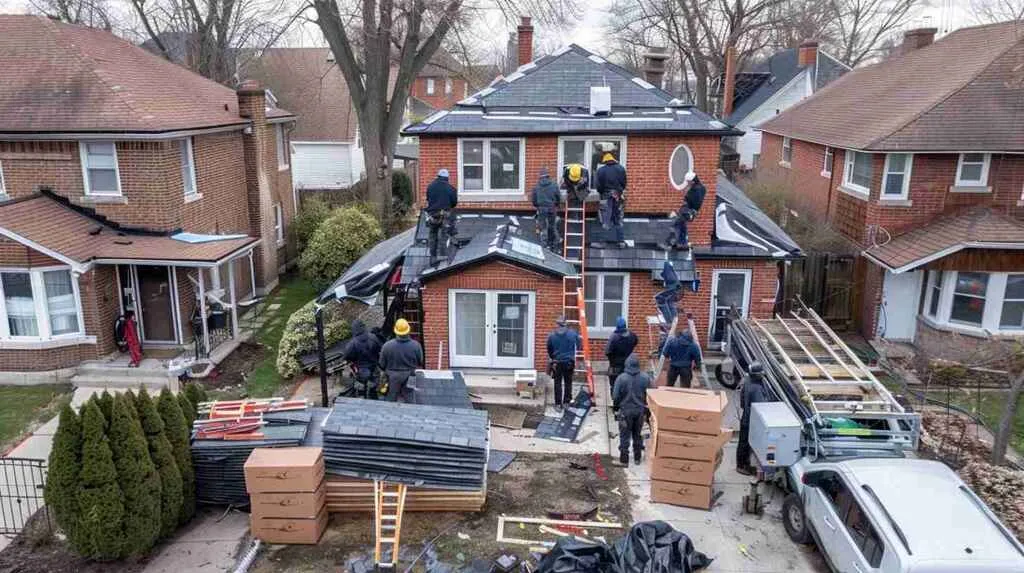
Can You Shingle a Wet Roof Queens NY? The Answer Is No | Free Estimates
Flat-out, you cannot-and should not-shingle a wet roof in Queens, NY, and doing it anyway almost always costs you more than the original job in repair bills, tear-offs, and emergency leak calls. In the 19 years I’ve been climbing roofs across this borough, I’ve seen damage bills range from $1,500 for minor fixes all the way up to $12,000 for full deck replacements, all because someone rushed to nail shingles over damp plywood, underlayment, or even standing water.
Can You Shingle a Wet Roof in Queens, NY? Flat-Out No-and Here’s What It Really Costs
When you shingle over a wet roof, you’re not just risking a few loose tabs in the next storm-you’re setting up backstage failure that eventually ruins the whole show. Think of your roof like a stage set: the shingles are what the audience (your neighbors, your insurance adjuster, you) sees from the street, but the real performance depends on what’s happening backstage-the deck, the underlayment, the fasteners, and the ventilation. If that backstage is wet, swollen, or wrinkled when you nail down the “show,” you’re going to get leaks, rot, and buckling no matter how pretty those shingles looked the day they went on. And in Queens, where storms roll through hard and fast, that backstage chaos shows up fast.
Here’s my blunt opinion: if a roofer is willing to nail shingles over a wet roof for you, you should never let them on your property again. One January morning, around 7:30 a.m. in Woodhaven, I showed up to a two-family where another crew had tried to shingle in a light drizzle the day before because the homeowner was pushing them to “just get it done.” I pulled up, and the first thing I saw was shingles sliding just a hair out of alignment on the north side where the sun hadn’t hit yet-like a crooked curtain. When I climbed up, the underlayment was still damp, nails were barely biting, and you could literally peel sections up with two fingers. I had to be the bad guy and tell the owner we had to strip what they’d done, wait for a full dry, and restart. It cost him extra, but a month later during that windstorm, his roof was one of the only ones on the block not losing tabs.
The simple truth is that asphalt shingles are like stage tape-great when the surface is clean and dry, useless when it’s damp and dirty. Moisture kills both the adhesive strip on the back of each shingle and the bite of the fasteners holding it down. Imagine trying to stick duct tape to a wet towel-it might hold for a second, but the first time you pull on it, it peels right off. Same deal with shingles: wet wood, wet underlayment, and trapped moisture mean your roof is basically held together by hope until the next big wind or rainstorm tears it apart.
What Wet-Roof Shingling Really Costs in Queens
These are ballpark ranges for typical asphalt shingle roofs on standard Queens houses. Your actual cost depends on size, pitch, access, and how much damage happened before you caught it.
Why Queens Roofs Don’t ‘Dry Out’ as Fast as You Think
On a typical block in Queens-think attached houses in Ridgewood with barely three feet between them-moisture doesn’t just “dry out” because the rain stopped. You’ve got tight spacing between buildings, shade from taller neighbors, alley-side walls that never see direct sun, and wind patterns that skip right over low-slope or flat sections. That north-facing slope on your Woodhaven two-family? It can stay damp for 24 to 36 hours after a storm even if the south side looks bone-dry in two hours. In Astoria, where row houses are packed so close you can hear your neighbor’s TV, those shaded gaps trap moisture like a sponge, and any roofer who tells you “it’s fine, the sun’s out” doesn’t know Queens roofs the way I do.
One summer evening in Astoria, about 5 p.m., a guy with a brand-new Tesla and a very “busy schedule” tried to convince me to shingle his low-slope roof right after a thunderstorm because “the rain’s done, so it’s basically dry.” I took a towel, slapped it on the deck, and wrung out a stream of water right in front of him. Then I pulled up a shingle sample and showed him how the adhesive strip needs warmth and dryness to bond-like stage tape on a clean floor, not on a wet carpet. He grumbled, but we waited 24 hours. When I came back the next day, you could still see little damp patches in shaded spots-exactly where his future leaks would’ve been.
What Actually Happens When You Shingle Over Moisture
Think of your roof like a layered set design: if the platform underneath is spongy and wet, it doesn’t matter how pretty the backdrop looks. What you see from the street-those clean, straight rows of shingles-is the front-stage performance, but the real action happens backstage: the plywood deck, the underlayment, the fasteners, and the ventilation pathways. When you shingle over a wet deck, that plywood swells, the underlayment wrinkles and bubbles, the nails lose their bite as the wood shrinks back down, and the adhesive strips on the shingles never bond. Wet wood always wins against your shingles. You might get away with it for a week, maybe a month if the weather’s calm, but the first big storm or heat wave is going to expose every shortcut, and by then the damage is deep and expensive.
The worst one was a Sunday call in Jackson Heights at 9 p.m.-a panicked landlord with water pouring into a third-floor nursery. Another contractor had “rushed to help” after a storm and shingled over a soaked roof deck that same afternoon. By the time I got there, you could smell that damp, sweet rot just from the top of the stairs. We opened a section and the plywood was already starting to swell and delaminate, like a warped stage platform after a prop leak. That one turned into a full tear-off and partial deck replacement that could’ve been avoided if they’d just waited for the roof to actually dry. When you shingle wet, you’re not saving time-you’re turning a quick fix into a full-scale emergency within weeks.
Backstage Damage You Don’t See (Until It’s Too Late)
- Trapped moisture leads to rot: Water stays locked between shingles and deck, turning solid plywood into soft, spongy pulp within weeks.
- Wrinkled underlayment creates leak paths: Wet felt or synthetic paper bubbles and folds, channeling water straight into your attic instead of shedding it.
- Nails back out in storms: As swollen wood dries and shrinks, fasteners lose grip and pop up, leaving shingles flapping in the wind.
- Mold risk in upstairs bedrooms and nurseries: Moisture seeps through ceilings, growing black mold in walls and insulation where you can’t see it until someone gets sick.
✅ Quick On-Site Dryness Check
Surface still feels cool and clammy: Touch the deck or underlayment-if it’s cold to the touch, there’s still moisture present.
Towel test comes up damp: Press a clean rag on the surface for 30 seconds-if you can wring out any water, you’re not ready.
Underlayment looks dark or blotchy: Wet felt or synthetic paper shows darker patches and uneven color-wait until it’s uniform.
Deck feels spongy underfoot: Walk carefully-if the plywood flexes more than usual or feels soft, it’s swollen with water.
Shaded areas stay darker than the rest after a few hours: North-facing sections and alley-side walls take longer to dry-check them separately.
How I Decide When It’s Safe to Shingle After Rain in Queens
If I were standing in your kitchen right now, the first question I’d ask is, “Do you want it done fast, or do you want it done once?” Because the real decision about when to shingle after rain isn’t about squeezing in a job between storms-it’s about making sure the roof lasts 20 years instead of needing a tear-off in two. My process is simple and physical: I check the forecast for at least 48 hours of dry weather ahead, I look at sun exposure and slope (south-facing steep roofs dry fastest, north-facing flat sections take forever), and I walk the deck barefoot if I have to, feeling for cool, spongy spots that tell me moisture is still trapped. Then I do a towel test-press a clean rag on the deck and underlayment in shaded areas, and if I can wring out even a drop, we’re not shingling that day. I’ll even lay down a test strip of shingle and check if the adhesive bond grabs within an hour, because that adhesive strip only works on a clean, dry platform-just like stage tape.
Waiting an extra day might feel inconvenient, but it can add 10 to 15 years of leak-free life to your roof. Not worth rushing.
Queens-Specific FAQs About Wet Roofs and Shingles
I get the same handful of questions over and over from Queens homeowners about wet roofs, timing, and warranties-usually standing in a driveway right after a storm, or on the phone after someone’s already seen water stains on their ceiling. I’m going to answer them here with the same no-nonsense approach I use on-site, because what people see from the street (those pretty, straight rows of shingles) is completely meaningless if the backstage conditions are wrong and your manufacturer warranty gets voided the second you shingle over a wet deck.
How long after rain can you shingle in Queens?
It depends on sun exposure, slope, and how hard it rained, but in general you need at least 24 hours of dry, sunny weather before shingling-and sometimes 36 to 48 hours for shaded north-facing sections or low-slope roofs. I always do a towel test and walk the deck before I commit, because “looks dry” and “is actually dry” are two very different things in Queens.
Is “morning dew” a problem for shingle installation?
Absolutely. Even a light coat of dew is enough to stop the adhesive strips on the back of asphalt shingles from bonding properly, and it can make nails slip slightly as you drive them into swollen plywood. If there’s dew on the roof in the morning, I wait until mid-morning or early afternoon when the sun’s burned it off completely and the deck has had time to warm up.
Will my manufacturer warranty cover problems if the roof was shingled wet?
No. Every major shingle manufacturer-GAF, Owens Corning, CertainTeed-requires installation over a clean, dry deck and underlayment. If they send an inspector and find evidence of wet installation (wrinkled underlayment, backing-out nails, early rot), they’ll deny your claim, and you’re stuck paying for the tear-off and replacement out of pocket.
Can you just “seal it later” with more nails or tar?
No, and anyone who tells you that is selling you a Band-Aid for a broken bone. Once moisture is trapped under shingles, adding more nails or tar on top won’t fix the rot, wrinkled underlayment, or delaminating plywood underneath-you need a tear-off and a proper dry installation. I’ve opened up dozens of “sealed” roofs and found swollen, rotten decks hiding under layers of tar and extra fasteners.
Do flat or low-slope roofs in Queens need more drying time than steeper ones?
Yes-significantly more. Flat and low-slope roofs pool water and have less natural drainage, so they can stay wet for 48 hours or longer after a storm, especially if they’re shaded by taller buildings or don’t get direct sun. I’ve had flat roofs in Astoria that looked dry on top but were still soaked underneath two full days later. You can’t rush those.
Who’s On Your Roof Matters in a Queens Storm
Fully licensed and insured in NYC: All permits, liability coverage, and worker’s comp in place so you’re never at risk.
19+ years roofing experience in Queens specifically: I know the weather patterns, building codes, and block layouts-not a generalist trying to wing it.
Same-day response for active leaks when weather allows safe access: If you’ve got water coming in and the storm’s passed, I’ll get up there fast.
Written workmanship warranties that require dry-deck installation: My guarantees are only valid because I never cut corners on moisture-your protection starts with doing it right.
In Queens weather, the smart move is to treat your roof like a stage set where the backstage-the deck, underlayment, fasteners-must be dry and solid before the show goes on, because no amount of pretty shingles on the front stage will save you if the platform underneath is wet, warped, and ready to fail. Call Shingle Masters for a free, no-pressure inspection and estimate so I can tell you exactly when your roof is truly ready for shingles-and what it’ll cost if you try to rush it.