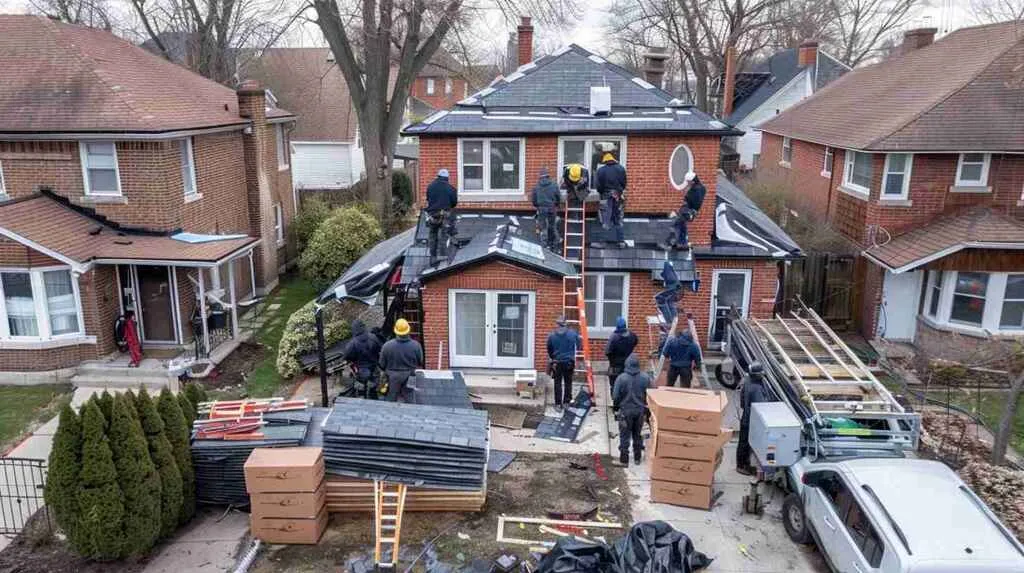
Why Are Roof Shingles Dark Queens NY – Roofers Explain the Reason
Layers of weather, heat, and winter cold-that’s what your roof deals with every day in Queens, and dark shingles aren’t just sitting there looking pretty. They’re a calculated choice about how much heat you want your roof to handle, how long you need it to last, and how well it deals with Nor’easters, sun-baked July afternoons, and the freeze-thaw cycles we get from November through March. I’m Victor, I’ve been tearing off and rebuilding Queens roofs for 19 years, and I want to walk you through why so many of the roofs around here are dark-and what that really means for your comfort and energy bills.
On a 90-degree July afternoon in Queens, your roof doesn’t care what’s trending on Pinterest-it cares about how it handles heat. Most people think dark shingles are a mistake, just soaking up sun and turning their attics into saunas, but that’s only half the story-and if I’m being honest, it’s usually the wrong half.
Why So Many Queens Roofs Use Dark Shingles
On a 90-degree July afternoon in Queens, your roof doesn’t care what’s trending on Pinterest-it cares about how it handles heat. Dark shingles-charcoal, dark gray, deep brown-dominate the skyline from Jackson Heights to Flushing because they’re a practical answer to our mixed climate. Think about it like choosing between a dark car interior and a light one when you’re street-parking all summer: the dark one gets hotter in July, sure, but it also hides wear better, seals tighter when asphalt gets soft in the sun, and stands up to the kind of abuse that snow, ice, wind, and rain deal out over a 20-year life. I’ll take a slightly hotter shingle that seals better over a pretty color that blows off in the first Nor’easter. That’s not just my preference-it’s what I’ve seen hold up on thousands of Queens roofs where fashion doesn’t fix leaks.
One July afternoon in 2021, it was 94°F in Jamaica, Queens, and I was on a south-facing roof with almost-black shingles that were maybe five years old. A science teacher who owned the house handed me an infrared thermometer and said, “Let’s see how bad it really is.” We shot the shingle surface: 171°F. Then we walked across the street to his neighbor’s newer medium-gray shingles-same time of day, same exposure-and those were 153°F. That little moment is burned into my brain, because I watched his face when he realized color alone was adding almost 20 degrees to the surface and cooking his attic. But here’s the thing: surface temperature is just one layer. What’s happening underneath-your insulation, your ventilation, whether warm air is leaking up through cracks-matters way more than those 18 degrees. You can have a 171-degree roof that doesn’t heat your house and a 153-degree roof that turns your upstairs into a broiler, all depending on what’s going on between the shingles and your living space.
Dark Shingles: Myths vs. Facts in Queens
Heat, Snow, and Queens Weather: How Dark Shingles Actually Behave
I remember standing on a Richmond Hill roof at 8 a.m., frost still on the grass, and thinking: this is exactly why your shingle color choice isn’t as simple as “dark is bad, light is good.” Back in 2014, during one of those weird cold-but-sunny March days, I got a call from a retired NYPD officer in Flushing who’d been battling ice dams. He swore his dark roof was “melting snow too fast” and causing leaks. I spent an hour up there with him, pointing out where the dark shingles were actually helping melt the snow evenly, but the real villain was the warm air leaking right at the eaves and the lack of proper ventilation. We ended up chalking lines right on the shingles to trace where heat was escaping, and that’s the day I started drawing on roofs to explain how color, heat, and airflow all play together. In Flushing, Forest Hills, and Astoria, our winters swing hard-one day it’s 22°F and windy, the next it’s 45°F and sunny enough to melt a foot of snow in hours. Dark shingles absorb that sun and can help clear snow faster, which is great for preventing ice buildup. But if your attic is pumping warm air up through gaps in your insulation, you’ll get melt-and-refreeze cycles at the eaves no matter what color your shingles are.
Think of your roof like a layered sandwich: bread (shingles), mayo (underlayment), lettuce and tomato (insulation), and the plate underneath (your attic air space). Choosing shingle color is like picking rye or white bread-it matters, but if your mayo is spoiled and your lettuce is wilted, the bread color won’t save your lunch. In Queens, where we get 90-degree summer days and 15-degree January nights, your roof system has to handle both extremes. A dark shingle is like wearing a heavy winter coat that also breathes-if the rest of your layers (insulation, ventilation) are doing their job, that coat keeps you comfortable. If they’re not, you’re either sweating in July or freezing in January, and blaming the coat won’t fix the problem.
⚠️
Don’t Blame Shingle Color for Ice Dams
Ice dams in Queens are almost never caused by shingle color alone. They’re usually the result of warm air leaking through gaps at your eaves, missing baffles that block air channels between insulation and roof deck, and poor attic ventilation that lets heat pool near the roof line. If you’re getting ice dams every winter, don’t waste money switching from dark shingles to light ones-fix your insulation, seal air leaks, and make sure ridge and soffit vents are clear. That’s what actually stops the melt-and-refreeze cycle that builds those dangerous icicles.
When Dark Shingles Make Sense for Your Queens Home
When I walk into a customer’s living room, the first thing I usually ask is, “Do you feel hotter upstairs in the summer or colder in the winter?” That question tells me more about the right shingle color than any chart or brochure. In 2018, during a fall job in Astoria, I had a landlord who wanted the “lightest shingles possible” because he’d just read an article about cool roofs in California. It was cloudy, windy, and about 58°F-classic Queens autumn-and the tenants were already complaining the building was drafty. I took him into the top-floor unit, held his hand near the ceiling, and explained how in our climate, with his old boiler and poor insulation, going super light on shingle color would actually make his winter gas bill worse. He ended up choosing a darker mid-tone shingle, and that winter he texted me a photo of his Con Ed bill with the words: “You were right. Don’t get cocky.” That taught me that shingle color isn’t about fashion or following trends from warmer climates-it’s about balancing what your house needs in July against what it needs in January, and most Queens homes lean toward needing a little extra help in the cold months.
From a roofer’s point of view, I’ll take a slightly hotter shingle that seals better over a pretty color that blows off in the first Nor’easter. Here’s my rule of thumb: if your top floor feels like an oven all summer and you’re running the AC nonstop, lighter shingles plus better attic ventilation can help. But if your upstairs is chilly from October through April and your heating bill makes you wince, darker shingles-especially in medium-dark tones like charcoal or deep brown-give you a thermal boost on sunny winter days and help your house hold warmth. It’s like choosing between a heavy cast-iron pot that takes forever to heat up but stays hot, versus a thin aluminum pan that cools off the second you turn down the flame. Most Queens brick and frame houses do better with the heavier pot-something that can take the hit of summer sun but also doesn’t surrender all that absorbed energy the moment the temperature drops.
Darker Shingles (Charcoal / Dark Brown)
- Absorb more sun in winter, helping reduce heating costs on sunny cold days
- Seal tighter in summer heat-asphalt gets soft and bonds better around nails
- Hide dirt, algae streaks, and wear better over 15-20 years
- Can raise attic temps 10-15°F in peak summer if ventilation is weak
Lighter Shingles (Light Gray / Pale Tan)
- Reflect more sun in summer, can lower attic temps by 8-12°F in July and August
- May reduce AC load if your top floor is constantly overheating
- Show dirt, moss, and algae stains more visibly-require more frequent cleaning
- Provide less solar warmth in winter, which can slightly increase heating costs in Queens
Should You Choose Dark, Medium, or Light Shingles in Queens?
Start: Is your top floor hotter in summer or colder in winter?
↓ Hotter in summer
Check your attic insulation:
• Good insulation? → Medium-tone shingles work fine
• Poor/thin insulation? → Go lighter + add insulation + improve vents
↓ Colder in winter
Consider heating costs:
• High heating bills? → Darker shingles capture solar warmth
• Attic feels cold? → Dark or medium shingles + seal air leaks
✓ Result: Most Queens homes → Medium-dark shingles (charcoal, dark gray) balance summer and winter best
What Really Controls Roof Heat: It’s Not Just Color
Here’s the blunt truth: most people blame shingle color for problems that actually come from lousy ventilation and weak insulation. Your roof is more like a cast-iron pan with a lid and potholders than a simple painted surface. The shingles are the pan-they take the heat. The lid is your attic ventilation-if it’s working, hot air escapes instead of pooling. The potholders are your insulation-they stop the heat from reaching your living space. And if the lid is stuck shut and the potholders are threadbare, it doesn’t matter if your pan is dark or light-you’re going to burn your hand either way. In Queens, where I’ve opened thousands of attics, I’ve seen 160-degree shingles over rooms that felt fine because the homeowner had 14 inches of blown-in insulation and good ridge vents, and I’ve seen 140-degree light shingles over bedrooms that were unbearable because there was only three inches of old fiberglass and zero airflow.
150°F sounds terrifying on paper. But with proper ventilation pulling hot air out through ridge and gable vents, and proper insulation stopping radiant heat from cooking down through your ceiling, that surface temperature doesn’t roast your living room-it just sits on top of the system doing its job.
Top Factors That Decide How Hot Your House Feels Under Dark Shingles
Attic Ventilation
Ridge, soffit, and gable vents must move air constantly to pull heat out before it radiates down
Insulation Depth
At least 10-12 inches (R-38 minimum) between attic floor and your ceiling to block radiant heat transfer
Roof Deck Condition
Old dark plywood absorbs more heat than new light OSB-deck color and moisture level matter too
Underlayment Type
Synthetic underlayment reflects more heat than old felt paper, adding another thermal barrier
Sun Exposure & Shade
South-facing roofs in full Queens sun hit 15-20°F hotter than north slopes or roofs shaded by tall buildings and trees
Simple Roof-Heat Control Maintenance Timeline for Queens Homeowners
Spring (April-May)
Check attic vents for blockages from leaves, bird nests, or insulation that’s shifted over the winter-clear soffit screens and make sure ridge vents are open
Early Summer (June)
Inspect attic insulation depth and look for air leaks around light fixtures, pipes, and ducts-seal gaps with spray foam or caulk before July heat hits
Fall (September-October)
Walk the roof to check for loose or damaged shingles, clear gutters and downspouts, and verify all vents are working before Nor’easters start rolling through
Every 10 Years
Have a professional evaluate the entire roof system-shingles, underlayment, deck, ventilation, and insulation-to decide if you need repairs, upgrades, or a full replacement
Turning That Knowledge into Smart Roofing Choices in Queens
From a roofer’s point of view, I’ll take a slightly hotter shingle that seals better over a pretty color that blows off in the first Nor’easter-and that mindset should guide how you think about picking shingles for your Queens home. Color is one ingredient in a recipe that also includes ventilation, insulation, underlayment, and how your specific block gets sun and wind. Think of your roof like a heavy cast-iron pot versus a thin aluminum pan: the heavy pot takes more heat but holds up to abuse and stays stable through temperature swings, while the thin pan is lighter and cooler but dents, warps, and doesn’t last as long under real-world stress. Shingle Masters can walk your actual house and block-just like I did in Jamaica, Flushing, and Astoria-measure your attic, check your vents, and recommend the right shingle color and system for how you live and what your building needs. We’re not just selling you a color; we’re designing a roof that works with Queens weather, not against it.
Dark Shingle Questions Queens Homeowners Ask Most
Will dark shingles make my Queens attic unbearably hot?
Not if your ventilation and insulation are doing their job. Dark shingles can hit 165-175°F on the surface in July, but with proper ridge and soffit vents moving air and at least 10-12 inches of insulation on your attic floor, that heat stays in the attic space and doesn’t radiate down into your rooms. I’ve measured 130-degree attics over 78-degree bedrooms when the system is set up right.
Are dark shingles worse for my summer electric bill?
They can be, but only if your attic insulation is thin and your vents are blocked. In Queens’ mixed climate, the difference between dark and light shingles is usually 5-10% on cooling costs-and that can be completely offset by the fact that dark shingles help lower heating costs in winter by capturing solar warmth. For most homeowners, fixing ventilation and insulation saves way more money than changing shingle color.
Do dark shingles wear out faster than light ones?
Not with modern asphalt shingles. Today’s dark shingles use UV-resistant granules and often last 20-25 years, just like lighter colors. In fact, darker asphalt gets softer in summer heat, which helps it seal around nails and edges more tightly-that can actually extend the life of your roof by preventing wind damage and water intrusion. I’ve replaced plenty of faded light shingles that were only 15 years old and still see dark roofs from the early 2000s holding up fine.
Can I keep my dark shingles and still cool down the top floor?
Absolutely. Add or improve attic insulation (aim for R-38 to R-49), install or upgrade ridge and soffit vents to create continuous airflow, seal air leaks around light fixtures and ducts, and consider a radiant barrier on the underside of your roof deck. Those upgrades will drop your attic temperature by 15-25 degrees in summer and make a way bigger difference than switching to light shingles ever would.
Why Trust Shingle Masters with Your Queens Roof
NYC Licensed & Insured
Fully bonded, DOB-compliant roofing contractor serving all five boroughs
19+ Years in Queens
We know Jamaica, Flushing, Astoria, Forest Hills, and how each neighborhood’s buildings behave
Familiar with Local Housing Stock
Brick row houses, frame colonials, flat-roof buildings-we’ve worked on them all
Free Roof & Attic Check
We inspect your shingle color, ventilation, insulation, and sun exposure-no charge, no pressure
Fast Response After Storms
Nor’easters, summer thunderstorms, wind damage-we respond fast when your roof needs emergency help
Shingle color is just one piece of the puzzle, and a quick on-site look at your roof, attic, and block is the only way to get it right. Call Shingle Masters today to have Victor or one of our team members walk your Queens home, check your current dark (or light) shingles, measure your insulation and ventilation, and lay out clear options before you commit to a new roof. We’ll tell you straight whether your shingles are helping or hurting, and what it’ll really take to make your top floor comfortable all year long.