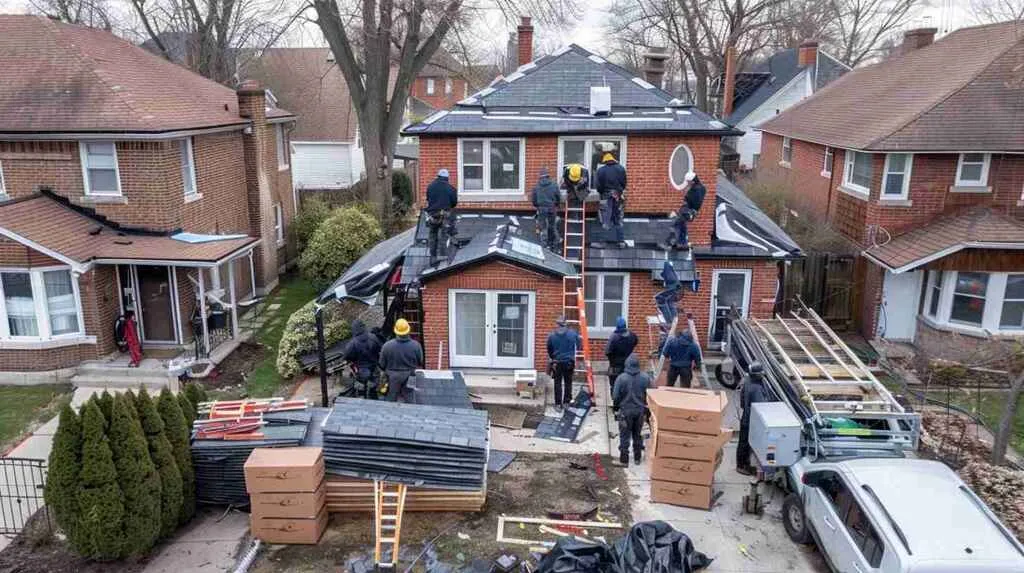
Home Roof Shingle Repair Queens NY – Fast Help When It Matters | Call Today
Refocused on what actually matters: small shingle repairs in Queens typically run $350 to $750, and spending that money now almost always stops a $3,000+ mess of stained ceilings, ruined floors, and mold remediation later. I’m Luis, and I’ve spent nineteen years diagnosing shingle failures across Jackson Heights, Corona, Flushing, and Forest Hills with the same eye I used to use composing photographs-find the detail that’s wrong, zoom out to see how it’s affecting everything, then reframe the problem so you can actually fix it instead of just covering it up.
Home Roof Shingle Repair Costs in Queens, NY (And What That Really Buys You)
Most small shingle repairs in Queens land between $350 and $750, and that number shifts based on what you’re actually asking me to fix-steep slopes cost more because the safety setup takes longer, multiple leak points mean I’m working on different sections of your roof, and emergency night calls during active storms add a premium because I’m literally climbing up there in the dark with a headlamp and tarp. One August afternoon around 3 p.m., right after one of those five-minute Queens downpours that feel like a car wash, I got a call from a Corona homeowner who said, “There’s a drip in my kitchen, but the roof looks fine.” I got there, looked up from the sidewalk, and immediately saw the issue-three shingles near the plumbing vent were cupped and casting a tiny shadow differently than the rest. The storm had just pushed water sideways under those lifted edges. We pulled back six shingles, found a cracked boot around the pipe, and I showed the owner a “before” photo on my phone and an “after” shot 40 minutes later. She couldn’t believe a leak that stressed her out for weeks came from a six-inch circle of material and two bad nails.
When I talk about that $350-$750 range, I’m painting you a “before” picture-brown rings spreading across your ceiling, water dripping into a bucket every time it rains, that smell of damp drywall that makes you nervous. Now zoom out and reframe the shot: spending that money on a focused shingle repair gives you an “after” picture of a dry ceiling, no buckets, no stress, and no $3,000 bill for ceiling replacement, repainting, fixing warped floors, and dealing with mold that spread behind the walls because you waited through two more storms. Not gonna lie, I’ve seen way too many homeowners try to stretch a leaky roof through “just one more winter” and end up paying for interior damage that costs five times what the original shingle fix would’ve cost.
Typical Queens Shingle Repair Scenarios & Price Ranges
Fast Facts: Shingle Masters Queens Shingle Repairs
From the Sidewalk on 37th Avenue: How I Spot a ‘Call Me Tonight in the Rain’ Shingle Problem
From the sidewalk on 37th Avenue, I can usually tell in ten seconds whether your shingles are a cosmetic problem or a “call me tonight in the rain” problem-cupped edges create these little shadows that catch afternoon sun differently, lifted corners show reflective nail heads that shouldn’t be visible, and misaligned rows break the rhythm of the shingle pattern in a way that jumps out once you’ve framed a few thousand roofs through a camera lens. Walking around Corona, Jackson Heights, and Flushing, I’ve trained my eye to see how those two-family attached brick homes and older Tudors respond to Queens weather-wind that funnels between buildings, ice that builds up where gutters clog, and those sudden August downpours that test every weak point on your roof. One August afternoon around 3 p.m., right after one of those downpours, I spotted those cupped shingles on that Corona home from street level before I even got out of the truck, and I knew the plumbing vent was going to be the culprit because I could see the shadow pattern change right around that penetration.
Here’s my honest take: if you can see edges lifting or corners curling from the street, the wind has already “learned” how to get under your roof-once that first edge pops up, every gust tests it a little more, water starts tracking sideways instead of down, and within two storm cycles you’re looking at interior damage. My process is all about zooming in and out: I start by spotting one bad shingle or a suspicious flashing line, then I pull back mentally and map how that single point affects water flow across the whole slope, and finally I zoom back in to trace the exact path the leak will take once it gets past your underlayment. I’m not tearing up half your roof to find the problem-I’m using that same composition eye I used in photography to read the “image” your roof is showing me from the sidewalk, and most of the time I can map the leak path before I even climb the ladder.
Street-Visible Shingle Issues You Should Not Ignore
-
✓
Edges lifting or flapping on windy days, especially along ridge lines or eaves where nails may have pulled loose -
✓
Visible nail heads reflecting light where they shouldn’t be visible, indicating that shingles have lifted or were improperly installed -
✓
Curled or “taco-shell” shaped shingles near the middle of a slope, showing age or heat damage that compromises waterproofing -
✓
Dark streaks or “shadow lines” running vertically from vents, chimneys, or pipe boots, hinting at chronic water channeling -
✓
Misaligned rows or “lumpy” sections where previous repairs layered new shingles over damaged old ones instead of removing them
Do You Need Emergency Roof Shingle Repair or Can It Wait?
Zooming In on Leak Paths: What Your Ceiling Stain Is Really Showing Us
When I step into a house and ask, “Where’s the first place you saw the stain?” I’m really trying to map the leak like a photographer maps light-stains spread along ceiling joists and plaster seams, so the brown ring you’re staring at in your bedroom is usually three to six feet downhill from where the water actually entered your roof. The toughest one was a Sunday night emergency in Flushing, right after 10 p.m., with 40 mph gusts and sideways rain. A young couple with a newborn called Shingle Masters because they saw water literally running out of a ceiling light fixture. When I got there, the wind was so strong it kept lifting a strip of three-tab shingles on the windward side, and you could see the nails shining because the previous installer had short-nailed the whole row. I climbed up with a headlamp, took a quick video for them so they could see what I saw, and did a temporary tarp and hand-sealed a few critical shingles in the dark. We came back two days later, once things dried out, and rebuilt a whole section, re-framed the decking, and I showed them a side-by-side “before” video and “after” stills so they’d feel confident the problem was actually gone, not just hidden.
$3,000 in ceiling, paint, and floor repair is what I usually see when a $500 shingle fix gets ignored for two Queens winters.
Here’s an insider tip that saves homeowners a ton of stress: ceiling stains almost always trail along the direction of your floor joists, which means the actual entry point on your roof is upslope and offset-sometimes by a surprising distance. I tell people to mentally “zoom out” from that brown ring to picture the entire roof plane above it, then look higher and slightly to the side of where the stain appeared, because water enters at a flashing seam or lifted shingle, then runs down rafters or along underlayment until it finds a crack in the ceiling. Once I reframe the problem from “my ceiling is ruined” to “there’s a six-inch section of compromised shingle or flashing somewhere up there,” most homeowners relax a little because they realize it’s not the whole roof-it’s one fixable spot that’s messing up everything below it.
Dangers of Ignoring Water Near Electrical Fixtures or Light Cans
If you see water dripping from a ceiling light, recessed can, exhaust fan, or pooling near an outlet, that’s a hard stop-do not wait until the rain slows down or try to “monitor it” through another storm. Water and electricity don’t negotiate, and even a small amount of moisture inside a junction box or fixture can cause a short, a fire, or a dangerous shock. I’ve seen homeowners assume the drip “isn’t that bad” because it stops when the rain eases, but behind that ceiling the wiring is sitting in dampness, corroding and creating a serious hazard. Call for same-day emergency help, turn off power to that fixture if you can do it safely from the breaker, and don’t touch anything wet until a professional has cleared the area.
Why a Queens Shingle Repair Isn’t Just ‘Slapping On a Patch’
Blunt truth: most shingle “emergencies” I get called for started as $150 fixes two years earlier-someone saw a lifted edge or a small drip and figured they’d wait, or they hired a guy who layered new shingles over damaged ones without checking what was underneath, and by the time I show up the problem has spread from one bad shingle to rotted decking and ruined insulation. One winter morning, just after sunrise when the roofs are still frosted, I was in Forest Hills working on a Tudor-style home with an older slate-look shingle. The previous contractor had “repaired” it by layering new shingles over old curled ones instead of removing them, so the roof was lumpy and ice was forming in weird ridges. Halfway through the job, the homeowner’s boiler cut out and the house went cold, and he asked if the roof was causing it somehow. I had to pull him aside, show him a wide-angle phone photo of the roof, and walk him through how trapped moisture and poor ventilation had rotted a section of deck right above his boiler flue. The repair turned into a full shingle replacement on one slope plus new venting, and we stopped what could’ve been a dangerous carbon monoxide situation just because the roof “didn’t look right” in a picture. My honest opinion: layering over bad shingles or skipping proper underlayment and ventilation is like trying to shoot a sharp photograph through a foggy lens-you might think it looks okay from a distance, but every detail underneath is still wrong and getting worse.
Think about your roof like a camera lens-if one element is out of alignment, the whole image goes soft; shingles, flashing, and underlayment work the same way. When I repair a section of shingles, I’m not just covering the hole-I’m checking the “before” frame to see what else is compromised (nailing pattern, ventilation gaps, flashing laps), then I rebuild it so the “after” frame is crisp, aligned, and waterproof across the whole system. A proper shingle repair in Queens means pulling back the damaged area, inspecting the deck and underlayment, replacing any soft spots, installing new ice and water shield if you’re near an edge or penetration, then hand-nailing new shingles with the correct overlap and sealant so wind can’t get underneath again. That’s the difference between a repair that lasts ten years and a patch that fails in the next big storm-one treats your roof like a system, the other just hides the symptom.
Why Queens Homeowners Call Shingle Masters First
What Happens When You Call for Home Roof Shingle Repair in Queens
When you call Shingle Masters for a shingle repair, here’s exactly what happens from first ring to finished roof: I answer or call you back within an hour, ask you to describe what you’re seeing inside (stains, drips, wet spots) and outside (visible shingle damage, lifted edges, missing pieces), and we schedule a visit-same day if it’s urgent, next day if it’s not actively leaking. I show up, start by looking at your roof from the sidewalk using that same “zoom in and out” approach I’ve always used-first I spot the suspect area from street level, then I get on the roof and zoom in close to inspect shingles, flashing, and underlayment around that zone, then I mentally pull back to see how water is flowing across the whole slope. I take before photos on my phone so you can see exactly what I’m seeing-that cracked boot, those short nails, that lifted flashing-and after the repair is done I take after shots from the same angles so you have a visual record that the problem is actually fixed, not just hidden under a tarp or a blob of tar.
Most small shingle repairs in Queens get done the same day or the next day, weather permitting-if it’s pouring or icing, I’ll do an emergency tarp or temporary seal and come back when it’s safe to work, but dry days mean I can usually pull the damaged shingles, check the deck, and have new shingles nailed down in a couple of hours. I work across all the Queens neighborhoods-Jackson Heights where I started, Corona with those classic two-families, Flushing with the steep Tudor roofs, Forest Hills with the older brick-and-shingle colonials-so I know the building styles, the typical problem spots, and the inspectors who check permits when we need them. If you’re reading this and you’ve got a drip, a stain, or shingles you can see flapping from the street, don’t spend another week stressing about it or waiting for the next storm to make it worse-call Shingle Masters today, and we’ll get Luis on site with a focused, photo-documented repair before that small $500 problem turns into a $3,000 interior disaster.
Step-by-Step: How a Queens Shingle Repair Visit Works
-
1
Initial Call: You describe what you’re seeing inside and outside; we ask clarifying questions and schedule a visit (same-day for emergencies, next-day for non-urgent issues).
-
2
On-Site Evaluation: Luis inspects from the sidewalk first, then climbs up to examine the suspect area closely-checking shingles, flashing, underlayment, and deck condition.
-
3
Photo Documentation: Take “before” photos of the damage from multiple angles so you can see exactly what the problem is and where it’s located.
-
4
Estimate Approval: Luis explains what needs to be fixed, gives you a clear price (typically $350-$750 for small repairs), and answers your questions before starting work.
-
5
Repair Execution: Remove damaged shingles, inspect/repair deck and underlayment, install new matching shingles with proper nailing and sealant-usually 1-3 hours for small jobs.
-
6
Final Walkthrough & After Photos: Luis takes “after” photos from the same angles, walks you through what was done, and provides warranty information for the repair.
Common Queens Shingle Repair Questions
How quickly can you respond to an emergency shingle repair in Queens?
Can you repair shingles in light rain or do you have to wait for dry weather?
What kind of warranty do you offer on shingle repairs?
Will my homeowner’s insurance cover shingle repairs, and can you help with the claim?
Do I need to be home during the shingle repair?
Ready to Fix Your Queens Shingle Problem Before the Next Storm?
Most small shingle issues in Queens can be stabilized quickly if you catch them now-before the next downpour turns a $500 repair into thousands in interior damage. Call Shingle Masters today to get Luis on site for a focused, photo-documented repair that actually solves the problem instead of covering it up.