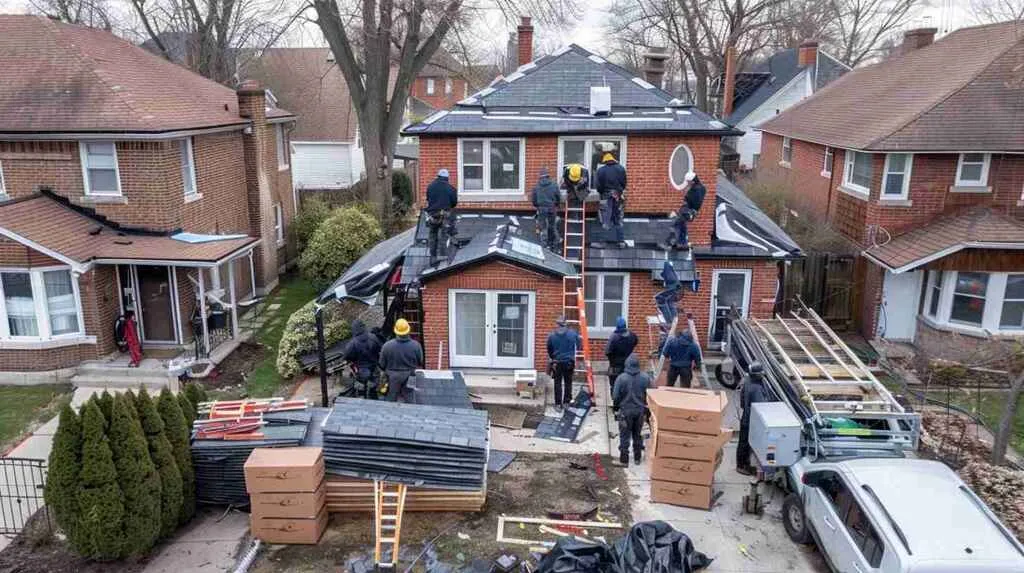
Trim Roof Shingle Edges Queens NY – Clean Lines at Every Cut | Free Quotes
Angles. Most of the “new roof” leaks I’m called to fix in Queens start along messy shingle edges, not in the middle of the roof. That last inch of every shingle at the eave and the rake does more work than the other eleven inches combined-it’s where water exits, where wind hits hardest, and where every cut I make either protects your house or opens a leak path straight to your walls.
Why Shingle Edge Trimming Matters More Than the Middle
Let me be straight with you: if your shingle edges look like a bad haircut, the rest of the roof doesn’t matter. Up there, the eave and rake are where water and wind test everything I’ve installed, and sloppy cuts at those edges mean you’re looking at stains, rot, and lifted shingles-sometimes within months. I spent my first five years painting hand-lettered billboards along Queens Boulevard, and the one thing sign work taught me is this: if the bottom line of the lettering wobbles, the whole sign reads wrong. Same goes for a roof. Your shingle edges need to read as one clean, straight sentence when you look up from the sidewalk, because that’s where the eye goes first, and more importantly, that’s where the water goes last before it leaves your roof.
On 46th Street last fall, I saw a perfect example of what happens when someone rushes the edges. The homeowner had hired a handyman to “finish up” a partial roof in Astoria-over their bay window, right above the living room. The guy trimmed by eye, no chalk line, no care for the drip edge alignment, and the metal stuck out in three different spots along the eave. Water was tracking sideways along those crooked cuts and funneling straight into the window frame. I remember it was August, heat bouncing off the blacktop, and I sweated through my shirt re-snapping perfectly straight lines in that blazing sun. The owner’s teenage son stood on the porch watching me work, and when I showed him how one eighth of an inch off at the eave became rot in their brand-new trim, his jaw literally dropped. Edges control both looks and leaks-get them wrong and you’re fighting damage on two fronts.
Quick Facts: Why Edges Fail First in Queens Roofs
8 out of 10 “new roof” leaks I fix in Queens start within 6 inches of an edge.
Eave and rake edges catch gusts between houses in Sunnyside, Astoria, Bayside, and Jackson Heights.
Crooked cuts send water sideways into fascia, siding, and window frames.
Wavy rooflines are visible from across the street long before shingles wear out.
| Myth | Fact |
|---|---|
| If the middle of the roof looks good, the edges don’t matter much. | Most edge leaks never show in the middle-they sneak into trim, soffits, and walls first. |
| Straight-looking edges from the ground mean it was trimmed right. | I’ve seen “straight” edges hiding missing starter rows and no metal drip edge. |
| Trimming shingles tight to the fascia stops wind from lifting them. | You actually need a controlled overhang and proper nailing to beat Queens gusts. |
| Any handyman with a utility knife can finish the edges. | Edge work needs layout, chalk lines, and the right blades, not guesswork. |
Clean, Straight Edges in Queens: How I Actually Trim Your Shingles
I always start with my chalk line and a sharp hook blade, never a guess and a dull knife. At the eave, I snap a reference line parallel to the gutter and fascia, measuring the overhang so every shingle tab ends at the exact same spot-typically a quarter to three-eighths of an inch past the metal drip edge, adjusted for your specific gutter setup and roof pitch. Then I work along that line like I’m reading a sentence left to right, trimming each shingle cleanly so water rolls off into the gutter, not behind it. At the rake, where the roof meets the gable end, I do the same thing: snap a clean line, set the overhang to resist wind lift, and cut so the shingle edge locks down against the rake metal. In tight Queens rowhouses, where wind channels down the side streets between two- and three-family homes, that rake edge takes a beating-especially in neighborhoods like Bayside and along the bay-so getting the cut and the metal right isn’t optional, it’s structural.
One windy November morning in Bayside, real nor’easter feel in the air, I inspected a roof where shingles along the rake edge kept snapping off. The previous installer had over-trimmed everything tight and skipped the starter and metal edge entirely, so every gust coming off the bay got under those sloppy cuts and peeled them back like pages in a book. I stood there with the homeowner’s dad, a retired engineer, and we both crouched under the ladder while I drew triangles in the condensation on his storm door, showing him how that tiny controlled overhang on a properly trimmed shingle changes the force of the wind. He got it immediately-you’re not just cutting shingles, you’re engineering the edge to survive Queens weather.
Here’s the thing about trimming roof shingle edges in Queens-you’re not just fighting gravity, you’re fighting wind tunnels between houses. So when I finish a job, I always walk back across the street with the homeowner and we both look up at the roofline together. If the shingle edge rides a true, clean line along the gutter and rake, it reads like good lettering on a storefront sign-rhythmic, straight, intentional. If it wobbles or sags, you see it instantly, and more importantly, so does the water when it’s trying to leave your roof.
Step-by-Step: How I Trim Roof Shingle Edges on Your Queens Home
-
1
Walk the perimeter from the sidewalk – I start by sighting down the existing roofline from the street and backyard, spotting sags, waves, and broken edges. -
2
Snap reference chalk lines – On the roof, I mark clean straight lines at the eave and rake to set the final shingle edge, adjusting for gutters, fascia condition, and local wind direction. -
3
Install or correct starter and metal edge – I make sure there’s proper starter shingles and drip/rake edge metal to carry water away from fascia and lock the first course. -
4
Set the overhang – I trim shingles to a consistent overhang (typically 1/4″-3/8″ at metal edge, adjusted for your specific roof and gutter setup). -
5
Fine-trim and corner-detail – I use a sharp hook blade for clean cuts at corners, valleys, and transitions, so no ragged tabs or exposed felt remain. -
6
Final street-view check – Once the cuts are done, I step back to the sidewalk with you so we can see the new edge line read as one clean, straight stroke.
| Edge Problem | What It Looks Like | What I Do to Fix It |
|---|---|---|
| Crooked eave line over gutters | Tabs dip and rise, shingle ends don’t line up with drip edge. | Re-snap chalk lines, re-trim or replace first course, adjust overhang to a consistent reveal. |
| Shingles snapping off at rake | Broken corners, missing tabs, exposed underlayment along gable edge. | Install/repair rake metal, weave in new shingles, reset overhang to resist wind lift. |
| Water staining fascia and soffit | Peeling paint, soft wood right under the shingle edge. | Extend or correct shingle and drip edge, seal and redirect water into gutters. |
| Jagged cuts around pipes or walls | Rough, uneven shingle edges at vents, parapets, and sidewalls. | Square and re-cut shingles, weave with flashing, close off water paths right at the edge. |
Typical Costs and When Edge Issues Become an Emergency
$275. That’s where many edge-tuning calls in Queens land when the problem is caught early-one side of the house, a wavy eave line over the gutter, no active leak yet, just an ugly roofline and the sense that something’s off. But costs climb fast when bad cutting has been letting water in for months or years, because then I’m not just re-trimming shingles, I’m rebuilding rotten fascia, replacing soaked underlayment, and chasing stains back to their source inside your walls. It’s always cheaper to fix crooked lines early than to rebuild rotten edges late.
A Saturday night in early spring, about 9pm, I got an emergency call from a restaurant owner in Jackson Heights-he had a leak right over his walk-in freezer before a big Sunday brunch service. Up on his flat-ish shingle roof under the glow of streetlights, I found the issue at the parapet: someone had hacked the shingle edges around a vent pipe with what looked like tin snips, leaving jagged cuts and open pathways right to the underlayment. I remember using my headlamp and a framing square like a surgeon’s tools, re-trimming and weaving in new shingles so the edges were clean and tight in the dark, while cumbia music floated up from Roosevelt Avenue. That job ran north of $1,000 because it was after-hours, emergency, and I had to undo a lot of damage. But if he’d called two weeks earlier when he first saw staining, it would’ve been a $400 daytime repair. Here’s what counts as urgent: if you see water dripping or staining under a roof edge, especially over a window, door, or room you care about, call that day. If it’s just a wavy line that bugs you visually but isn’t leaking yet, you’ve got a week or two to schedule it right.
Sample Pricing for Shingle Edge Work in Queens, NY
| Scenario | Typical Situation | Estimated Price Range |
|---|---|---|
| Minor eave line tune-up (1 side of house) | New-ish roof, wavy cut along one gutter line, no active leak yet. | $250-$400 |
| Rake edge repair on one gable | Shingles snapping or lifting along windy side of house, starter/rake metal missing. | $400-$700 |
| Front elevation curb-appeal straightening | Crooked edges visible from street, multiple small corrections along eave and rake. | $550-$900 |
| Leak-driven edge rebuild over window or bay | Rotten fascia/trim from years of bad cuts, water stains inside. | $850-$1,600+ |
| After-hours emergency edge repair | Active leak during storm, restaurant or home needs immediate stopgap and clean re-trim in the worst area. | $650-$1,200+ |
Quick Self-Check Before You Call About Your Roof Edges
You ever stand back across the street and really look at your roofline? From the sidewalk, you can see whether the shingle edge runs parallel to your gutters or waves up and down, whether tabs are missing or broken at the corners, and whether there’s staining or peeling paint on the fascia boards right under the edge. Don’t climb a ladder-just use your eyes from the ground and think of it like reading a sign: if the bottom line of lettering wobbles, the whole sign looks wrong, and your roof works the same way.
Ground-Level Shingle Edge Check for Queens Homeowners
-
✓
Step across the street and look at the eave line: does it run parallel to your gutters, or wave up and down? -
✓
Check for any shingle corners visibly hanging much lower or shorter than the rest along the edge. -
✓
Look at the fascia/trim under the roof edge for peeling paint, dark streaks, or soft/warped boards. -
✓
During or after rain, watch where drips fall: from the gutter line, or from spots between gutters and corners? -
✓
On gable ends, see if the shingles follow the rake board in a clean, even line or if tabs jut past randomly. -
✓
For flat-ish roofs with parapet walls, scan for jagged shingle lines around pipes or wall edges. -
✓
Note any rooms with ceiling stains that line up with edges, like over bay windows, porches, or additions.
Why Queens Homeowners Call Me the “Chalk Line Guy”
From Astoria bay windows to Bayside gables.
For residential and light commercial roofing in New York City.
Chalk-line trimming, drip edge correction, and leak tracing.
Honest, line-by-line explanations of what I’m fixing.
Answers to Common Queens Questions About Shingle Edges
Here’s the thing about trimming roof shingle edges in Queens-you’re not just fighting gravity, you’re fighting wind tunnels between houses. So when people stop me on the sidewalk or in driveways around Astoria, Bayside, Jackson Heights, and Sunnyside, they always ask the same few questions about whether their edges can be fixed without replacing the whole roof, how long it takes, and whether they can DIY it safely.
Crooked shingle edges, jagged cuts, and mystery leaks near your roofline can almost always be corrected cleanly when you catch them early-before water’s had time to rot fascia, soak walls, or wreck your ceilings. Call Shingle Masters in Queens, NY for a straight-line inspection and a free quote on trimming and tightening your shingle edges, so your roof finally reads right from the sidewalk and keeps the water where it belongs: off your house and into the gutters.