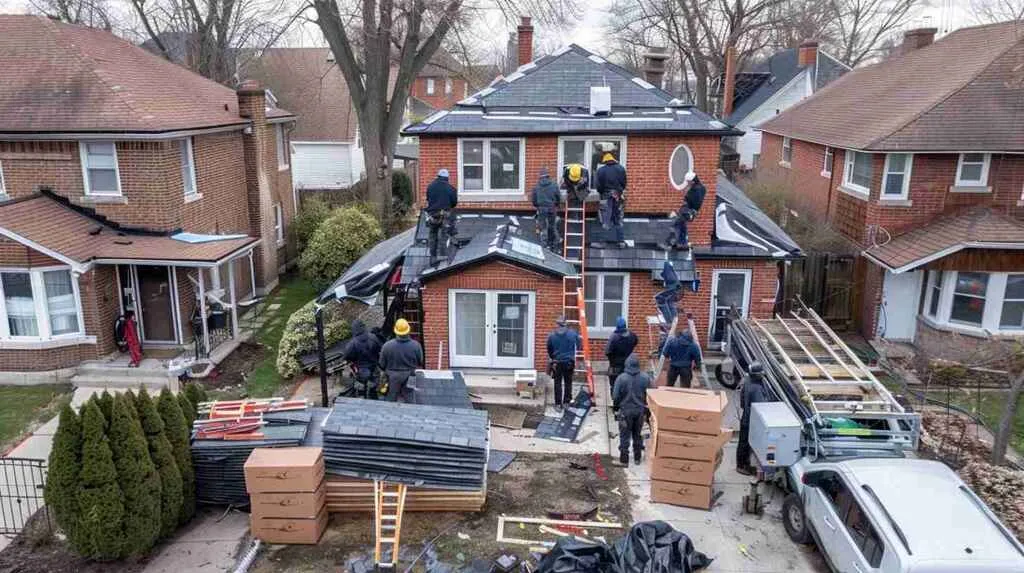
Shingle Roof Inspection Queens NYC – What a Thorough Check Covers
Maps tell you what you can’t see from ground level, and roofs are no different. Most “roof inspections” in Queens are really just someone leaning out of a ladder for ten minutes, squinting at a few shingles, and calling it done. That’s not an inspection – that’s a guess. A proper shingle roof inspection in Queens means I’m walking every block of your roof like I’m reading a neighborhood map, looking for the quiet failures that don’t show up from the sidewalk but cost you thousands down the road.
I’m Carlos Medina, and I’ve been climbing onto Queens roofs for 19 years. I explain your roof the same way I’d walk you through Astoria or Jackson Heights: we start at the front, move to the back, check the borders, zoom in on problem intersections, and by the end you know which neighborhoods are calm and which ones need attention.
What a Real Shingle Roof Inspection in Queens Actually Covers
A real shingle roof inspection in Queens isn’t someone yelling up from your driveway that “everything looks good.” It means I’m physically on your roof, stepping across every slope, checking nail lines, tracing water tracks, feeling for soft spots under my boots, and looking at how each section connects to the next. I mentally divide your roof into neighborhoods – front slope, back slope, valleys, ridge line, edges – and I check each one for the slow-motion problems that only reveal themselves when you’re standing right on top of them.
One February morning around 7:15 a.m., sun not even fully up yet, I was on a two-family in Jackson Heights doing a shingle roof inspection before a sale. The buyer swore the roof was “only eight years old,” but the north slope told a different story – granule loss in bands, soft spots near the eaves, and a bad ridge vent install that had been sucking in snow for years. When I pulled one shingle near the ridge and found mold on the underside, I had to sit both buyer and seller at the kitchen table and explain that the real problem wasn’t the shingles they could see, but the ventilation they never thought about. That’s the thing: a proper inspection looks past the age claim and checks the actual health of your roof system, and honestly, ventilation matters just as much as the shingles people focus on.
What I do on every Shingle Masters inspection is treat your roof like a map with distinct districts. The front slope facing the street? That’s one neighborhood. The back slope over the addition? Another. The valleys where two wings meet? Those are your high-traffic intersections where water concentrates and problems start early. I check each zone for wear, flex, cracks, and the telltale signs of failure you only catch if you’re willing to slow down and read the roof like you’d read a block-by-block crime map.
✅ Key Components Checked During a Thorough Shingle Roof Inspection
- ✅ Main slopes (front and back) for shingle wear and soft spots
- ✅ Ridge and hips for cracked caps, loose nails, and vent issues
- ✅ Eaves and overhangs for ice damage, rot, and improper drip edge
- ✅ Valleys where two slopes meet for granule loss and water tracks
- ✅ All roof penetrations (pipes, vents, skylights) for hidden cracks and gaps
- ✅ Attic or top-floor ceilings (if accessible) for early leak and ventilation signs
⚠️ The 10-Minute Ladder Peek Problem in Queens
Many “free inspections” are just quick looks from the gutter line that never spot north-slope wear, bad ridge vent installs, or soft decking in the middle of the roof. This shortcut is risky in Queens where multi-family buildings and older framing hide decay until ceilings stain. If the inspector never leaves the ladder, they’re not really inspecting your roof.
Walking the Roof Block by Block: How I Inspect Your Shingles, Decking, and Flashing
On a typical two-family in Queens, I start at the sidewalk asking myself which slope takes the worst weather – front slope gets afternoon sun, back slope might sit in shade and hold moisture, side valleys funnel every rainstorm into one narrow channel. One August evening after a thunderstorm, around 6 p.m., I got a call from a retired school principal in Bayside who’d just found a ceiling stain over her dining room. By the time I climbed up, the shingles were still slick and steaming. The obvious suspect was “missing shingles,” but everything was intact – the real issue was a hairline crack in the flashing around a bathroom vent and a line of blistered shingles right uphill from it. That job taught me that the most expensive leaks often come from the smallest, almost invisible defects you only find if you’re willing to sit on the ridge and just… stare at the layout for ten minutes. Queens storms, prevailing winds off the water, and attached houses all create specific wear patterns that you miss if you’re rushing.
Once I’m safely on the roof, I physically walk every slope: checking shingle condition with my eyes and hands, feeling for flex in the decking underfoot, tracing lines of nail pops and granule trails like streets on a map. I zoom in close enough to see if a shingle is cupping, cracked, or hiding a soft deck underneath, then I step back and look at how those little defects affect the whole district of the roof. I’ll tell you honestly whether your roof has five years or fifteen, and I’ll show you exactly which blocks need attention first.
On-Roof Shingle Roof Inspection Process Carlos Follows
1. Sidewalk scan of all visible slopes
I look for obvious damage, discoloration, and how different slopes age differently based on sun and wind exposure before climbing.
2. Safe access and perimeter walk at the eaves
I check edge condition, drip edge, and gutter interface to understand how water exits the roof “district.”
3. Slow walk across each slope checking shingles and soft spots
I feel for deck flex, watch for nail pops, and note where granules are missing or shingles are curling.
4. Close inspection of flashings, vents, and penetrations
These “intersections” are where most leaks start – hairline cracks and gaps you only see when you’re kneeling beside them.
5. Ridge and hip check for vent issues and cracked caps
Bad ridge installs can suck in wind-driven rain, and that messes up your whole map from the top down.
6. Interior/attic spot-check for leaks and ventilation problems
Moisture stains and poor airflow reveal hidden issues that surface shingles don’t always show.
| Roof “Neighborhood” | Common Problem | What It Looks Like | Why It Matters in Queens |
|---|---|---|---|
| Front street-facing slope | Granule loss bands | Darker/asphalt showing in horizontal lines | Sun and traffic-facing slope ages faster and can shed granules into gutters. |
| Back slope over extensions | Soft, spongy spots | Deck flexes underfoot near middle of the slope | Old additions often have thinner decking that fails early. |
| Valleys between wings | Granule-heavy gutters and worn valley shingles | Shingles smoother and discolored along the water path | Queens rainstorms concentrate water here and expose poor installs. |
| Ridge line | Improper ridge vent install | Caps misaligned, nails exposed or rusting | Can suck in wind-driven rain or snow like in the Jackson Heights job. |
| Around plumbing vents | Hairline flashing cracks | Tiny splits in metal or rubber boots | Small leaks over time lead to ceiling stains like the Bayside case. |
When a Shingle Issue Is Really a Decking or Ventilation Problem
Here’s what I’ll tell you that some guys won’t: many Queens leaks blamed on “bad shingles” actually start with cheap, flexing decking or poor ventilation that nobody bothered to check. A couple of summers ago, at about 2 p.m. on one of those 95-degree days in Corona, I was inspecting a landlord’s triplex between tenants. He wanted a “quick look” because the last roofer told him the roof was fine. Walking the perimeter, I noticed the pattern of nail pops lined up like someone playing battleship, and every pop lined up perfectly with a seam in the cheap OSB decking underneath. When I showed him how the decking flexed under my boot and how that movement was stressing his shingles, he finally understood why one tenant had recurring leaks while the unit next door was bone dry. That’s an insider tip you won’t hear everywhere: follow lines of nail pops or granule trails like streets on a map, and they’ll lead you back to the true entry point – often a deck problem, not just an old shingle.
Ventilation problems are even sneakier. Hot attics, condensation, mold on the underside of shingles – these quietly kill roofs years before their time. Remember that Jackson Heights inspection from earlier where I found mold under the ridge shingles? That wasn’t an “old roof” case, it was a ventilation failure letting moisture bake the shingles from below. A thorough inspection includes checking attic airflow and looking for early moisture signs, not just counting shingle tabs from the ground.
| Myth | Fact |
|---|---|
| “If I don’t see missing shingles from the street, my roof is fine.” | Granule loss, nail pops, and soft decking almost never show from sidewalk level. |
| “A home inspector’s quick look is the same as a roofer’s inspection.” | Most general inspectors won’t walk every slope or lift a shingle to check for trapped moisture. |
| “Ventilation is optional if the shingles look good.” | Poor ventilation in Queens attics bakes shingles from below and breeds mold like in that Jackson Heights ridge. |
| “One ceiling stain means one easy patch.” | Water can travel across joists; the entry point may be 10 feet “up the block” on your roof map. |
| “Newer OSB decking means no worries.” | Thin OSB can flex, causing nail pops and leaks between units like that Corona triplex. |
Quick Facts About Shingle Masters Shingle Roof Inspections
Typical on-roof inspection time
45-90 minutes depending on size and access
Roof types covered
Asphalt shingle roofs on one- to three-family homes and small mixed-use buildings
Report style
Plain-language summary with photos tied to your roof “neighborhoods”
Service area focus
Queens neighborhoods including Astoria, Jackson Heights, Bayside, Corona, and surrounding areas
Do You Need an Inspection Now or Can It Wait?
When I’m standing on your sidewalk, the first question in my head is whether your roof’s “district” is calm or on the edge of trouble. Some issues can wait a few weeks for a scheduled inspection – minor granule loss, a little curling, general aging with no active leaks. Other situations in Queens need quick attention: active leaks after a storm, visible damage from high winds, sagging you can feel from inside, or a home sale where the seller swears the roof is newer than it looks. Knowing the difference saves you from either panicking over nothing or ignoring a problem that’s quietly spreading.
Call Shingle Masters ASAP
- Active leak or new ceiling stain after a storm
- Shingles or flashing visibly lifted or missing after high winds
- Sagging or soft spots you can feel from an upstairs floor
- Purchase or sale of a property with conflicting roof age claims
Can Schedule Within a Few Weeks
- Granules collecting more than usual in gutters
- Minor shingle curling or discoloration with no leaks
- Annual peace-of-mind check before hurricane season
- Roof over 15 years old with no recent professional inspection
Determine If You Need a Shingle Roof Inspection or Full Replacement Estimate
Are you seeing active leaks or ceiling stains right now?
NO ↓
Has your shingle roof been replaced in the last 15 years?
YES: You likely need a targeted inspection and repair plan from Shingle Masters.
NO: You may be close to end-of-life – schedule an inspection plus replacement estimate.
Is your roof over 20 years old or unknown age?
YES: Schedule a full inspection to map remaining life and budget for replacement.
NO: Schedule a preventive inspection to catch small issues early.
What to Expect When Shingle Masters Inspects Your Roof
$500 of early repair can easily prevent a $5,000 interior mess in a two-family when we catch problems during inspection. On inspection day, I’ll arrive on time, introduce myself, ask a few quick questions about your building’s age and any concerns you’ve noticed, then set up safe access to your roof. I walk the roof using that neighborhood map approach – front slope, back slope, valleys, ridge, edges – checking every block systematically. I don’t rush. And at the end, I’ll come back down and explain in plain language what I found, where your roof stands, and what your realistic timeline looks like for repairs or replacement.
I speak plainly, not in roofing jargon, and I’ll literally point out each block of your roof on a sketch or photo so you understand which areas need attention first and which can wait. No scare tactics, no overselling – just honest assessment based on 19 years of walking Queens roofs. If your roof’s got life left, I’ll tell you. If it’s time to plan for replacement, I’ll show you why.
Why Queens Homeowners Trust Shingle Masters for Shingle Roof Inspections
- ✓ Licensed and insured for roofing work across New York City
- ✓ 19+ years of on-roof experience in Queens neighborhoods
- ✓ Known by local real estate agents for pre-closing roof evaluations
- ✓ Photo-backed findings so you can see each issue on your own roof “map”
Common Questions About Shingle Roof Inspections in Queens
Do you always have to walk the roof, or can you inspect from the ground?
On-roof inspection is standard because the most important issues – soft decking, hairline flashing cracks, nail pops, granule loss patterns – only show when you’re standing right there. Some situations (very steep slopes, fragile old tiles, active ice) may limit full access, but if I can’t walk it safely, I’ll tell you that upfront and we’ll figure out the best approach together.
Can you inspect my roof if it’s wet or snow-covered?
Safety comes first. I can do a partial assessment from the perimeter or attic on a wet day, but for a thorough walk-every-block inspection, I’ll usually ask to reschedule when conditions are safer. Snow cover hides everything, so we’d wait for a clear day.
Will you try to sell me a new roof no matter what you find?
Not my style. I’ll give you an honest assessment: if your roof has good years left and just needs a repair, I’ll tell you that. If it’s end-of-life and a full replacement makes more sense than patching, I’ll show you why. Simple repairs and maintenance are on the table when they’re appropriate.
How soon after the inspection will I get your recommendations?
I’ll give you a verbal summary on-site right after I come down from the roof, so you know immediately where things stand. Then I’ll follow up with a written summary and photos – usually within 24 to 48 hours – so you have everything documented for your records or to share with a lender or buyer.
A mapped, thorough shingle roof inspection now can save you from major damage, surprise leaks, and expensive interior repairs down the road. Your roof doesn’t have to be a mystery or a gamble. Call Shingle Masters for a full on-roof shingle roof inspection in Queens, NY – I’ll walk your roof block by block, explain exactly what I find, and show you the path forward whether that’s simple maintenance, targeted repairs, or planning for replacement.