Inspect Sheathing Before Shingle Replacement Queens NY – Why | Free Quotes
Underneath every curled shingle job I see in Queens is sheathing that might be hiding rot, and if you’re not budgeting an extra 10-30% for possible deck repairs, you’re planning to waste money. I’ve been roofing these streets for 19 years, and I tell every customer the same thing: check the bones before you change the skin, or you’ll pay twice.
Why Sheathing Inspection Comes Before Shingle Replacement in Queens
Let me be blunt: if you skip the sheathing inspection and only budget for shingles and labor, you’re setting yourself up to install a beautiful roof over rotten wood that will fail anyway. I think of a roof like a living patient – the shingles are the skin, the sheathing is the bones, and you can’t cure a sick structure with a pretty cosmetic job. That’s not an opinion; that’s physics.
One August afternoon in Woodside, it was 96 degrees and you could smell the tar from the sidewalk. The homeowner wanted us to “just reshingle” his 1950s cape because the shingles looked curled, but when we pulled back one row to check the deck, my flat bar literally went through the sheathing like it was wet cardboard – there was a bathroom fan vent dumping steam into the attic for years, turning the plywood into mush. That hidden infection would’ve rotted out any new shingle warranty within eighteen months, and the customer would’ve been calling me angry, broke, and standing under a leak.
Here’s what sheathing actually does: it’s the structural layer nailed across your rafters that holds your shingles and transfers wind, snow, and weight loads down to the framing. In Queens, where most of the housing stock was built between 1920 and 1950, original sheathing is either 1×6 boards or early plywood, and decades of hidden moisture from poor attic ventilation, ice dams, or bathroom vents means I’m finding soft spots on about 40% of tear-offs. Inspectors around here call me when they can’t decide if a deck is saveable, because I’ve walked enough Bayside colonials and Jackson Heights row houses to spot the difference between surface staining and structural failure in about ten seconds.
Warning: Skipping Sheathing Inspection Before Shingle Replacement
If you only budget for shingles and labor in Queens, NY, and don’t set aside a 10-30% cushion for possible sheathing repair, here’s what you’re risking:
- Premature failure: New shingles installed over compromised sheathing can sag, dimple, and leak within 1-3 years, turning your investment into a repeat job.
- Voided warranties: Most major shingle manufacturers specifically exclude warranties when the deck underneath doesn’t meet structural standards – meaning you paid for protection you don’t actually have.
- Insurance claim denials: If an adjuster finds that underlying sheathing damage was ignored or concealed during installation, your storm or leak claim can be rejected outright.
- Double costs: Tearing off a failed roof and redoing sheathing after the fact always costs 30-50% more than addressing the deck issues during the original project when materials and crews are already on site.
What I Look For When I Check Your Roof’s “Bones”
When I walk your roof for the first time, I’m silently asking myself: how many fasteners do I count per sheet, do I feel any give under my boots, and are there nail pops or soft spots near the edges where moisture sneaks in? I still remember a freezing January morning in Bayside, standing on a roof at 7:00 a.m. with my flashlight because the house had a home inspection at 10. The buyers were nervous but convinced the roof “looked fine” from the street, so I popped a shingle near the ridge and found delaminated plywood – the plies of the board were peeled apart from long-term moisture, and you could see the layers flaking like baklava when I pulled my glove across it. That ten-minute sheathing check completely changed their negotiation; they got a full roof and deck replacement credited before closing, saving them about $8,400 in surprise repairs six months later.
The main red flags I hunt for are a spongy feel when I press my boot near penetrations, visible shingle patterns that show sag or dips between rafters, and – when I can get into the attic – dark triangular staining on the underside of the deck or any powdery white mold along seams. This isn’t guesswork; it’s a medical exam of your roof, and just like a doctor palpates for lumps, I’m feeling for structural weakness that a cosmetic shingle job will only hide, not cure.
Key Sheathing “Symptoms” I Check Before Shingle Replacement
Soft or spongy areas when I walk the roof, especially within three feet of chimneys, vents, and skylights
Nail or screw pull-through where fastener heads have sunk below the surface or show rust rings
Wave or dip patterns visible from the ground that follow rafter spacing (usually 16 or 24 inches)
Attic-side dark staining or water marks on the underside of the deck, especially triangular patterns near eaves
Delamination or splintering where plywood layers separate or solid boards show cracks wider than a pencil lead
Older framing quirks I know from Flushing, Bayside, and Jackson Heights – mixed board sizes, skip sheathing, or cathedral ceilings with no ventilation chases
How We Inspect and Repair Sheathing Before New Shingles Go On
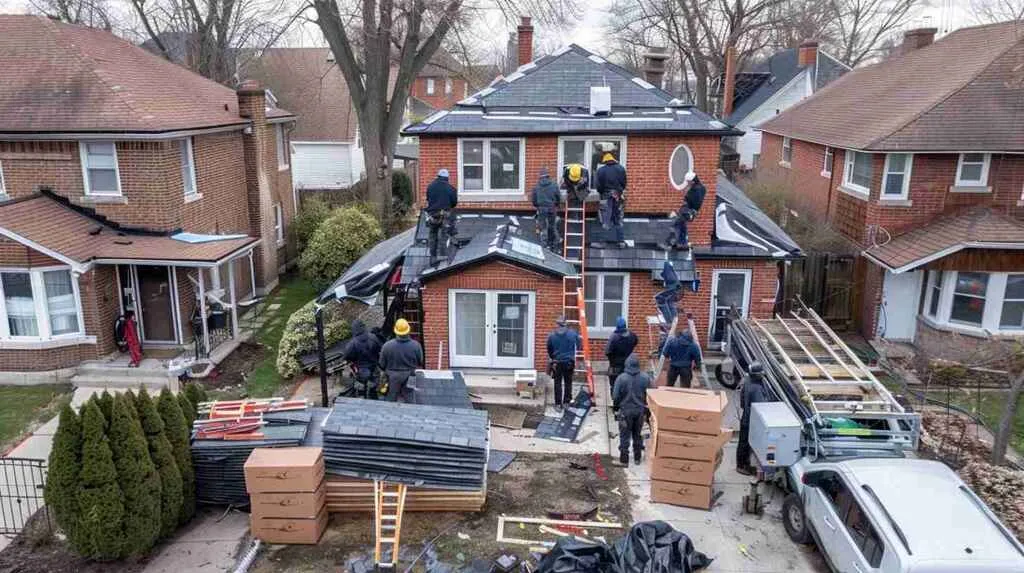
On a typical two-story in Queens, I start tear-off in sections – usually one slope or half a slope at a time – so I can probe the exposed deck with a flat bar, check around every penetration, dormer edge, and valley, and know exactly what I’m dealing with before the next truckload of materials shows up. A job that still bugs me happened in Corona on a small two-family we did in a rush before a big storm; the landlord was pushing us to skip sheathing inspection and “just nail over” because the tenants were complaining. Against my usual rule, I let myself be rushed and we only spot-checked one area, and three months later he called angry about a soft spot outside a back dormer – turned out there was an old, covered-up satellite dish mount that had rotted a section of deck we never saw. I fixed it for free, but since then I tell every customer that story and I will not start a shingle replacement without a proper deck inspection – no exceptions.
Here’s the insider tip that separates good roofers from rushed ones: I never remove more roof in one day than my crew can re-sheathe, felt, and dry in before we leave the site, especially with Queens’ sudden summer thunderstorms that can roll in from nowhere by 4 p.m. We work in controlled sections – tear off, inspect, replace bad wood, then get that zone weatherproofed and ready for shingles the next morning. It takes slightly longer, but your house never sits open overnight, and I sleep fine knowing a pop-up storm won’t flood your attic.
Step-by-Step Sheathing Inspection and Repair Before Shingle Replacement
Before any tear-off begins, I walk every slope with the homeowner (if they’re comfortable on a ladder), pointing out soft spots, sags, and suspect areas; I mark problem zones with chalk so my crew knows to probe those first.
We strip shingles and underlayment from one manageable section – typically 300-500 square feet – exposing the bare sheathing so I can inspect every fastener, seam, and penetration without leaving the entire roof vulnerable.
I walk the exposed deck and press a flat pry bar into suspect areas – good plywood resists; bad plywood lets the bar sink in or puncture through; I also stomp lightly near valleys and chimney flashings to feel for spring or deflection.
Every problem area gets photographed close-up with a tape measure or chalk mark for scale; I text or email those images to the homeowner immediately and get written approval (even just a text “OK to replace”) before cutting out any wood.
We cut back to solid wood, ensuring new plywood edges land on rafter centers for proper nailing; all replacement sheets are ½” or ⅝” CDX plywood (or the thickness specified by local code), fastened with 8d ring-shank nails every 6 inches at edges, 12 inches in the field.
Once the repaired section passes my final walk-through, we install underlayment (synthetic or #30 felt, depending on spec), drip edge, and any ice-and-water shield; that zone is now shingle-ready and protected from weather overnight if needed.
🚨 Urgent – Call Now
- You can see visible sag or dip lines in your roof from the street
- You’ve discovered water stains or mold on attic sheathing and shingles are due for replacement
- A home inspector flagged sheathing concerns and recommended immediate evaluation before closing
- You’re mid-project and another contractor just told you “the deck is fine” without showing you photos or letting you look
📋 Can Wait a Short Time
- Your roof is 15+ years old and you’re planning replacement within 6-12 months
- You’ve noticed minor interior ceiling stains but no active leaks
- You’re getting quotes and want a second opinion on whether sheathing replacement is really necessary
- You’re buying a Queens home and the seller agreed to a roof allowance but you want to know the real scope
Budgeting Smart: Realistic Sheathing Costs for Queens Roofs
$1,500 on a typical Queens roof is the difference between a cosmetic shingle job and a structurally sound one. I tell every homeowner to budget an extra 10-30% on top of the shingle-only quote to cover possible sheathing repairs – older homes in Bayside, Flushing, and Jackson Heights usually land closer to the 30% end because of ice dam damage and poor historical ventilation. I walk customers through the costs before any wood gets replaced, showing them photos and explaining exactly what we found and what it’ll take to fix it, so there are no surprises when the invoice comes.
Common Myths About Sheathing and Shingle Replacement in Queens
Before You Book Your Roof in Queens: Quick Checks and FAQs
Here’s the part no one wants to hear, but everyone needs to: grab a flashlight, go into your attic on a sunny day, and look up at the underside of your roof deck. If you see daylight through cracks, dark triangular stains near the eaves, or any powdery white spots, take photos and show them to your roofer before you sign anything. These simple checks won’t replace a professional inspection, but they’ll help you ask better questions and spot a contractor who’s trying to skip the sheathing conversation.
✔️ Simple Homeowner Checks Before Calling About Shingle Replacement and Sheathing
Sheathing Inspection and Shingle Replacement FAQs for Queens Homeowners
Can you just re-shingle without touching the sheathing?
How do you know how much sheathing will need replacing before you tear off?
Will I see the bad sheathing from inside my house?
How long does sheathing repair add to the job time on a typical Queens roof?
Do you give photos or videos of the sheathing problems before replacing wood?
Why Queens Homeowners Trust Shingle Masters with Sheathing and Shingles
Full liability and workers’ comp coverage; all permits pulled properly
Deep local knowledge of older housing stock and unique deck issues
Local inspectors and structural engineers refer tough sheathing calls to Luis
Every sheathing problem photographed, explained, and approved before repair
Clear written quotes; honest budget ranges; no bait-and-switch surprises
Inspecting and repairing sheathing before you replace shingles isn’t a luxury or an upsell – it’s the only way to build a roof in Queens that will actually last the 20-25 years the warranty promises. If you skip the bones, you’re just putting expensive makeup on a sick patient. Call Shingle Masters today for a free, photo-documented sheathing and shingle assessment, and I’ll give you a clear written quote that covers the real scope of your roof – no guessing, no surprises, just honest work done right the first time.