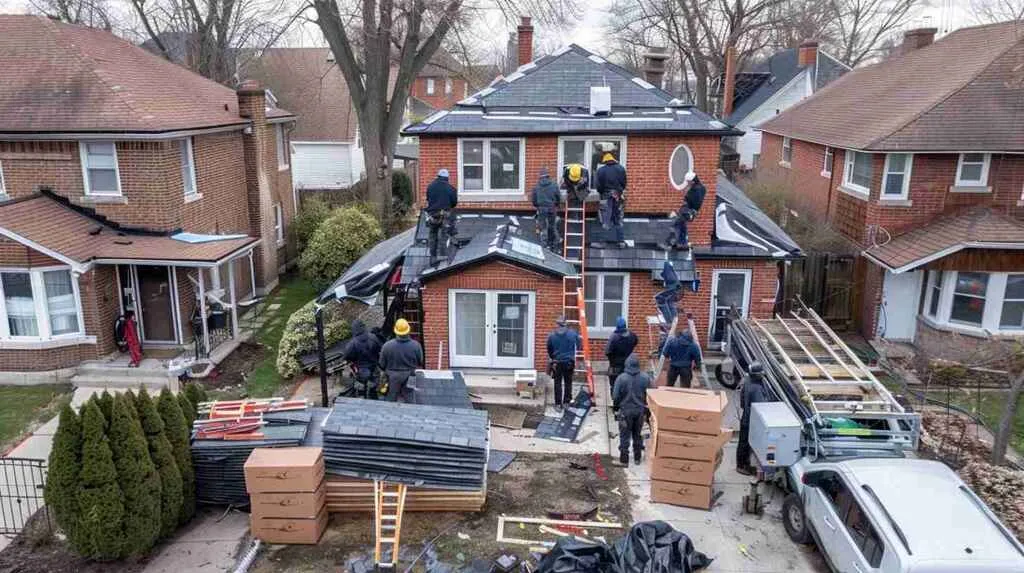
Shingle Roof Snow Removal Queens NY – Safe Technique Only | Free Estimates
Quiet streets lined with a fresh snow blanket look peaceful, like a postcard – until you notice the scars. On a typical block in Queens after a storm, I can spot at least two roofs that someone “helped” a little too aggressively. I’m Nadia Petrov, and for 19 years I’ve watched neighbors attack their shingle roofs with metal shovels and ice picks, thinking they’re solving a problem when they’re actually creating one that won’t show up until the next warm rain. Most shingle roofs can carry a lot more snow than you’d guess, but one wrong tool or panicked move does more damage than the storm itself. What you need is safe technique, not muscle, and I’ll show you exactly how to tell when your Queens shingle roof needs professional snow removal and when it’s better to let gravity and time do their thing.
Shingle Roof Snow in Queens: When It’s Fine and When It’s a Problem
On a typical block in Queens after a storm, I can spot at least two roofs that someone “helped” a little too aggressively. One January morning around 6:15 a.m., I was standing on a sidewalk in Forest Hills in single-digit windchill, watching a neighbor two houses down attack his shingle roof with a metal shovel and a hammer because his front gutter was overflowing with ice. I had been called by the woman next door, and while I was inspecting her roof from the ground with binoculars, I literally watched him pop three shingle tabs off in real time. I walked over, introduced myself, and fifteen minutes later I was up on his roof using a plastic roof rake and steam to clear the ice, while he held a broken shingle in his hand looking like he’d just smashed his own taillight. That day became my go-to example of how “DIY snow removal” can turn into a leak two storms later. Here’s the thing: every decision you make about touching roof snow is actually a trade between gravity (the weight sitting on the deck), water (where melt will travel when it thaws), and time (how long it stays up there). Change one without thinking about the others, and you’ve got a problem.
Most shingle roofs in Queens are engineered to carry 20-30 pounds per square foot of snow load, which translates to roughly 12-18 inches of fluffy snow or 4-6 inches of heavy, wet stuff. The panic you feel looking at a white roof isn’t always justified – but the damage you can cause with the wrong tool absolutely is. I’d rather see a foot of untouched snow on a sound shingle roof than a half-cleared roof that’s been scraped and chopped with metal tools, because the second one is almost guaranteed to leak later. Let me show you when snow is actually urgent and when you’re just worried for no reason.
When to Call for Shingle Roof Snow Removal in Queens, NY
Call Shingle Masters Now (Urgent)
-
▸
You see sagging in the roof deck or hear creaking after a heavy, wet snow -
▸
Water is dripping inside, especially around ceilings, light fixtures, or exterior walls -
▸
You have thick ice dams at the eaves and water backing up under shingles -
▸
Previous crew or DIY attempt used shovels, picks, or hammers and now you see missing or broken shingles -
▸
Top-floor unit reports new stains right after a Nor’easter or big drift
Monitor or Schedule (Can Wait)
-
▸
Even blanket of light, fluffy snow with no interior leaks -
▸
Snow is less than 6-8 inches on a modern, well-ventilated shingle roof -
▸
Detached garage or porch roof with no signs of bowing or cracking -
▸
You only need advice on preventing ice dams before the next storm -
▸
You’re planning a roof inspection once the snow season ends
Safe Shingle Roof Snow Removal: My Exact Process in Queens, NY
When I come to your house for snow removal, the first thing I’ll ask you is simple: “Are you worried about leaks, collapse, or both?” A couple of winters ago, during that wet, heavy snow we got right before Valentine’s Day, I got an emergency call from a daycare center in Jackson Heights at 2:30 p.m. Kids were being picked up, parents were double parked, and the director was panicking because water was dripping from a light fixture in their nap room. When I climbed into their attic, I found a perfect little tunnel of meltwater tracking under the shingles at the eave where someone had previously hacked off snow with an ice chopper, nicked the shingles, and punctured the underlayment. I had to explain to a room of worried parents, with toddlers hanging on their coats, that the roof wasn’t “collapsing” – it was bleeding from an old snow-removal wound. That case taught me that assessment beats panic every time. In dense neighborhoods like Jackson Heights, parking chaos and tight alleys change how I can even set up ladders or rakes, and attached row houses change how snow drifts and drains between properties, so I’m always adjusting my approach block by block.
Before I touch a single flake, I walk around the house with my graph-paper notebook and sketch how load is distributed, where meltwater wants to go, and what kind of shingle condition I’m dealing with. I’m looking at Queens roof types – attached two-families, dormers, flat-to-pitch transitions – and asking myself: is the deck sound, are the flashings intact, and will clearing this snow actually help or just redirect the problem? This isn’t a shovel-and-go job; it’s engineering. I’m methodical about it because one wrong push can crack a ridge shingle or concentrate weight in a spot that wasn’t designed to carry it.
Once I understand the roof’s story, I start the actual removal using only tools and techniques that won’t rip, scrape, or puncture the shingle surface. The goal is always to shift the balance between gravity (snow weight), water (melt paths), and time (how long the load sits there) in a way that protects the roof system, not just makes the surface look clearer. Here’s exactly how I do it.
Step-by-Step: How I Clear Snow Without Killing Your Shingles
Professional Shingle Roof Snow Removal Process
-
1
Initial phone or photo assessment: You call or text me photos from the ground showing snow depth, any visible sagging, and interior leak spots if present, and I tell you whether it’s urgent, can wait, or is fine to leave alone. -
2
On-site safety and access check: I arrive with proper harness, non-slip footwear, and plastic rakes, walk the perimeter to see where ladders can go, and confirm with you exactly what you want cleared and why. -
3
Ground-level clearing first: Using a telescoping roof rake from the sidewalk or yard, I pull down the lower 3-4 feet of snow at the eaves to relieve load and give meltwater a clear exit path, keeping the rake a few inches above the shingle surface. -
4
Controlled roof access if needed: Only when ground raking isn’t enough do I climb onto the roof with a harness, snow shoes to distribute weight, and soft plastic tools, working from ridge down to eaves to avoid concentrating loads. -
5
Ice dam treatment if present: For stubborn ice at gutters and in valleys, I use low-pressure steam or warm water (never hammers or picks) to melt channels that let trapped water escape without damaging shingles or underlayment. -
6
Final walkthrough and interior check: Before I leave, I inspect gutters, downspouts, and any attic access you have to confirm no new leaks formed during the work, and I give you a quick sketch of what I did and what to watch for next time.
| Tool / Method | Safe for Shingles? | Notes |
|---|---|---|
| Plastic roof rake with soft edge | Yes, when used from the ground and kept a few inches above shingles | Used to pull snow down in layers, not scrape surface bare |
| Telescoping roof rake from the ground | Yes, ideal starting point for most Queens homes | Perfect for small-to-medium storms on 1-2 story homes |
| Low-pressure steam for ice dams | Yes, when done by trained techs to avoid thermal shock | Best for stubborn ice dams on eaves and in valleys |
| Walking with roof harness and snow shoes | Yes, but only with proper planning and limited foot traffic | Used only when absolutely needed to relieve excessive load |
| Metal shovel or spade on shingles | No, easily scrapes off granules and breaks tabs | Often used in DIY attempts that lead to leaks later |
| Ice chopper or pick on roof | No, punctures shingles and underlayment like the daycare case | Turns a snow problem into a roofing repair problem |
| Rock salt directly on shingles | No, can stain, corrode metal, and damage vegetation below | Safer options include calcium chloride in socks at gutters |
| Piling snow in one corner of the roof | No, concentrates load and can crack ridge or deck, as seen in Flushing | Common mistake when trying to clear walkways or balconies |
DIY vs Pro: What You Can Safely Do from the Ground
Here’s a truth most people don’t like to hear: sometimes the safest thing to do with snow on a shingle roof is absolutely nothing. One Sunday night around 11 p.m., right after a Nor’easter, a landlord in Flushing begged me to come look at his three-family house because his top-floor tenant sent him a video of “the roof shaking.” The roof wasn’t shaking; what was happening was that a huge wind-drifted snow load was pushing against a poorly secured satellite dish that was flexing the fascia. When I got there, I could see where a previous crew had piled snow in one area “to get it off the walkway,” and that extra concentrated weight had actually cracked two shingles on the ridge. Clearing that roof with a harness and a snow rake under swirling snow and sodium-vapor streetlights is still the job I think about whenever someone asks me if it’s okay to “just push the snow to one side.” The answer is no – pushing snow concentrates the load instead of distributing it, which is exactly how you crack a ridge or bow a deck. Here’s my insider tip: for most Queens homeowners, the safest and most effective DIY move is to stand on the ground and gently pull down only the lower few feet of snow to relieve eave load, never aiming for a perfectly bare shingle surface. That’s it. If you’re thinking about climbing, you’re thinking about hiring me.
DIY Snow Handling vs Hiring a Pro in Queens
Reasonable DIY From the Ground
-
✓
Using a plastic or foam-edge roof rake from the sidewalk or yard to remove the first 3-4 feet of snow at the eaves -
✓
Gently knocking icicles off gutters from the ground with a broom (avoiding the shingles) -
✓
Keeping downspouts and area drains clear so meltwater can exit -
✓
Taking photos from the ground to send to a roofer for evaluation before climbing -
✓
Staying off the roof completely during and right after storms
Call a Pro Like Shingle Masters
-
!
Any situation requiring climbing onto a snowy or icy roof surface -
!
Thick ice dams that are forcing water back under the shingles -
!
Visible sagging, bowing, or cracking sounds from the roof or ceiling -
!
Snow drifts higher than 12-18 inches or visibly uneven loads -
!
Previous damage on the roof (missing tabs, old patches, satellite mounts) near where snow is collecting
⚠
Warning: Don’t Treat Your Shingle Roof Like a Sidewalk
Let me be blunt: your shingle roof is not a sidewalk, and you should never treat it like one. Shovels, picks, stomping on ice – all of those moves break tabs, scrape off the protective granule layer, and puncture the underlayment beneath. The real problem is that the damage doesn’t show up the day you do it. It shows up two storms later when meltwater finds that tiny hole you made and starts tracking into your attic, creating stains, mold, and expensive repairs. I’ve seen too many Queens homeowners turn a manageable snow load into a leak nightmare because they panicked and grabbed the wrong tool. If you wouldn’t stab your winter jacket with an ice pick to “get the snow out,” don’t do it to your roof.
Quick Costs & Response Times for Snow Removal in Queens
$0 is what it costs to call me for a quick phone or photo-based opinion after a storm. Shingle Masters offers free estimates and same-day or next-morning snow removal for many Queens neighborhoods, and pricing depends on height, roof complexity, and ice dam severity.
Typical Shingle Roof Snow Removal Scenarios in Queens
Ground raking only, no roof access needed
Ground work plus limited roof access, includes dormers
Full roof access with harness, multiple load zones
Stubborn ice at eaves, valleys, or around chimneys
Active leak, visible sagging, or urgent safety concern
All prices are estimates – actual cost depends on your specific roof and conditions. Free on-site or photo estimates always available.
Shingle Masters Winter Response Snapshot
FAQs: Shingle Roof Snow Removal in Queens, Answered
Think of your roof like a layered winter jacket – if you stab or scrape through the outer fabric, the insulation underneath doesn’t stand a chance. Most questions I get after a storm boil down to two things: how much weight can my roof safely carry, and where will meltwater go if I damage the shingle layer trying to remove it. That’s the gravity-water-time framework I keep coming back to. Understanding those three forces – the weight pressing down, the liquid trying to escape, and how long both are sitting there – helps you make smarter decisions about whether to touch the snow at all or call for help.
Use these FAQs as a quick filter before you pick up the phone. And if you’re still unsure, text me a couple of photos from the ground – I can usually play “damage detective” remotely and tell you whether you’ve got an urgent problem, a wait-and-see situation, or just winter doing its thing. Free estimates mean you’ve got nothing to lose by asking.
Q
How much snow can my shingle roof in Queens safely hold before I need to call someone?
Most modern shingle roofs in Queens are designed to handle 20-30 pounds per square foot, which works out to roughly 12-18 inches of light, fluffy snow or 4-6 inches of heavy, wet snow. If you’re seeing more than that, or if the snow is visibly uneven (big drifts in one area), or if you hear creaking or see any ceiling sagging inside, call immediately. Don’t wait to see if it gets worse – that’s how small problems turn into emergency tarps and displaced families. If you’re unsure, send me photos from the ground and I’ll tell you whether your roof is handling it fine or if we need to act fast.
Q
Can I just use a regular shovel to clear snow off my shingles if I’m careful?
No, and “being careful” doesn’t fix the problem. Metal shovels scrape off the protective granule layer on shingles even when you think you’re being gentle, and they catch edges that pop tabs off completely. I still remember one February on 108th Street when a homeowner proudly showed me the bare patches he’d carved in his roof after a blizzard, and six weeks later I was back replacing 40 shingles because those spots leaked during the March thaw. If you’re standing on the ground, use a plastic roof rake with a foam or soft edge, and keep it a few inches above the shingle surface to pull snow down in layers. If you’re thinking about climbing up there with any kind of shovel, you’re thinking about calling me instead.
Q
What’s the safest way to handle ice dams without damaging my shingles?
Ice dams form when heat from your attic melts snow on the upper roof, and that water refreezes at the cold eaves, creating a ridge that traps meltwater and forces it back under your shingles. The safest professional approach is low-pressure steam or warm water to melt channels through the ice without thermal shock or physical damage to the shingles. Never use hammers, picks, or rock salt directly on the roof – those create more problems than they solve. A temporary DIY trick is filling old pantyhose or tube socks with calcium chloride (not rock salt) and laying them across the ice dam to slowly melt a path, but if you’re seeing active leaking or thick ice buildup, call a pro with the right equipment before you make it worse.
Q
How do I know if snow damage to my shingle roof is covered by my homeowner’s insurance in Queens?
Most standard homeowner’s policies in New York cover sudden damage from the weight of snow or ice – things like a collapsed deck, cracked rafters, or leaks caused by ice dams that formed during a covered storm. What they usually don’t cover is gradual damage from deferred maintenance or wear and tear, and they definitely won’t cover damage you caused yourself during a panicked DIY snow-removal attempt. When I work with insurance adjusters in Queens, they always ask me the same question: “Was this damage caused by the storm, or by what the homeowner did after the storm?” Document everything with photos, don’t touch the roof before calling your insurer, and if they send an adjuster, I’m happy to walk them through what happened and what needs to be fixed. I’ve been doing this long enough that most local adjusters know me, and I write clear, honest reports.
Q
Do I need to clear snow off my detached garage or porch roof, or can I leave it alone?
It depends on the structure and the snow load. Older detached garages in Queens, especially those built before modern codes, often have lighter framing and less margin for error than your main house. If you’re seeing visible bowing in the roof deck, cracks in the walls, or doors that suddenly won’t open because the frame is being pushed, that’s a sign the structure is struggling and you need to relieve the load. Porch roofs and add-ons are similar – they’re often framed differently than the main roof and can handle less weight. That said, if there’s no distress and the snow is light and evenly distributed, leaving it alone is often safer than climbing up there and creating damage. When in doubt, take photos from multiple angles and text them to me – I’ll tell you whether your garage is fine or if we need to schedule a careful clearing.
Before You Call Shingle Masters After a Snowstorm
Check these things from inside and outside your house (without climbing) so you can give me better information when we talk:
-
1
Look for new ceiling stains, drips, or damp spots around light fixtures, vents, or exterior walls -
2
From the ground, take photos showing snow depth, ice dams at the eaves, and any visible sagging or bowing in the roof deck -
3
Note whether the snow is evenly distributed or piled in drifts, and whether it’s light/fluffy or heavy/wet -
4
Check if downspouts and gutters are clear or blocked with ice, and whether water is flowing when things start to melt -
5
Listen for unusual sounds – creaking, popping, or cracking – especially when wind picks up or temperatures drop -
6
Tell me if you or anyone else already tried to remove snow, what tools were used, and if you saw or heard anything break
Why Queens Homeowners Trust Shingle Masters in Winter
If you’re staring at a snow-loaded shingle roof in Queens right now and feeling unsure whether to touch it, leave it, or call for help, here’s what I want you to do: put down whatever tool you just picked up, step back inside, and text me a couple of photos from the ground. I’ll tell you honestly whether your roof is handling the load just fine, whether you can safely pull down a few feet of snow yourself with a plastic rake, or whether we need to schedule a professional clearing before things get worse. Free estimates mean you’ve got nothing to lose by asking, and safe techniques mean your roof will still be sound when spring comes. Call Shingle Masters today – let’s keep your roof protecting your family instead of becoming your next repair bill.