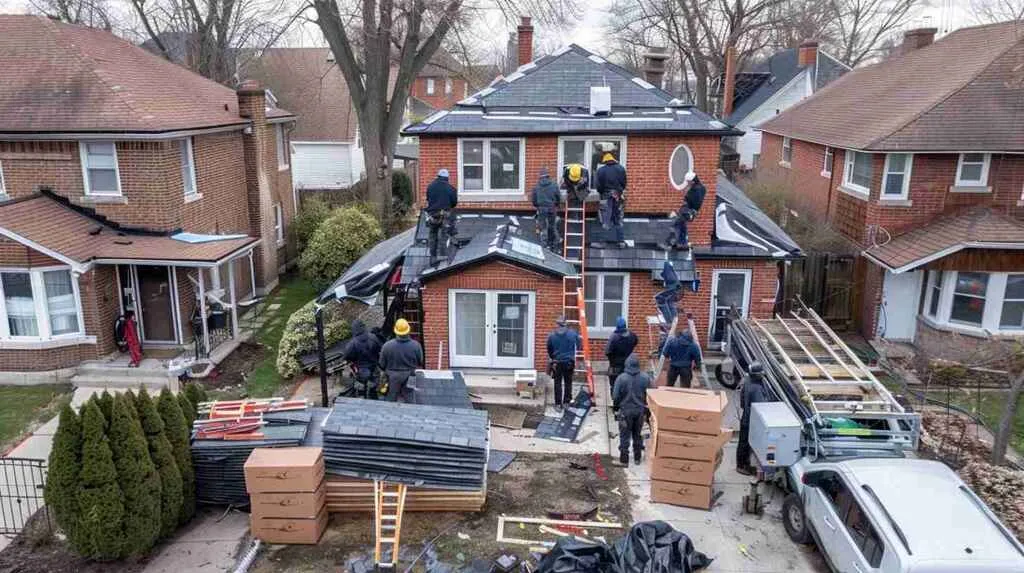
Shingle Roof Coating Queens NY – Which Products Work, Which Don’t
Microscope: put most “shingle roof coatings” sold in Queens under one and you’ll find that they either shorten your roof’s actual life or quietly void your manufacturer warranty. The handful that have a track record here fall into a very short list-high-quality water-based reflective acrylics made specifically for asphalt shingles, selective elastomeric patch systems for localized repairs, and manufacturer-approved top coats-and the rest of this article will separate those real options from the gimmicks that end up costing you twice.
Which Shingle Roof Coatings Actually Work in Queens Heat
Here’s my honest take, after 17 years working on Queens roofs: most shingle roof coatings I see either shorten roof life or void the warranty, period. The only ones worth considering are properly formulated water-based reflective acrylics designed for asphalt shingles, targeted elastomeric repair systems for specific leak points, and the rare manufacturer-approved top coats. Think of choosing a coating like picking the main subject in a photograph-you need a clear “focus” on what you’re trying to solve, whether that’s heat reduction, a specific leak, or buying a few more years. Every coating is like a layer in a camera lens, and one bad element ruins the final image. I’ve watched too many homeowners slap on miracle products without asking what problem they’re actually trying to fix, and then wonder why the roof performs worse than before.
On a typical July afternoon in Queens, when your shingles are hot enough to fry an egg, the coating you pick behaves very differently than it did in the lab brochure. One August afternoon around 3:30, I was standing on a South Richmond Hill roof with my infrared thermometer in one hand and a gallon of bright white acrylic coating in the other. The shingles under my boots were reading 164°F, and the homeowner was waving an Amazon printout of some “universal roof sealer” he’d already bought. I brushed a tiny patch onto a spare shingle and we watched it bubble within 10 minutes from trapped heat and off-gassing. That little experiment is why I now refuse to put generic white coatings on aged shingles in full sun without testing-Queens heat punishes products that work fine in cooler climates, and the dark shingles on most homes here soak up thermal energy like a battery, changing how every coating cures and bonds.
| Coating Type | Verdict for Queens Shingle Roofs | Why / Typical Outcome |
|---|---|---|
| Premium reflective acrylic (shingle-specific) | ✓ Can work with proper prep | Lowers surface temp 15-25°F on healthy shingles, breathable, won’t trap moisture if roof deck is sound. Only use on roofs under 12 years old with intact granules. |
| Targeted elastomeric repair patches | ✓ Good for specific leaks | Seals around boots, flashing, and localized cracks without covering the entire roof. Flexible enough for Queens freeze-thaw cycles when applied correctly. |
| Generic silicone “roof sealers” | ✗ Usually causes problems | Bridges over moving shingles and traps water underneath. Heavy application peels in sheets during wind events. Voids most shingle manufacturer warranties immediately. |
| Black asphalt “rejuvenators” / cosmetic sprays | ✗ Kills roof faster | Makes shingles look darker for resale but clumps granules, accelerates shedding, and provides zero waterproofing. Seen too many of these turn a 5-year-old roof into junk in one winter. |
⚠️ Common Warranty-Killing Coating Mistakes on Shingle Roofs in Queens
- Fully encapsulating a roof in generic silicone – Most shingle warranties explicitly forbid full-surface silicone coatings, and the second you roll it on, you’re on your own if a defect shows up.
- Spraying asphalt “rejuvenator” for cosmetic looks – These products smear the protective layer, glue granules together, and void manufacturer coverage because they chemically alter the shingle surface.
- Rolling thick white acrylic over already-baked, brittle shingles without testing – On roofs over 15 years old, coatings often peel in sheets because the bond surface is too degraded, and you’ve just paid for a mess instead of a fix.
Coatings That Cause Leaks Instead of Stopping Them
Here’s my honest opinion: 80% of the shingle roof coating products I see in people’s basements should stay in the basement. One rainy November morning in Flushing, I got a call from a landlord panicking because water was dripping through a freshly coated shingle roof over a third-floor unit. I climbed up between showers and saw a silicone coating someone had rolled on heavy like cake frosting, bridging right over loose shingles and a cracked plumbing boot. The coating looked perfect from the sidewalk, but when I pressed with my thumb, water squished underneath like a blister. That job taught me that no matter how waterproof a shingle roof coating claims to be, it’s useless if you seal in moving problems under a shiny skin. Queens weather makes it worse-our freeze-thaw cycles in late fall, Nor’easters with wind-driven rain off the East River, and the way three-story walk-ups in Flushing and Elmhurst trap moisture all punish bad coating jobs within one or two seasons.
Now, zoom in on what actually went wrong there. Silicone and other thick elastomeric coatings bridge over movement points like loose tabs, failing flashing, and boots that shift with temperature swings. On a pitched shingle roof, that rigidity is risky-shingles expand, contract, curl, and flex with every weather cycle, and a hard coating can’t follow. Think of it like “exposure” in photography: a coating can hide problems from view, like a bad filter on a lens, so water that used to drip visibly now runs sideways under the sealed surface and shows up inside your ceiling three feet away from the actual source.
When to Call About Leak Situations on Coated Shingle Roofs in Queens
Call Right Away (Same Week)
- Active drip inside your house after rain
- Visible water blisters under a coating when pressed
- Large sections of coating peeling off in sheets during wind
Can Usually Wait a Bit (Schedule an Inspection)
- Coating showing chalky residue or minor surface cracks
- Old water stain inside but no new dripping after recent storms
- You’re planning to sell and want to know if coating needs touch-up or removal
The Coatings That Make Old Shingles Die Faster
I still remember the first time I watched a “lifetime” roof coating start to chalk and wash off after one brutal Queens winter. A winter night around 9 p.m., after an icy rain, I was on a little row house in Astoria with a couple who’d just bought the place. The previous owner had used a cheap asphalt “rejuvenator” on the shingles to make the roof look younger for the sale. Under my headlamp I could see the granules glued together in little black clumps, and when I scraped lightly, the whole surface smeared like warm crayon. A month later, those same shingles started shedding granules into the gutters like crazy-since then, any time someone in Queens asks me about black “restorer” sprays, I tell them about that frozen night and how appearance coatings can kill the life left in a roof instead of saving it. My insider tip: lightly rub an aged shingle with a gloved finger-if granules clump or smear with any coating on top, that roof shouldn’t get another coating, it should be evaluated for replacement. Think of it like ruining the “image” by smearing the protective varnish-you can’t fix the underlying photograph if the surface is compromised.
Blunt truth-if your shingles are already curling like potato chips, no coating on Earth is going to turn them into a new roof. Zooming out for a second, curled, cracked, or bald shingles mean the asphalt has oxidized, the fiberglass mat is brittle, and the adhesive bond is shot. At that stage, a coating is throwing good money after bad-the only honest recommendation is full replacement or a proper reroof, not a cosmetic Band-Aid.
| Perceived Pros | Real-World Cons on Queens Roofs |
|---|---|
| Makes old shingles look darker and “new” for resale photos | Smears and clumps protective granules, leading to accelerated shedding and UV damage within months |
| Quick DIY application, dries in hours | Voids manufacturer warranties and offers zero actual waterproofing or structural benefit |
| Costs less than $100 for a typical Queens house | After one Queens winter with freeze-thaw and ice, the coating breaks down and you’re left with a roof in worse shape than before you started |
How I Decide: Coat, Repair, or Replace Your Shingle Roof
If you were standing next to me on your roof, I’d ask you one simple question: are you trying to lower heat, stop leaks, or just avoid a full replacement? That question sets my “focus”-like choosing the main subject in a photo-and every decision after that (coat, repair, or replace) has a different “depth of field” effect on both the surface shingles and the layers underneath. A coating might cool the roof but do nothing for a leak; a repair might fix the leak but leave you with a patchy appearance; and replacement solves everything but costs ten times more. The trick is matching the solution to what you actually need, not what a product label promises.
$1,500 spent on the wrong coating can do more damage than $600 of smart repairs. A quick on-roof inspection in Queens neighborhoods-Jackson Heights, Astoria, Flushing, South Richmond Hill, Elmhurst-tells me which path actually makes sense for your house.
Should Your Queens Shingle Roof Be Coated, Repaired, or Replaced?
Start: Are your shingles mostly flat, with granules still intact?
→ YES – Go to next question
→ NO (curling, bald spots, heavy granule loss) – Plan for replacement instead of coating
Is your roof under 12 years old?
→ YES – Go to next question
→ NO (13+ years old) – Do localized repairs only; coating usually fails within 2 years on older shingles
What’s your main goal?
→ Lower attic heat / reduce cooling costs – Consider limited reflective coating with proper prep
→ Stop a specific leak – Do targeted repair at the leak source (boot, flashing, damaged shingles)
→ Improve appearance for resale – Skip cosmetic coatings; clean roof or plan for replacement if condition is poor
| Scenario | Typical Scope | Estimated Price Range in Queens |
|---|---|---|
| Small leak repair | Replace 1 boot, seal flashing, patch 3-5 shingles | $350 – $700 |
| Selective coating + repair combo | Fix leak sources, then apply elastomeric patch to 100-150 sq ft around problem area | $900 – $1,600 |
| Full light-reflective coating (healthy roof only) | Clean, prime, and apply shingle-specific reflective acrylic on a 1,200 sq ft roof under 10 years old | $2,200 – $3,800 |
| Proper attic ventilation + minor repairs (instead of coating) | Install ridge vent, add soffit vents, fix 2-3 small leaks to reduce heat and moisture | $1,800 – $3,200 |
| Full shingle replacement (typical Queens house) | Tear-off, new underlayment, architectural shingles on 1,200-1,500 sq ft with basic ridge/valley work | $7,500 – $12,000 |
All estimates are rough ranges for typical Queens residential roofs and can vary based on access, pitch, existing damage, and material choices. Call for an actual quote after inspection.
What to Check Before You Let Anyone Coat Your Shingle Roof
Think of your shingle roof like a layered photo print: the base paper, the ink, the protective varnish-if you smear the wrong stuff on top, you don’t fix the picture, you just ruin it faster. Before coating, I always “zoom in” on the basics: shingle condition (are they flat, cracked, curled?), flashing condition (rusted, lifted, missing caulk?), boots around pipes and vents (cracked rubber, loose seals?), attic ventilation (is heat and moisture escaping properly?), and manufacturer specs (does the coating void the warranty?). Getting the “shot” right before you hit the shutter is everything-rushing a coating without that check is like taking a blurry photo and then applying a filter hoping it looks sharp.
A good coating plan in Queens is about prep and honesty, not miracle products. A quick attic peek and a roof walk in real Queens weather-hot July sun, windy March afternoon, right after a rainstorm-is more valuable than any label claim on a can.
✓ Before You Call Shingle Masters About Shingle Roof Coating in Queens
- Visible granule loss: Check gutters and downspouts-if you see heavy black grit collecting, your shingles may be too degraded for coating
- Curling or cupping shingles: Walk around and look at edges from the ground-if tabs are lifting or curling like potato chips, coating won’t help
- Existing leaks: Note exactly where water shows up inside (ceiling stain location, which room, after which type of rain)
- Age of roof: If you know the install date or have old invoices, that helps determine whether coating is even worth considering
- Attic ventilation: Pop into your attic on a hot day-if it feels like an oven, ventilation upgrades might solve your heat problem better than any coating
- Any past coatings already on the roof: If someone already applied a coating (even years ago), that changes what products will bond and whether removal is needed first
Why Queens Homeowners Call Shingle Masters
- Fully licensed and insured in NYC – All permits, all liability coverage, all worker’s comp in place for every job
- 17+ years working on Queens shingle roofs – Seen every coating failure, every leak pattern, every weather condition this borough throws at roofs
- Fast scheduling for on-roof inspections – Usually out within 3-5 days to walk your roof, check attic, and sketch out real options
- Familiarity with manufacturer guidelines for major shingle brands – Know which coatings void warranties and which are approved, so you don’t lose coverage by accident
Every Queens roof is different, and a quick on-site look beats any label claim. Call Shingle Masters for a shingle roof inspection or coating evaluation in Queens, NY-Rafa will walk the roof, sketch out your options, and recommend whether to coat, repair, or replace, with zero pressure and a plan that actually makes sense for your house.