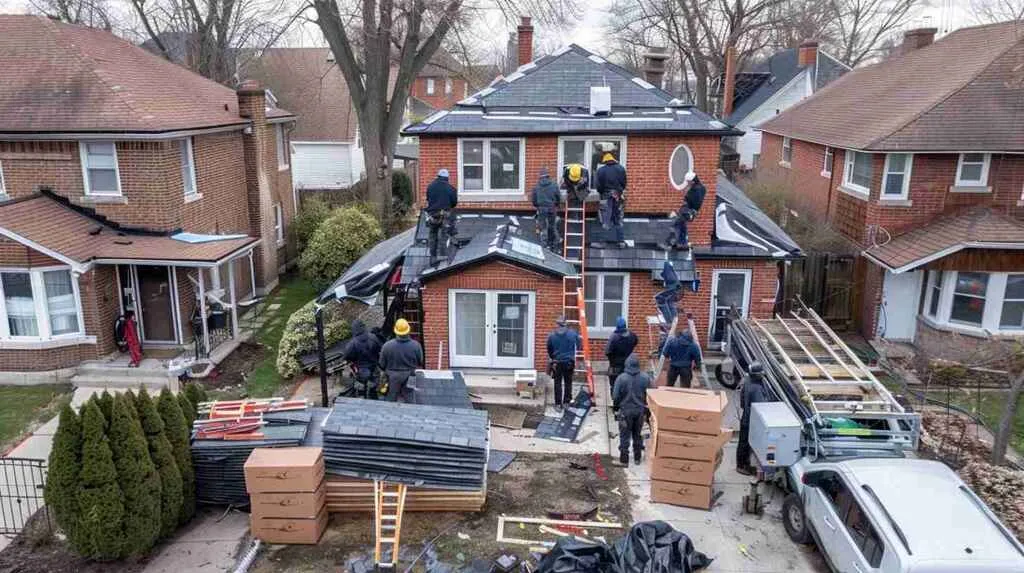
Reseal Roof Shingles Queens NY – What Gets Sealed and Why | Free Estimates
Rivers of rainwater cross your roof every storm, and on a typical Queens shingle roof, sealing the right edges, nail penetrations, and flashing can be the difference between a roughly $350 targeted repair and a $7,000 interior restoration. This page will show you exactly which parts get sealed, which are left alone so the roof can breathe, and how I follow the water’s path to make those decisions-so you can talk about your roof like someone who actually understands where water wants to go.
What Really Gets Resealed on a Queens Shingle Roof (and What Stays Untouched)
On a typical two-family in Queens with an asphalt shingle roof, the first thing I look at is how the shingles are bonded along the bottom edges and over the nail lines. Resealing is targeted, not a whole-roof smear job-you’re looking at specific shingle edges where the factory adhesive failed, exposed nail heads along ridges and around penetrations, and the transitions where shingles meet flashing. Think of it like smoothing a water slide instead of building dams: proper resealing just guides water down the natural path without creating little ponds or forcing it sideways into places it shouldn’t go.
Most of the time, you’re resealing lifted bottom tabs where wind got underneath, nail heads that rusted through or worked loose, and the metal-to-shingle seams at step flashing and counter flashing. You’re not slapping caulk on every shingle seam or covering active vent openings. Water follows gravity and capillary action, so if you seal a random seam that looks like a gap but isn’t on the water’s route, all you’ve done is create a new dam for the next storm to work around-and usually that detour leads straight to a nail hole or under a flashing edge.
Here’s my opinion after nearly three decades up there: most leaks I fix didn’t come from what wasn’t sealed, but from what someone sealed in the wrong place. One August afternoon around 3 p.m., the kind of day where the shingles feel like frying pans under your boots, I got called to a brick semi-detached in Maspeth. The owner had “resealed” his own shingles with a caulk gun and whatever he found on sale, then couldn’t figure out why the bedroom ceiling still leaked. When I peeled back the shingles, I saw half the nail heads exposed and random blobs of sealant damming water right into his nail holes instead of diverting it away. That job taught me you don’t just seal things because they look like gaps-you seal where water wants to travel, not where you guess it might.
Key Roof Areas: What Gets Resealed and What Stays Untouched
Bottom edges of loose shingle tabs where factory adhesive never bonded
Exposed or lightly rusted nail heads along ridges, vents, and flashing
Shingle-to-metal transitions at step flashing and counter flashing
Entire shingle surfaces or random seams with no visible lifting
Active ventilation components like ridge vents and intake vents
Curled, brittle, or severely worn shingles that really need replacement
Follow the Water: Shingle Edges, Nails, and Flashing in Queens Roofs
On a typical two-family in Queens with an asphalt shingle roof, the first thing I look at is how the shingles are bonded along the bottom edges and over the nail lines. I trace the path water would take-starting at the peak, following down-slope across the shingle field, then sideways along step flashing where the roof meets walls or dormers, and finally around every penetration like vents, pipes, and small chimneys. In neighborhoods like Elmhurst and Maspeth, you see a lot of two-family layouts with side entrances, dormers, and patchwork additions, which means more sidewall transitions and more places where water wants to sneak behind something. The trick is seeing the roof the way water sees it: as a series of slides and channels, not just a flat surface.
How Water Travels Across a Two-Family Roof
How I Trace the Water Path Before Resealing
Why Flashing Seals Matter More Than Random Caulk
I still remember a little yellow house in Elmhurst where a simple missed seal along the step flashing above a side entrance rotted out half the staircase wall. The homeowner had patched the roof shingles multiple times, even replaced a few courses, but nobody ever looked at the thin metal step flashing tucked under the siding. Water ran down the shingles, hit that transition, and instead of following the flashing down and out, it ran behind the flashing because one nail penetration at the top was never sealed. For years, every storm sent a trickle behind the wall until the framing turned to mush. That’s the thing with older Queens homes-especially two-families with side entrances and patchwork repairs over decades-the real leaks are almost always at those transitions, not in the middle of a shingle field.
⚠️ Warning: Over-Sealing Flashing Can Trap Water
Smearing sealant along the exposed edge of step flashing or wall flashing can create a lip that holds water against siding or under shingles. Proper resealing focuses on the upper, hidden edges and nail penetrations-not creating a visible caulk bead along every metal edge. Older Queens homes with siding transitions over roof lines are especially vulnerable to this mistake, because that little dam you just built can send water up and behind the siding instead of down and off the roof.
Sealing vs Ventilation: Let the Roof Breathe While You Stop the Leaks
When I’m on your roof and you ask me, “Can’t we just put more sealer everywhere to be safe?” I usually shake my head and ask you a different question: “Do you want your roof to breathe or suffocate?” About five years ago, on a cold, windy November morning in Bayside, I was resealing a ridge line on a cape with a very cautious older couple watching from their upstairs window. A previous crew had over-sealed the ridge caps, basically gluing them shut and trapping condensation in the attic. The husband kept asking me, “Why can’t you just seal every seam tight?” So I took a break, went down, and actually breathed on a cold ridge vent cover so he could see the condensation form and drip off-then explained that’s what was happening under his shingles because his roof couldn’t “exhale.” You seal where rain can blow in under the shingles, not the vent openings themselves, and you leave pathways for warm, moist attic air to escape or you’ll end up with condensation dripping on your insulation like fog on cold metal.
When to Call: Urgent vs Can-Wait Situations
🚨 Urgent Situations
- Active dripping during rain near a bathroom or kitchen vent
- Brown ceiling spots that grow after every storm
- Shingles visibly flapping or lifting near the ridge in high wind
- Water running down an interior wall near a side entrance or dormer
📋 Can-Wait Situations
- A few slightly lifted tabs with no interior staining yet
- Minor granule loss but shingles still lying flat
- Old sealant drying or cracking around flashing without signs of leaks
- Small, stable nail pops noticed from the ground with binoculars
When Resealing Helps-and When It’s Just Tape on Wet Cardboard
Blunt truth: if your shingles are curling, blistered, or worn thin, resealing them is like putting tape on wet cardboard-it might hold for a storm or two, but it’s not a fix. I evaluate whether the shingles are still structurally sound enough to benefit from a reseal by looking at age (anything over 20 years gets extra scrutiny), the amount of curling and brittleness, whether you’ve already got multiple patch jobs layered on top of each other, and how much granule coating is left. If I press a shingle tab with my thumb and it feels like stiff cardboard instead of flexible rubber, or if I see widespread blistering and bare spots, we’re not in reseal territory anymore-we’re in replacement territory, and a targeted reseal is just buying you time to plan the bigger job.
There was a late-night emergency call in Jackson Heights during one of those sideways-rain nor’easters-wind howling, around 11 p.m. A family with a newborn had water coming in around a bathroom vent. Up there in a poncho with my headlamp, I found the shingles themselves were fine, but the factory adhesive strip had never fully activated because the roof was installed in cold weather and nobody came back to re-bond them. The wind had lifted a few courses just enough for driven rain to sneak under. I did a targeted reseal of the lifted tabs and the flashing around the vent, and I remember the relief on their faces when the dripping stopped before morning. That’s when I started always checking shingle tab adhesion on any wind-exposed Queens roof, not just looking for obvious cracks. When the base materials are still healthy-good granule coverage, no major curling, decent flexibility-a smart reseal of lifted tabs, nails, and flashing can stop leaks fast and buy you years.
Do You Need Resealing or Full Shingle Replacement?
START: Are most of your shingles lying flat without major curling or cracking?
→ YES
Do you see active leaks or stains after storms?
YES: Targeted reseal of shingles, nails, and flashing is likely appropriate.
NO: Schedule an inspection; minor preventative resealing may extend roof life.
→ NO
Are shingles 18-25+ years old with widespread curling or bald spots?
YES: Full replacement recommended; resealing is a short-term bandage only.
NO: Have a pro inspect-mixed wear may call for partial replacement plus selective resealing.
What to Check Before You Call for a Reseal in Queens, NY
Can you safely take a minute from the ground to trace your own “water path” before calling? It’s a quick way to talk to me in the same language-so I can go straight to the trouble spots when I’m on-site.
✓ Before You Call: Ground-Level Checks for Shingle Resealing
- Look for shingles that appear lifted or uneven along ridges and near roof edges
- Scan around chimneys, sidewalls, and dormers for dark streaks or rust on flashing
- Check ceilings under bathrooms, kitchens, and top-floor bedrooms for new stains
- Note any spots where gutters overflow or downspouts dump water near walls
- Take photos with zoom of any shingle areas that look different after a storm
- Write down which direction that roof slope faces (street, backyard, alley) so I can match it to wind-driven rain patterns
Common Questions About Resealing Roof Shingles in Queens, NY
How long does a shingle reseal usually last on a Queens roof?
A properly done reseal typically lasts 3-7 years depending on the condition of the underlying shingles, sun exposure (south-facing slopes wear faster), and wind. On roofs that are less than 15 years old and otherwise in good shape, the reseal often holds up until you’re ready for a full replacement anyway. If your shingles are already pushing 20 years, think of the reseal as buying you a couple seasons to plan the bigger job without emergency water damage in the meantime.
Can you reseal shingles in winter around here?
I can do cold-weather resealing with the right products and technique-there are sealants formulated to cure in colder temps-but adhesive curing and shingle flexibility are definitely better above 40-45°F. If we’re in the middle of a deep freeze and you’ve got an active leak, I’ll stop the dripping with an emergency seal and then come back in warmer weather to do a thorough job on all the lifted tabs and flashing. Sometimes winter work has to be staged that way to respect what the materials can actually do.
Will resealing my shingles void my roof warranty?
Careful, manufacturer-compatible resealing around nails and flashing usually doesn’t void a warranty, but improper smears of incompatible sealants-especially random caulk on ventilation components or across wide shingle surfaces-can give a manufacturer an excuse to deny a claim. When I know a roof is still under warranty, I check the manufacturer’s installation manual to see what sealants they recommend and where. Most allow targeted repairs with approved products; they just don’t want you gluing the whole roof shut or blocking designed water paths.
Do you offer free estimates for reseal roof shingles in Queens, NY?
Yes-Shingle Masters provides free on-roof assessments with photos, and I’ll walk you through exactly what will be sealed and why. I’ll trace the water path with you, show you the lifted tabs or exposed nails, and explain whether a reseal makes sense or if you’re better off planning a replacement. No pressure, just honest information so you can make the call that fits your timeline and budget.
Ready to Stop the Leaks at the Source?
If you can describe what you’re seeing and where the water shows up inside, I can trace the path on your Queens roof and recommend either a smart reseal or a bigger fix. Think of your roof the way I think of those old stained-glass windows I used to restore: the beauty is in how each piece overlaps and channels water; the sealer is just there to back up the design, not replace it. Call or request a free estimate for reseal roof shingles in Queens, NY, and I’ll walk you through your options on-site-no guessing, just following the water to the real problem.