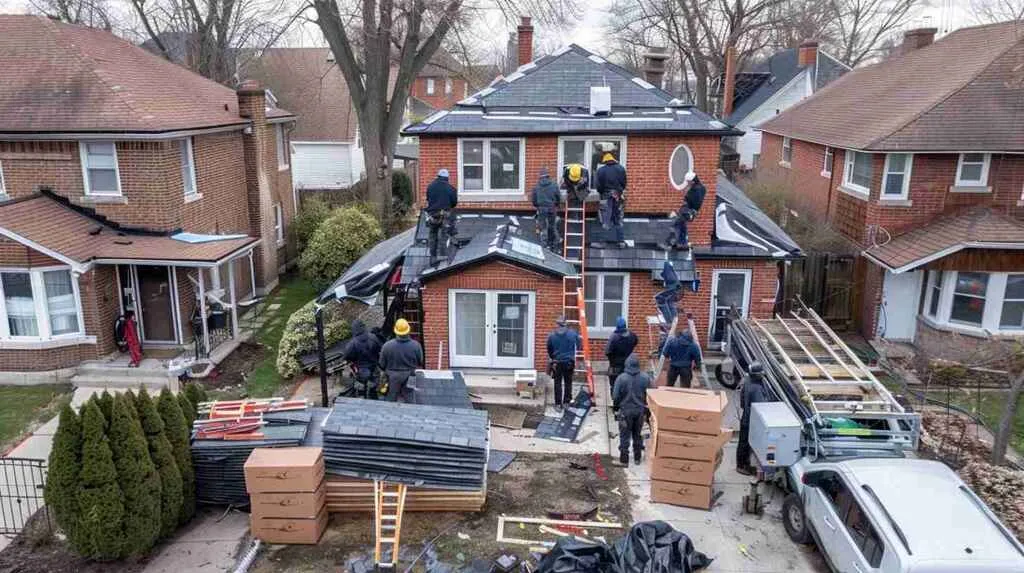
Do Shingle Roof Coatings Work Queens NY? The Honest Answer | Free Estimates
Honestly, a proper professional shingle roof coating job on a typical Queens two-family can easily run anywhere from $2,800 to $5,500, while a cheap roll-on product from a big-box store might cost you a few hundred bucks in materials-and in both cases, about half of that money is often thrown down the drain when the roof underneath is already curling, brittle, or actively leaking. This article is me, Luis Ortega from Shingle Masters, walking you through when coatings actually help, when they’re just an expensive bandage on a rotten wound, and what I honestly recommend after 17 years climbing onto Queens roofs and seeing every coating gimmick and miracle pitch out there.
What a Shingle Roof Coating Really Costs in Queens (and When It’s Wasted Money)
Honestly, my ladder-side opinion is that coatings are like trying to seal a ripped jacket with clear nail polish if the roof is already failing-you’re not rebuilding the fabric, just painting the surface and hoping. I grew up watching my dad tailor suits in Jackson Heights, so I’ve always thought about roofs the same way: all the layers need to work together, and you can’t fix bad seams or worn-through elbows with a spray-on shell. When someone calls asking about coating their shingles, my first question back is always “how old is the roof, and are you seeing leaks?” because that answer tells me whether we’re talking about a smart five-year extension on a healthy roof or a complete waste of their hard-earned money.
One August afternoon around 3 p.m., I was standing on a blazing hot shingle roof in Jamaica Estates that a handyman had coated with some “miracle white sealer” from a big-box store the year before. I remember my boots actually sticking to the soft coating as I peeled it back and found rotten OSB underneath, while the homeowner kept pointing to the receipt that promised a 10-year solution. She’d already spent about $1,400 on that coating, and now she was staring at a full tear-off that could’ve been avoided if someone had told her the truth up front: her shingles were already shot, and coating them was like trying to iron tissue paper.
Think of your roof like a winter jacket-the shingles are the outer fabric, the underlayment is the lining, and the deck is the structure holding it all together. A coating is basically a thin clear shell layer sprayed on top. If the fabric’s already torn, the seams are ripped, and the lining’s soaked, that shell isn’t going to save you. A coating might make sense if your roof is relatively young (say, under 15 years), the shingles are still flat and uncurled, you have no active leaks, and you understand you’re buying a short-term comfort upgrade-maybe a cooler attic in summer or a small bump in reflectivity-not a structural fix.
Typical Queens Shingle Roof Coating vs Repair vs Replacement Costs
| Scenario | Description | Typical Cost Range (Queens, NY) | Usually Smart or Wasted? |
|---|---|---|---|
| DIY Big-Box Coating | Homeowner buys acrylic or reflective coating product and rolls it on themselves | $300-$800 materials | Almost always wasted unless roof is under 10 years old with zero damage and you actually prep the surface properly-which most folks skip. |
| Professional Coating Application | Pro crew cleans, preps, and sprays elastomeric or silicone coating on a structurally sound roof (1,200-1,800 sq ft) | $2,800-$5,500 | Smart if shingles are still healthy, flat, and under 15 years old; adds 3-5 years and cooler attic temps. Wasted if shingles are curling or leaking. |
| Targeted Repair (Partial Replacement) | Replace damaged sections, fix flashing, seal known trouble spots on an otherwise decent roof | $1,500-$4,200 | Usually smart-addresses real structural issues and often buys more time than a coating ever would on an aging roof. |
| Full Roof Replacement | Complete tear-off and re-roof with new architectural shingles, underlayment, flashing (typical Queens house) | $9,500-$16,000+ | Smart if roof is over 20 years old, heavily curled, or leaking in multiple spots-it’s the only real fix and comes with a warranty. |
Myth vs. Fact: Common Beliefs About Shingle Roof Coatings in Queens
| Myth | Fact from Luis |
|---|---|
| “A coating will magically seal my roof watertight for 10 years, no matter the age.” | No coating can fix structural rot, curled shingles, or failing underlayment-it just sits on top. If your roof’s already sick, the coating peels or traps moisture and makes things worse, not better. |
| “You can coat any old shingle roof to avoid replacement.” | Once shingles are brittle, curling, or you can see the fiberglass mat underneath, a coating is like trying to iron a jacket made of tissue paper. The fabric’s gone, and no amount of spray-on shell will bring it back. |
| “A white reflective coating is always cheaper than repairs.” | A pro coating job can easily run $3,000-$5,500 in Queens. Targeted repairs on specific bad sections often cost less and actually fix the problem instead of hiding it under a thin layer of paint. |
| “Coatings stop all leaks instantly, just like roof sealant in a can.” | Coatings aren’t sealants. They sit on the surface and rely on perfect adhesion-if water’s already getting under your shingles through bad flashing or rotten deck, the coating won’t even touch the real leak path. |
On a Typical Two-Family in Queens Village, When I Climb Up and See…
On a typical two-family in Queens Village, when I climb up and see shingles that are curled like potato chips, soft spots where my boot sinks a little, or blisters where trapped water is bubbling under the surface, I know right away a coating is not going to save this roof. There was a Saturday in late October, just before sunset, over in Astoria, where a landlord begged me to “just coat it” so he could avoid replacing a 25-year-old roof before winter. I walked him through each blister, curl, and exposed nail head, then took my phone out and recorded water actually trapped under a loose shingle-when we pressed down, it bubbled like a blister on your hand. In the end he admitted the videos convinced him more than my words, and we did a partial replacement instead of a useless coating that would’ve peeled by spring. This is typical across Queens Village, Astoria, and similar neighborhoods with older housing stock: once shingles are curling and soft, a coating is like trying to iron that tissue-paper jacket I keep talking about-there’s no structure left to save.
Picture water sliding under a loose playing card on a table-no amount of spraying something on top of the card will stop the water underneath. That’s what happens when coatings go onto damaged roofs. I started using quick phone videos and simple Sharpie diagrams (sometimes on pizza boxes, sometimes on the back of old estimates) to show owners the side view of their roof layers, where the water’s actually sneaking in, and whether a coating still has a chance or is just throwing money at a dying roof.
Should You Even Consider Coating Your Shingle Roof Instead of Repair or Replacement?
(Common on Whitestone side or sun-baked south-facing pitches in Astoria)
Evaluating Shingle Roof Coatings on Still-Healthy Roofs
| Pros of Coating a Healthy Shingle Roof | Cons of Coating a Healthy Shingle Roof |
|---|---|
| White or reflective coatings can lower attic temperatures by 10-20°F in summer, potentially cutting AC costs a bit. | Many shingle manufacturers will void your warranty if you apply a coating, leaving you unprotected if defects show up later. |
| Can add an estimated 3-5 years to a roof that’s structurally sound but showing minor UV wear-basically buying time before a full replacement. | Prep work is critical and time-consuming: power washing, repairing loose shingles, priming-if skipped, the coating peels or traps moisture and does more harm than good. |
| Helps with minor UV protection and can slow granule loss on shingles that are otherwise still flexible and intact. | Doesn’t fix hidden problems like rotten decking, bad flashing, or underlayment failure-you’re painting over issues you can’t see from the surface. |
| On a young, well-maintained roof with good ventilation, a quality elastomeric coating can provide a uniform, clean appearance and some added waterproofing at seams if applied correctly. | Recoating or future repairs become trickier-new shingles won’t adhere well to old coating residue, and removal is messy and expensive if you decide to re-roof later. |
When a Coating Fails Overnight: What I Saw in Middle Village
If you remember nothing else from this page, remember this: a coating that washes off never fixed your roof. It just hid the problem until the first real storm.
During a nasty nor’easter about four years ago, I got called to a small single-family in Middle Village at 9 p.m. because a “cool roof coating” had started literally washing down the gutters in white streaks. I remember the flashlight beam catching flakes of the coating stuck on the window screens like snow, and the homeowner saying the salesman told her it would “lock the roof watertight for 15 years.” That storm made me start telling every customer: if a coating can wash off in one bad night, it never fixed your roof-just hid the symptoms for a season. Here’s the insider guideline I give everyone now: if a coating can wash off or chalk heavily in one nor’easter, it was either the wrong product for your shingle type or the roof was the wrong candidate in the first place. Queens weather-fall rain, wind off the water, brutal freeze-thaw cycles in winter-will expose a bad coating job faster than almost anywhere else.
⚠️ Big Red Flags with Shingle Roof Coating Pitches in Queens
-
1
They promise 10-15 years of life extension on a roof that’s already 20+ years old. Consequence: The coating will peel, trap moisture under curled shingles, or wash off in the first big storm because there’s no sound substrate to bond to. -
2
They don’t propose any shingle repairs, flashing fixes, or wood deck inspection before coating. Consequence: You’re sealing in rot, loose nails, and bad seams that will continue to leak underneath the pretty new coating. -
3
No mention of a moisture check or discussion about attic ventilation. Consequence: Trapped heat and humidity under the coating can cook your shingles from below and accelerate decay instead of preventing it. -
4
They don’t talk about coating-manufacturer compatibility with your specific shingle brand or age. Consequence: Wrong chemistry means poor adhesion, bubbling, or voiding your existing shingle warranty without you even knowing. -
5
Pushy same-day sign-up discounts or “this price expires tonight” pressure. Consequence: You skip the chance to get a second opinion or real inspection, and often end up locked into a bad job you can’t easily undo.
I’m Just Going to Say This the Way I Say It on the Ladder:
I’m just going to say this the way I say it on the ladder: if your shingles in Queens are brittle, curling, or you can see the fiberglass mat poking through where granules used to be, a coating is not a fix-full stop. You can’t save a ripped, paper-thin jacket with clear nail polish; you need new fabric or at least a proper patch on the torn seam. I say this because I’ve watched too many homeowners throw $3,000 or $4,000 at a coating that peeled off in six months, leaving them right back where they started but now even more frustrated and out of pocket.
Think about the roof layers like a tailored winter coat you’d see hanging in one of those shops on Roosevelt Avenue: you’ve got the outer fabric (your shingles), the lining inside (underlayment), and the stitching that holds the seams together (flashing, nails, deck attachment). A coating is like spraying a thin clear shell over the whole thing-it might make the outside look cleaner or reflect some sun, but if the fabric’s already worn through at the elbows or the seams are ripped open, that spray isn’t going to hold the coat together. Picture a side-view sketch of your roof with water sneaking under a shingle lap like it’s sliding under a loose hem on a pair of pants-no amount of spray-on coating touches that gap, because the real problem is underneath, not on top.
🚨 Call Shingle Masters ASAP
-
▸
Active ceiling drip or visible water stains spreading after rain -
▸
Sagging roof deck or soft spots you can feel when walking (for pros only-don’t walk on a damaged roof yourself) -
▸
Existing coating already peeling, chalking heavily, or washing into gutters -
▸
Brown ceiling stains growing bigger after each storm or nor’easter
📅 Can Usually Wait a Week for an Estimate
-
▸
Minor granule loss in gutters but no bare spots on shingles yet -
▸
Slight heat gain in attic during summer, curious about reflective coatings -
▸
Small cosmetic discoloration or streaking on shingles, no interior issues -
▸
General curiosity about whether a coating makes sense for your roof, but no active leaks
Before You Spend a Dollar on Coating: Quick Checks and Honest Answers
Before you spend a dollar on coating, run through a few quick checks: How old is your roof-ballpark, even if you’re not sure of the exact year? Are shingles visibly curling at the edges or do you see soft, spongy spots when someone (a pro, not you) walks on it? Have you had a history of ice dams or heavy ponding water, especially in neighborhoods like Maspeth, Middle Village, and Elmhurst where the housing stock is older and eaves can be shallow? These local Queens conditions matter because sun on south-facing slopes and wind off the water mean coatings perform differently here than in milder markets-what works in North Carolina might peel off in six months after a Queens winter.
Here’s the thing: an honest roof inspection can often find a middle ground you didn’t know existed. Maybe targeted repairs on the worst sections, a partial replacement of one slope, or-in rare cases-a carefully prepped coating on specific areas that are still structurally sound. You’re not automatically locked into the most expensive option, but you need someone up there with a flashlight, a moisture meter, and the guts to tell you the truth instead of just selling you whatever’s easiest to spray on.
✅ Before You Call Shingle Masters: What to Note About Your Roof
-
1
Age of roof (estimate is fine): Even a rough decade helps us know whether we’re looking at a candidate for coating or straight to replacement. -
2
Where leaks show up inside: Ceiling corner, near chimney, whole room? Location tells us a lot about whether it’s a coating issue or something deeper like flashing. -
3
Photos after the last big storm: Quick phone pics from the ground showing shingles, gutters, or any visible damage help me prep before I even climb the ladder. -
4
Any prior coatings or patch products used: If someone already sprayed or rolled something on, I need to know what and when so we can check compatibility or plan removal. -
5
Type of attic ventilation (if you know): Soffit vents, ridge vents, gable vents, or nothing? Good airflow affects how well a coating can work and whether moisture will be a problem. -
6
Utility bill changes in recent summers: If your AC costs jumped, we can talk reflective coatings as part of a bigger energy picture-but only if the roof’s healthy enough to support it.
Frequently Asked Questions: Queens Shingle Roof Coatings
Can I coat my roof instead of replacing it if it’s 20+ years old?
Short answer: almost never. By 20 years, most shingles in Queens are curling, brittle, or have lost so much granule protection that a coating won’t bond properly or fix the underlying decay. You’re better off pricing a replacement or at least targeted repairs on the worst sections-a coating will just trap moisture and peel, wasting your money.
Will a white coating really lower my NYC electric bill?
It can lower attic temps by 10-20°F in summer, which might shave a bit off your AC usage if your attic is well-ventilated and insulated. But don’t expect huge savings-we’re talking maybe $10-$30 a month in peak summer, not hundreds. The real benefit is comfort upstairs, not a dramatic utility bill drop, and only if the roof underneath is sound enough to support the coating in the first place.
Do coatings void my shingle warranty?
Yes, in most cases. Major shingle manufacturers explicitly say that applying an aftermarket coating will void the material warranty because it changes the shingle’s chemistry and performance. Always check your original warranty paperwork or call the manufacturer before coating-once it’s on, you can’t undo that decision, and you’re on your own if shingles fail early.
How long does a properly done coating last on a Queens shingle roof?
On a relatively young, structurally sound roof with perfect prep and the right product, you might get 3-5 years of real benefit before it starts chalking, peeling, or losing effectiveness. Queens weather-freeze-thaw, high wind, heavy rain-is tough on coatings, so don’t believe any pitch that promises 10-15 years unless they’re also selling you a bridge in Brooklyn.
Can you just coat the bad area over my leak?
No, and here’s why: leaks almost never come from exactly where the water shows up inside. Water travels along rafters, under shingles, through nail holes-coating one visible spot does nothing if the real entry point is three feet upslope or hidden under flashing. You need to trace the leak, fix the actual breach (loose shingle, bad seal, rotten wood), and then decide if a coating even makes sense for the rest of the roof. Spot-coating a leak is like putting a Band-Aid on your shoe when the hole’s in your sock.
The only honest way to answer “do shingle roof coatings work?” for your Queens home is with a real, on-roof inspection-not a sales script read over the phone or a drone photo from 100 feet up. Sometimes the best answer I can give you is “no, don’t waste your money on a coating” if it saves you thousands and gets you pointed toward a real solution instead of a temporary cover-up. Call Shingle Masters for a free, no-pressure estimate where I’ll actually get up there, take photos or shoot a quick video, sketch out what’s happening with your roof layers on the back of an old estimate if I have to, and tell you straight whether a coating, targeted repair, or replacement makes the most sense for your house and your budget.