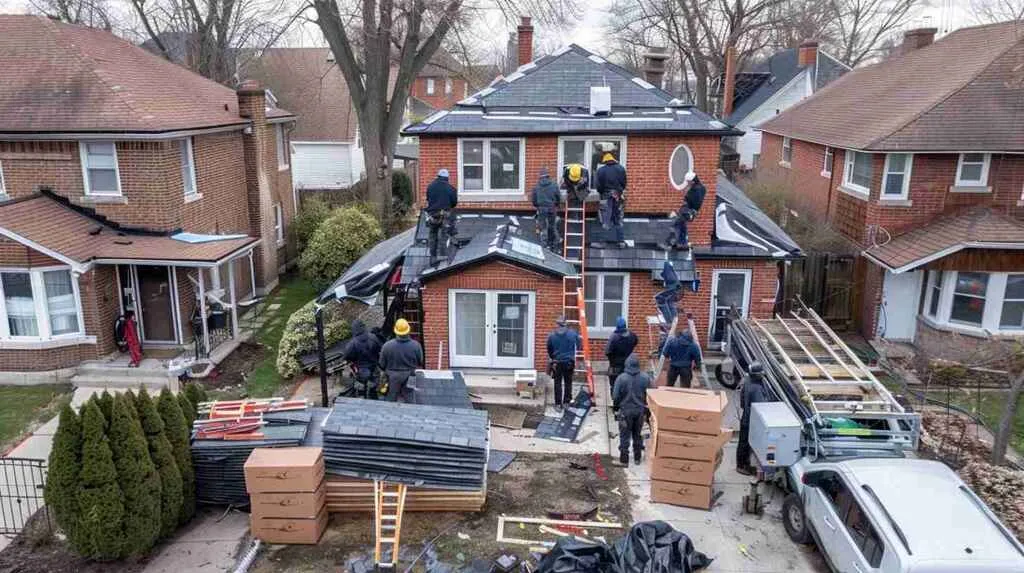
Asphalt Roof Rejuvenation Queens NYC – Add Life to Aging Shingles
Blueprint-level clarity: most Queens asphalt roofs can gain 5-8 extra years from professional rejuvenation, costing roughly a quarter to a third of a full replacement. The smart move isn’t asking “does my roof look old?” but calculating cost per remaining year of roof life and letting the numbers tell you what makes sense.
How Many Extra Years Will Asphalt Roof Rejuvenation Actually Buy You in Queens?
Here’s my view after 19 years on Queens roofs: most mid-life asphalt roofs around here get torn off 5-8 years too early because homeowners don’t realize rejuvenation math often wins on cost per remaining year. On a typical Queens cape, you’re looking at $1,800-$3,200 for a rejuvenation versus $9,000-$16,000 for a full teardown and replacement. If a rejuvenation buys you six solid years, you’re paying around $450 per year; if you replace prematurely, you’ve spent five figures on years you didn’t actually need yet. I frame every decision this way-cost per remaining year-because your roof is an engineered lifespan problem, not a gut call about whether it’s “tired.”
One August afternoon, about 3:30, I was on a two-family in Jackson Heights, and the shingles were so dry and brittle that every step sounded like I was walking on cornflakes. The owner wanted to replace the whole thing, but when I cored a sample and checked the granule loss and nail pull resistance, I realized rejuvenation could realistically extend his roof 6-7 years. We did a controlled spray at sunset to avoid flash evaporation in the heat, and three months later during a nor’easter he called me just to say, “I can’t believe it, the attic is cooler and the noise is way down.” That job convinced me how much timing, temperature, and prep matter for asphalt roof rejuvenation, especially in Queens’ summer climate where a midday mistake can cook off the treatment before it soaks in.
Cost vs Added Years: Rejuvenation vs Full Replacement in Queens
| Scenario | Roof Size / Type | Service | Estimated Total Cost (Queens, NY) | Estimated Added Years | Cost per Remaining Year |
|---|---|---|---|---|---|
| Small Rowhouse, 15-yr Roof | 1,200 sq ft | Rejuvenation | $1,800-$2,400 | 6-7 years | ~$320/year |
| Small Rowhouse, 15-yr Roof | 1,200 sq ft | Full Replacement | $7,500-$11,000 | 25-30 years | ~$330/year |
| Typical Cape, 18-yr Roof | 1,600 sq ft | Rejuvenation | $2,400-$3,200 | 5-8 years | ~$450/year |
| Typical Cape, 18-yr Roof | 1,600 sq ft | Full Replacement | $10,500-$15,000 | 25-30 years | ~$480/year |
| Larger Colonial, 20-yr Roof | 2,200 sq ft | Rejuvenation | $3,000-$4,200 | 5-6 years | ~$630/year |
Note: Replacement cost-per-year assumes full remaining lifespan. Rejuvenation wins when your roof still has structural integrity but needs extra years before a necessary tearoff.
Is Your Queens Asphalt Roof a Good Candidate for Rejuvenation or Is It Too Far Gone?
When I’m standing in your driveway and you ask, “Can you just tell me if this thing is shot?” here’s what I’m actually looking at. I do a flex test on sample shingles-can they be gently lifted without snapping through the mat? I check granule loss with my hand and a magnifying loupe to see if the asphalt base is exposed or still protected. I probe for soft spots in the decking from the attic side because a rotten deck disqualifies rejuvenation instantly. And I note your neighborhood: coastal exposure in Bayside near the water accelerates UV and salt wear differently than a sheltered block in Forest Hills or dense Jackson Heights where shade and neighbor proximity matter. That local knowledge shapes whether I tell you we can buy years or it’s time to talk replacement.
I’ll never forget a Saturday morning in late October in Bayside when a rejuvenation almost went sideways. The forecast said clear, but a surprise drizzle rolled in right after we finished our prep cleaning. I had two guys ready to start spraying and I called a hard stop; we waited nearly three hours for the shingles to dry back out while the homeowner watched nervously from the porch. Because we delayed, the treatment soaked in evenly instead of beading on a damp surface, and six years later during a follow-up inspection I could still see the flexibility we’d restored in those same shingles. That patience taught me the go/no-go decision isn’t just about age or curling-it’s about whether the substrate can still accept and hold treatment. Roofs with widespread curling, cracking through the mat, or active leaks into living spaces usually fail that test and need replacement, not a chemical band-aid.
Should You Rejuvenate or Replace Your Asphalt Roof in Queens?
START: Is your roof currently leaking inside the house during normal rain?
→ YES: Talk about replacement instead – Active leaks mean structural damage beyond what rejuvenation can fix.
→ NO: Continue ↓
How old is your asphalt shingle roof?
→ Under 10 years: Talk about replacement instead – Too early; warranty or defect issue likely.
→ 12-25 years: Continue ↓
→ Over 28 years: Talk about replacement instead – Past realistic rejuvenation window in Queens climate.
Can you gently lift a corner of a shingle without it cracking or breaking?
→ YES (shingles still flex): Continue ↓
→ NO (shingles snap like crackers): Talk about replacement instead – Material too brittle to rejuvenate.
What percentage of shingles are missing, curled severely, or clearly cracked through?
→ Under 15%: Continue ↓
→ More than 25%: Talk about replacement instead – Too much localized damage to justify rejuvenation.
How much granule loss do you see? (Check gutters and bare spots on shingles)
→ Moderate (some bare patches, granules in gutters): Good rejuvenation candidate
→ Severe (asphalt mat exposed across large areas): Talk about replacement instead – Base layer compromised.
✓ If you reached here: Good rejuvenation candidate – call for detailed inspection.
✓
Before You Call: Quick Roof Observations to Note
-
1.
Approximate age of the roof (or year last replaced, if you know it) -
2.
Whether you see visible shingle curling, cupping, or large bare spots from the ground or a window -
3.
Amount of granules collecting in gutters or at downspout exits (handful vs bucketful) -
4.
Any known leaks or water stains on ceilings/attic, even old ones -
5.
Whether your neighborhood gets heavy shade, direct salt air (near water), or full southern sun exposure -
6.
If you can safely touch a shingle edge from a window or ladder, does it feel brittle or still somewhat flexible?
These details help me give you a realistic preliminary opinion over the phone and save you an unnecessary site visit if your roof is clearly past the rejuvenation window.
What the Asphalt Roof Rejuvenation Process Looks Like on a Typical Queens Home
On a typical 1,600-square-foot Queens cape, the rejuvenation day starts around 7:30 a.m. with a roof-level inspection-I walk every zone, photograph trouble spots, and measure shingle flex and granule retention so we have baseline data. Next comes a thorough low-pressure cleaning to remove loose granules, moss, and surface grime; this step matters because treatment can’t penetrate dirt. We handle any small repairs-re-nail lifted tabs, seal minor cracks, replace a handful of damaged shingles if needed. Then we apply the rejuvenation treatment itself in a controlled spray pattern, working section by section, with temperatures and humidity watched closely. My insider tip: I prefer starting mid-morning in Queens once overnight dew has burned off and shingles feel warm to the touch, and if I sense a damp chill from the bay or river air, I’ll wait an extra hour rather than rush. Cure time is about 48 hours for full absorption, though light rain after 6-8 hours won’t hurt. Final inspection includes attic ventilation checks and a written estimate of the added years you just bought.
This is where the numbers on my clipboard turn into real extra years over your head.
Step-by-Step Asphalt Roof Rejuvenation Process in Queens, NY
Complete Roof Inspection & Documentation
Walk entire roof, photograph every zone, measure shingle flex, record granule retention, and note any soft decking. You get baseline photos and a go/no-go decision.
Low-Pressure Cleaning of All Shingle Surfaces
Remove loose granules, moss, algae, and surface debris using controlled low-pressure rinse. Clean shingles = better treatment penetration and adhesion.
Minor Repairs & Shingle Replacement
Re-nail lifted tabs, seal small cracks, replace heavily damaged individual shingles (usually fewer than a dozen). Goal: structurally sound substrate before treatment.
Temperature & Moisture Check
Confirm shingles are dry to the touch and ambient temp is in ideal range (typically 50-85°F). If conditions aren’t right, we pause-no exceptions.
Controlled Application of Bio-Based Rejuvenation Treatment
Apply treatment in even, overlapping passes, working section by section. The formula penetrates asphalt base, restoring flexibility and slowing oxidation at the molecular level.
Cure Period & Weather Protection Advisory
Treatment absorbs over 48 hours. Light rain after 6-8 hours is fine; heavy downpour in first 4 hours can reduce effectiveness. You’ll get specific cure guidelines based on forecast.
Final Inspection, Attic Check & Written Lifespan Estimate
Walk roof again, verify even coverage, check attic ventilation, and provide a written estimate of added years (typically 5-8) along with follow-up inspection schedule.
One winter evening in Forest Hills, I was doing a follow-up on a rejuvenation we’d done for an older couple who kept their thermostat at 78 because they were always cold. It was around 9 p.m., snow flurries starting, and we took infrared readings in the attic before and after additional ventilation tweaks. The rejuvenated shingles were holding granules better than their neighbor’s brand-new roof, and the heat loss through the deck dropped enough that they called me in spring to say their gas bill had finally calmed down. That’s when I started pairing rejuvenation with small energy-efficiency audits-it’s not just about the shingles, it’s about how the whole roof assembly behaves. When shingles regain flexibility and their reflective granule layer is intact, attic temperatures moderate, insulation performs closer to spec, and your HVAC doesn’t fight as hard. Rejuvenation changes system-level performance, not just curb appeal.
Rejuvenation vs Replacement: When the Math Stops Making Sense
I’m going to be blunt about this part because the numbers don’t care about feelings. The cost-per-remaining-year metric is simple: divide total project cost by the realistic years you’ll get. If a $2,800 rejuvenation buys you seven solid years, that’s $400 per year. If a $12,000 replacement gives you 28 years, that’s $429 per year-nearly identical annual cost. But here’s the tipping point: if your roof has structural deck issues (soft plywood, visible sag, water-damaged rafters visible from below), severe storm damage with missing sections, or you’re already past 25-28 years in the Queens climate with widespread brittleness, rejuvenation stops making sense. You’re not buying years; you’re delaying an inevitable and now more expensive repair because the deck will keep rotting underneath a temporarily prettier surface.
There’s a habit in this industry that drives me crazy: ripping off roofs that still have a second career in them. I’ve seen contractors quote $14,000 tearoffs on 16-year-old roofs that passed every flex test, granule check, and deck probe I could throw at them. My discipline is documenting the recommendation-I take close-up photos of shingle cross-sections, sketch how water is (or isn’t) penetrating on the back of my estimate form, and write down the projected added years in ink so you can hold me to it later. If I say rejuvenation will buy you six to seven years and I’m wrong by more than one year either direction, we talk about what went sideways and I adjust future recommendations. That accountability keeps me honest about the math.
⚠️
Warning: Signs a Contractor Is Pushing Rejuvenation When You Actually Need a New Roof
- They dismiss soft or spongy decking as “not a big deal” or “fixable later” without showing you the affected areas from the attic.
- They minimize active interior leaks, saying rejuvenation will “probably stop them” without identifying the exact entry point.
- They refuse to estimate remaining years in writing or give vague answers like “it’ll last a while longer.”
- They skip the flex test, granule check, or visual deck inspection and quote rejuvenation based only on age or curb appeal.
- They won’t show you comparison math (cost per remaining year for rejuvenation vs replacement) when you ask directly.
- They pressure you to decide same-day without giving you time to get a second inspection or written documentation.
A legitimate rejuvenation specialist will walk away from a job that doesn’t pass objective tests, because their reputation depends on roofs performing as promised for the quoted years.
Common Questions About Asphalt Roof Rejuvenation in Queens, NY
Victor has heard the same handful of questions across every neighborhood in Queens-from Astoria rowhouses to Bayside colonials to Forest Hills tudors-and he’ll answer them directly with numbers and plain language. These answers assume typical Queens weather (humid summers, freeze-thaw winters, occasional nor’easters), older three-tab or architectural asphalt shingles, and 1-3 story residential homes.
Frequently Asked Questions
How many extra years will rejuvenation realistically add to my Queens asphalt roof?
For a qualifying roof (12-25 years old, still flexible, no major structural issues), you’re looking at 5-8 additional years in the Queens climate. I’ve tracked roofs I treated in 2016-2018 and the average is right around 6.5 years before they needed replacement. Roofs with heavy coastal exposure in Bayside trend toward the lower end (5-6 years); sheltered inland roofs in Forest Hills or Flushing often hit 7-8 years. I always put the estimate in writing so you can hold me to it.
Is rejuvenation safe for older or more brittle shingles, or will it make things worse?
If shingles are so brittle they snap when you try to gently lift a corner, rejuvenation won’t save them-you’re past the window. But if they’re stiff and dry yet still have some flex (you can bend a sample slightly without it cracking), the bio-based treatment penetrates the asphalt and restores plasticizers that were lost to oxidation. Think of it like reconditioning dried-out leather; it won’t turn a cracked belt new, but it absolutely brings life back to stiff but intact material. The prep inspection is where we make that call-I’ll show you the flex test in person.
Will rejuvenation affect a future roof replacement or make it harder/more expensive?
No. When you eventually replace the roof, the old rejuvenated shingles tear off exactly like untreated shingles-there’s no adhesive residue, no special disposal required, no extra labor. The treatment absorbs into the asphalt base; it doesn’t create a surface coating. If anything, rejuvenation delays your replacement by several years, which means your next roof goes on when material and labor costs might be different, but the actual tear-off and install process is identical.
Does rejuvenation void my existing shingle warranty or affect homeowners insurance?
Most manufacturer warranties on standard asphalt shingles are already pro-rated by the time rejuvenation makes sense (12+ years in), so there’s minimal coverage left to “void.” The treatment itself doesn’t alter the shingle structure in a way that invalidates material warranties; it’s restoring lost oils, not adding foreign layers. For insurance, I’ve never had a carrier in New York raise an issue-you’re maintaining your roof, not modifying it. If you have specific warranty language you’re concerned about, I’m happy to review it with you and provide documentation of the treatment used.
How much noise, odor, or disruption should I expect during the rejuvenation process?
Noise is minimal-low-pressure cleaning sounds like a garden hose, and the spray equipment is quieter than a lawnmower. The treatment itself has a faint petroleum-like odor (similar to fresh asphalt or roofing tar) that’s noticeable outdoors for a few hours but dissipates quickly; it doesn’t penetrate inside your home. We work during daylight hours, typically finishing in 4-6 hours for a standard Queens residential roof. You don’t need to leave the house, and most homeowners go about their day normally. We protect landscaping, gutters, and driveways with drop cloths, and clean up thoroughly before we leave.
What time of year is best for asphalt roof rejuvenation in Queens, and can you do it in winter?
Spring (April-May) and fall (September-October) are ideal because temps are consistently in the 55-75°F sweet spot and humidity is moderate. I can work in summer if we start early or finish late to avoid midday heat that causes flash evaporation. Winter is possible on milder days (above 50°F, dry shingles, no forecast precipitation for 48 hours), but the window is narrow and I won’t force it. I’d rather delay two weeks and do it right than rush a winter job and have the treatment bead instead of soak. If you call in December and it’s feasible, great; if not, I’ll put you first on the spring schedule and explain exactly why waiting helps you.
Why Queens Homeowners Choose Shingle Masters for Rejuvenation
The real value of asphalt roof rejuvenation in Queens isn’t hope or wishful thinking-it’s a calm, number-driven inspection that tells you exactly how many extra years you can reasonably buy and what you’ll pay per year of remaining life. If you’re tired of guessing whether your roof is “too old” or being pressured into a premature tearoff, call Shingle Masters at Victor’s direct line and schedule a rejuvenation assessment. You’ll get a written cost-per-year comparison against full replacement, baseline photos, and an honest answer about whether rejuvenation makes sense or it’s time to replace.