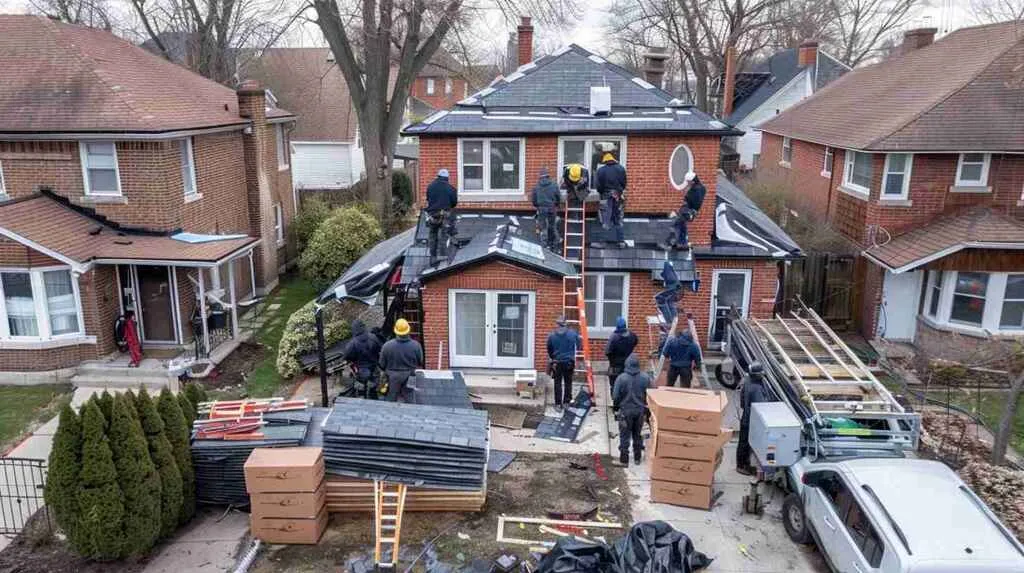
Wood Shingle Roof Queens NYC – Natural Beauty and Real Durability
Quiet truth most folks don’t expect: in Queens’ particular mix of humidity, salt air off the bay, and those brutal freeze-thaw cycles we get every winter, a properly detailed wood shingle roof can outlast a basic asphalt roof by five to ten years and look better doing it. I’ve watched it happen on blocks from Whitestone to Middle Village over nearly two decades. The catch is, it’s not the wood that fails-it’s almost always the venting, the underlayment, or the installer who treated cedar like it was just prettier asphalt.
I’m Victor, I’ve been doing this for 19 years, and around here I’m the guy other roofers call when a wood shingle roof is acting weird. I used to pull nets off New Bedford, walked away after a storm chewed up our boat, and found I liked the precision of roofing more than 3 a.m. hauls. These days I spend a lot of time sketching cross-sections on cardboard so people can see how air and moisture are going to move through their roof when nobody’s looking. That’s the part that decides whether your beautiful cedar roof lasts 30 years or starts rotting from the inside in seven.
Why Wood Shingle Roofs Actually Work in Queens, NY
Most folks think wood and humidity don’t mix. But here’s the thing: if you give the wood the conditions it likes-dry air moving underneath, proper spacing between shingles, breathable underlayment-it handles Queens weather better than a lot of the cheap asphalt I tear off every month. Cedar naturally resists rot when it can breathe. The problem is when it gets trapped wet, when vents are blocked, or when someone nailed it down like it was composition shingle and didn’t leave room for the wood to move. On jobs where we control the details, I’ve seen wood shingle roofs in Bayside, Forest Hills, and even right near the salt spray in Rockaway outlast the builder-grade asphalt going up around them. The wood breathes, it insulates, and when it weathers to that silver-gray, it still keeps your attic cooler in August and quieter during a downpour.
On a typical block in Middle Village, you’ll see three kinds of roofs: standard black asphalt that’s baking and curling by year fifteen, those faux-wood composite shingles that look plasticky up close, and the occasional real cedar or redwood roof that still has texture and character after twenty winters. That third house? The one with the wood? Walk inside on a 95-degree day and you’ll notice the living room doesn’t feel like an oven. The attic stays cooler because the wood itself has better insulation value than asphalt, and the ventilation we build into a proper wood shingle system keeps hot air from baking your second floor. Over twenty to thirty years, that translates to lower cooling bills, fewer emergency calls when storms blow through, and a house that just feels more solid when you pull into the driveway at dusk.
| Myth | Fact for Queens, NY Homes |
|---|---|
| Wood shingles rot fast in our humidity. | Properly spaced, ventilated cedar shingles with the right underlayment routinely last 5-10 years longer than basic 3-tab asphalt in Queens. |
| Wood roofs are a fire hazard in the city. | Modern cedar shingles are available in Class C or better fire-rated treatments that meet NYC code when installed correctly. |
| Wood shingles can’t handle salt air from Rockaway or Whitestone. | Cedar actually tolerates mild salt exposure well; trapped moisture from bad detailing is the real enemy, not the salt itself. |
| Wood shingles are just for fancy historic houses. | They’re common on modest Capes and colonials across Queens where owners want lower attic temps and a softer, natural look. |
| Any roofer who does asphalt can install wood. | Wood shingles need different nailing patterns, spacing, and ventilation planning than asphalt to perform in our climate. |
Cost and Options for a Wood Shingle Roof in Queens
From $18,000 and up is what you’re looking at for a real wood shingle roof here, and that range stretches all the way to $60,000 or more depending on your roof’s size, complexity, and whether we’re fixing ventilation problems at the same time. A small attached house in Jackson Heights with a simple gable might come in around $18,000 to $25,000 for a basic cedar overlay with standard underlayment. A bigger detached colonial in Bayside with dormers, multiple pitches, and the premium #1 cedar shingles? You’re closer to $30,000 to $42,000, especially if we’re upgrading your ridge venting and fixing soffit issues so the wood can actually breathe. And if you’ve got one of those complex Tudor roofs in Forest Hills Gardens with valleys, custom flashing work, and a bunch of detail trim, we’re talking $40,000 to $60,000. The money mostly ties to shingle grade, roof square footage, and how much ventilation and sheathing work needs to happen before we even start laying wood. I always walk people through the breakdown so they understand what they’re paying for and why skipping the venting upgrades is a false economy.
My honest opinion? Most people underestimate how tough wood can be when you give it the right conditions, and they overestimate how long that $12,000 asphalt roof is actually going to last without needing repairs or a full redo. A properly installed cedar roof in Queens will give you 30 to 40 years if the venting and underlayment are right, which is often a full decade more than the builder-grade asphalt I see failing around year 20. And that’s before you factor in comfort-your second floor stays cooler, your living room is quieter during storms, and your house just looks better from the street. When you pull up at dusk and the wood has that warm, textured glow, it hits different than flat black shingles. That curb appeal and comfort are part of the value equation, not just the warranty sticker.
Typical Installed Cost Ranges for Wood Shingle Roofs in Queens
| Scenario | Example Queens Home | Roof Size (approx.) | What’s Included | Estimated Price Range |
|---|---|---|---|---|
| Basic cedar overlay | Small attached in Jackson Heights | 1,000-1,400 sq ft | Strip old shingles, new cedar #2 grade, standard underlayment | $18,000-$25,000 |
| Premium cedar with vent upgrades | Detached colonial in Bayside | 1,800-2,400 sq ft | Premium #1 cedar, upgraded breathable underlayment, ridge + soffit venting tweaks | $30,000-$42,000 |
| Complex roof with dormers | Tudor in Forest Hills Gardens | 2,400-3,200 sq ft | Custom flashing work, mixed pitches, ice shield where needed, detailed trim | $40,000-$60,000 |
| Partial section replacement | Front slope refresh in Middle Village | 400-800 sq ft | Match existing cedar, selective sheathing repair | $7,000-$16,000 |
| Ventilation + underlayment rehab only | Existing wood roof in Whitestone | Varies | Correct soffit/ridge venting, add proper underlayment from interior where accessible | $3,000-$9,000 |
How We Install Wood Shingle Roofs That Last Here
Here’s the blunt part nobody likes to hear: wood doesn’t fail, details do. I’ve seen gorgeous hand-split cedar roofs rot from the inside in less than a decade because the installer didn’t understand how moisture moves in Queens’ climate, blocked the soffits with insulation, or used the wrong underlayment that trapped condensation. So before we order a single bundle of shingles, I design the venting and underlayment system first-where the air comes in at the soffits, how it flows up under the sheathing, and where it exits at the ridge. Then I spec the right breathable underlayment, the correct nail type (stainless or hot-dipped galvanized, never plain steel), and the shingle spacing that lets each piece expand and contract without buckling. When I’m up there laying the cedar, I’m thinking about what those shingles are going to do in February when it’s 18 degrees and sleeting, and again in August when it’s 95 and humid. If the wood can dry out between storms and the attic stays ventilated, you’re going to get decades. If it can’t, you’re going to get problems, and they’ll show up right when you’re trying to sell or refinance.
Step-by-Step: How Victor Installs a Wood Shingle Roof in Queens
- Walk the entire property line to spot sprinklers, overhanging trees, and shade patterns that could keep shingles wet.
- Inspect attic and existing ventilation to see how air and moisture are moving now, and measure moisture content of sheathing.
- Design the venting and underlayment system first (soffits, ridge, and breathable layers) before a single shingle is ordered.
- Remove existing roofing, repair or replace any compromised sheathing, and mark nailing lines and shingle exposure on the deck.
- Install underlayment and flashings with wood-specific detailing at valleys, chimneys, and walls to keep water moving off the house.
- Lay cedar or redwood shingles with proper spacing, staggering, and stainless or hot-dipped nails set to the correct depth.
- Final walkthrough from curb and attic: confirm even airflow, dry sheathing, and that all details match the plan.
Top Detailing Mistakes That Quietly Destroy Wood Shingle Roofs in Queens
Two things I refuse to compromise on: open soffit and ridge vent paths, and breathable underlayment. Blocking soffits with blown-in insulation or using the wrong underlayment can trap moisture so badly that a beautiful new wood shingle roof starts sweating from the inside within a couple of winters. I’ve literally watched condensation drip from recessed lights during a nor’easter because someone ignored the venting plan after we left. Don’t let that be your house.
Real Queens Roof Stories: What the Wood Taught Me
I still remember a fluke hailstorm in 2016 that came through Jackson Heights on a Tuesday afternoon-quarter-sized hail, lasted maybe ten minutes, but it was enough to punch divots in every asphalt roof on the block. The wood shingle roofs? They took the hits and kept going. A few shingles split along the grain, which is what cedar does when it absorbs impact, but the roof itself didn’t lose its seal or need an emergency tarp. That day taught me something I now explain to every customer: wood shingles are thicker and more forgiving than asphalt when weather gets weird. The key is the exposure and how the shingle is bedded-if you’ve got proper spacing and the right underlayment, the wood flexes and absorbs impact instead of cracking brittle like a thin composition shingle. It’s one reason I push for premium #1 grade cedar on jobs where the homeowner is serious about long-term performance.
One August afternoon in Forest Hills, it was 97 degrees and the homeowner’s sprinklers kept misting the edge of a cedar shingle roof we’d just done six months earlier. He couldn’t figure out why some shingles on that corner were already dark and fuzzy. I remember standing there, sweat dripping into my eyes, holding up a piece of swollen cedar and showing him how the grain had opened up from constant wetting and no sun. The wood was trying to do its job-absorb moisture and release it-but the sprinkler was hitting it three times a day and it never got a chance to dry out. That was the day I started insisting on walking the whole property line with the owner before wood shingle jobs, just to spot things like sprinkler overspray, shade from neighboring houses, or downspouts aimed wrong. It’s a small step, takes maybe ten minutes, but it’s saved a dozen roofs from premature edge rot because we caught the problem before the shingles went up. Here’s the insider tip: if you’ve got an irrigation system, adjust those heads so they’re not hitting your lower shingle edges, and if you’ve got a shaded north slope that never sees sun, we talk about ventilation and spacing differently for that section.
Around 7:30 on a cold November morning in Bayside, I got a panicked call from a real estate agent because her buyer’s inspector had “failed” a wood shingle roof for being “too uneven.” I went over with a level, my moisture meter, and a thermos of coffee, climbed up, and showed them how that particular hand-split cedar roof was supposed to have texture and shadow lines, and how the important numbers were moisture content and fastener placement, not a perfectly flat appearance. The inspector was used to looking at asphalt, where any waviness means the decking is failing. But hand-split cedar shingles have natural thickness variation, and that texture is part of the design-it sheds water beautifully and looks better than a flat synthetic roof. I pulled out my meter, showed them bone-dry readings on the sheathing, checked that every nail was properly set and staggered, and walked them through why this roof was actually in excellent shape. We saved the deal, and that roof is still bone-dry and beautiful eight winters later. The lesson? In Queens, not every inspector understands wood shingle roofs, and texture doesn’t equal trouble. What matters is whether the wood is drying out, whether the fasteners are rust-free and properly placed, and whether the venting system is keeping the attic healthy.
What Victor Checks on Every Queens Wood Shingle Roof Visit
- ✓ Sprinkler overspray on lower edges and walkways
- ✓ Shade patterns from neighboring houses and big trees
- ✓ Attic moisture levels and any signs of condensation
- ✓ Nail placement, shingle spacing, and exposure lines
- ✓ Early discoloration or fuzz that hints at chronic wetting
Care, Maintenance, and When to Call Shingle Masters
Think of your wood shingle roof like a living breathing jacket on your house, not a plastic shell. It needs to stay clean, it needs to dry out between rainstorms, and you need to keep an eye on the attic so you know the ventilation is doing its job. In Queens, that means a couple of simple habits: clean your gutters and downspouts twice a year, especially before nor’easter season, so water doesn’t back up and soak the lower shingle courses. Walk around your house every few months and look for dark streaks, fuzziness, or any shingles that look swollen-those are early warnings that something’s staying too wet. And once a year, poke your head into the attic on a humid day and check for condensation on the nail tips or a musty smell. If the attic smells fresh and the underside of the sheathing is dry, your roof is happy. If you’re seeing moisture or the wood feels damp, it’s time to call us and figure out what’s blocking the airflow or where water is sneaking in.
The one that still bugs me was a Sunday in March during a nor’easter in Whitestone. A guy who’d ignored my advice about ventilation called because water was literally dripping from his recessed lights. We had installed a gorgeous wood shingle roof, but he’d had another contractor blow in extra insulation later and completely blocked the soffit vents. I was up there in sideways rain, poking my inspection camera into the attic and watching condensation run down the underside of the sheathing like a cold beer bottle. That job cemented my habit of refusing wood shingle installs unless I control both the venting plan and the underlayment spec-because once you lose control of airflow, the wood is fighting a battle it can’t win. So here’s when to call us right away: if you see water stains on your ceiling, if shingles are curling or splitting in patches, if your attic smells musty, or if you just had insulation work done and now things feel different. And if you’re just due for a routine check or you’re thinking about selling and want to know where your roof stands, schedule an inspection and I’ll bring the moisture meter, the camera, and a sketch pad so we can map out exactly what’s happening up there.
Simple Maintenance Schedule for a Queens Wood Shingle Roof
| Interval | Task | What Victor Looks For |
|---|---|---|
| Every 6 months | Gutter and downspout cleaning | Backed-up water lines, staining on fascia, overflow onto shingles |
| Once a year | Roof surface check from the ground | Curling, fuzziness, dark patches, or uneven weathering of shingles |
| Every 2-3 years | Attic and ventilation check | Condensation on nails, musty smell, blocked soffits or ridge vents |
| After big storms | Quick visual hail and wind scan | Broken shingles, missing pieces near ridges or edges, loose flashing |
Common Questions Queens Homeowners Ask About Wood Shingle Roofs
How long will a wood shingle roof last in Queens if it’s done right?
On the jobs where we control venting and detailing, I expect 30-40 years from a good cedar shingle roof in Queens, which is often 5-10 years more than the basic asphalt roofs I see failing around year 20-25.
Will my wood roof go gray, and is that a problem?
Yes, cedar naturally weathers to a silver-gray in our climate, especially on sunnier slopes. That color shift is normal and doesn’t hurt performance as long as the shingles are drying out between rains.
Can you repair small sections or do I need a full replacement?
We can usually surgically repair front slopes, edges near sprinklers, or isolated leak areas if the rest of the roof and the ventilation are still sound.
Is a wood shingle roof noisy in heavy rain or hail?
Most people are surprised it’s quieter than old asphalt because the shingle thickness and attic ventilation soften the sound-your living room shouldn’t feel like a drum.
Why Queens Homeowners Call Shingle Masters for Wood Shingle Roofs
19+ Years Experience
Victor’s been doing wood roofs in Queens since 2006
Licensed & Insured NYC
Fully licensed for all five boroughs, all permits handled
Detailed Written Scopes
Every venting and underlayment plan documented before work starts
Fast Local Response
Most inspections scheduled within 48 hours for Queens homes
If you’re thinking about a wood shingle roof in Queens-whether it’s a full replacement, a section repair, or just fixing ventilation issues on an existing cedar roof-don’t guess at the details. Call Shingle Masters and let me walk your property, sketch out the venting and underlayment plan, and give you a real estimate based on what your house actually needs. I’ll bring my moisture meter, my camera, and that cardboard sketch pad so you can see exactly how the air and water are going to move through your roof when you’re not looking. And we’ll schedule a detailed inspection or estimate that fits your timeline, usually within a couple of days for local Queens homeowners.