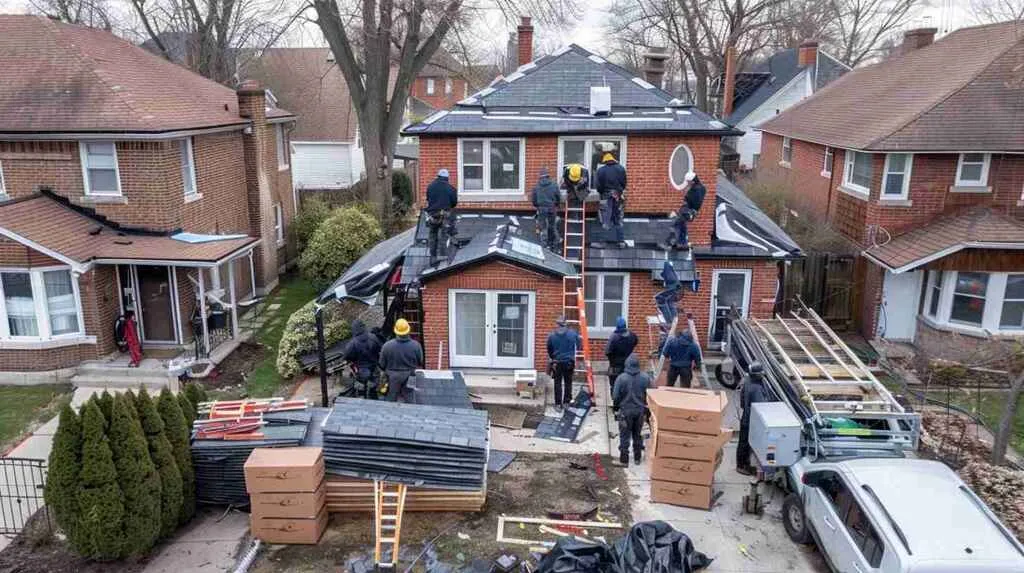
What Is a Shake Shingle Roof Queens NY? Natural Look Explained | Call Today
Sidewalk perspective matters when you’re talking about roofs, and I’ll tell you why in a second. When homeowners call me asking about a “shake shingle roof,” they’re usually picturing something rougher and more natural than regular shingles, but they often don’t realize there’s actually a big difference between a true cedar shake roof and what most contractors are quoting them. That mix-up can cost you thousands or leave you with a roof that doesn’t hold up the way you expected in Queens weather. Think of your roof like stage lighting-I used to build sets on Broadway back in the day, and shake shingles are the warm spotlight that makes the whole house feel intentional from across the street, not just the flat fluorescent overheads you get with standard asphalt. And honestly, people misuse the term “shake roof” all the time, pointing at any wood-look shingle and calling it a shake when it’s really just a machined product with a wood-grain print.
A real cedar shake roof uses hand-split cedar pieces that are thicker and more irregular than standard wood shingles or asphalt. Each shake has a rough, textured face because it’s actually split along the grain, not sawn perfectly flat like a machine-cut shingle. That means you get natural variation in thickness-some shakes might be almost an inch thick at the butt, while standard wood shingles are maybe half that. Asphalt shingles, even the fancy architectural ones, are uniform pressed material with a printed pattern on top. When you’re standing in your driveway comparing samples, the difference is obvious: a real shake feels chunky and uneven, a wood shingle feels smooth and precise, and an asphalt shingle feels like layered fiberglass with grit on top.
From the sidewalk on a typical Queens block-whether you’re in Astoria near the older brick rowhouses, out in Bayside with the Tudors and ranches, or closer to the water in Rockaway-that thickness and texture show up as deep shadow lines and color variation that read clearly even from a distance. A shake roof has personality; the pieces overlap in a way that catches light differently throughout the day. You’ll notice roofs in neighborhoods like Forest Hills or Douglaston where someone went with real shakes, and the whole house looks more custom, more deliberate, like someone actually cared about the details instead of just slapping on whatever was cheapest.
What a Real Shake Shingle Roof Is (and What It Isn’t) in Queens, NY
Real Cedar Shakes vs Wood Shingles vs Asphalt Shingles
| Real Cedar Shakes (What Vic Means by a Shake Roof) | Wood Shingles & Asphalt (What People Often Mean) |
|---|---|
|
|
Common Myths About Shake Shingle Roofs in Queens
| Myth | Fact |
|---|---|
| “Shake shingle roof” just means any roof that looks kind of wood-like. | A true shake roof uses hand-split cedar pieces, installed to specific patterns and thicknesses. |
| Shakes are basically the same as fancy asphalt, just more expensive. | Cedar shakes move, breathe, and weather differently; they’re a different system, not just a “deluxe” shingle. |
| Real shake roofs don’t work in salty air near Rockaway or Howard Beach. | Properly treated and detailed cedar can hold up fine near the water if you respect the wind and salt conditions. |
| All shake roofs end up looking messy and uneven from the street. | A good shake layout looks intentionally varied, not sloppy-the pattern reads as texture from across the street. |
| Any contractor who’s done asphalt can install shakes just as well. | Shake installation is slower and more detailed; you want someone who’s picky about grain, layout, and fastening. |
How Shake Shingle Roofs Look and Age on Queens Homes
I still remember the first time I saw a real hand-split cedar shake roof up close-back when I was still doing set work, I’d driven past this Tudor in Forest Hills every day and thought it looked sharp from the road, but I didn’t really understand what I was seeing until I got hired for a theater job nearby and actually walked right up to the house during lunch. From the sidewalk, the roof read as this warm, layered blanket of browns and reds with strong shadow lines; up close on the property line, you could see every piece was different, thicker at the bottom, with grain running in slightly different directions. A few summers ago I worked with this designer couple in Astoria who’d saved an Instagram photo of a shake roof that was way too uniform, almost fake-looking in how perfect it was. When we were installing theirs, I pulled them up on the scaffold in the middle of July and showed them how the slight variation-mixing in a second grade of cedar with different tones-was what made the roof feel alive instead of like a printed pattern. We actually walked them across their narrow street afterward so they could see how the variation blended at “audience distance,” the way I used to check how stage backdrops looked from the tenth row instead of from backstage. That roof now has this “wine lodge” character they brag about to every neighbor, and after a couple of seasons the color’s already starting to shift-fresh honey tones mixing with early silver, especially on the south-facing slope that takes the most sun. You see this aging pattern all over Astoria and similar older Queens neighborhoods where people actually care how their house looks from the next block over.
How Cedar Shake Roofs Change Over Time in Queens, NY
| Roof Age | What It Looks Like from the Sidewalk | What Vic Checks Up Close |
|---|---|---|
| New (0-1 year) | Warm browns and reds, strong variation between shakes; crisp shadow lines that pop even from across the street. | Proper nail placement, tight courses, and consistent exposure of each shake. |
| Early Weathering (2-4 years) | Color starts to soften, mixes of honey, tan, and early silver; texture still very pronounced. | Early signs of moss or debris in joints, making sure drainage is clear. |
| Mature Silvering (5-10 years) | Even silver-gray tone with subtle streaks; looks like an old coastal cottage roof you’d see out in the Hamptons. | Condition of fasteners, any cracked or damaged shakes in high-wind corners. |
| Long-Term (10-20 years) | Patina is mostly silver; some darker shakes and mild cupping add character, like weathered stage scenery that still reads strong from the audience. | Areas that take the biggest weather beating-ridges, valleys, and bays-flagged for spot repair before issues start. |
Natural Variation
No two shakes are identical; that irregularity is the whole point of the look.
Color Shift
Queens sun, salt, and seasons pull cedar toward silver; stains and treatments can slow but not stop this.
Street View
From the next sidewalk over, you’ll see texture and shadow lines more than individual defects.
Design Match
Shake roofs pair best with brick, stone, and painted trim where you actually want the roof to be part of the design, not just background.
Performance, Weather, and Common Shake Mistakes in Queens
On a cold corner of Rockaway Boulevard last winter, a homeowner asked me why her “shake shingle roof” estimate was higher than her neighbor’s asphalt price, and I could see her breath fogging up as she waited for my answer. I walked her out to her fence line where you could see straight over the rooftops toward the water, and I pulled up some photos on my phone of what happens to untreated cedar shakes in that kind of salt air-black streaks, rot starting at the butt edges, shakes that curl up like potato chips after a few hard winters. Queens has these coastal microclimates where one street gets hammered by sideways rain off the Atlantic and another street two blocks inland barely notices, and if you don’t account for that when you’re choosing materials and installation details, you’re gonna have problems. Two years after that freezing conversation, she called me just to say her roof had silvered out exactly the way I’d described standing in that driveway, and she was thrilled because it looked like an old beach cottage instead of turning into a maintenance nightmare.
Once in Bayside, we showed up at 7 a.m. in a light drizzle to rip off what the previous contractor had called a “shake-style” roof, and the whole crew knew something was wrong the second we started pulling pieces. They’d used thin decorative shakes meant for siding-the kind you’d put on a gable end for looks, not the heavy roofing-grade stuff that’s built to shed water and take wind. The poor homeowner’s roof had started curling in just three years. I laid a real roofing shake next to one of those impostor pieces right there on his porch rail and knocked them both with my knuckles so he could hear the difference in density; the fake one sounded hollow and cheap, the real one had weight and substance. He still jokes that he signed the replacement contract because of the “sound test,” but the real lesson is this: from the sidewalk, you can spot a bad shake job before you even step onto the property. If the roof looks too thin, too flat, or if you see obvious repeating patterns like printed wallpaper, it’s not a true shake roof-it’s either machined wood shingles or some kind of composite product dressed up to fool you.
⚠️ Warning: Using Siding Shakes or Fake Shakes as Roofing in Queens
Some contractors will try to save money by using thin decorative shakes (designed for siding or accent walls) as actual roofing material. Here’s why that’s a terrible idea on a Queens roof:
- Wrong thickness: Siding shakes are typically half the thickness of roofing shakes and can’t handle foot traffic or ice buildup.
- Different fastening: They’re meant to be nailed to a wall, not laid in overlapping courses that shed water horizontally.
- Curling and warping: Without the weight and grain density of true roofing cedar, they’ll curl, cup, and fail in just a few years under Queens weather.
- No warranty protection: Most manufacturers void any coverage if you use their siding products on a roof application.
Bottom line: If the price seems too good compared to other shake quotes, ask specifically whether they’re using roofing-grade shakes or decorative/siding-grade material. Don’t get fooled.
Quick Ways to Spot a Problem “Shake” Roof from the Sidewalk
✅ Good Sign: Deep, irregular shadow lines that vary across the roof surface
❌ Red Flag: Flat, uniform appearance with repeating patterns that look printed
✅ Good Sign: Visible thickness at the butt ends, shakes look chunky and substantial
❌ Red Flag: Thin, flimsy-looking pieces that read as “too neat” from the street
✅ Good Sign: Natural color variation-browns, reds, some early graying in spots
❌ Red Flag: Obvious curling or lifting at the edges after just a few years
Should You Choose Shake Shingles or Something Else on Your Queens Home?
Blunt Budget vs. Beauty Trade-Off
Here’s my honest take, and you might not like it at first: if you only care about the cheapest option and you just want something functional over your head, you’re not really looking for shakes-you’re looking for basic asphalt shingles, and that’s perfectly fine. Blunt truth: shake roofs cost more upfront, they take longer to install right, and they need a contractor who’s picky about grain direction and fastening details, not someone who just wants to bang out three roofs in a week. But if you care about curb appeal, if you want your house to stand out on the block instead of blending into the background, if you actually notice the difference between warm stage lighting and flat fluorescent overheads-then a real shake roof might be worth the investment. I’m talking from experience here: on set builds, we used to light backdrops carefully because the audience judges the whole scene from row ten, not from backstage where you can see every seam and nail. Your roof works the same way. Asphalt is the functional overhead work light-it does the job, keeps you dry, costs less. Shakes are the warm spotlight that makes the whole house feel intentional and custom when someone drives past.
So here’s the real question: do you want your roof to disappear into the neighborhood, or do you want it to be part of what makes people slow down and look at your house? Don’t overcomplicate it.
Simple Decision Guide for Homeowners
Do You Care More About Long-Term Character or Upfront Cost?
↓
Consider real cedar shakes
↓
High-end architectural asphalt
↓
Premium wood-look asphalt or composite
Still not sure? Call Shingle Masters and we’ll walk you through real examples on your street.
Cedar Shake Roof vs Architectural Asphalt on a Queens House
| Category | Details |
|---|---|
| Cedar Shake Roof – Pros | |
| Rich, natural texture that boosts curb appeal and resale on the right house. | |
| Weathers into that silver coastal look many Queens homeowners want. | |
| Can be repaired in small areas without obvious patchwork if done right. | |
| Stands out on the block-looks custom, not cookie-cutter. | |
| Cedar Shake Roof – Cons | |
| Higher upfront cost in both materials and labor. | |
| Needs more check-ins and light maintenance over the years. | |
| Not every HOA or rowhouse configuration will approve or suit it visually. | |
| Requires a contractor who actually specializes in shakes, not just “can figure it out.” | |
| Architectural Asphalt – Pros | |
| Lower cost and faster install on most Queens roof shapes. | |
| Many color options to coordinate with brick and siding. | |
| Good manufacturer warranties when installed to spec. | |
| More forgiving if you’re not as picky about grain and variation. | |
| Architectural Asphalt – Cons | |
| Printed patterns look flatter and more uniform from the sidewalk. | |
| Doesn’t develop that natural silvered patina over time. | |
| Can look like every other roof on the block, especially in spec developments. | |
| Heat buildup can be more noticeable on dark colors in peak Queens summers. | |
What Happens If You Call Shingle Masters About a Shake Roof in Queens?
When I come out to give an estimate and you say, “Vic, what is a shake shingle roof, really?” I start with this: we walk across the street together so you can see your own house the way your neighbors do. I’ll point at other roofs on your block, show you which ones are real shakes and which ones are just asphalt trying to look like wood, and I’ll explain the difference right there on the sidewalk before we even climb a ladder. If I need to sketch something out-like how the courses overlap or where the nails should land-I’ll do it on the back of a delivery ticket or a scrap shingle I keep in the truck. I tailor the whole conversation based on where you live: if you’re in Astoria near all the brick rowhouses, we’re talking about how shakes match that old-world look; if you’re out in Bayside with more varied architecture, I’m showing you how shakes can make a ranch or Tudor feel more custom; if you’re near the water in Rockaway or Howard Beach, we’re walking through wind exposure, salt air, and what treatments actually work long-term in those conditions.
I’d rather talk someone out of shakes and into a smart asphalt choice than let them buy the wrong thing just to close a sale. Shingle Masters has been doing roofs in Queens for over three decades, we’re licensed and insured in New York City, and we’ve worked in every neighborhood from Forest Hills to Far Rockaway. You’ll get a detailed, written proposal with line-item pricing so you can see exactly what a shake roof costs versus other options, and I’ll walk you through every decision before you sign anything.
Our Shake Roof Visit Process in Queens, NY
- Initial Call: You reach out, describe your roof and what you’re hoping for, and we schedule a time that works around your schedule-evenings and weekends are fine.
- Sidewalk Perspective: Vic meets you at the property, and before anything else, we walk across the street together to see your house from the “audience view” and talk about what shakes would actually look like.
- Roof Inspection: We get up on the roof (safely), check the decking, flashing, and overall condition, take measurements, and note any trouble spots or repairs that need to happen first.
- Sample & Photo Review: Vic shows you actual shake samples, pulls up photos of past Queens jobs in similar neighborhoods, and sketches details if needed to explain installation or design choices.
- Written Proposal: You get a clear, line-item estimate breaking down materials, labor, prep work, and timeline-shakes vs asphalt vs other options, all spelled out so you can make an informed decision.
Why Queens Homeowners Trust Shingle Masters for Shake Roofs
- 31+ years on Queens roofs, including cedar shake specialists
- Licensed and insured in New York City
- Local experience in Astoria, Bayside, Howard Beach, Rockaway, and more
- Detailed, written proposals with line-item pricing for shakes vs asphalt
- We’ll walk you across the street and show you your options before you decide
Common Shake Shingle Roof Questions from Queens Homeowners
How much more does a real shake roof cost compared to architectural asphalt in Queens?
Rough ballpark: a true cedar shake roof can run 2.5 to 3.5 times the cost of good architectural asphalt, depending on your roof’s complexity, accessibility, and the grade of cedar you choose. That includes both higher material costs (hand-split shakes vs pressed shingles) and more labor hours (shakes take longer to install correctly). If an asphalt reroof on a typical Queens house might run $8,000-$12,000, you’re looking at $20,000-$35,000+ for shakes on the same roof. I always give line-item pricing so you can see exactly where the money goes.
How long does a cedar shake roof last in Queens weather?
Properly installed and maintained, a quality cedar shake roof can last 25-35 years in Queens, sometimes longer if you treat it right and stay on top of minor repairs. That’s longer than most standard asphalt (15-25 years) but shorter than premium synthetics or metal. The key is regular inspections-clearing debris, replacing cracked shakes before they leak, and treating for moss or algae in shaded areas. Near the water, salt air and wind can shorten that lifespan if you skip maintenance, but with the right details and treatments, shakes hold up fine even in coastal Queens neighborhoods.
What kind of maintenance does a shake roof need over the years?
More than asphalt, less than you’d think. Plan on an annual inspection (or after big storms) to clear debris from valleys and gutters, check for cracked or missing shakes, and look for early signs of moss or rot. Every few years, you might need to replace a handful of damaged shakes-this is normal wear, not a failure. If you’re in a shaded area or near trees, treating for moss and algae keeps things clean. Some homeowners choose to re-treat with a protective stain every 5-10 years to slow the silvering process, but that’s optional-plenty of people love the natural gray patina and skip the treatment entirely.
Do shake roofs work on Queens rowhouses and attached homes?
Yes, but you’ve got to think through the details. On a rowhouse or attached home, your roof is often visible from the street and neighbors can see it up close, so the curb appeal benefit is real. The challenge is making sure your shakes tie in cleanly at the party wall and that any shared flashing or drainage is handled right-you don’t want water running onto the neighbor’s side. Some HOAs or historic districts have rules about roofing materials, so check before you commit. If your rowhouse has a simple gable or flat roof with a visible front slope, shakes can look amazing and really set your house apart on the block. If it’s mostly hidden or you share a continuous roofline with neighbors, the investment might not make as much sense visually.
So if you’re still wondering what a shake shingle roof really is, or whether it makes sense on your Queens home, give Shingle Masters a call and let’s walk your block together. I’ll show you the difference between real shakes and the stuff that just looks like wood from a distance, and we’ll figure out what actually fits your house, your budget, and how you want your home to look from the sidewalk. Call Shingle Masters today for a shake roof inspection or quote in Queens, NY-no pressure, just straight answers and real examples you can see with your own eyes.