What Is a Composite Shingle Roof Queens NY? Full Explanation | Free Quotes
Blueprint: Most “asphalt roofs” you see driving through Corona, Jackson Heights, or Flushing are actually composite shingle systems, and the label on the shingle bundle – what it’s made of and how it’s layered – matters way more than most homeowners realize. I’m Vico Ramirez, and for 19 years I’ve been installing composite shingle roofs on tricky old row houses and semi-attached homes across Queens, and I like to show people exactly what’s going over their heads, the way a mechanic would walk you around an engine bay, so you’re never guessing with your money.
What a Composite Shingle Roof Really Is on a Queens House
On a typical two-family in Elmhurst, the “asphalt” shingles you see from the street are actually composite shingles built in layers. Here’s what’s printed on the bundle that matters more than the marketing pitch: most roofs in Queens today are composite systems – a fiberglass mat soaked in asphalt, covered with mineral granules, and sealed with adhesive strips. Think of it like picking the right bodega sandwich: the layers have to make sense together, not just look good on top. When people say “asphalt roof,” they’re usually pointing to these composite systems without realizing it, and that confusion leads to bad choices when it’s time to replace.
When I walk into a house in Queens and somebody asks, “So what is a composite shingle roof, really?” I start with the part you’ll never see – the core. Old-school organic asphalt shingles used a paper mat soaked in tar; composite shingles upgraded to a fiberglass mat that won’t rot or buckle the same way. It’s like the difference between the old paper MetroCard transfers and the OMNY tap – same basic idea (getting you where you need to go), but the guts are completely different. That fiberglass core gives modern composite shingles better wind resistance, longer life, and more flexibility when temperatures swing between January freeze and August rooftop heat.
Here in Queens, that construction actually matters. Our freeze-thaw cycles in winter, the baking sun on a two-story brick house in July, and the wind whipping down Queens Boulevard or off the water in the Rockaways – all of that tests your roof. Composite shingles handle that stress better than old organic products because the layers work together: the fiberglass gives you structure, the asphalt seals out water, and the granules shield the asphalt from UV breakdown. I’ve walked blocks in Jackson Heights and Woodhaven where you can spot the composite roofs versus the older stuff just by how flat and uniform the surface stays after a decade.
Core Parts of a Composite Shingle (What’s Actually on Your Roof)
-
✓
Fiberglass mat – the backbone that gives the shingle strength and won’t rot like old paper. -
✓
Asphalt coating – the waterproof layer that keeps rain out and holds everything together. -
✓
Mineral granules – the gritty top layer that shields from UV rays and gives you the color you see. -
✓
Adhesive strips – the lines of sealant that glue shingles together once the sun heats them up. -
✓
Backing sand – the dust-like layer on the back so the shingles don’t stick in the bundle.
What Makes a Composite Roof Work (or Fail) in Queens, NY
I’ll be blunt: if you don’t know what’s inside your shingle, you’re guessing with your money. In 2017, during a freezing rainstorm at 6 a.m., I was on a little brick house in Jackson Heights where a previous contractor had mixed composite shingles with leftover 3-tab asphalt like it was a patchwork quilt. The water was actually running sideways into the soffit because the thicknesses didn’t match – the thicker composite shingles created a dam against the flatter 3-tabs, and every raindrop followed that edge straight into the wood. We had to rip everything down to the deck and rebuild a proper composite shingle roof, and that’s when I started carrying actual cutaway samples in my truck so I could show people why mixing products is a bad idea, not just tell them. Around here, especially on those old semi-attached homes with side additions and odd rooflines near Queens Boulevard, you see this all the time: someone patched a section over a porch with whatever was on the truck, and five years later the leak starts right along that seam.
One morning in February, standing on a frosty flat section in Ridgewood, I realized the whole problem came down to one thing: the wrong shingle type for the roof’s pitch. Your roof pitch (how steep it is), the condition of the wood deck underneath, and using one consistent shingle type across the whole surface – those three things matter more than brand names or color charts. It’s like choosing an express train versus a local: architectural composite shingles (the thicker, layered kind) give you better wind resistance and longer life, but they cost more and weigh more, so your deck and framing need to handle it. Lighter 3-tab composite shingles are cheaper and easier on an older structure, but they don’t seal as tight in wind and can start lifting at the edges after a decade. Most of the row houses and two-families I work on in Queens do best with architectural composite systems, as long as we fix any spongy decking first.
Mixing Shingle Types on One Roof
Mixing architectural composite with leftover flat 3-tab shingles, or blending products from different manufacturers, leads to uneven thickness, bad water flow, and premature leaks – especially on older row houses and over porches in Queens. The shingles don’t seal together properly, water finds the seams, and you end up chasing leaks through your ceiling for years. Don’t let anyone “use up what’s on the truck” on your roof. One consistent product, installed right, is the only way a composite shingle roof works the way it’s supposed to.
How I Build a Composite Shingle System on a Queens Roof
Think of your roof like a layered sandwich from a deli on Queens Boulevard – if one layer is cheap or missing, the whole thing falls apart when you pick it up. One August afternoon in Woodhaven, it was 94° and the humidity felt like soup when I got called to look at a “leak” over a baby’s nursery. The homeowner swore the roof was only five years old, but when I pulled back a piece of the ceiling I could literally crumble the old organic shingles with my fingers. That job is when I really leaned into composite shingles – we swapped the whole thing for a laminated composite system with better heat resistance, proper underlayment, and ice-and-water shield around the chimney and along the eaves where those old row houses always get ice dams. I still get texts from that mom every thunderstorm saying, “Still dry!” Here’s the insider tip that came from that job: on many Queens row houses with a small low-slope back section, always extend ice-and-water shield a few feet up from the gutter and around any vent pipes before laying composite shingles, or you’ll chase leaks for years when snow melts and refreezes at the edge.
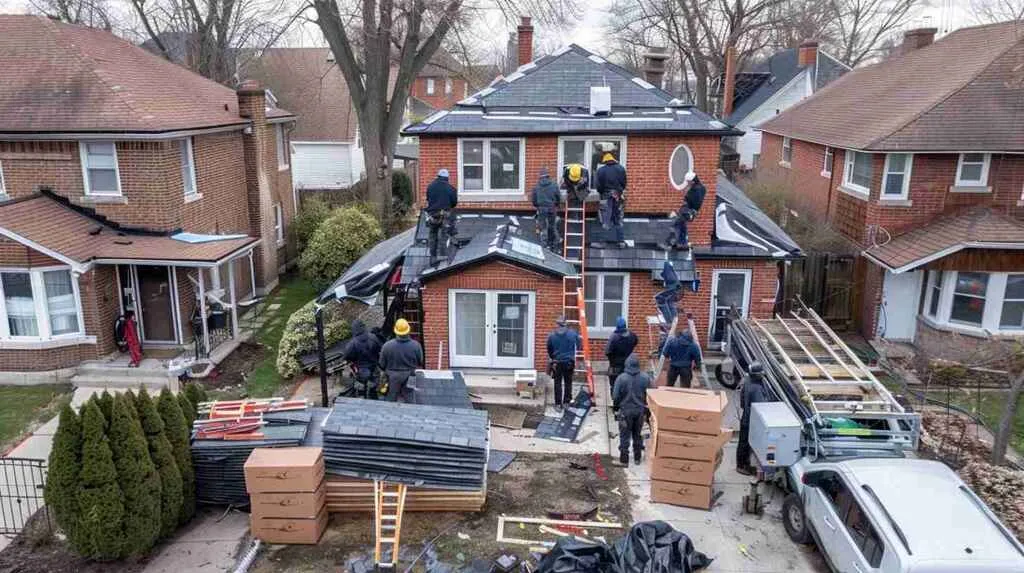
The sequence matters. We strip the roof down to the deck and inspect all the wood, especially over extensions and around chimneys where previous work might’ve left gaps or soft spots. Any rotten or spongy decking gets replaced so the nails actually hold and the shingles lie flat – composite shingles telegraph every bump and dip in the deck, so this step isn’t optional. Then we roll out underlayment and add ice-and-water shield in valleys, along eaves, and around skylights or vents. Drip edge goes on next, along with flashings and starter shingles at the edges to control water flow. Only then do we lay the composite shingles in the manufacturer’s pattern with the correct nail count and placement for local wind ratings – usually six nails per shingle on these Queens roofs. We finish with ridge caps and make sure attic or top-floor ventilation is balanced so the new roof can shed heat and moisture; without that airflow, even the best composite shingles cook from below and curl early.
Step-by-Step: How We Install a Composite Shingle Roof in Queens
Strip and Inspect: Tear off old shingles down to the deck and inspect all wood, especially over extensions and around chimneys.
Replace Damaged Decking: Swap out any rotten or spongy wood so nails actually hold and shingles lie flat.
Install Underlayment and Protection: Roll out underlayment and add ice-and-water shield in valleys, along eaves, and around skylights/vents.
Add Drip Edge and Flashings: Install proper drip edge, flashings, and starter shingles along edges to control water flow.
Lay Composite Shingles: Install shingles in the manufacturer’s pattern with correct nail count and placement for local wind ratings.
Finish with Ridge Caps and Ventilation: Cap the ridge and make sure attic or top-floor ventilation is balanced so the new roof can shed heat and moisture.
Is a Composite Shingle Roof Right for Your Queens Home?
Here’s the uncomfortable truth: most roofs that “fail early” in Queens didn’t lose a battle with the weather; they lost a battle with the material choice. I’ll never forget a retired MTA dispatcher in Flushing who insisted composite shingles were “just plastic with a fancy name.” It was a cool October morning, light drizzle, and I took an extra half hour on his stoop with a thermos of coffee, showing him how the fiberglass mat, asphalt, and granules all work together differently than the old paper-based shingles he’d grown up with. He ended up calling his neighbor over, and I basically gave a sidewalk seminar on composite roofs; both houses went composite, and three years later they had zero shingle blow-offs after a nasty windstorm. If your roof is pitched enough to see shingles from the street, and you’re dealing with typical Queens weather – freeze-thaw, summer rooftop heat, wind – a composite shingle system is usually the right call, as long as the slope, ventilation, and installation details all line up.
Quick Flowchart: Do You Likely Need a Composite Shingle Roof?
Quick question: Do you actually know what’s under the top layer of shingles on your roof right now? Most people don’t – and that’s why the wrong choice costs thousands later.
Costs, Timing, and What to Ask Before You Call
Most full composite shingle roof replacements on a typical Queens one- or two-family run between $8,000 and $18,000 depending on size, pitch, and how much deck repair we find once we peel back the old layers – think of it like comparing rent on a studio in Astoria versus a three-bedroom in Forest Hills. Install usually takes 2-4 days in decent weather, including tear-off, deck fixes, and cleanup. I’m giving you these numbers so you can budget and so you’re not caught off guard when someone quotes way higher or suspiciously lower.
Before you call any roofer, you’ll want to be ready to talk specifics: not just “I need a new roof” but which shingle type, how many layers are up there now, what the warranty actually covers, and how they handle ventilation and flashings. The checklist and FAQs below will help you quiz anyone who shows up with a clipboard, so you’re comparing apples to apples, not just color swatches and vague promises.
Sample Composite Roof Pricing Scenarios in Queens (Ballpark Only)
These are rough estimates assuming full tear-off and standard architectural composite shingles. Your actual price depends on deck condition, access, permits, and unforeseen issues.
What to Have Ready Before You Call Shingle Masters for a Composite Roof Quote
-
✓
Your address and whether it’s a row house, semi-attached, or detached home -
✓
Approximate age of the current roof, even if it’s just a guess based on when you moved in -
✓
Any known leak spots – which rooms, corners, or areas around chimneys/skylights -
✓
Photos from the street and, if it’s safe, from a back window or yard showing the roof surface -
✓
Whether you’ve seen ice dams in winter or felt heavy attic heat in summer -
✓
Your preferred time window for an on-site inspection so we’re not trying to talk roofing while you’re catching the 7 train
Common Questions About Composite Shingle Roofs in Queens
How long does a composite shingle roof last in Queens?
Most architectural composite shingle systems last 20-30 years in Queens when installed correctly with proper ventilation and underlayment. The actual lifespan depends on product line (thicker laminates last longer), attic ventilation (poor airflow cooks shingles from below), and exposure (a roof facing south and getting full sun all day ages faster than a shaded north slope). If you’re still on the original 3-tab shingles from the ’90s, you’re living on borrowed time.
Can you put composite shingles over my old roof?
I usually recommend full tear-off on older Queens homes. Layering new composite shingles over old ones hides deck damage, traps moisture, voids most manufacturer warranties, and adds weight your framing might not handle. On row houses and semis built in the ’50s through ’80s, I’ve seen too many rotten deck boards and failed flashings hiding under “perfectly fine” old shingles. Ripping down to the wood lets us fix those problems before they become leaks in your kitchen ceiling.
Do darker composite shingles make my top floor hotter?
Darker shingles absorb more heat, but the real issue is ventilation and attic insulation. If your attic has poor airflow and thin insulation, even light-colored shingles won’t save you from a 95° top-floor bedroom in July. I’ve done dark charcoal roofs on homes with proper ridge vents, soffit vents, and R-38 insulation, and the owners report cooler upstairs temps than before because the heat escapes instead of radiating down. Focus on the whole system, not just the color swatch.
What brands of composite shingles do you use around Queens?
I stick with major manufacturers that have local supply houses in Queens and Long Island for warranty service and color matching down the road. The criteria that matter: fiberglass mat construction, adequate asphalt content (not skimped to save cost), proper granule adhesion, and wind ratings of at least 110 mph. I don’t push one brand over another; I choose based on what’s best for your roof’s pitch, exposure, and budget, and I always show you cutaway samples so you can see the layers for yourself.
Can composite shingles handle hail and nor’easters?
Most architectural composite shingles are rated for Class 4 impact resistance (the highest) and 110-130 mph wind when installed with the correct nailing pattern and sealant strips. Hail rarely does catastrophic damage in Queens – you’ll see dimples in the granules, but the shingle usually holds. Wind is the bigger threat: if shingles aren’t nailed in the right spots (usually six nails per shingle) and the adhesive strips aren’t sealed properly, a nor’easter will peel them back like lifting the lid on a takeout container. That’s why install quality matters more than brand name.
Why Queens Homeowners Call Shingle Masters for Composite Roofs
-
✓
Fully licensed and insured in NYC – you won’t get stuck with permit or liability issues -
✓
19+ years doing shingle systems on Queens row houses, semis, and detached homes -
✓
Same-week on-site inspections in most Queens neighborhoods, no three-month wait -
✓
Written proposals that list exact shingle type, underlayment, and venting plan – not just a number on a napkin -
✓
Local references in Corona, Jackson Heights, Flushing, Woodhaven, and more – we work where you live
If you’ve read this far, you’re already thinking about your roof differently than you were 20 minutes ago – you understand the layers, the decisions, and what actually matters when someone shows up with a truck and a quote. Let Vico from Shingle Masters come out, look at your existing shingles, and sketch out a composite system that fits your specific Queens house, your budget, and your timeline. Call us or request a free quote for a composite shingle roof inspection and estimate – we’ll bring the samples, the notebook, and the straight answers you need before you make a decision that’ll be over your head for the next 25 years.