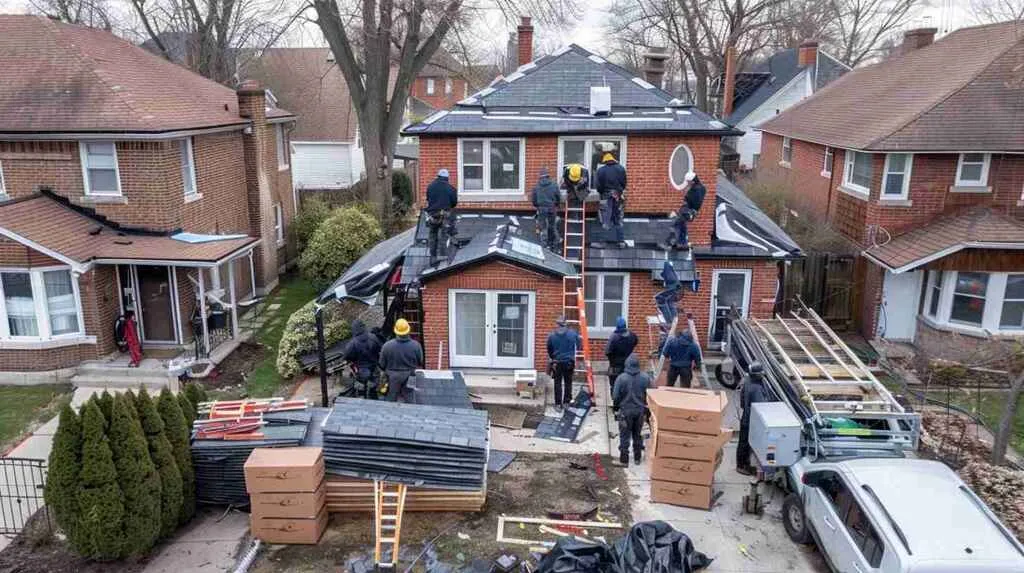
Types of Tile Roof Shingles Queens NY – Clay, Concrete and More
Blueprints for a new tile roof always show crisp lines and perfect shingles, but in Queens – where wind barrels off the water, salt spray eats at everything, and freeze-thaw cycles repeat like clockwork – the heaviest, fanciest-looking tile isn’t always the strongest choice. The real story is how clay, concrete, and newer synthetics each behave once they’re up there facing nor’easters, summer heat, and whoever’s stepping around your HVAC unit.
How Clay and Concrete Really Behave on Queens Roofs
Here’s my personal opinion after 19 years on Queens roofs: people see a heavy clay tile and assume it’s bomb-proof, then they watch a lightweight concrete tile and think it’s cheap. Both assumptions are wrong once you factor in wind uplift, salt air corrosion, and freeze-thaw cycles. This isn’t a beauty contest – it’s an engineering trade-off. Clay might weigh 600-900 pounds per square, give you that Mediterranean look, and resist salt like it was born for it, but it’s brittle, it can craze or spall when water gets into micro-cracks during winter, and one bad step from an HVAC tech can crack a tile and start a slow leak into your plywood. Concrete, on the other hand, often lands heavier at 800-1,100 pounds per square, but modern mixes are designed to handle freeze-thaw if you pick the right product, and the wind uplift resistance is excellent when fastening is done right.
On a typical two-family in Queens Village, the first thing I look at is the framing – not the color chart. If the structure was built or reinforced for heavy loads, then both clay and concrete are on the table, and the decision comes down to how much foot traffic you expect (from service calls), how much wind exposure you get (corner lots near open blocks get hammered), and whether you care more about that old-world texture or a smoother, more uniform surface. I treat the whole roof like a machine: the tiles are the outer shell, the underlayment is the waterproof membrane, the fasteners are the mechanical joints, and the framing is the chassis. Change one component – say, swap standard clay for dense imported clay – and you’ve got to adjust fastener gauge, maybe upgrade the underlayment grade, possibly even add blocking if the rafter spacing is wide.
Clay Tile vs Concrete Tile Performance in Queens, NY
Clay Tile
- Weight: ~600-900 lbs per square (heavier profiles at upper end)
- Wind Resistance: Good when properly fastened; individual pieces can crack or lift in nor’easters
- Freeze-Thaw: Can spall or craze over years if water gets into micro-cracks
- Salt Air: Naturally very good resistance if glaze/finish is intact
- Foot Traffic: Brittle; not ideal if techs walk the roof often
- Lifespan: 50+ years, but localized breakage is common
- Installed Cost in Queens: $$-$$$ depending on profile/import
Concrete Tile
- Weight: ~800-1,100 lbs per square (often heavier than clay)
- Wind Resistance: Very strong uplift resistance when fastened correctly
- Freeze-Thaw: Designed mixes can handle Queens cycles if rated properly
- Salt Air: Good, but surface can roughen over decades
- Foot Traffic: Slightly more forgiving; still not a walkway
- Lifespan: 40-50+ years with sound underlayment
- Installed Cost in Queens: $$ (often less than premium clay)
One July afternoon in Astoria, with the sun bouncing off the East River like a welding torch, I was redoing a clay tile roof on a 1920s rowhouse where someone had mixed three different tile profiles over the years. Halfway through, we hit a section where the previous “pro” had used interior drywall screws to fasten concrete tiles – I had to explain to the homeowner, standing there with his garden hose, how those screws were basically rust grenades waiting to explode in the next storm. That job taught me how brutal Queens weather can be on the wrong fasteners, especially when you’re loading heavy tile onto them. If you pick a denser concrete or a thick clay profile, you’re asking each fastener to resist not just wind uplift but also the shear weight pressing down through every freeze-thaw cycle, and if the fastener corrodes or backs out even a quarter inch, the whole interlock starts to fail.
Queens Weather vs. Tile Types: What Actually Survives
I’ll be blunt: most people overestimate how tough clay really is and underestimate what concrete can do. One freezing November morning in Flushing, I got a call from a panicked landlord whose “fancy” imported Spanish-style tiles were shedding into the alley during a windstorm – turned out, they’d used lightweight composite tiles rated for mild California climates, not Queens’ freeze-thaw cycles. I spent the day on the roof with numb fingers, swapping in proper concrete tiles in the worst sections and explaining to the landlord that design magazines don’t list wind uplift ratings for a reason. Around Flushing and other neighborhoods near the water, you’ve got building heights that create wind corridors and salt spray that sneaks into every tiny surface crack; a tile that looks perfect in a showroom can delaminate or lose its finish coat in five years if it wasn’t engineered for coastal Northeast conditions.
When you zoom out and look at the roof as a system, tile type is just one moving part. The underlayment has to handle condensation that forms when warm interior air hits cold tile in winter. The fastening pattern has to account for wind zones – corner and ridge tiles get way more uplift than field tiles. Vent layout matters because every penetration is a potential leak path if the tile profile doesn’t shed water cleanly around it. And the framing interacts with everything: if your rafters are 24 inches on center instead of 16, the plywood can flex more under heavy concrete, which can telegraph through to the tiles and crack them over time. So the engineering trade-off isn’t just “clay vs concrete” – it’s weight vs wind resistance, classic beauty vs long-term maintenance, upfront cost vs lifespan, and how all those factors play with your specific building’s structure, exposure, and usage.
| Tile Type | Best Queens Use Case | Main Weather Risk | Typical Wind Rating Need |
|---|---|---|---|
| Traditional Clay | Historic-style homes in Astoria/Forest Hills with strong framing and aesthetic priority | Freeze-thaw cracking and individual tile breakage from impact/foot traffic | High-look for hurricane/nor’easter-tested systems |
| Standard Concrete | Two- and three-family homes needing durability and value in places like Queens Village and Elmhurst | Weight overloading weak framing or poor fastening in high winds | High-ensure secure fastening schedule is followed |
| Lightweight Composite | Limited; only if product is specifically rated for freeze-thaw and high wind | Wind uplift and cracking in cold snaps if not climate-rated | Very high-only consider systems with tested uplift ratings |
| Synthetic / Polymer Tile | Owners wanting lower weight on older framing but still needing good wind ratings | UV aging over decades; some products can discolor or warp if low quality | High-check third-party testing, not just marketing claims |
⚠️ Warning: Non-Climate-Rated “Designer” Tiles in Queens
Importing tiles or using catalog-only lightweight/composite systems that haven’t been tested for Northeast freeze-thaw and nor’easter wind conditions is a recipe for tiles shedding during the first big coastal storm. Before you sign any contract, verify ASTM freeze-thaw ratings, check the manufacturer’s wind uplift testing data, and confirm local code approvals specific to NYC/Queens. Pretty samples don’t mean much when they’re sliding off your roof into the neighbor’s yard.
Profiles, Underlayment, and Leak Paths: Getting the System Right
I still remember a winter job in Elmhurst where the wrong tile profile turned every snow melt into a leak path. The homeowner had picked a low-profile flat tile because it looked sleek, but the roof pitch was just barely enough for that style, and when snow piled up and then melted during the day, the meltwater would pond in tiny valleys between tiles instead of running cleanly off. Combined with an older felt underlayment that had started to crack, we had water sneaking under the tiles and soaking the plywood. And then there was that Saturday evening in Forest Hills, just before a forecasted nor’easter, when I inspected a multi-family building and traced mysterious ceiling spots over a baby’s crib back to a single cracked clay tile that had probably been stepped on years earlier when someone serviced a vent. One weak link in a tile system can slowly soak the underlayment and plywood, and honestly, choosing a tile type that can handle occasional foot traffic matters a lot if you’ve got rooftop HVAC units or exhaust vents that need regular service. My insider tip: if you know techs are going to be up there more than once a year, either pick a slightly more forgiving profile (some concrete flat tiles are tougher underfoot than barrel clay), or plan dedicated walk pads or reinforced paths near equipment so people aren’t tap-dancing on your expensive tiles.
Think of your roof like a mechanical system – tiles are just one component, and they have to play nice with underlayment, framing, and even your gutters. If you go with a high-profile barrel tile for that classic Mediterranean look, you’re creating great ventilation under the tiles and excellent water shedding, but you’re also making wind uplift a bigger concern and you’ll need more precise flashing details around chimneys and skylights. Switch to a low-profile flat tile and snow sheds smoother, tight flashing areas are easier, and the tiles are generally more walkable, but now you’re relying heavily on underlayment quality because any marginal slope can pond meltwater. Every choice moves another part of the machine: heavier tile means beefier fasteners and possibly upgraded framing; certain profiles mean wider or differently sloped gutters to catch the faster runoff; choosing clay over concrete might mean specifying a breathable underlayment to handle moisture differently.
How a Proper Tile Roof System is Designed for a Queens Home
| Profile Type | Pros | Cons |
|---|---|---|
| High-Profile / Barrel Tile | Excellent water shedding; classic Mediterranean look; good ventilation under tiles | More prone to wind uplift if not detailed correctly; trickier around complex flashing areas; easier to crack when stepped on |
| Low-Profile / Flat Tile | Smoother snow shedding; better in tight flashing areas; usually more walkable for service paths | Can pond meltwater if slope is marginal; relies heavily on underlayment quality; less “old-world” visual texture |
Choosing the Right Tile Roof Shingles for Your Queens Property
When I sit down with a homeowner at the kitchen table, the first question I ask is, “What beats up your roof more – wind, sun, or foot traffic?” because that one answer shapes the entire tile recommendation. If you’re on a corner lot in Rockaway with nothing blocking the ocean wind, we’re talking serious uplift resistance and probably concrete over clay. If you’ve got three HVAC units and the landlord’s handyman up there every other month, we need a profile that won’t crack under boots. If the building’s framing is original 1950s construction and nobody’s ever reinforced it, heavier clay or standard concrete might be off the table entirely, and we’re looking at quality synthetics or a structural upgrade first. Every tile type is a bundle of trade-offs: concrete gives you durability and value but adds weight; clay delivers that classic look and excellent salt resistance but can be brittle; lightweight composites save your framing but only if they’re actually rated for Queens’ climate; synthetics can look great and weigh less, but cheap versions fade or warp in ten years. The decision isn’t a beauty contest – it’s an engineering exercise where you balance your building’s bones, your neighborhood’s weather, your maintenance tolerance, and your budget into one coherent roof system.
So what’s actually beating up your roof the most right now – wind, weight, or people walking on it?
Which Tile Roof Shingle Type Should You Consider in Queens, NY?
Start: Is your existing framing rated or verified to handle heavy tile (800+ lbs/square)?
→ YES and you want a historic/Mediterranean look? Consider premium clay or architectural concrete tiles with proper wind-rated fastening.
→ YES and durability/value are top priorities? Standard concrete tiles offer excellent lifespan and wind resistance at a lower cost.
→ NO but you still want tile? High-quality synthetic or polymer tiles rated for freeze-thaw and high wind – verify third-party testing, not marketing.
→ NO and framing can’t be upgraded easily? Reconsider tile entirely or budget for structural reinforcement before installation.
Critical: Every tile choice affects underlayment grade, fastener type, flashing details, and gutter sizing – treat it as a system, not just a shingle swap.
Shingle Masters Tile Roofing at a Glance
Typical Project Duration
Most Queens tile roof replacements: 5-10 days depending on size, complexity, and weather windows
Service Area Focus
All Queens neighborhoods – Astoria, Forest Hills, Flushing, Queens Village, Elmhurst, Rockaway, and beyond
Tile Types Handled
Traditional clay, standard and architectural concrete, climate-rated synthetics, custom profiles and imported tiles
Inspection Approach
Structural first, then exposure and wind mapping, followed by tile/underlayment/fastening system design – never “one size fits all”
Why Queens Homeowners Hire Shingle Masters for Tile Roofs
-
✓
Fully licensed and insured for roofing work in New York City and Queens-specific building departments -
✓
19+ years on Queens roofs – familiar with local weather, building styles, and code requirements -
✓
Experience with clay, concrete, and synthetics – not locked into one product line or supplier -
✓
Knowledge of neighborhood-specific challenges – salt air near water, wind corridors, freeze-thaw patterns -
✓
System-based design approach – we don’t just swap tiles; we engineer the whole roof as an integrated machine
Common Questions About Tile Roof Shingles in Queens, NY
Here are the questions I hear most at kitchen tables from Queens homeowners trying to pick between clay, concrete, and newer tile options. Not gonna lie, some of these answers surprise people.
How long do clay vs concrete tile roofs actually last in Queens?
Clay can hit 50+ years if the install is clean and you’re diligent about replacing individual broken tiles, but in Queens you’ll often see localized damage from freeze-thaw or foot traffic long before the whole roof fails – so “50 years” can mean “50 years with a dozen small repairs along the way.” Concrete typically lands at 40-50+ years with proper underlayment, and the failure mode is usually underlayment aging or fastener corrosion rather than the tiles themselves disintegrating. The real wildcard is always how well the original installer matched the tile weight and profile to your building’s structure and exposure.
Will my structure handle the weight of concrete or clay tile?
Maybe, maybe not – and “my house has stood for 80 years” isn’t proof. I need to look at rafter size and spacing, plywood thickness, any prior modifications, and whether there’s sagging or rot. Most two- and three-family homes built after the 1950s in Queens can handle tile if the framing is sound, but older rowhouses or buildings with wide rafter spacing might need blocking or even sistered rafters. Don’t skip the structural inspection just because you fell in love with a tile sample; finding out mid-install that your framing can’t handle it is expensive and embarrassing.
Are synthetic or composite tiles a safe choice here?
They can be – if you pick a product specifically rated for freeze-thaw cycles and high wind, and you verify that with third-party test data, not just the manufacturer’s brochure. I’ve seen good polymer tiles perform well in Queens for 15+ years, and I’ve also seen cheap composites crack, warp, or fade within five. The trap is assuming “lightweight” automatically means “inferior” or assuming “looks like clay” means it’ll behave like clay. Do your homework: check ASTM ratings, ask for local references, and confirm your installer has actually worked with that specific product in coastal Northeast conditions.
How often should a tile roof be inspected in Queens’ climate?
Visual walk-around after every major storm (nor’easter, hurricane remnants, heavy wet snow) to catch any obvious cracked or displaced tiles. Full professional inspection once a year, ideally in late fall before winter hits, to check fasteners, underlayment condition around penetrations, and any subtle movement in ridge or hip tiles. And then a more detailed underlayment check at the 15-20 year mark, because even if the tiles look perfect, the membrane underneath can age out and start leaking. Tile roofs fail slowly and quietly – you won’t know you have a problem until water’s already soaking plywood, so regular inspections are part of the deal.
What signs mean I should call Shingle Masters instead of patching tiles myself?
If you’re seeing multiple cracked tiles in one area (suggests a bigger structural or drainage problem), water stains on your ceiling that keep coming back after you “fixed” a tile, tiles that have slipped out of interlock and are sitting crooked, or any situation where you’re not sure if the leak is from a tile or from flashing around a chimney or vent. Also call if someone stepped on your roof and you heard a crack but can’t find it – hidden damage under a tile can turn into a slow rot issue. DIY tile replacement is fine for one or two obvious breaks if you know what you’re doing, but anything systemic or mysterious needs someone who understands how all the parts of the roof machine interact.
Tile Roof Maintenance Schedule for Queens Homeowners
Here’s the uncomfortable truth: the prettiest tile on the sample board is often the worst match for your building. Choosing between types of tile roof shingles in Queens isn’t a beauty contest – it’s an engineering decision where you balance your framing’s capacity, your neighborhood’s wind and salt exposure, your maintenance tolerance, and your budget into one coherent roof system. Clay, concrete, and synthetics all have their place, but only if they’re matched to your specific structure and climate.
If you’re ready to stop guessing and start designing a tile roof that actually works as a system – not just a collection of pretty shingles – call Shingle Masters for a roof inspection that looks at framing, exposure, drainage, and how every component interacts. We’ll walk your roof, sketch out the trade-offs on a piece of cardboard if that’s what it takes, and give you a tile recommendation that fits your building, your neighborhood, and your real-world needs in Queens, NY.