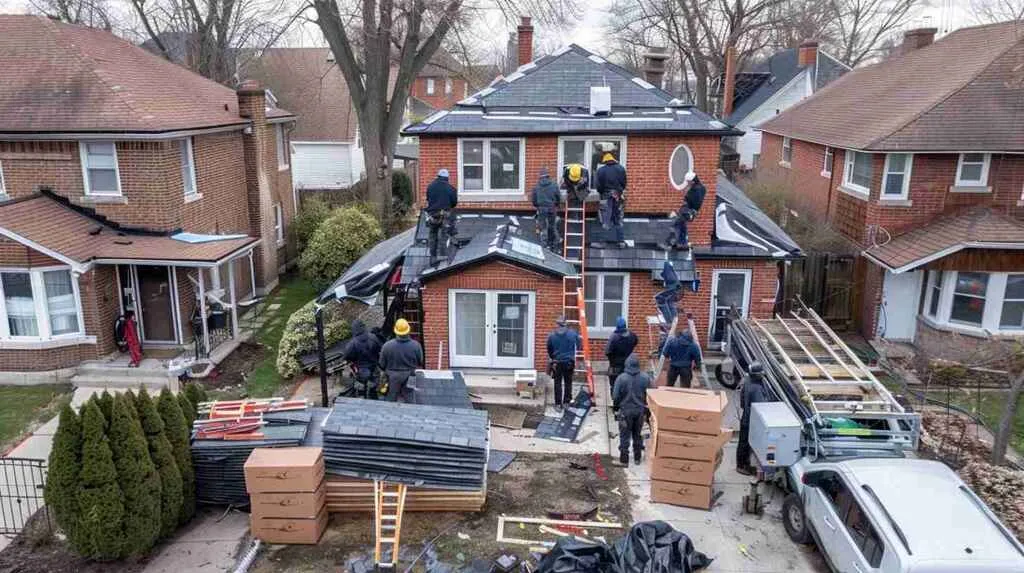
Shake Shingle Roof Life Expectancy Queens NY – Real Estimates | Free Quotes
Honestly, if you’ve got a cedar shake roof in Queens and you’re trying to figure out how many good years are left, the real answer is somewhere between 18 and 28 years depending on your block, your sun exposure, and whether you’ve done anything beyond putting it up and forgetting about it. I’ve seen roofs on the same street where one house gets a comfortable 25 years and the neighbor’s starts falling apart at 17, and the difference comes down to tree cover, attic ventilation, and whether anyone bothered to clean moss out of the valleys every few years.
What Shake Shingle Roof Life Expectancy Really Looks Like in Queens, NY
Let me be blunt: your shake shingle roof does not care what the brochure promised. I’ve spent 19 years on Queens roofs, and the “30-year cedar shake warranty” you see in marketing material is built for ideal conditions-which means perfect ventilation, minimal sun, regular maintenance, and weather that doesn’t exist anywhere near LaGuardia. The real story is that in our climate, with our freeze-thaw cycles, summer heat islands, and coastal humidity, most shake roofs I work on hit their retirement years somewhere around 18 to 23 years, and the ones that make it past 25 are either shaded by mature trees or owned by people who treat roof care like a religion. Think of your roof’s lifespan like a career timeline: you get rookie years when everything’s tight and new, peak performance years when it’s doing the job but starting to show character, and then retirement years when you’re deciding between expensive repairs and a full replacement.
One February morning, about 7:15 a.m., I was up on a two-family in Woodside after a wet snowstorm, and the homeowner kept insisting his 18-year-old cedar shakes were “good for another decade.” I pulled a shake near the ridge and it practically crumbled in my fingers-freeze-thaw damage and moss had eaten it from the back side, which he never saw from the street. That job taught me to always talk about life expectancy in terms of what’s happening under the surface, not just what the curb appeal says. In Queens, the difference between a roof that looks fine from the sidewalk and one that’s actually safe over your head can be eight to ten years of hidden decay, and the only way to know which one you’ve got is to climb up there with someone who knows what backside rot looks like before it turns into a ceiling stain.
| Roof Scenario | Rookie Years (Early Life) | Peak Performance Years | Retirement / Risk Years | Typical Total Life Expectancy in Queens |
|---|---|---|---|---|
| Shady, well-ventilated, maintained (re-stained, cleaned) | 0-5 years | 6-20 years | 21-28 years | 22-28 years |
| Mixed sun, average ventilation, minimal maintenance | 0-4 years | 5-16 years | 17-23 years | 18-23 years |
| Full sun, poor ventilation, no maintenance | 0-3 years | 4-11 years | 12-17 years | 13-18 years |
Queens Shake Roof Life Expectancy at a Glance
| Typical Queens cedar shake lifespan | 18-23 years on an average block |
| Best-case with excellent care | Up to about 28 years before full replacement |
| Common insurance ‘red flag’ age | Around 20-25+ years without documentation |
| Average inspection time by Shingle Masters | 60-90 minutes for a full on-roof assessment |
Why Two Shake Roofs on the Same Block Can Age a Decade Apart
On a corner house off Queens Boulevard last summer, I saw a perfect example of what I’m talking about: the south-facing side of a shake roof was scorched, cracked, and cupping like potato chips, while the north side under a big oak still looked almost new-same roof, same install date, but one side had been baking in full sun for fifteen years and the other stayed cool and damp. Now, tie that to what happened on a brutally hot August afternoon in Jamaica Estates, where I misjudged how fast a dark-stained shake roof would cook under the sun; by 1 p.m. the surface temperature was over 160 degrees, and when we walked a certain section, we heard this faint cracking-shakes that were already dried out were splitting just from our weight. In Queens, you’ve got blocks in Astoria with zero tree cover and constant salt wind, and then streets in Forest Hills where every house sits under canopy shade and the heat island effect is cut in half, and those differences will add or subtract five to ten years without any change in the quality of the shake itself.
Here’s the thing: brochure promises are built around some mythical average climate that doesn’t account for your specific orientation, your attic ventilation setup, or whether you’re getting blasted by reflected heat off your neighbor’s white vinyl siding all summer. I’ve worked corners where one roof faces northeast and stays cool most of the day, and the twin house next door faces southwest and gets hammered by afternoon sun from May through September, and by year twelve the difference is obvious-one’s still tight and even, the other’s starting to curl and split at the ridge. Those are the block-by-block realities that decide whether your shake roof retires early or makes it to its full potential, and you won’t find any of that nuance in a manufacturer’s installation guide.
How to Tell What “Inning” Your Shake Shingle Roof Is In
When I first step into a customer’s living room, I usually ask one question: “Do you know how old your roof is, or are we starting from scratch?” The answer tells me whether we’re looking at a rookie roof that just needs a checkup, a peak-performance roof that’s earned some targeted care, or a retirement-year roof where we need to talk replacement timelines and budget planning. Most homeowners can’t read the signs from the ground, but once you know what to look for-cupping patterns, nail stains in the attic, the way shakes split along the grain or across it-you can place any shake roof into one of those three stages pretty fast. Here’s an insider tip most people miss: if you can safely get into your attic on a sunny afternoon, look at the underside of the shakes where they meet the eaves and check for rust halos around the nails and any soft, punky wood that flakes when you press it with a screwdriver; that backside condition will tell you more about real remaining life than anything you see from the curb.
One spring, a retired teacher in Astoria called me in a panic because her home insurance was threatening to drop her over an “overaged” shake roof; the adjuster’s report said 35+ years, doomed, replace immediately. I went up there on a drizzly Tuesday afternoon, pulled proper core samples, checked fastening and underlayment, and showed her the shakes were actually about 24 years old but in above-average condition-we documented everything, and she not only kept her coverage, she got another 8 solid years before we finally did a full replacement. That’s why careful inspection matters: an experienced eye can prove a roof has more innings left than a clipboard and a calendar suggest, and in a market where replacement costs fifteen to twenty-five grand, knowing whether you’re in the seventh inning or the ninth can save you years of worry and tens of thousands of dollars.
Identify Which Stage Your Queens Shake Roof Is In
Start: Do you know the roof’s age?
-
Yes, under 10 years: Look for random curling or split shakes.
- If mostly flat, even color, and attic stays under 120°F in summer → Rookie Years (monitor, simple maintenance).
- If early curling, cupping, or bare wood showing → borderline between Rookie and early Peak (schedule inspection).
-
Yes, 10-20 years: Walk the property and check valleys and ridge.
- If only a few isolated cracks, no missing pieces, and no ceiling stains → Peak Performance (plan preventative work).
- If you see multiple cracked, slipped, or moss-loaded shakes → late Peak heading to Retirement (get a detailed inspection within 3-6 months).
-
Yes, 20+ years or unsure age:
- Any insurance letters, interior stains, or soft decking underfoot? → Retirement Years (discuss replacement options now).
- No obvious leaks but lots of surface wear? → Have Shingle Masters pull sample shakes to confirm remaining service life.
-
No, you don’t know the age:
- Use attic nail rust, underlayment condition, and fastening pattern-this is where a pro inspection is essential to place your roof on the timeline.
Urgent (call within 24-48 hours)
-
⚠
Active leak or fresh ceiling stain after rain -
⚠
Shake pieces on the ground after a windstorm -
⚠
Soft or spongy feel when you carefully walk the roof deck (for pros only) -
⚠
Insurance letter citing “overaged” or “high-risk” wood roof
Can Wait a Few Weeks (but don’t ignore)
-
📋
Random split shakes you can see from the sidewalk -
📋
Light moss or lichen just starting on the north side -
📋
Minor curling or cupping on older but not yet leaking shakes -
📋
A roof in the 15-20 year range with no visible leaks but uneven weathering
Maintenance Timeline: Adding Years to Your Shake Roof Instead of Losing Them
Here’s the part nobody likes to hear, but everybody needs to understand: Queens climate will steal years from your shake roof unless you follow a clear maintenance schedule, and the difference between doing nothing and doing smart, timed work can be the gap between a 17-year roof and a 25-year roof-which in real dollars is the difference between replacing in 2026 versus 2034, and that’s enough time to save up, plan properly, and maybe even enjoy a few more summers without the stress of a major capital expense hanging over your head.
| Roof Age | Recommended Tasks | How It Helps Life Expectancy |
|---|---|---|
| 0-5 years (Rookie) |
Annual visual check from the ground, attic ventilation check, gentle debris removal from valleys. | Keeps the roof in its healthiest stage and prevents early moisture problems. |
| 6-12 years (Early Peak) |
Every 2-3 years: professional inspection, clean moss/debris with low-pressure methods, check flashings and fasteners. | Catches small issues before they accelerate aging and splits. |
| 13-18 years (Late Peak) |
Every 1-2 years: targeted shake replacements, re-fastening loosened pieces, evaluate stain/finish condition. | Extends the peak-performance window and delays full replacement. |
| 19-25 years (Retirement window) |
Annual inspection, moisture readings, core samples where needed, budget and plan for full replacement. | Avoids surprise failures and lets you replace on your schedule, not after major damage. |
Simple Do’s and Don’ts for Longer Shake Life in Queens
-
✅
Keep gutters and valleys clear so meltwater doesn’t back up under shakes. -
✅
Trim back overhanging branches that dump constant shade and debris. -
❌
Don’t power wash aggressively or use harsh chemicals on aging shakes. -
❌
Don’t ignore early moss or algae on the north and east faces of the roof. -
✅
Schedule a pro inspection after major Nor’easters or hail events.
Realistic Costs and Common Questions About Shake Roof Life Expectancy
$350 is usually enough to get a real, on-roof opinion about where your shake roof stands on its career timeline, and that number gets credited toward any work you decide to do with us, which means the inspection isn’t a sunk cost if you move forward with maintenance or replacement. Full tear-off and new roofing can run anywhere from fifteen to twenty-eight thousand depending on your square footage, pitch, and what material you choose to replace the shakes with, but understanding those numbers up front lets you plan instead of panic when a leak forces your hand.
Common Questions About Shake Shingle Roof Life Expectancy in Queens, NY
How many years should I realistically expect from a cedar shake roof in Queens?
In Queens, most cedar shake roofs we see run 18-23 years before a full replacement makes sense. With excellent ventilation, regular cleaning, and timely repairs, some make it into the mid-20s. Anything approaching 30 years here is the exception, not the rule, and usually only with meticulous care and favorable exposure.
How often should I have my shake roof inspected?
Once every 2-3 years is a good rhythm for younger roofs under 12-15 years. After that, especially past 15 years, yearly or every other year is smarter, because small splits and fastener issues can escalate quickly in our freeze-thaw cycles. Shingle Masters spends about 60-90 minutes on a proper inspection, including attic checks when possible.
Can maintenance really add years, or does it just delay the inevitable a few months?
Maintenance done at the right time can reliably add several solid years of safe service. Replacing failing shakes, improving ventilation, and dealing with moss before it gets under the shakes can be the difference between replacing at 18 years and pushing comfortably toward 23-25, which is a big deal when you’re talking five-figures for a new roof.
Will my insurance drop me just because my shake roof is over 20 years old?
Some carriers get nervous once they see “wood roof” and “20+ years” in the same sentence. That doesn’t automatically mean you’re in trouble; it means you need documentation. We’ve helped homeowners keep coverage by providing age estimates, condition reports, and photos that show a roof is still in its safe working life, not at end-of-career.
If my shake roof is near the end, should I replace it with more shakes or switch materials?
That depends on your block, your budget, and how much you value the look. Many Queens homeowners move to modern shingles or composites for lower maintenance and better fire rating, but there are still situations where new shakes make sense architecturally. During an estimate, we walk you through pros and cons for your specific house and street, not just a generic brochure comparison.
If your roof were a baseball pitcher, this is the inning it’s actually in, not the one you hope it’s in, and the only way to know for sure is to get someone up there who’s seen enough Queens shake roofs to recognize the difference between early-career wear and late-career decline. Call Shingle Masters for a block-specific shake roof life expectancy assessment and a free quote-Hector will spend the time to map your roof’s weather timeline, show you exactly what stage you’re in, and give you a realistic plan whether you need simple maintenance now or full replacement in the next few seasons.