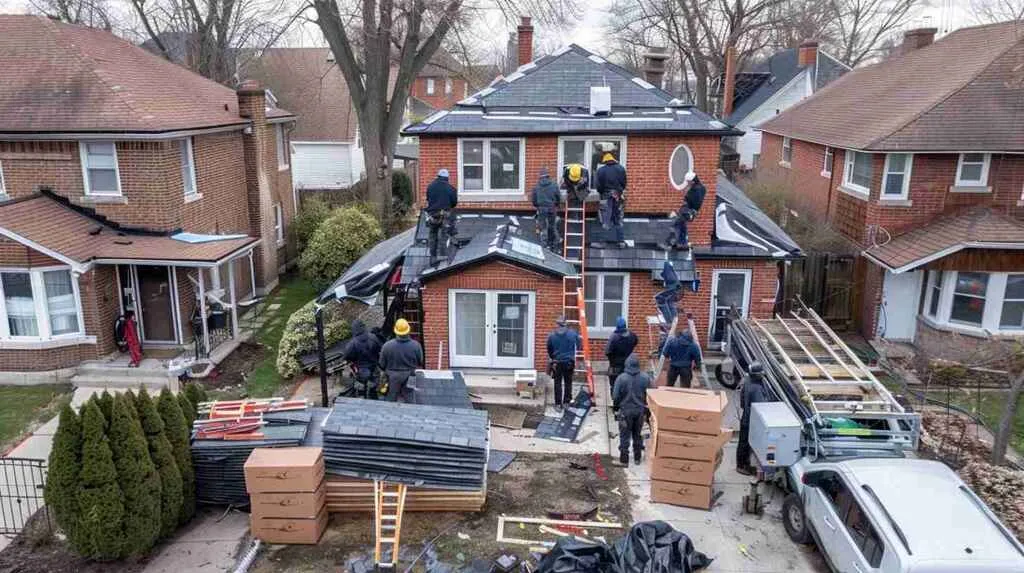
Shake Shingle Roof Queens NY – Rustic Style Done Properly | Free Estimates
Sidewalk quotes for cedar shake shingle roofs in Queens usually range from $9 to $14 per square foot installed if the job’s done right-tear-off, ice-dam-rated underlayment, proper nailing for wood movement, the whole system. But when a crew skips those steps to win the bid at $6 or $7, you’ll spend an extra $15 to $20 per square foot effective cost once you factor in fixing leaks, replacing rotted sheathing, and doing it all over again within two years.
What a Proper Shake Shingle Roof in Queens Really Costs
Two houses down from the Q32 bus stop on Northern Boulevard, I replaced a “bargain” shake shingle roof that started leaking after the second storm because the installer nailed through the shakes like they were asphalt three-tabs and used generic felt instead of real ice-and-water shield in the valleys. Water backed up at those valleys exactly like cars pile up at a bad intersection during rush hour-no clear path, everything jams, and suddenly you’ve got a mess inside your ceiling. The homeowner had saved maybe $2,800 upfront on that discount bid, then spent close to $11,000 fixing water damage, mold remediation, and hiring me to tear it all off and start over with the right underlayment and flashing. Queens housing stock-brownstones, detached capes, attached row houses-demands real planning for water flow, not just copying a pretty Pinterest cabin roof and hoping it works on a 1920s two-family with chimneys, skylights, and zero roof overhang.
Here’s my honest take: if your shake shingles are nailed like asphalt shingles, you just paid premium prices for a short-term roof. I’d rather walk away from a job than install shakes that I know will leak in a year, because I’ve spent 19 years watching water move over Queens roofs like the 7 train at rush hour-predictable, relentless, and ready to exploit every shortcut you take. One August afternoon in 2021, during that nasty heat wave in Maspeth, I was sweating through a cape-style shake install while the homeowner kept sending me Pinterest screenshots of “Adirondack cabin vibes.” I pulled out my tablet, showed her underlayment specs and shake staggering patterns right there on the ladder at 103°F, and explained how we’d route water down those slopes like traffic lanes feeding onto the Grand Central. When the first big thunderstorm rolled through a week later, she called just to say she’d sat by the window watching the runoff behave exactly like I’d sketched it. That’s what measurements and moisture readings buy you instead of vague contractor promises.
Installed Cost of Shake Shingle Roofs in Queens vs Cost of Fixing Bad Installs
| Scenario | Typical Roof Size (sq ft) | Upfront Installed Cost ($/sq ft) | What’s Included | 2-3 Year Reality Check Cost |
|---|---|---|---|---|
| Small attached row house | 800-1,000 | $9-$11 | Full tear-off, new underlayment, cedar shakes, basic flashing, ridge vents | $9-$11 (no repairs needed) |
| Typical detached Queens cape | 1,200-1,500 | $10-$13 | Tear-off, deck repairs (10-15% typical), ice-dam-rated underlayment, premium flashing | $10-$13 (holds up through winters) |
| Brownstone or multi-family | 1,800-2,200 | $12-$14 | Complex valleys, chimney work, skylight integration, upgraded metal flashing, ventilation upgrades | $12-$14 (built to last 25+ years) |
| “Bargain” install needing repair | 1,200-1,500 | $6-$8 | Minimal tear-off, generic felt, asphalt-style nailing, skipped flashing details | $18-$22 effective (re-tear, fix deck rot, water damage, re-install) |
⚠️ Warning: If a shake shingle quote for your Queens home comes in significantly under $9 per square foot installed, it almost always means shortcuts on tear-off (leaving old layers), cheap felt instead of ice-and-water shield, ventilation ignored, or flashing done with whatever’s left over from an asphalt job. Those gaps show up as leaks at valleys, around skylights, or near chimneys within two winters-guaranteed.
How I Build Rustic Shake Roofs That Actually Survive Queens Storms
From first tear-off to the last shake
Here’s my honest take: if your shake shingles are nailed like asphalt shingles, you just paid premium prices for a short-term roof. Back in 2016, I had a shake shingle job in Bayside that started going wrong at 7:30 a.m. on a Saturday when we opened up the old roof and found three layers-yes, three-of shingles buried under the top one. The building was a two-family with elderly parents downstairs, and the son upstairs was panicking because rain was in the forecast at 4 p.m. Stacking that many layers is like trying to run the E train on top of the F and M on the same track-eventually something jams, weight adds up, and the deck underneath starts sagging or rotting from trapped moisture. I had to reroute my crew on the fly, bring in an extra dumpster, and change the plan from partial tear-off to full tear-off plus new sheathing along the back where the shakes were going to sit. We still got the new shake shingle roof decked, underlayment on, and one main slope fully shingled before those first drops hit, and to this day I use photos of that mess to explain why “just slap shakes over what’s there” is a terrible idea, especially in Queens where codes and structural loads don’t tolerate hidden surprises.
Why nailing patterns and underlayment matter here
Once the deck’s clean and solid, I lay ice-and-water shield in the eaves, valleys, and around every penetration-chimneys, vents, skylights-because Queens winters may not be Minnesota, but ice dams and wind-driven rain absolutely happen here. Then comes breathable underlayment across the field, not that crinkly felt contractors grab to save a buck, because cedar shakes need to breathe or they’ll rot from the inside out like a sealed Tupperware left in the sun. When I’m actually nailing the shakes, I treat each one like a separate building in a little neighborhood: proper exposure (usually 7½ inches for 18-inch shakes), offset joints so no two line up vertically, and nails placed high enough that the shake above covers them but low enough that wood movement in summer heat or winter cold won’t pop them loose. Think of water flowing down those staggered slopes like rush-hour cars feeding onto the Grand Central Parkway-each shake is a lane marker, and if you line them up wrong or leave gaps, you get a pileup at the first heavy rain. One insider tip I always share: never agree to a shake install without confirming attic ventilation first, because if hot, moist air from your house gets trapped under those thick shakes, you’ll cook the wood from the inside and see rot or mold within five years no matter how perfect the top surface looks.
Luis’s Queens-Specific Shake Shingle Installation Process
- Full tear-off and debris handling: Remove all existing shingles down to bare deck, checking for hidden stacked layers (common in older Queens two-families) and hauling everything to the dumpster same-day so your yard isn’t a hazard zone.
- Deck inspection, moisture readings, and sheathing replacement: Walk every square foot with a moisture meter and chalk any soft, rotted, or warped plywood-then replace it before a single shake goes down, because shakes are heavy and need solid support.
- Install ice-and-water shield in critical zones: Eaves (first three feet minimum), valleys (full length), around chimneys, skylights, and vents-this is your real leak insurance for Queens nor’easters and surprise ice dams in February.
- Lay breathable synthetic underlayment across the field: Not bargain felt-actual high-temp, breathable material that lets cedar dry out between storms so it doesn’t rot prematurely.
- Install cedar shakes with correct exposure, stagger, and nailing: Each shake gets two rust-resistant nails placed ¾ inch from edges and 1-2 inches above the exposure line, with joints offset at least 1½ inches from the shake below-no shortcuts, no patterns that line up and channel water straight through.
- Flashing, ridge vents, and final walkthrough: Custom-fit metal step flashing at sidewalls and chimneys (not the generic stuff), properly vented ridge caps to keep air moving, and a full photo set on my tablet so you see exactly what’s under those beautiful rustic shakes.
✅ What I Include on Every Shake Job
- Complete tear-off to bare deck, no old layers left behind
- Moisture readings and rafter checks before new sheathing
- Ice-dam-rated underlayment in eaves, valleys, penetrations
- Properly vented ridge with airflow confirmed in attic
❌ What the Bargain Guys Usually Skip
- Leaving one or two old shingle layers “to save time”
- Generic 15-pound felt instead of real ice-and-water shield
- Asphalt-style nailing that doesn’t account for wood movement
- No attic ventilation checks or airflow upgrades
The Details That Keep Your Shake Shingle Roof From Leaking
Valleys, chimneys, and all the little bottlenecks
I still remember a Tuesday morning in Woodhaven when a customer asked me, “Luis, why are you obsessing over that little valley if the shingles look fine?” Because that valley is an intersection where two roof slopes dump their water traffic into one narrow channel, and if the flashing isn’t wide enough, lapped correctly, and sealed with the right underlayment, you get a backup just like Queens Boulevard at 5 p.m.-everything jams and spills over into places it’s not supposed to go. One job I’ll never forget was a small attached row house in Ridgewood, winter of 2019, first week of January, wind cutting right through you. The couple wanted a rustic shake shingle roof to match the pergola on their back deck, but they were worried about weight on old rafters. I spent an hour in their freezing attic with my laser level and moisture meter, then came down and drew them a sketch on the back of a takeout menu showing where we’d need to sister some rafters and reinforce around the chimney. When we finished, that shake roof looked older than the row house in the best way, and the husband told me it was the first time a contractor had ever explained something in a way he could repeat to his father-in-law without sounding lost.
Blunt truth-most shake shingle roofs I’m called to “inspect” in Queens fail at the details, not at the shingles themselves. Valleys act like subway transfers during rush hour-if the platform (flashing) is too narrow or poorly designed, people (water) miss their connection and end up on the tracks (inside your walls). Same with sidewall step flashing where a dormer or addition meets the main roof: if you use the thin aluminum stuff meant for asphalt instead of heavier-gauge metal sized for the thicker shake profile, wind-driven rain will work its way behind the shakes within one nor’easter. I always upgrade metal flashing on shake jobs for exactly that reason-thicker shingles catch more wind and water, so the details have to match that reality. Around chimneys and skylights, I treat every transition like a custom puzzle: measure twice, cut flashing to fit the actual angles, and seal with a combination of underlayment wraps and metal caps so there’s no single point of failure when water’s rushing downslope looking for the easiest way in.
Is a Shake Shingle Roof Right for Your Queens Home?
Let me ask you this: when you picture your “rustic” roof, are you imagining the look, or have you thought about how it handles a sideways Queens nor’easter? Shake shingles make the most sense for homeowners who care about both aesthetics and long-term performance and are okay with a bit of maintenance-periodic inspections, keeping gutters clear, maybe treating the wood every decade. Choosing shakes is like deciding between a scenic side street and a well-marked main avenue during a storm: if you pick based only on curb appeal and ignore how water actually moves, you’re going to end up lost and soaked.
Quick Check: Should You Choose Shake Shingles for Your Queens Roof?
Start here: Do you want a rustic, textured roof look that matches older Queens architecture (brownstones, capes, row houses with character)?
- No → Consider high-quality architectural asphalt shingles instead-lower cost, easier maintenance, still looks great.
- Yes → Continue ↓
Next question: Are you prepared for a higher upfront cost (typically $9-$14/sq ft installed) in exchange for better detailing, specialized underlayment, and the maintenance shake roofs require?
- No → Shake may not be ideal for your budget or timeline right now.
- Yes → Continue ↓
Final check: Is your existing framing suitable (confirmed by inspection), or are you open to structural reinforcement (sistering rafters, upgrading sheathing) if needed?
- No → Recommend structural evaluation before committing to shakes.
- Yes → Shake shingle roof is a good fit-schedule an inspection.
Maintenance, Lifespan, and When to Call Me Out
Think of your roof like Roosevelt Avenue at rush hour: if water traffic has nowhere clear to go, everything backs up and something ugly happens. Simple maintenance keeps that traffic moving-clean your gutters twice a year so valleys and eaves don’t overflow, trim back any tree branches that drop leaves or rub against shakes in the wind, and do a quick visual walk-around from the ground after big nor’easters to spot any lifted, cracked, or missing shakes. Most properly installed cedar shake roofs in Queens will give you 25 to 30 years if you treat them like a living system instead of a “set it and forget it” surface.
I offer inspections and honest feedback, even if that means saying “not yet” when your framing needs work before shakes make sense. If you’re in Jackson Heights, Woodhaven, Bayside, Ridgewood, Maspeth, or anywhere else in Queens and you’re thinking about a shake shingle roof-or you’ve already got one that’s starting to worry you-call Shingle Masters for a free on-site estimate. Unlike a faceless company, I’ll walk you through your roof like a map of city streets, show you photos and measurements on my tablet, and explain exactly what you’re paying for so there are zero surprises when the crew shows up.
Shake Shingle Roof Maintenance Schedule for Queens Homeowners
🚨 Call ASAP
- Active ceiling leak or water stains spreading after rain
- Visible sagging or dips around valleys or ridge
- Shake shingles blown off or visibly missing after a storm
- Brown water stains on attic rafters or insulation
✅ Can Wait a Few Weeks
- Cosmetic aging or graying of cedar shakes (natural weathering)
- Small moss or algae patches on shaded slopes
- Planning a future replacement within 1-2 years
- Wanting a second opinion on another contractor’s quote
Common Questions About Shake Shingle Roofs in Queens, NY
How long does a cedar shake shingle roof last in Queens climate?
With proper installation, good ventilation, and regular maintenance, a cedar shake roof in Queens will typically last 25 to 30 years. Coastal humidity and winter freeze-thaw cycles mean you need quality underlayment and flashing from day one-skimp on those and you’ll see rot or leaks within 10 to 15 years instead.
Will a shake roof be too heavy for my older Queens row house?
Maybe, and that’s why I always check your attic framing before quoting. Cedar shakes weigh about 450-650 pounds per square (100 sq ft) installed, compared to 250-350 for asphalt. If your rafters are undersized or spaced too far apart, we’ll need to sister some joists or upgrade sheathing-but I’ll show you exactly what’s required with photos and measurements, not guesses.
Can you install shakes over my existing asphalt shingles to save money?
No, and anyone who says yes is setting you up for failure. Shakes need a solid, flat deck to lie correctly, and leaving old asphalt (or worse, multiple old layers like I found in Bayside) traps moisture, hides deck rot, and creates an uneven surface that’ll telegraph through your expensive new cedar. Full tear-off is non-negotiable if you want the roof to last.
How loud is it during installation, and how long will my house be exposed?
Tear-off and nailing are loud-expect noise similar to any roofing job, roughly 7 a.m. to 4 p.m. for the active days. A typical Queens single-family home (1,200-1,500 sq ft roof) takes about 4 to 6 days total: one day for tear-off and deck work, one day for underlayment and flashing, two to three days for shake installation. Your house is never “open” overnight-we tarp and secure everything at the end of each day, rain or shine.
Ready for a Shake Shingle Roof That’s Built Like a Water-Management System?
A shake shingle roof in Queens is only worth it if it’s installed like a carefully planned neighborhood for water traffic, not just a pretty surface-and that’s exactly what I bring after 19 years of roofing in this borough, plus my MTA electrician precision for measurements and details. Call Shingle Masters today for a free on-site shake shingle roof inspection and estimate in Queens, NY. I’ll walk you through photos and options on my tablet so you know exactly what you’re paying for, no vague promises.
📞 Call Now for Your Free Estimate