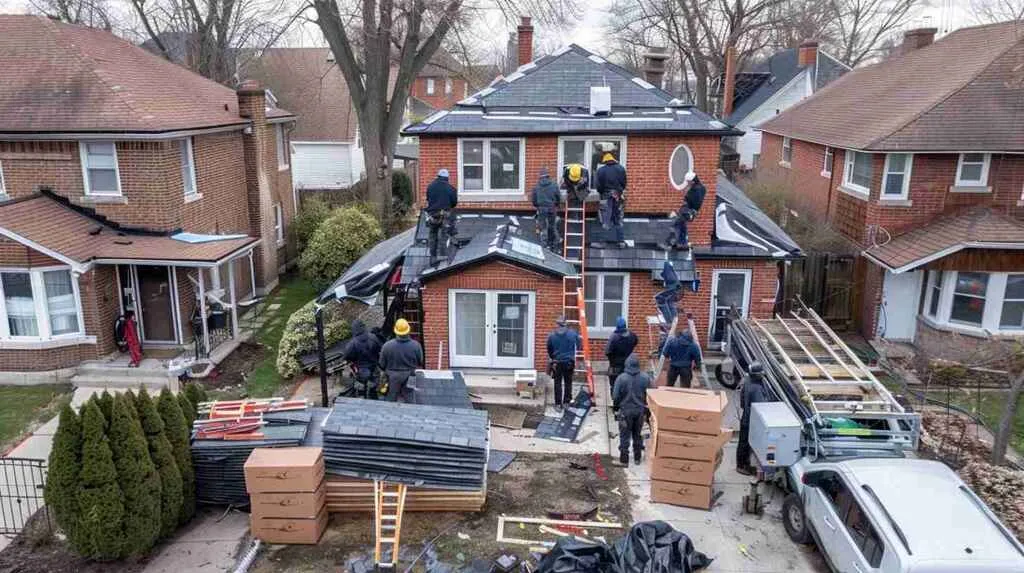
Rubber Roofing Shingles Queens NY – Durable Low-Maintenance Option
Counterintuitive as it sounds, the rubber roofing shingles I install on homes across Queens often need less annual attention than a homeowner’s gutters-and they’ll realistically run 35 to 50 years when you prep the deck right, compared to the 15 to 20 years most standard asphalt roofs give you before curling and cracking take over. I’m Denise Alvarez, and after teaching high school physics in Jackson Heights for years I switched to roofing in my mid-30s; now I spend my days explaining why rubber shingles act more like flexible lab-grade material and less like the brittle tar paper people think of, treating every roof install like a repeatable experiment so homeowners understand what actually happens on their specific Queens block.
How Long Rubber Roofing Shingles Really Last in Queens Weather
Counterintuitive but true: on a properly built deck, rubber roofing shingles in Queens neighborhoods will give you 35 to 50 years of service with minimal annual maintenance-basically a visual check and gutter cleaning-while the same house with standard asphalt is looking at 15 to 20 years before you’re dealing with granule loss, lifting tabs, and patching runs that never quite stop. What that means for you is fewer ladder visits, less money spent on repair visits every three or four years, and a lower total cost over the decades even though rubber’s upfront price looks higher on the estimate.
One July afternoon in Woodside, it was 94° and the rubber shingles were so flexible I could bend them like a playing card. The homeowner, an older gentleman, kept saying he was worried they’d “melt.” I took my infrared thermometer-still have the photo on my phone-and showed him the surface temp on his old dark asphalt vs. the new rubber. The asphalt was 162°F; the rubber was 128°F. He stopped worrying about melting and started asking how much he’d save on his ConEd bill. Think of it like the difference between leaving a black car and a silver car in the sun: the darker surface absorbs way more heat, and that heat cycles through expansion and contraction all day, every summer, for years. Rubber shingles run cooler, flex instead of cracking, and don’t stress the adhesive bond the same way-it’s a little physics experiment happening on your roof every afternoon, and I’ve seen the long-term results in homes I re-inspect a decade later.
Rubber Roofing Shingle Lifespan & Maintenance at a Glance in Queens, NY
| Typical Rubber Shingle Lifespan | 35-50 years on a properly built deck in Queens |
| Typical Asphalt Shingle Lifespan | 15-20 years before noticeable curling, cracking, or granule loss |
| Routine Maintenance for Rubber | Simple visual check once a year + gutter cleaning; usually no patching for decades |
| Expected Energy Impact | Up to 20-30°F cooler surface vs dark asphalt on summer afternoons, reducing AC strain |
| Comparison Point | Rubber Roofing Shingles | Standard Asphalt Shingles |
|---|---|---|
| Realistic Lifespan in Queens | 35-50 years with minimal repairs or replacement | 15-20 years before major granule loss, curling, or frequent leaks |
| Typical Maintenance Needs | Annual visual check, gutter cleaning, rare flashing touch-ups | More frequent patching, seal repairs every few years, earlier full replacement |
| Common Weather-Related Issues | Handles freeze-thaw cycles, hurricane remnants, and microbursts well; rare lifting | Prone to wind uplift in storms, cracking in winter, quick deterioration from UV and salt air |
| Impact on Summer Roof Temperature | Runs 20-30°F cooler than dark asphalt; less attic heat, lower ConEd bills | Surface temps can exceed 160°F on hot afternoons; drives up cooling costs |
What Has to Happen Before Rubber Shingles Go On Your Queens Roof
On a typical two-story house in Jackson Heights, I tell people that deck prep and wood replacement matter ten times more than which brand of rubber shingle you pick, because a $12,000 rubber roof can easily outlive a $500 deck repair you skipped-and when that deck fails in year twelve, it’ll look like the shingles didn’t hold up, but really you asked a championship material to sit on a wobbly foundation. What that means for you is that when I pull the old shingles off and find scrap plywood or soft spots, saying yes to replacing that wood-even if it wasn’t in your original mental budget-is what lets those rubber shingles hit their full 40-year lifespan instead of tapping out early.
In 2018, I had a rubber shingle job in Howard Beach where everything that could go wrong in prep did go wrong. We discovered, at 7:30 a.m. in a light drizzle, that half the underlying plywood had been pieced together with scrap wood in the ’80s. If we’d slapped rubber shingles over that mess, they would’ve outlived the deck by a decade and the customer would’ve blamed the shingles. I spent the first two hours explaining why we were tearing out more wood than the estimate, and I pulled out my mini whiteboard to sketch how load and moisture travel-he told me no one had ever given him a “roofing class” before. Here’s the thing: the physics of a roof system is straightforward-water always follows the easiest path down, and weight always presses on whatever’s weakest-so if you install a super-durable top layer but ignore the structural layer underneath, you’ve just guaranteed the weak link will snap first. That job ended up costing more than the homeowner planned, but eight years later his roof still looks brand new and his neighbor’s asphalt replacement is already showing wear.
Step-by-Step Rubber Shingle Installation Process Shingle Masters Follows in Queens
Attic and Roof Deck Inspection
Checking plywood thickness, signs of leaks, previous patchwork, and whether the framing can support the new rubber shingle system without reinforcement.
Tear-Off and Deck Assessment
Removing old roofing down to the wood, identifying bad or pieced-together sections that won’t show up until the old shingles are gone.
Deck Repairs and Reinforcement
Replacing scrap or rotted plywood with proper panels, using the right fastener pattern, and making sure every seam is supported so rubber shingles sit on a solid, flat surface.
Underlayment and Flashing Upgrades
Installing ice and water shield in vulnerable areas, synthetic underlayment across the deck, and Queens-specific flashing details around chimneys, parapets, and any brick or stucco transitions.
Rubber Shingle Layout and Installation
Correct staggering, fastener placement per manufacturer specs, and attention to wind ratings-rubber shingles need precise installation to deliver their full lifespan.
Final Walkthrough and Maintenance Lesson
I walk you through what we did, show you what to look for in annual checks, and explain how the system works so you’re not guessing when something looks different five years from now.
⚠ Danger of Installing Rubber Shingles Over a Weak or Pieced-Together Deck
- Moisture trapping: Rubber shingles seal so well that any moisture already in bad plywood or between deck layers can’t escape, leading to rot that starts under the shingles and spreads invisibly for years.
- Wind uplift on weak sheathing: When a storm hits, loose or thin deck panels will flex and pop fasteners even if the rubber shingles themselves are rated for high wind-the weak point fails first.
- Beware “no tear-off” pitches: Contractors who push skipping tear-off on older Queens homes with multiple roof layers are gambling that you won’t be around when the whole stack collapses inward; rubber shingles deserve a clean, solid start.
Performance in Queens Storms: Rubber vs Old Asphalt Shingles
The blunt truth is that Queens roofs don’t fail because of the weather first; they fail because of the materials. The same Nor’easter, the same summer microburst, the same hurricane remnant hits every house on your block, but the ones with weaker shingles and loose nailing patterns peel first while stronger roofs ride it out. Think of it like trying to peel tape off glass versus peeling tape off cardboard-the wind’s the same force, but the bond strength and the backing material decide what actually lifts. Rubber shingles, when they’re fastened right to a solid deck, have better tensile strength and a tighter seal than budget asphalt, so the wind doesn’t get underneath as easily.
The strongest case for rubber shingles I ever saw was a Bayside job right after Hurricane Ida remnants hit us. Two houses on the same block: one we had re-done in rubber shingles the year before, one still on 15-year-old asphalt. Same wind, same tree line. The asphalt roof lost two sections and had lifted tabs all over; the rubber shingle roof had one minor scuff where a branch slid. Standing there in my rain jacket at 6 a.m., coffee in hand, I realized I’d never again recommend basic builder-grade shingles in that neighborhood. The homeowner with the rubber roof called to ask if he needed any repairs; I told him to just hose off the scuff mark and keep an eye on his neighbor’s tarp situation. That kind of real-world difference-same storm, wildly different outcomes-is why I now treat rubber as the default choice for anyone in a storm-prone part of Queens who plans to stay put more than a decade.
| Pros of Rubber Shingles in Queens Storms | Potential Drawbacks to Consider |
|---|---|
| Superior wind resistance-tight seal and flexible material resist uplift better than brittle asphalt in high gusts and hurricane remnants | Higher upfront cost-expect to pay 30-50% more than standard asphalt for materials and skilled labor |
| Excellent impact resistance from branches, hail, and windblown debris-rubber absorbs energy instead of cracking on contact | Need for experienced installer-not every roofer knows proper fastener schedules and seam details for rubber shingles |
| Handles freeze-thaw cycles without the cracking and curling that plague asphalt in Queens winters | Possible HOA or historic district restrictions-some Queens neighborhoods have appearance guidelines that limit shingle profiles or colors |
| Longer-term seal integrity-adhesive bonds stay flexible for decades, so shingles don’t lift as easily in wind events years after install | Lead time for materials-rubber shingles sometimes take longer to source than commodity asphalt, which can delay start dates |
When Queens Homeowners Should Call Shingle Masters After a Storm
Call Right Away
- Visible missing shingle sections or bare deck showing
- Active leaks or water stains forming on ceilings or walls
- Ceiling sagging or bulging-sign of trapped water weight
- Tree limbs resting on or piercing the roof surface
Can Usually Wait a Few Days
- A single scuffed area on rubber shingles with no puncture
- Small pieces of shingle in the yard but no visible bare spots on the roof
- A loose gutter or downspout that’s still attached
- Cosmetic fascia or soffit damage with no structural flex
Cost, Lifespan, and When Rubber Shingles Make Financial Sense in Queens
If you were one of my old physics students, I’d start with this question: what costs more over 40 years-replacing cheaper asphalt shingles twice, at roughly $8,000 to $12,000 each time, plus the repair visits in between, or paying $15,000 to $22,000 once for rubber shingles that last the whole period and need almost no fixes? For most Queens homeowners planning to stay put 15 years or longer, the higher upfront price of rubber shingles wins when you factor in fewer emergency calls, better energy performance lowering your ConEd bills every summer, and not having to budget for a second or third roof replacement down the road.
| Scenario | Estimated Range (Rubber Shingles Installed) |
|---|---|
| Small One-Family Row House Roof 600-900 sq ft, simple layout, minimal hips or valleys |
$9,000 – $14,000 |
| Typical Two-Story Detached in Jackson Heights 1,000-1,400 sq ft, moderate complexity, standard chimney and vents |
$15,000 – $22,000 |
| Larger Bayside Colonial 1,500-2,000 sq ft, multiple hips, valleys, dormers |
$22,000 – $32,000 |
| Queens Two-Family with Minor Deck Repairs 1,200 sq ft roof, replacing 15-20% of plywood for soft spots |
$18,000 – $26,000 |
| Older Home with Extensive Deck Replacement 1,400 sq ft roof, replacing 50%+ of deck plus new rubber shingles |
$28,000 – $42,000 (roughly half structural repair, half shingle system) |
| Myth | Fact |
|---|---|
| Rubber shingles will melt in Queens summer heat. | Rubber shingles are engineered to withstand surface temps well above 200°F; in real-world Queens conditions they run cooler than dark asphalt because they reflect more heat-I’ve measured 128°F on rubber vs 162°F on asphalt on the same July afternoon. |
| Rubber roofing always looks like flat, commercial rubber. | Rubber shingles are molded to look like traditional asphalt profiles-dimensional, textured, available in grays, browns, blacks, and blends-so they blend perfectly with brick, stucco, and siding common across Queens neighborhoods. |
| You can just lay rubber shingles over anything and they’ll be fine. | Absolutely not-rubber shingles will outlive a bad deck by a decade, and when that deck fails the whole system comes down; proper prep (tear-off, plywood replacement, correct underlayment) is what lets rubber deliver its full 35-50 year lifespan. |
| Rubber shingles are too heavy for older Queens houses. | Modern rubber shingles weigh about the same as mid-grade asphalt-around 250-350 pounds per square-so they don’t require any structural upgrades on typical Queens framing; weight distribution is straightforward physics and well within code limits. |
| Any roofer who does asphalt can install rubber just as well. | Not true-rubber shingles have tighter fastener schedules, specific underlayment requirements, and manufacturer training that many general roofers skip; improper installation voids warranties and cuts lifespan in half, so you need someone who’s done rubber installs repeatedly and knows the details. |
Simple Maintenance: Keeping Rubber Shingles Performing for Decades
Think of your roof like a system of gears-if one weak plastic gear is in the mix, that’s where the whole thing will strip. With rubber shingles, most “gears” are very strong-the shingles themselves, the fasteners, the underlayment-so your job as the homeowner is mainly to protect the small weak points: clogged gutters that back water up under flashing, broken chimney caps that let moisture in, and overhanging branches that scrape and abrade the surface every time the wind picks up. Here’s my insider tip: take smartphone photos from street level once a year after the leaves fall, and compare them year to year for any visible changes-curling, lifting, color streaks, sagging-instead of climbing on the roof yourself and risking a fall or damaging shingles by walking on them wrong.
Low-Maintenance Schedule for Rubber Roofing Shingles in Queens
Check gutters and leaders for winter debris, look for storm damage from ice or wind, and do a quick ground-level visual scan to confirm shingles are still lying flat and uniform.
Clear leaves from gutters before they freeze, verify no branches are rubbing the roof, and inspect after heavy rains to make sure water’s draining properly and not pooling anywhere.
Walk the property looking for unusual shingle movement, displaced flashing, or visible damage, and take photos if you see anything new so you can show your roofer exactly what changed.
Schedule a professional inspection with Shingle Masters to check flashing, sealants, and overall system health-catching small issues early keeps your rubber roof running the full 40+ years.
Queens Rubber Roofing Shingle FAQs
Will rubber roofing shingles match the look of my existing Queens block?
Yes-rubber shingles come in dimensional profiles, textured surfaces, and colors (charcoal, slate gray, weathered wood, deep brown, black) that blend seamlessly with the brick, stucco, vinyl siding, and mixed-material facades you see across Jackson Heights, Bayside, Astoria, and the rest of Queens. Honestly, most neighbors won’t know you switched from asphalt to rubber unless you tell them; the difference shows up in longevity and heat reflection, not curb appeal.
How noisy are rubber shingles in heavy rain compared to asphalt?
Roof noise during rain is mostly about attic insulation, ventilation, and the deck-not the shingle type. Rubber and asphalt shingles both sit on the same plywood deck with the same underlayment, so if you have decent insulation in your attic you won’t hear much difference between the two. If your attic is uninsulated or poorly vented, adding insulation will quiet things down far more than switching shingle materials ever could.
Can rubber shingles be installed in winter in Queens?
Most rubber shingle manufacturers recommend installation when temperatures are consistently above 40-45°F, because the adhesive strips need warmth to seal properly. In Queens, that usually means mid-March through November for ideal conditions. We can install in colder months if there’s an emergency-using hand sealers and careful scheduling around warmer afternoons-but I prefer to wait for better weather so the shingles bond right the first time and hit their full lifespan.
What warranties are available on rubber roofing shingles and installation?
Manufacturer warranties on rubber shingles typically run 40-50 years for materials (prorated after the first 10-15 years), covering defects in the shingles themselves. Shingle Masters provides a separate workmanship warranty-usually 10 years-covering installation errors, fastener issues, and flashing details. To keep both warranties active, you’ll need to register the job with the manufacturer within a set window (often 60 days) and follow basic maintenance like keeping gutters clear and not letting moss or debris pile up. I walk every customer through the registration process and give them a simple one-page maintenance checklist so nothing falls through the cracks.
Here’s my honest opinion after almost two decades on ladders: if you’re planning to stay in your Queens home 15 years or more, rubber roofing shingles are usually the smarter long-term choice once you’ve got a solid deck underneath and a crew that knows how to install them right. The upfront cost stings a little, but the trade-off is real-fewer emergency calls, better storm performance, cooler attic temps in summer, and not budgeting for a second roof replacement while you’re still paying off the first one. If you want a Queens-ready roof that trades constant patching for long-term performance, Shingle Masters can walk your home through the same step-by-step process I use on every rubber shingle job-deck inspection, honest prep, correct installation, and a clear maintenance plan so you know exactly what to expect over the next four decades. Call Shingle Masters today to schedule an on-roof inspection and get a physics-backed plan for upgrading to rubber roofing shingles in Queens, NY.