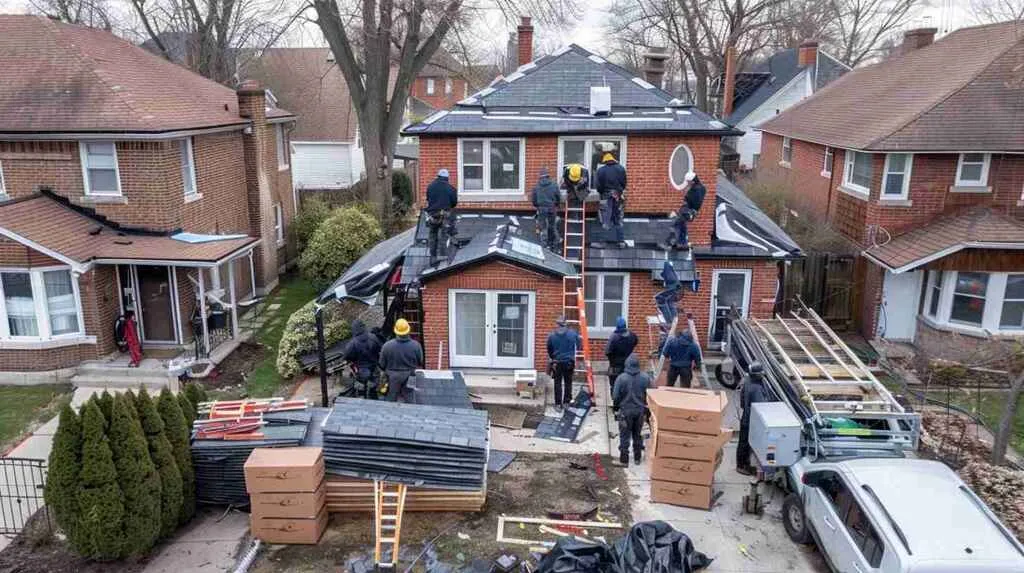
Roof Shingle Options Queens NY – All Your Choices Laid Out Clearly
Sideways from the normal way of thinking: the cheap-shingle-versus-expensive-shingle debate is mostly useless for Queens homeowners. What actually matters is your building type, how much wind hammers your block, which side of the street you’re on, and how long you’re planning to stay in the house. My name’s Dennis Cho, and after 19 years of roofing in Queens-following a stint as a civil engineer who finally escaped the AutoCAD dungeon-I still run wind-load calculations on a yellow legal pad before I recommend a single bundle, because your roof isn’t a one-size-fits-all problem, it’s a system that has to match your exact house and the way Queens weather works.
Sideways: Why Your Queens Block Matters More Than the Price Tag
Here’s my honest opinion: if you still think 3-tab shingles are “fine for now,” you’re probably remembering the weather from 20 years ago, not the storms we’re seeing today. The way I look at it-and yeah, I’m the oddball roofer who still sketches wind diagrams on-site-your roof shingle options aren’t about cheap versus expensive, they’re about picking the right route for your house the same way you’d pick between the local, the express, or the weekend-only train line. A corner lot in Maspeth with an open industrial lot across the street sees completely different wind loads than a sheltered mid-block row house in Flushing, and a flat-roof section or low-slope transition changes the conversation entirely.
One January afternoon in 2018, with that wet, bone-deep cold that Queens does so well, I was on a hip roof in Maspeth where the homeowner wanted the cheapest 3-tab shingles because, in his words, “It’s just shingles, right?” I pulled out my notebook, showed him the wind ratings versus the gusts we’d had during that nor’easter a week before, and reminded him we were half a block from an open industrial lot where the wind tunnels through. He reluctantly upgraded to architecturals, and three months later, after another storm, his neighbors’ 3-tabs were scattered like playing cards while his roof didn’t lose a single tab. That’s the kind of real-world outcome you get when you stop thinking price tag and start thinking wind exposure, building type, and how Queens nor’easters behave around your specific block.
Myth vs Fact: Queens Roofing Assumptions
| Myth | Fact |
|---|---|
| 3-tab shingles are basically the same as architectural-just cheaper | 3-tab shingles have single-layer construction and lower wind ratings (typically 60 mph), making them risky on exposed Queens blocks; architectural shingles are multi-layered and rated for 90-130 mph gusts, which matches what we’ve seen in recent storms |
| All shingles last 20-30 years in Queens | Manufacturer brochures assume ideal conditions; in Queens, with coastal humidity, temperature swings, and wind, realistic lifespan is 15-20 years for 3-tab and 20-25 years for quality architectural shingles |
| Shingle color is just about looks | Dark shingles in full sun can hit 160°F+ surface temps on a Queens July day, driving up attic heat and AC bills; cool-rated lighter shingles run 20-30°F cooler and pay off over time |
| If my neighbor’s roof is fine, I can copy it | Corner lots, attached versus detached homes, and roof pitch all change wind and snow load; your neighbor’s mid-block semi-detached setup may not match your exposed single-family corner house at all |
Quick Facts: Queens Roof Shingle Realities
Typical Queens Wind Gusts:
40-60 mph during routine storms; 70-90+ mph during nor’easters and severe weather
Common Building Types:
Attached row homes, semi-detached two-families, and single-family houses-each with different wind and structural profiles
Real Shingle Lifespan vs Brochure:
Brochures say 25-30 years; Queens conditions deliver 15-20 for 3-tab, 20-25 for mid-grade architectural
Coastal vs Inland Neighborhoods:
Rockaways and coastal areas see salt, humidity, and higher winds; inland Flushing or Bayside see less salt but still plenty of thermal cycling and storm exposure
Local, Express, or Weekend-Only: Laying Out Your Main Shingle Options
3-Tab Shingles: The Old Local Train
Here’s my honest opinion: if you still think 3-tab shingles are “fine for now,” you’re probably remembering the weather from 20 years ago, not the storms we’re seeing today. I still remember a brutally hot July Saturday in 2020 in Jamaica Estates, standing on a dark brown roof you could’ve fried eggs on at 10 a.m. The homeowner had just installed a new AC system and couldn’t figure out why her cooling bills were still crazy. I took temperature readings on her existing black architectural shingles and then on a sample of cool-rated shingles I brought, and the difference was over 20 degrees. That job turned into a full-color and shingle-type consultation on her shady front lawn, with me sweating through my shirt but grinning because you could literally see the lightbulb go on when she realized color and shingle composition aren’t just cosmetic. The old 3-tab design is a single-layer, flat-profile shingle that was fine 30 years ago when storms were gentler and most Queens homes were sheltered by taller buildings and more trees, but today they’re a gamble on anything but the most protected, short-term projects.
Architectural Shingles: The Everyday Express
For most Queens roofs-whether you’re in Flushing with a standard pitched colonial, Bayside with a split-level ranch, or Jackson Heights with a semi-detached two-family-architectural shingles are the everyday express line. They’re multi-layered, heavier, and come with wind ratings from 90 mph up to 130 mph depending on the product line, which actually matches the gusts we’ve measured during the storms that blow through here. The typical roof structures in neighborhoods like Flushing and Bayside-moderate to steep pitches, gable or hip designs, sometimes with dormers-handle architectural shingles perfectly, and you get better granule retention, better curb appeal, and a realistic 20-25-year lifespan if you don’t cheap out on the underlayment and flashing. Here’s an insider tip I don’t see other roofers talk about enough: on windy Queens blocks-especially corner lots, houses near highways or open parks, and anywhere near the water-I often ignore the bare-minimum code wind rating and bump you up to the next tier, because the difference in cost is maybe $200-$400 on a typical job, but the difference in performance during a 75 mph nor’easter is the difference between keeping your roof and watching tabs fly into your neighbor’s yard.
Designer Shingles: The Fancy Weekend Route
I still laugh about a Sunday morning in Bayside when a homeowner showed me three Pinterest photos and said, “Just make it look like this”-as if pitch, code, and climate didn’t exist. Back in 2014, I had a nightmare job in Astoria where the customer insisted on a fancy designer shingle they’d seen in a magazine-problem was, their roof had a low slope and a history of ice dams. Against my advice, we installed what they wanted, and sure enough, the first icy winter brought leaks along the eaves because that heavy designer shingle didn’t shed water well at that pitch. I ate a chunk of the cost, tore off the lower courses, installed a beefy ice-and-water shield and switched that section to a different shingle system rated for low-slope transitions. Ever since, when people ask me about “pretty” shingles, I tell them about that frozen Tuesday in February when good looks and bad design had a very expensive argument. Designer shingles-luxury lines, slate-look, cedar-shake profiles-are gorgeous and built to last 30+ years in the right application, but they’re heavier, more expensive, and they need the right roof pitch, proper ventilation, and a structure that can carry the extra weight. On the right Queens house-a well-built single-family with steep slopes, good bones, and an owner who’s staying put for decades-they’re the weekend-only luxury route that pays off in resale and curb appeal, but only when the building and the design match.
| Shingle Type | Typical Installed Cost per Square (Queens Range) | Typical Wind Rating | Realistic Lifespan in Queens | Best For | Transit Analogy |
|---|---|---|---|---|---|
| 3-Tab Shingles | $350-$500 (materials + labor, non-binding estimate) | 60 mph typical | 15-20 years | Very sheltered mid-block homes, tight budgets, short ownership horizon (case-by-case only) | The old local train-stops everywhere, slow, outdated for today’s weather |
| Architectural Shingles | $500-$750 | 90-130 mph | 20-25 years | Most Queens homes-single-family, semi-detached, two-families with moderate to steep pitch | The everyday express-reliable, fast, built for the real Queens commute |
| Designer Shingles | $800-$1,200+ | 110-130 mph (varies by line) | 25-30+ years | High-end single-family homes with steep slopes, proper structure, long ownership plans, and curb-appeal focus | The fancy weekend route-luxury, scenic, only runs when conditions are perfect |
Heat, Color, and Cool Roof Choices on the Queens Map
I still remember a brutally hot July Saturday in 2020 in Jamaica Estates, standing on a dark brown roof you could’ve fried eggs on at 10 a.m. The homeowner had just installed a new AC system and couldn’t figure out why her cooling bills were still crazy. I took temperature readings on her existing black architectural shingles and then on a sample of cool-rated shingles I brought, and the difference was over 20 degrees. That job turned into a full-color and shingle-type consultation on her shady front lawn, with me sweating through my shirt but grinning because you could literally see the lightbulb go on when she realized color and shingle composition aren’t just cosmetic. Here’s the technical reality translated into plain language: darker shingles absorb more solar radiation, driving surface temps to 160°F or higher on a sunny Queens summer day, and that heat soaks straight through to your attic if your ventilation and insulation aren’t spot-on. Cool-rated shingles-engineered with reflective granules-run 20-30°F cooler, which means your attic stays cooler, your AC works less, and over 15-20 years you save real money on energy bills. If your roof faces south or west and gets full sun most of the day, especially on a flat or low-slope section, choosing lighter or cool-rated shingles isn’t just eco-friendly talk, it’s a smart Queens-specific design move.
Standard Dark Architectural
Estimated Surface Temperature (90°F day): 160-170°F in full sun
Impact on Attic Temperature: Drives attic temps to 130-150°F without adequate ventilation, forcing AC to work overtime
Typical Color Range: Black, dark brown, charcoal, dark gray
Best For: North-facing or heavily shaded roofs; homeowners prioritizing curb appeal over energy savings; well-insulated and well-vented attics
Cool-Rated / Light Architectural
Estimated Surface Temperature (90°F day): 130-140°F in full sun
Impact on Attic Temperature: Reduces attic heat by 15-25°F, cutting cooling costs and extending shingle lifespan by reducing thermal cycling
Typical Color Range: Tan, light gray, weathered wood, adobe, white-blend
Best For: South- and west-facing roofs in full sun; homes with AC struggles or high energy bills; coastal or low-slope sections prone to heat buildup
Heat & Color Maintenance Timeline for Queens Roofs
First Summer After Install
Walk the roof perimeter from the ground and check for any early granule loss, shingle curling at edges, or discoloration around vents and chimneys; confirm attic temps aren’t spiking above 140°F on hottest days
Year 5
Inspect for accelerated granule wear on south- and west-facing slopes; check that ridge vents and soffit vents are clear and functioning; look for any early edge curling which signals heat and ventilation issues
Year 10
Evaluate overall granule coverage and shingle flexibility; verify attic insulation hasn’t settled or degraded; check for any interior ceiling water stains or mold which can signal condensation from poor ventilation
After Any Major Heat Wave (95°F+ for 3+ Days)
Quick visual from ground level to spot any buckled or blistered shingles; confirm no new leaks or drips in attic; this is when thermal stress shows up fastest on dark or improperly ventilated roofs
Choosing Your Route: Matching Shingle Type to Your Queens House and Plans
Before you look at any shingle samples or pricing charts, stop and ask yourself: what did your roof look like after the last big Queens windstorm, and how long are you planning to stay in this house?
When I sit at your kitchen table, my first question isn’t about color; it’s, “How long are you planning to stay in this house?” The reason is simple: your time horizon changes everything about which shingle system makes sense for you. If you’re planning to sell in three years, dumping money into a 30-year designer shingle is like buying a monthly MetroCard when you only need a single ride. But if you’re staying put for 15-20 years, cheaping out on a 3-tab now means you’ll be reroofing again in 12-15 years instead of 20-25, and you’ll deal with more wind damage, more granule loss, and probably higher energy bills along the way. This isn’t just about the shingle, it’s about the whole system: your building’s age, its structure and load capacity, the wind exposure on your specific block, the pitch and complexity of the roof, whether you’ve got low-slope sections or ice-dam history, and how all that connects to your budget and timeline. Think of it like planning a transit route across Queens-you need to know where you’re starting, where you’re going, how fast you need to get there, and what obstacles are in the way, and then you pick the train line that actually fits your trip.
Blunt truth: in Queens, your neighbor’s roof is a terrible model for your own unless your house is a clone of theirs. A corner lot with open exposure to the north and west sees completely different wind loads than a mid-block attached row house that’s sheltered on three sides. A detached single-family colonial with steep gable roofs needs a different shingle strategy than a semi-detached two-family with a low-slope flat section over the back addition. I’ve been on blocks in Jackson Heights where every third house has a totally different roof design, and copying the guy next door without understanding your own building’s quirks is a recipe for leaks, wind damage, and expensive do-overs. That’s why I still walk every roof with my clipboard and legal pad, sketching the layout, measuring pitches, noting which sides face open lots or highways, and running the numbers on wind ratings and structural capacity before I ever talk price or color.
Which Shingle Route Is Right for Your Queens Home?
Planning to stay in your home at least 10 more years?
Is your budget flexible enough for long-term value?
Is the roof in sheltered mid-block location?
Wind Exposure & Building Type Check
Corner Lot or Near Open Space/Highway
➜ Architectural with 110+ mph wind rating minimum; designer if high-end home and budget allows
Sheltered Mid-Block, Attached or Semi-Detached
➜ Standard architectural (90-110 mph) works well; upgrade if staying 15+ years
Flat or Low-Slope Sections Present
➜ Special low-slope membrane or modified shingle system required-designer shingles rarely appropriate here
Simple Steep-Pitched Roof, High Curb Appeal Goals
➜ Select designer shingles if structure supports weight and budget fits; premium architectural otherwise
Final Recommendation Zones: Short-term sheltered = case-by-case 3-tab | Most Queens pitched roofs = mid-grade architectural | High-end curb appeal + right pitch = designer | Low-slope transitions = specialized system consult required
How a Shingle Consultation with Dennis at Shingle Masters Actually Works
Phone Call with Address & Quick Storm History – You tell me where the house is, what type of building, and how the roof handled the last few big storms or whether you’re seeing leaks, missing tabs, or just planning ahead
On-Roof Inspection with Clipboard & Photos – I walk the roof with my measuring tape, legal pad, and camera, sketching the layout, noting pitch and exposures, checking existing underlayment and flashing condition, and taking photos of problem spots or structural details
Wind Load & Building Type Review Using Queens Data – Back in my truck or at your kitchen table, I pull out my wind maps, reference your block’s exposure (corner vs mid-block, nearby open lots, proximity to water), and run the numbers on recommended wind ratings and shingle weights for your structure
Sit-Down Explanation Using Subway-Route Analogies & Layout Sketches – I walk you through your options using my transit-map approach: here’s the local (3-tab if applicable), the express (architectural), and the weekend luxury line (designer), showing which route fits your house, budget, time horizon, and risk tolerance
Written Proposal with 1-2 Clearly Labeled Shingle System Options – You get a typed proposal with material specs, wind ratings, manufacturer warranties, labor details, and pricing for one or two different shingle systems so you can compare apples to apples and make an informed decision, not a guess
Real-World Issues: Wind, Leaks, and When to Call for a New Shingle System
On a corner lot in Jackson Heights, I’ll almost always start by asking you one question: how did your roof handle the last big windstorm? One January afternoon in 2018, with that wet, bone-deep cold that Queens does so well, I was on a hip roof in Maspeth where the homeowner wanted the cheapest 3-tab shingles because, in his words, “It’s just shingles, right?” I pulled out my notebook, showed him the wind ratings versus the gusts we’d had during that nor’easter a week before, and reminded him we were half a block from an open industrial lot where the wind tunnels through. He reluctantly upgraded to architecturals, and three months later, after another storm, his neighbors’ 3-tabs were scattered like playing cards while his roof didn’t lose a single tab-that’s the kind of outcome you get when you make the right call before the problems start instead of waiting until you’re calling me at midnight because water’s dripping into your living room.
Queens Roof Shingle Questions Dennis Hears at Kitchen Tables
Q: Is 3-tab still allowed by code, and when will you actually recommend it?
A: Yes, 3-tab meets basic NYC building code for wind zones in most of Queens, but code minimum isn’t the same as smart design. I’ll only recommend 3-tab in very specific cases: extremely sheltered mid-block homes with short ownership horizons, tight budgets where architectural isn’t feasible, and buildings where I’ve confirmed the structure and exposure can handle the lower wind rating. Most of the time, the small cost difference to architectural makes 3-tab a bad bet given how Queens storms have changed.
Q: How does Queens wind and coastal exposure actually change my shingle choice?
A: Wind ratings matter more here than in sheltered inland suburbs. Corner lots, houses near highways or open parks, and anything within a few miles of the water see higher gusts during nor’easters and summer storms. I use local weather data and your specific block exposure to recommend shingles rated for 110-130 mph on windy sites, versus 90 mph minimums on very sheltered locations. Coastal neighborhoods like the Rockaways also deal with salt spray and humidity, which accelerates granule loss, so I typically bump up to higher-grade architectural or designer lines there.
Q: How long does a shingle roof really last in Queens versus what the brochure says?
A: Manufacturer brochures assume ideal conditions-moderate climate, perfect ventilation, no wind damage, and regular maintenance. In Queens, with temperature swings from below freezing to 95°F+, coastal humidity, wind, and occasional ice dams, realistic lifespan is 15-20 years for 3-tab and 20-25 years for quality architectural shingles. Designer shingles can hit 25-30 years if installed correctly on the right structure. The key is proper underlayment, good attic ventilation, and picking a shingle rated for your actual exposure, not just the cheapest option on the shelf.
Q: Is reroofing over existing shingles a smart move in Queens?
A: Code allows one layer of reroof in many cases, but I almost never recommend it in Queens. The extra weight stresses the structure, you can’t inspect or repair the underlayment and decking, trapped moisture between layers accelerates rot, and it often voids manufacturer warranties. On top of that, Queens wind can peel off a double-layer roof faster than a single properly installed system. The money you save skipping tear-off usually comes back to bite you in 5-10 years when you’re doing a full tear-off anyway, plus repairing damaged decking you couldn’t see.
Q: How noisy and disruptive is a typical shingle replacement on a Queens lot?
A: Tear-off day is loud-expect noise from 8 a.m. to 4 p.m. as crews strip old shingles, pull nails, and toss material into a dumpster parked on your driveway or street. Installation days are quieter but you’ll still hear nail guns and foot traffic on the roof. On a typical Queens single-family or semi-detached home, tear-off takes 1 day, install and cleanup take 2-3 days depending on roof size and complexity. We tarp the dumpster daily, protect landscaping and AC units, and schedule around your work-from-home days when possible. Most of my customers are surprised it’s less disruptive than they feared, as long as expectations are set up front.
Why Queens Homeowners Hire Shingle Masters for Shingle Work
✓ Licensed & Insured in NYC
Full licensing, liability, and workers’ comp coverage for all Queens roofing projects
✓ 19+ Years Queens Experience
Dennis has walked thousands of Queens roofs from Astoria to Jamaica, learning every building type and exposure challenge
✓ Fast Response Times
Typically 24-48 hours for non-emergency inspections; same-day or next-day for active leaks when schedule allows
✓ Manufacturer-Trained
Certified on major shingle brands including GAF, CertainTeed, Owens Corning, and IKO for proper installation and warranty compliance
✓ Queens-Specific Know-How
Familiar with everything from Astoria row houses to Jamaica single-families, plus local wind patterns, building codes, and permit requirements
Your roof shingle options in Queens aren’t a simple cheap-versus-expensive choice-they’re like picking the right train route for your house, and Dennis has already done the math, walked the blocks, and mapped the exposures for 19 years across every neighborhood from Flushing to the Rockaways. The shingle that works on a sheltered mid-block semi-detached home in Bayside won’t be the same one you need on a corner-lot single-family in Jackson Heights with wind tunneling through from an open lot, and pretending otherwise is how you end up with tabs flying off and emergency leak calls during the next nor’easter. Call Shingle Masters today to schedule a roof inspection and shingle consultation-Dennis will show up with his clipboard, measure your actual roof and exposure, run the wind-load numbers, and map out the best shingle system for your exact home, your budget, and how long you’re planning to stay, so you can make a smart decision instead of a guess.