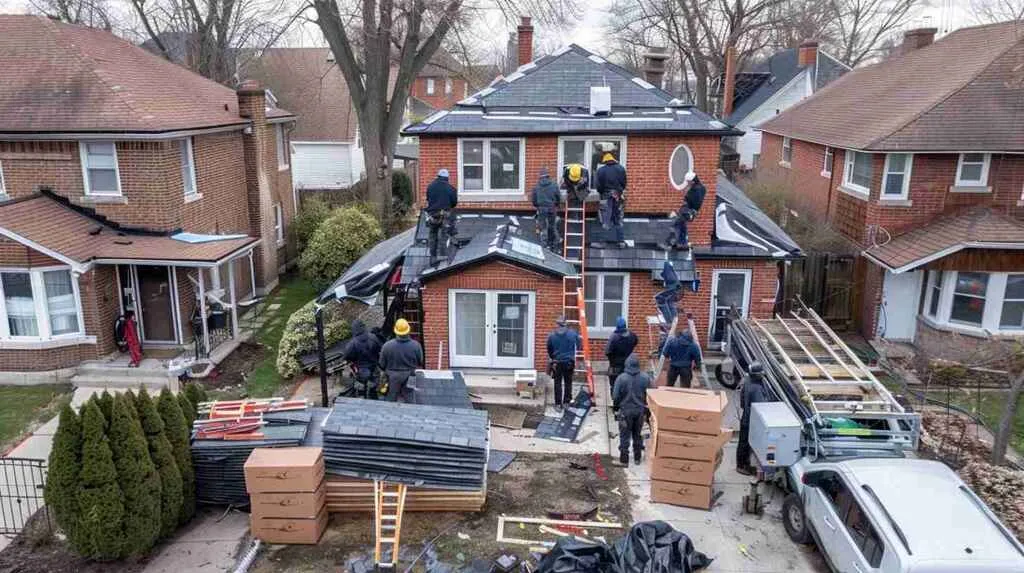
Roof Shingle Material Queens NYC – Choosing the Right One for You
Sideways rain, the kind that hammers Queens roofs every March and October, doesn’t care what color shingle you picked. Stand on any block in Astoria or Flushing and you’ll see three different roofs-one covered in cheap 3-tab that’s already curling, one in solid architectural shingles still looking sharp after twelve years, and one with designer shingles that cost a fortune but weren’t worth it for that house. Only one of those homeowners made the right call, and it wasn’t about the brochure or the color swatch-it was about matching roof shingle material to Queens weather, their budget, and how long they’re honestly staying in the house.
Why Roof Shingle Material Matters More in Queens Than the Brochure Says
Every manufacturer makes their shingles sound bulletproof. Out here, reality is different. Queens gets swampy August afternoons that cook your attic, January ice that builds up around eaves, and spring storms that rip off anything poorly fastened. The right roof shingle material has to handle all of it without falling apart in fifteen years, and the wrong one will bleed you with patch jobs and early replacement.
One August afternoon in Woodside, it was 95 degrees and you could feel the shingles soften under your boots. The homeowner really wanted the cheapest 3-tab shingles because “the inspector said the roof looked fine.” I pulled out a piece of the old shingle, crumbled the brittle edge between my fingers, and showed him how the granules were in his gutters like beach sand. That job is where I learned to always explain why a slightly more expensive architectural shingle often saves a Queens homeowner a full tear-off ten years down the line. Here’s my take: in Queens, going ultra-cheap on 3-tab asphalt is almost always a false economy compared with basic architectural fiberglass shingles. Think of shingle materials like instruments in a band-your roof is the lead vocal, but the shingles, attic ventilation, gutters, and sun exposure all have to play together or the whole thing sounds off. A cheap material on a well-ventilated house might squeak by; that same material on a poorly vented colonial in Rego Park will fail fast.
| Shingle Material | Typical Queens Lifespan (Years) | Relative Cost | Best For | Quick Queens Note |
|---|---|---|---|---|
| 3-Tab Asphalt | 12-18 | $ | Rentals, short-term holds, tight budgets | Granule loss shows up fast in Queens humidity; check gutters yearly |
| Architectural Asphalt | 20-30 | $$ | Most Queens homeowners planning 10+ years | Best balance of cost, lifespan, and wind resistance; algae-resistant versions crucial here |
| Metal Panels/Shingles | 40-60 | $$$ | Long-term owners, modern aesthetics, flat or low-slope situations | Noisy in heavy rain unless properly insulated; great for shedding snow and handling wind |
| Synthetic Slate/Shake | 30-50 | $$$-$$$$ | High-end homes, historic preservation look, weight-sensitive projects | Lighter than real slate, still pricey; check local installer experience before committing |
Asphalt Shingles in Queens: 3-Tab vs Architectural vs Premium
Four houses down from Roosevelt Avenue, I stood on a roof last summer and saw the perfect comparison: one neighbor had tired 3-tab shingles with edges lifting like bad wallpaper, the next had healthy architectural shingles still flat and tight after fifteen years, and the third had gone full designer premium on a Cape Cod that frankly didn’t need it. There was this December job in Bayside where a couple had just installed new black metal gutters but wanted a super light, almost white shingle “for the Mediterranean vibe.” It was 8 a.m., frost on the deck, and I remember my breath hanging in the air while I walked them through how that color combo would cook their attic in July but still ice up around the eaves in winter. We ended up choosing a medium-gray algae-resistant shingle that matched their gutters and cut their cooling bill the next summer-he actually texted me their ConEd bill. Out here, sun angle matters: a south-facing roof in Astoria gets hammered all day, while a north slope in Jackson Heights stays shadier and holds moisture longer, which means moss and algae love it. On streets near Flushing with lots of mature trees, you’ll see green streaks on shingles within five years if they’re not algae-resistant.
So here’s the breakdown in plain language. 3-tab asphalt shingles are flat, single-layer, and the cheapest option-they’ll do the job for twelve to eighteen years if you’re lucky, but they curl, crack, and lose granules faster in Queens conditions. Architectural shingles (also called dimensional or laminate) are thicker, multi-layer, and look better because they have depth and shadow lines; they’re fiberglass-backed, handle wind better, and most come with algae resistance built in. Premium designer shingles mimic slate or wood shake and cost significantly more-they’re gorgeous, but on most Queens colonials, ranches, and split-levels, you’re paying for curb appeal that doesn’t translate to longer lifespan in our weather. My ranking for most Queens homeowners: skip basic 3-tab unless you’re flipping or renting, go with solid architectural fiberglass shingles as your baseline, and only step up to premium if your house is high-end, you’re staying twenty-plus years, or the neighborhood demands it. Always insist on fiberglass mat instead of organic (which absorbs moisture and rots), algae resistance because of our humidity and tree cover, a wind rating of at least 110 mph for nor’easters, and check that your attic ventilation matches what the shingle manufacturer requires or the warranty is useless.
| Shingle Type | Pros | Cons |
|---|---|---|
| 3-Tab Asphalt |
• Lowest upfront cost • Lightweight, easy install on older frames • Widely available, fast turnaround |
• Shorter lifespan in Queens weather (12-18 years) • Curls and loses granules faster • Flat appearance, less wind resistance • Often lacks algae protection |
| Architectural Asphalt |
• Better wind and impact resistance • Lasts 20-30 years in Queens • Multi-layer depth looks premium • Most include algae resistance • Strong warranty coverage |
• Costs 20-40% more than 3-tab • Heavier (check old roof structure first) • Still vulnerable to poor installation or ventilation issues |
✅ Key Asphalt Shingle Features Queens Homeowners Should Insist On
- Fiberglass mat base – resists moisture and rot better than old organic mats in our humid summers
- Algae-resistant coating – mandatory if you have tree cover or north-facing slopes; keeps those ugly black streaks off
- Wind rating 110+ mph – nor’easters and summer microbursts will test cheap fastening and low-grade shingles
- Proper attic ventilation compatibility – shingle warranties void if your ridge and soffit vents don’t meet manufacturer specs
When to Consider Metal or Synthetic Shingles on a Queens Roof
Let me be blunt: if you only pick roof shingles by color, Queens weather will punish you. Metal and synthetic shingles are specialty players, not everyday choices for most homes around here. Metal makes sense when you’re staying in the house twenty-plus years, you want zero maintenance, or you have a modern aesthetic that can handle the industrial look-think standing-seam panels on a contemporary box in Long Island City or metal shingles on a craftsman in Forest Hills. Synthetic slate or shake-look shingles work when you want the classic appearance without the weight or cost of real slate, or when your roof structure can’t handle heavy material but you still need durability. I once did a late-night emergency tarp in Corona after a storm ripped off half a roof that had cheap organic shingles from the early 2000s. It was 11 p.m., raining sideways, and I kept seeing these swollen, spongy shingles slide off like wet cardboard. That disaster taught me to always bring up material composition-fiberglass vs organic mat-whenever I’m helping someone pick shingles in Queens, because humidity and our freeze-thaw cycles will expose weak material faster than people think. Modern synthetic and metal options use advanced fasteners, UV-resistant coatings, and interlocking designs that handle our weather extremes better than outdated organic asphalt ever could.
Now, before we go any further, understand that metal and synthetic shingles are like different instruments in your house “orchestra.” Metal is the loud, precise lead guitar-it sheds snow and rain fast, reflects heat in summer, lasts fifty years, but it’s noisy in heavy rain unless you add sound-dampening underlayment, and it can dent from hail or falling branches. Synthetic slate or shake is the versatile keyboard-it gives you the classic look, weighs way less than real slate, resists cracking and moss, but costs significantly more than architectural asphalt and requires installers who actually know how to work with it (not every Queens roofer does). How do they pair with your house? Metal roofs need gutters that can handle fast runoff and ice-melt systems if your eaves face north; synthetic shingles look amazing but can look out of place on a simple ranch or row house where everyone else has standard asphalt. On many typical Queens colonials, Capes, and split-levels, these materials are niche, not default-you’re paying a premium for benefits most homeowners won’t fully use unless they’re in the house long-term or the architecture demands it.
Metal Shingles
Typical Lifespan: 40-60 years in Queens
Visual Style: Modern, industrial, standing-seam or shake-profile options
Noise/Heat: Can be noisy in rain without insulation; reflects heat well in summer
When Kev Recommends: Long-term ownership (20+ years), modern homes, desire for zero maintenance, areas with heavy snow or ice buildup
Synthetic Slate/Shake
Typical Lifespan: 30-50 years in Queens
Visual Style: Classic, elegant, mimics natural slate or wood shake perfectly
Noise/Heat: Quiet, moderate heat reflection, lighter than real slate by 75%
When Kev Recommends: Historic-look homes, weight-sensitive roof structures, high-end neighborhoods where curb appeal matters, owners staying 15+ years
⚠
Risks of Mixing Fancy Shingle Materials with Old Queens Roof Structures
Don’t slap heavy or specialty shingles on an old Queens roof without a structural check first. Many homes built in the ’50s through ’80s have 2×6 rafters on wide spacing, and adding a second layer of architectural shingles-or going straight to metal or synthetic-can overload the frame, especially if there’s already one or two old layers underneath. You’ll also need proper ventilation (ridge vents, soffit vents, sometimes baffles) or the shingle warranty voids and your attic becomes a swamp. On top of that, NYC permits can get tricky when you’re changing roof weight or material type, and inspectors will flag it if your structure wasn’t built for the load. Get the attic and framing inspected, pull the right permits, and make sure your roofer knows Queens building codes before you commit to anything beyond standard asphalt.
How to Match Roof Shingle Material to Your Queens Home and Budget
Here’s what I ask customers first: how long do you honestly plan to stay in this house? If it’s under seven years, spending big on premium shingles is like buying a sports car you’ll never take out of the driveway-it won’t pay back in resale, and basic architectural asphalt will do the job fine. If you’re staying seven to fifteen years, that’s the sweet spot for upgrading to solid architectural shingles with algae resistance, good wind rating, and a color that won’t cook your attic. Fifteen-plus years or you’re aging in place? Then metal, synthetic, or top-tier architectural starts making financial and comfort sense. Your budget and current roof condition drive the decision just as much as timeline. Around Queens, I see different patterns: younger families in Astoria condos and rentals often flip every five to eight years and want the cheapest reliable fix, while detached homeowners in Bayside or Flushing tend to stay longer and invest in better materials because they’re building equity and care about energy bills.
An extra $800-$1,200 on a typical Queens roof is often the difference between bottom-shelf 3-tab and solid architectural shingles. That’s it-less than the cost of one major repair visit if the cheap stuff fails early. Spending a bit more on better architectural shingles instead of rock-bottom 3-tab often dodges a full tear-off and emergency patch nightmare when a nor’easter hits in year ten, your shingles are already brittle, and suddenly you’re looking at water damage, ruined insulation, and a scramble to find a contractor during storm season when everyone’s booked solid.
| Scenario | Roof Size & House Type | Material Choice | Approx. Price Range in Queens | Who This Usually Fits |
|---|---|---|---|---|
| Budget Rental Roof | 1,200 sq ft, simple gable, 2-family Woodside | Basic 3-tab asphalt | $4,500-$6,200 | Landlords, short-term holds, tight cash flow |
| Standard Homeowner Upgrade | 1,600 sq ft, colonial, Bayside | Mid-range architectural asphalt, algae-resistant | $7,800-$10,500 | Families staying 10+ years, solid budget |
| Premium Asphalt for Curb Appeal | 2,000 sq ft, Cape Cod, Forest Hills | Premium architectural (designer line) | $11,000-$15,500 | High-end neighborhood, long-term owners, resale focus |
| Metal Roof for Longevity | 1,800 sq ft, ranch, Astoria | Standing-seam metal or metal shingles | $15,000-$22,000 | 20+ year owners, modern aesthetic, zero-maintenance priority |
| Synthetic Slate for Historic Look | 2,200 sq ft, Victorian, Jackson Heights | Synthetic slate shingles | $18,000-$26,000 | Historic preservation, architectural pride, weight concerns |
Choosing the Right Roof Shingle Material for Your Queens Home
START: How long are you staying?
→ Under 7 years?
Tight budget: Basic 3-tab (but check existing condition first)
Comfortable budget: Entry-level architectural asphalt
→ Recommendation: Basic fiberglass architectural asphalt
→ 7-15 years?
Tight budget: Mid-grade architectural, focus on algae resistance
Comfortable budget: Upgraded architectural with better wind rating and warranty
Flexible budget: Premium architectural or consider metal if house suits it
→ Recommendation: Upgraded algae-resistant architectural asphalt
→ 15+ years or aging in place?
Tight budget: Best architectural asphalt you can afford
Comfortable/Flexible budget: Consider metal or synthetic; get structural check first
→ Recommendation: Metal, synthetic, or top-tier architectural-verify roof structure can handle it
Pro tip: Always factor in your roof’s current condition, attic ventilation, and whether you’re in a shaded or sun-blasted spot-those change the math on lifespan and cost.
Queens-Specific Maintenance, Myths, and When to Call Shingle Masters
Think of your roof like a winter coat you also have to wear in August; that’s how you should judge shingle material in Queens. Every material needs some upkeep, but the type and frequency vary. With asphalt shingles, clear your gutters in spring and fall-piles of granules mean your shingles are shedding fast and you’re closer to replacement than you think. Check for curling, cracking, or lifted edges after big storms; if you see it on more than a few shingles, it’s time to call someone. On shaded north or east slopes, especially near Kissena Park or along tree-lined streets in Forest Hills, moss and algae show up within a few years unless you used algae-resistant material. Metal roofs need way less-just inspect fasteners and seams once a year and keep debris off. Synthetic shingles rarely need anything beyond gutter cleaning, but watch for any cracking or fading if you got a budget-brand version. Here’s an insider tip: after heavy rain, look at your downspouts and the sidewalk where water drains-if you’re seeing granules piling up like coarse sand, your shingles are past their prime and you should plan for replacement within two years, not five.
You don’t need to memorize wind ratings or mat types; you just need to know your goals-how long you’re staying, what your budget is, whether you care more about cost or curb appeal-and let someone who’s been on Queens roofs for years translate that into the right roof shingle material for your house. If your shingles are over fifteen years old, you’re seeing granule loss, or you’re just not sure what condition things are in, call Shingle Masters. We’ll walk your actual roof in your neighborhood, check what you’ve got, explain what makes sense for Queens weather and your timeline, and give you a straight estimate with no upselling on materials you don’t need.
| Myth | Fact |
|---|---|
| “Dark shingles always make my house hotter.” | Color matters, but attic ventilation and insulation matter way more. A dark roof with proper ridge vents and R-38 insulation will stay cooler inside than a white roof with zero airflow. |
| “All 30-year shingles last 30 years in Queens.” | That’s the warranty, not the real lifespan. In Queens humidity, heat, and freeze-thaw cycles, even good 30-year shingles often need replacement around year 22-25. Cheap ones fail sooner. |
| “Metal roofs are always noisy during rainstorms.” | Only if installed without proper underlayment and insulation. Modern metal roofs with sound-dampening layers are quieter than you think-sometimes quieter than old asphalt on thin sheathing. |
| “I can just roof over my old shingles to save money.” | NYC code allows one layer over existing in some cases, but it traps heat, hides rot, voids many warranties, and adds weight your old framing might not handle. Tear-off is almost always the smarter move in Queens. |
| “Synthetic shingles are just expensive plastic that won’t last.” | Quality synthetic slate and shake are engineered polymers with UV inhibitors, impact resistance, and 50-year track records. Cheap knockoffs exist, but reputable brands outlast organic asphalt by decades. |
| Season | Material | What to Check |
|---|---|---|
| Spring | Asphalt | Look for lifted or missing shingles after winter ice; clear gutters of granules and debris; inspect flashing around chimneys |
| Spring | Metal / Synthetic | Check fasteners and seams for loosening; clear any winter debris from valleys |
| Late Summer | Asphalt | Inspect attic for heat damage or poor ventilation; look for curling or brittleness on south-facing slopes |
| Late Summer | Metal | Check for expansion/contraction issues at seams; verify gutters aren’t overflowing from fast runoff |
| Fall | All Materials | Clear gutters and downspouts thoroughly; trim tree branches within 6 feet of roof; inspect for moss or algae on shaded areas |
| After Major Storms | All Materials | Walk the perimeter and look for debris, lifted shingles, or metal panel damage; check attic for leaks within 24 hours |
Queens Roof Shingle Material Questions Kev Gets All the Time
Do shingles really last as long as the warranty says in Queens?
Short answer: no. A “30-year shingle” will usually give you 22-26 years in Queens because of our humidity, temperature swings, and storms. The warranty is prorated and full of fine print about ventilation, installation, and maintenance-miss any of those and the manufacturer won’t pay. Focus on real-world lifespan, not marketing.
Does shingle color actually affect my energy bills?
Yes, but not as much as people think. A very dark roof on a south-facing slope with poor attic ventilation can raise your cooling costs 10-15% in summer. A light-colored roof helps a bit, but upgrading your attic insulation and adding ridge vents will save you way more money. Color is about looks first, energy second.
Can I replace just one slope or section of my roof?
Technically yes, but it’s tricky. The new shingles won’t match the aged ones in color or texture, so your house will look patchy. More importantly, if the rest of your roof is near the end of its life, you’ll be paying for mobilization, permits, and labor twice. Most of the time, it makes more sense to do the whole roof unless one section took specific storm damage and insurance is covering it.
Are metal roofs really that noisy when it rains?
Only if they’re installed cheap-bare metal on thin sheathing with no underlayment. A properly installed metal roof with synthetic underlayment and decent attic insulation is quieter than you’d expect, sometimes even quieter than old asphalt on a poorly insulated house. The noise myth comes from old barn roofs and bad DIY jobs.
Can I install new shingles over my old ones to save money in Queens?
NYC building code technically allows one layer over existing in certain cases, but it’s almost never a good idea. Roofing over traps moisture, hides rot and structural problems, voids most manufacturer warranties, and adds weight your framing might not handle-especially on older Queens homes. You’ll also lose the chance to inspect and upgrade your decking and underlayment. Tear-off costs more upfront but saves you from bigger headaches and a premature failure.
Your roof shingle material isn’t just about picking a color from a sample board on a sunny Saturday-it’s about matching Queens weather, your house, your timeline, and your wallet to a material that’ll actually perform for the next fifteen to fifty years. Have Shingle Masters walk your roof in person, check what you’ve currently got, and recommend the right material upgrade or full replacement that makes sense for Queens conditions. Call us today for an on-roof material assessment and a straight estimate-no pressure, no upselling, just honest advice from someone who’s seen every shingle mistake this borough can throw at a house.