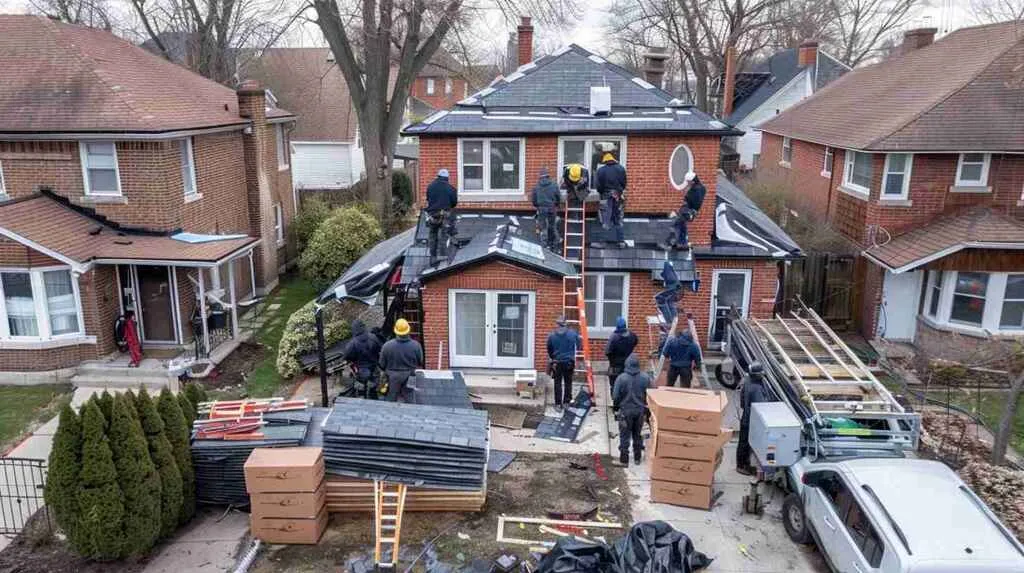
Extend Asphalt Shingle Roof Life Queens NY – 5 Things That Work
Quiet as it sounds, most 25-30 year rated asphalt shingle roofs in Queens can often stretch another 5-8 years past their typical local lifespan if you make two moves: jump on small repairs fast and skip the power washer. Those extra years aren’t magic-they’re the direct payoff from treating your roof like a checking account, where every curling shingle you fix deposits time back, and every ignored leak spends years away.
On my clipboard right now, I’ve got a note from last week’s inspection in Woodhaven that says “16-year-old architectural shingles, minor wear on south slope, gutters clean, ventilation solid-should hit 25-27 years easy.” That roof is already past the typical Queens lifespan of 22-24 years for that shingle class, but the owner’s been doing small tune-ups since year 12. Here’s the thing about Queens climate: we don’t just wear shingles down slowly-freeze-thaw cycles in winter, summer sun that bakes tar down to the deck, and wind off the water can all shave time fast if you’re not paying attention.
| Roof Type & Condition | Manufacturer Rated Life | Typical Life in Queens (Neglected) | Extended Life in Queens (Good Care) | Key Habits That Buy Extra Years |
|---|---|---|---|---|
| Standard 3-tab asphalt shingles | 20-25 years | 15-18 years | 22-25 years | Fast small repairs, yearly gutter cleaning, attic ventilation check |
| Architectural/dimensional asphalt shingles | 25-30 years | 20-24 years | 28-33 years | Gentle cleaning (no power wash), prompt storm-damage fixes, biannual inspection walk |
| Mid-life roof (10-15 years old) with minor wear | 25-30 years | 18-22 years | 25-30 years | Soft-brush moss removal, seal loose flashing, keep downspouts flowing away from foundation |
| Older roof (18+ years) still in decent shape | 25-30 years | 21-24 years | 26-30+ years | Pro inspection every 18-24 months, immediate targeted repairs, seasonal attic moisture checks |
✅ Two Fastest Ways to Buy Extra Years for Your Shingles Right Now
- ✅ Next 7 days: Walk around your house once from the sidewalk, looking up at shingles for lifted corners, bare patches, or clusters of missing granules-photograph anything weird with your phone and text it to a local roofer like Shingle Masters for a quick “urgent or can-wait?” read.
- ✅ Next 14 days: Clean gutters and check that downspouts dump water at least 4-6 feet from your foundation; standing water near the house = water wicking back under eaves and spending years off those bottom shingle courses.
- ✅ Next 30 days: If you’ve got a pull-down attic ladder, pop up there mid-morning and shine a flashlight along the underside of the roof deck looking for dark stains, wet insulation, or daylight peeking through-catching deck rot early can save you from a premature replacement.
- ✅ Next 60 days: Book a professional roof inspection (not a sales pitch, a real documentation visit) and ask for photos of every problem spot with an honest assessment of repair vs. replace-that one visit often buys you 3-5 years by catching fixable issues before they cascade.
5 Things That Actually Extend Asphalt Shingle Roof Life in Queens, NY
My honest opinion? Most Queens roofs don’t die from age-they die from neglect. The five actions below are like putting years into a savings account for your roof, one small habit at a time. In Bayside, where tree cover is heavy and wind whips off the bay, I see roofs that could’ve hit 30 years replaced at 20 because gutters stayed clogged and attic ventilation got ignored. Over in Jackson Heights and Forest Hills, where you’ve got rows of attached homes, poor drainage from one property can overwork the neighbor’s eaves. And out in coastal neighborhoods like Howard Beach or the Rockaways, salt air and wind means shingles age faster unless you’re actively buying them back time with gentle cleaning and fast repairs.
Here’s where experience shapes my advice. One cold Sunday in January, a retired teacher in Bayside called me in a panic after a windstorm, convinced she needed a full roof replacement. When I got there, what she thought was “mysterious damage” was actually just normal granule loss in the gutters and some minor edge wear on a 10-year-old architectural shingle roof-totally manageable. We did a focused tune-up instead of the $18,000 replacement another contractor had quoted, and I built her a 5-year maintenance calendar right there on the back of her lesson-plan notepad: year 1, clean gutters and check flashing; year 2, gentle moss removal and attic ventilation check; year 3, pro inspection with photos; and so on. Breaking it into small, timed actions made it doable, and now she’s on track to get every rated year plus a few bonus ones. That’s what I mean by choosing where to spend or save years-you’re always trading time, effort, or a little money now for years later.
If I were standing in your driveway right now, the first question I’d ask is: when’s the last time you really looked at your roof from the sidewalk? Most people only glance up after a storm or when a neighbor mentions something. But a 10-minute walkaround from ground level can tell you a lot. Start at the front curb and work your way around the house in a circle, looking for: lifted or curling shingle tabs (especially along the edges and ridges), dark streaks or green patches that signal algae or moss, missing shingles or bare spots where granules have washed away completely, sagging spots along the roofline that hint at deck trouble, and gutters overflowing or pulling away from the fascia. Each of those issues is either spending years off your roof’s life right now, or it’s a problem you can fix and buy those years back. Shingle Masters can do the full up-close version safely with a ladder and harness, documenting everything with photos so you know exactly where you stand.
Every curling shingle you ignore on a Queens roof is quietly trading $20-$40 today for one or two years you’re spending off that roof’s life.
1. Gentle Cleaning Instead of Power Washing
Power washing asphalt shingles is one of the fastest ways to throw away years. The high-pressure spray strips granules-the tiny ceramic bits that protect the asphalt layer from UV and weather-and once those granules are gone, shingles get brittle and crack within a year or two. If you’ve got moss, algae, or dark streaks, use a soft-bristle brush with a mild detergent mix (or hire a pro who uses a low-pressure chemical wash designed for roofs), rinse gently with a garden hose, and let gravity do the rest. In Queens, where humidity and tree shade encourage algae growth, a gentle clean every 3-4 years can keep shingles looking decent and buy you an extra 3-5 years compared to leaving thick moss to lift tabs and trap moisture.
2. Fixing Small Shingle Problems Within Weeks, Not Years
A single lifted shingle tab isn’t the end of the world, but if you wait three years to fix it, that tab will let wind get under adjacent shingles, water will track sideways under the whole course, and you’ll end up replacing a section of deck instead of just re-sealing one tab with a $6 tube of roofing cement. I still remember one March afternoon on a South Ozone Park roof where a $20 tube of sealant could have prevented the $1,200 repair we did later-because the homeowner had put it off. Small repairs are how you buy years: a missing shingle replaced within two weeks costs maybe $150-$250 if you hire it out, but ignored for a season it can spend two to three years off the roof’s total life by letting water reach the underlayment and deck.
3. Ventilation and Attic Insulation That Don’t Cook Your Shingles
Your attic is either buying your shingles years or spending them. If it’s too hot in summer (because ventilation is blocked or inadequate) or too moist in winter (because insulation isn’t doing its job), heat and humidity bake the shingles from below, making them age twice as fast. Proper ridge and soffit vents, plus enough insulation to keep your attic within 10-15 degrees of the outside temperature, can literally add 5-7 years to an asphalt shingle roof in Queens. Check your attic on a hot July afternoon-if it feels like an oven and you can’t breathe, your shingles are cooking too. Worth fixing.
4. Gutters and Downspouts That Keep Water Moving
Clogged gutters mean water backs up under the first course of shingles at the eaves, soaking the decking and rotting fascia boards. In Queens, where fall leaves from maples and oaks can fill a gutter in two weeks, you want to clean gutters at least twice a year-once in late fall after the leaves drop, and once in late spring after the seed pods and blossoms settle. If downspouts dump water right at the foundation, it’ll wick back up and spend years off your lower shingles; extend those downspouts 4-6 feet away from the house with simple splash blocks or flexible extensions.
5. A Simple, Repeatable Inspection Routine
You don’t need to be a roofer to spot trouble. Twice a year-early spring and late fall-spend 10 minutes walking around your house looking up. Bring your phone, take photos of anything that looks different from last time, and keep a simple log (even just notes in your phone). If you see something new, text the photo to a local roofer and ask “urgent or routine?” Most of the time it’s routine, but catching the urgent ones early is how you avoid spending years in a single storm. Every two to three years, book a pro to actually get up there, document everything with close-up photos, and give you a real assessment-it’s like a dental cleaning for your roof, and it buys you clarity plus years.
How to Do a Safe Queens Sidewalk Inspection in Under 10 Minutes
Start at the front curb, scan the ridge and peaks – Look for sagging, wavy lines, or missing ridge shingles; these spend years fast because they let wind lift whole sections.
Walk to the left side, check shingle edges and valleys – Valleys channel the most water, so cracks or lifted tabs there buy or spend years faster than anywhere else on the roof.
Move around back, look for moss, algae, or dark streaks – Green or black growth traps moisture and lifts shingle tabs; cleaned gently within a few months, it’s harmless, but left for years it spends 2-3 years of roof life.
Check the right side, scan gutters for overflows or sags – Gutters pulling away or overflowing mean water is backing up under eaves; fix it within weeks and you buy back the years that standing water would’ve stolen.
Return to the front, look down at the ground near downspouts – Piles of granules (they look like coarse sand) mean shingles are shedding protection; a little is normal aging, but thick piles mean you’re spending years and should get a pro opinion soon.
| Myth | Fact |
|---|---|
| “Power washing is the best way to clean moss and algae off shingles.” | Power washing strips protective granules and can force water under shingle tabs, often costing you 3-5 years of roof life in a single afternoon. Use a soft brush and gentle rinse or hire a pro with a low-pressure chemical wash instead. |
| “A little granule loss is a sign the roof is done.” | All asphalt shingles shed some granules over time, especially in the first year and again as they age past 15 years. Thick piles in gutters or bare spots on shingles are worth a pro look, but a light dusting is normal and doesn’t mean you need to replace yet. |
| “If it’s not leaking inside, the roof is fine.” | By the time water shows up on your ceiling, you’ve often already got deck rot, soaked insulation, and mold starting-problems that could’ve been caught and fixed for a few hundred dollars if you’d looked earlier. Waiting until it leaks can spend 5+ years off your roof’s total life. |
| “Roof maintenance is expensive and complicated.” | Most roof maintenance in Queens costs less than a tank of gas and an hour of your time twice a year: clean gutters, check for lifted shingles from the ground, and book a pro inspection every 2-3 years. That simple routine can buy 5-8 extra years for under $500 total over five years. |
| “Once shingles start curling, you need a full replacement right away.” | Curling along edges or in a small cluster often means you can do a targeted repair-re-seal or replace just those shingles-and buy another 3-5 years before a full replacement. Widespread curling across multiple slopes is a different story, but localized curling is fixable. |
Queens Weather, Bad Cleaning Choices, and How They Spend Your Roof’s Years
I still remember one March afternoon on a South Ozone Park roof where a $20 tube of sealant could have prevented what turned into a $7,800 nightmare. The homeowner had noticed a few curling shingles three years earlier during a gutter cleaning but figured “it’s not leaking, so it’s fine.” Then one August afternoon around 4 p.m., I was finishing up an inspection on a two-family in Jackson Heights when a pop-up thunderstorm rolled in. The owner had ignored that same curling-shingle issue for years, and I literally watched water track under the lifted tabs in real time, soaking the underlayment and deck. By fall we were tearing off shingles, replacing rotted decking, and pulling out wet insulation that had turned into a moldy sponge. That $450 preventive repair-sealing the curls and replacing a few tabs-would’ve bought him 5-7 more years, but ignoring it spent those years in a single storm. This is what I mean when I say you’re always trading: every small issue you skip is you spending years off your roof’s life, and every quick fix is you buying them back.
And then there’s the Maspeth story that still bugs me. One steep little Cape I worked on at dusk in late October-owner had hired “a guy with a ladder” the year before to clean the gutters with a power washer. The overpowered spray had stripped granules off a whole section of shingles along the eaves, and when I got there a year later those shingles were brittle and cracking like potato chips. We patched what we could, but I knew we’d shaved about 5 years off that roof’s life because of one bad cleaning choice. Power washing asphalt shingles is like taking sandpaper to your car’s paint-you’re removing the protective layer that keeps everything else intact. If you’ve got moss or algae in Queens, use a soft brush with a diluted bleach-and-water solution (1 part bleach to 3 parts water, applied gently and rinsed with a garden hose), or hire a pro who does low-pressure chemical roof washes designed not to strip granules. Those gentler methods buy your shingles years; power washing spends them in an afternoon.
⚠️ Why Power Washing Your Asphalt Shingles in Queens Is a Fast Way to Throw Away Years of Roof Life
- Granule loss: High-pressure water blasts off the ceramic granules that shield asphalt from UV rays and weather-once they’re gone, shingles age 2-3 times faster and become brittle within 12-18 months.
- Voided warranties: Most asphalt shingle manufacturers explicitly prohibit power washing in their warranty terms, so if you do it and the roof fails early, you’re on your own for replacement costs.
- Water forced under shingles: The spray can drive water sideways under tabs and through micro-cracks, soaking underlayment and decking that would normally stay dry-leading to rot you won’t see until it’s expensive.
- Queens freeze-thaw and wind make it worse: Any water trapped under shingles from power washing will freeze in winter, lifting tabs further, and wind will catch those lifted edges and tear whole sections loose-spending 3-5 years of roof life in one bad season.
| Cleaning Method | Pros (Years You Might Buy) | Cons (Years You Might Spend) |
|---|---|---|
| Power Washing (High Pressure) | None for asphalt shingles-this method is all downside. | Strips granules, voids warranty, forces water under tabs, often costs 3-5 years of roof life and can lead to premature deck rot. Avoid completely on asphalt shingles. |
| DIY Gentle Cleaning (Soft Brush + Garden Hose) | Removes surface moss and algae without damaging granules; costs under $30 in supplies and can buy 2-3 extra years by preventing moisture buildup. Safe if you’re comfortable on a ladder and work slowly. | Time-consuming (2-4 hours for an average roof), requires safe ladder work, and won’t address deeply rooted moss or stains without multiple treatments. Risk of falls if you’re not experienced. |
| Professional Low-Pressure Roof Cleaning | Uses chemical treatments (zinc or bleach-based) applied at low pressure, kills algae and moss at the root, gentle on granules, and can buy 3-5 years by keeping shingles clean and preventing moisture damage. Typically $300-$600 for most Queens homes. | Costs more than DIY; need to ensure the company actually uses low pressure and doesn’t just say they do. Results can take a few weeks as rain washes away dead growth. |
Simple Maintenance Timeline for Queens Roofs (Without Turning You Into a Roofer)
Here’s the unromantic truth about extending the life of an asphalt shingle roof: it’s mostly about boring, consistent habits. In Queens, the rhythm of the year-post-winter damage check, pre-summer gutter clear, fall leaf cleanup, and after-storm quick look-gives you natural checkpoints to catch problems while they’re still small and cheap. A simple calendar can quietly add 5-8 years of life without any big projects, and honestly it mirrors the 5-year maintenance plan I sketched out for that Bayside teacher on her lesson-plan notepad. You’re not trying to become a roofer; you’re just trying to make sure water keeps moving off the roof and nothing sits long enough to cause rot. Here’s an insider tip: in Queens, booking pro inspections in early spring (late March or April) or late fall (October or early November) means you catch damage before the busy storm seasons and you’ll usually get more appointment flexibility and sometimes even slightly better rates than peak summer.
| Time of Year | Tasks | Why It Buys Years for Your Roof |
|---|---|---|
| Early Spring (March-April) |
• Clear gutters and downspouts of winter debris • Walk around house checking for winter storm damage (lifted shingles, ice-dam wear) • Pop into attic to look for moisture stains or daylight through deck • Schedule a pro inspection if roof is 10+ years old or if you spot anything unusual |
Catches freeze-thaw damage before spring rains compound it; clearing gutters now prevents summer overflow that would soak eaves and spend 1-2 years off lower shingle courses. |
| Mid-Summer (July-August) |
• Quick sidewalk inspection for curling or loose shingles (heat makes problems more visible) • Check attic ventilation-if it’s crazy hot up there, you may need more vents • Trim back tree branches within 6 feet of the roof to reduce moss and minimize storm-damage risk |
Heat stress shows shingle weaknesses early; fixing ventilation now buys 3-5 years by keeping shingles cooler. Trimming branches prevents future punctures and reduces moisture that feeds algae growth. |
| Fall (October-November) |
• Deep gutter cleaning after leaves fall (do it twice if you have heavy tree cover) • Check flashing around chimneys, vents, and skylights for gaps or rust • Seal any small shingle issues (lifted tabs, minor cracks) before winter freeze-thaw • Book a pro tune-up every 2-3 years to document condition and handle repairs you can’t safely reach |
Clean gutters prevent ice dams that lift shingles and rot fascia; sealing small problems before winter stops them from becoming deck-rot nightmares and buys 2-4 years per fix. |
| After Major Storms (Any Season) |
• Within 24-48 hours, walk around and photograph any visible damage (missing shingles, dented vents, debris) • Check attic for new leaks or wet insulation • Call a local roofer for a quick assessment if you see widespread damage or active leaks |
Storm damage compounds fast-wind-lifted shingles let water in during the next rain, and waiting even a few weeks can turn a $200 repair into a $2,000 deck replacement. Catching it immediately buys back the years a leak would spend. |
Do You Need a Repair, a Tune-Up, or a Full Roof Replacement?
Start here: Are you seeing active leaks inside (water stains on ceiling, drips during rain)?
→ YES, multiple rooms or widespread stains: Likely need full replacement or major section tear-off. Call Shingle Masters for an urgent inspection and quote.
→ YES, but only in one spot or after heavy wind/rain: Often a targeted repair (flashing, small cluster of shingles). Schedule a repair visit within 48 hours to prevent deck damage.
→ NO, no leaks yet: Move to next question ↓
How old is your roof?
→ Under 15 years: Probably just needs routine maintenance or small repairs. Book a tune-up inspection with photos to document condition.
→ 15-20 years: Mid-life-inspect closely for curling, granule loss, and soft spots. If mostly good, a tune-up buys you 5+ more years; if widespread wear, start planning replacement in next 2-4 years.
→ Over 20 years: Move to next question ↓
What do you see from the ground (curling, missing shingles, bare spots)?
→ Just a few isolated problem shingles or small bare patches: Target those areas with a repair. Even a 22-year-old roof can often get 3-5 more years with smart spot fixes.
→ Widespread curling across multiple slopes, lots of granule loss, sagging sections: Time for a replacement quote. Shingle Masters will give you an honest assessment and show you exactly what’s salvageable vs. what’s not.
→ Not sure what you’re looking at: Call for a free inspection-Shingle Masters documents everything with photos and explains whether you’re looking at years left or time to replace.
When to Call a Queens Roofer vs. When You Can Just Keep an Eye on Things
Picture your roof like a big, shallow bowl sitting on top of your house-every spot where water can sit is a year you’re shaving off its life. The difference between cosmetic wear (a little granule loss, minor algae streaks) and urgent issues (active leaks, soft decking you can feel when you walk on it, clusters of missing shingles after a storm) is the difference between “check it again in six months” and “call today before the next rain.” Active leaks spend years the fastest because water doesn’t just damage shingles-it soaks underlayment, rots decking, ruins insulation, and can even grow mold in your attic. Soft spots when you walk on the roof (or if a roofer mentions them during an inspection) mean the plywood deck is already compromised, and that’s not something you can ignore. Clusters of missing shingles-three or more in the same area-signal that wind is getting under tabs and the problem will spread unless you address it within a week or two. On the flip side, a few curling edges on a 12-year-old roof, some faded color, or light moss on the north slope are all things you can keep an eye on and handle during your next scheduled tune-up. Shingle Masters is the local team that can climb up safely, document everything with close-up photos, and give you a repair-first plan if the roof still has years left to save-not every roof issue means full replacement, and we’ll tell you the truth about what you’re facing.
Call Shingle Masters ASAP (Urgent)
- ✖ Active leak dripping inside during rain
- ✖ Cluster of 3+ missing shingles in one area
- ✖ Visible sagging or soft spots on the roof deck
- ✖ Storm damage with exposed underlayment or torn flashing
- ✖ Large sections of shingles lifted or curling badly after wind
- ✖ Water stains spreading on ceiling or walls
Schedule a Visit Soon (Can Wait a Bit)
- ✓ One or two isolated curling shingles you noticed from the ground
- ✓ Light moss or algae growth on north-facing slope
- ✓ Granules in gutters but no bare shingle spots visible yet
- ✓ Roof is 15+ years old and you haven’t had a pro inspection in 2-3 years
- ✓ Minor flashing gap or small rust spot around chimney
- ✓ General wear and you want a documented baseline for future reference
Common Queens Homeowner Questions About Extending Asphalt Shingle Roof Life
Q: My roof is 18 years old and looks okay from the ground-do I need to replace it soon or can I get more years out of it?
A: Age alone doesn’t tell the whole story. If your shingles aren’t curling badly, you’re not missing a bunch of them, and your attic shows no leaks or moisture stains, you can often buy another 5-7 years with a good tune-up (seal small issues, improve ventilation, keep gutters clean). Get a pro inspection with photos so you know exactly what you’re working with-Shingle Masters will give you a clear repair-or-replace recommendation based on what’s actually up there.
Q: Will walking on my asphalt shingle roof to check it myself damage the shingles and shorten the roof’s life?
A: Walking on asphalt shingles when they’re hot (summer afternoons) or brittle (cold winter mornings) can crack them, and stepping on already-curling or loose shingles can break tabs off. If your roof is under 15 years old and it’s a cool, dry day, careful walking probably won’t do much harm, but honestly the safest move is to inspect from the ground with binoculars and let a pro with proper boots and training do the up-close work.
Q: How bad is moss or algae for my shingles, and does cleaning it really buy extra years?
A: Moss roots can lift shingle edges and trap moisture underneath, which accelerates rot and shortens roof life by 2-3 years if left untreated. Algae (the black streaks) is mostly cosmetic but holds moisture on the shingle surface. Gentle cleaning-soft brush and low-pressure rinse or a pro chemical wash-removes the growth without damaging granules and can absolutely buy you 3-5 extra years by keeping shingles dry and intact.
Q: How often should I have a professional roofer inspect my Queens roof to maximize its life?
A: Every 2-3 years for a roof under 15 years old, and every 12-18 months once it’s past 15 years or if you’ve had storm damage. A pro inspection catches small problems-loose flashing, a few cracked shingles, minor ventilation issues-before they cascade into expensive deck repairs. In Queens, scheduling inspections in early spring or late fall gives you the best chance to catch winter or storm damage early.
Q: What does a roof maintenance visit from Shingle Masters typically include?
A: We do a full walk of the roof (safely, with harness and proper boots), photograph every problem area up close, check flashing and penetrations (vents, chimneys, skylights), inspect attic ventilation and insulation from below, clear debris from valleys and gutters if needed, and give you a written report with photos showing what’s urgent, what can wait, and what small repairs will buy you the most extra years. If repairs are needed, we quote them separately and never push replacement unless the roof is genuinely at end-of-life-our goal is to help you get every year your shingles have left to give.
Why Queens Homeowners Call Shingle Masters to Stretch Roof Life
- ✓Licensed & insured in New York State – Full liability and workers’ comp coverage so you’re protected on every job, from a small flashing repair to a full tune-up.
- ✓19+ years of hands-on Queens roofing experience – We know how coastal wind, freeze-thaw, and heavy tree cover affect roofs in every neighborhood from Bayside to the Rockaways.
- ✓Photo-documented inspections – You get close-up images of every problem spot with a written explanation, so you understand exactly what’s spending or saving years on your roof.
- ✓Repair-first recommendations – We don’t push replacement if your roof still has years left; we’ll show you the targeted repairs that buy the most time for the least cost.
- ✓Neighborhood coverage across Queens – Serving Jackson Heights, Bayside, South Ozone Park, Maspeth, Forest Hills, Howard Beach, the Rockaways, Woodhaven, and surrounding areas with the same thorough, honest approach.
If you’re in Queens and want to buy as many years as possible for your asphalt shingle roof, Shingle Masters can do a full photo-documented inspection and maintenance tune-up instead of jumping straight to a replacement quote. We’ll tell you honestly how many years your current roof still has to give, which small repairs will buy you the most time, and exactly when replacement makes sense-call us or schedule a visit to find out where your roof stands.