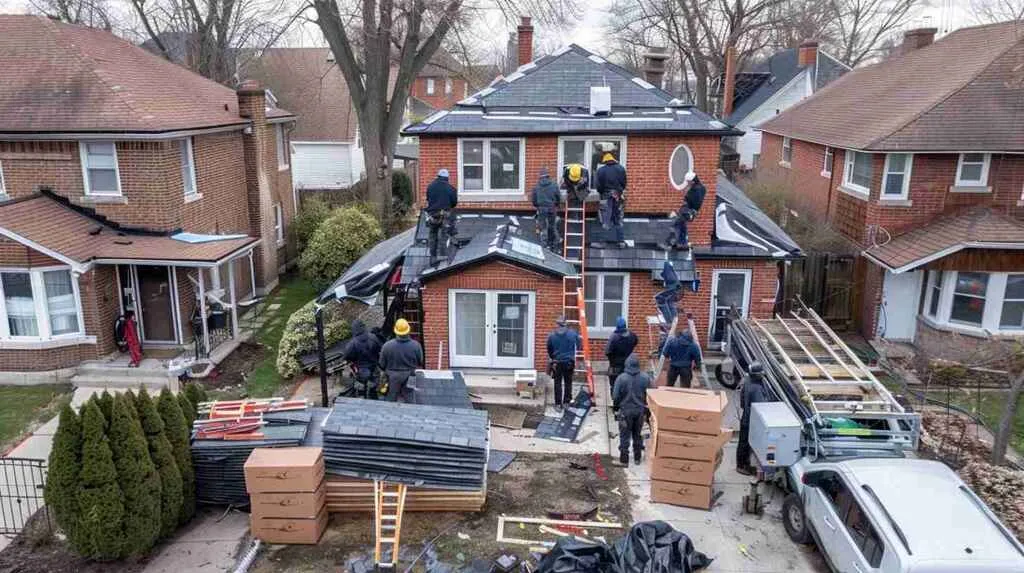
Can You Shingle Over a Rubber Roof Queens NY? Roofers Explain | Free Quotes
Blueprint is simple: in almost every Queens, NY case, shingling directly over a rubber roof is a structural and code headache that costs more to fix later than doing it right the first time. Think of your roof like a layered recording in a studio-if the base track is distorted, no amount of fancy effects on top will make it sound right. I’m going to walk you through what really happens when shingles meet rubber, smarter options that won’t cost you twice, and realistic prices using the same musical analogy that’s helped hundreds of Queens homeowners make the right call.
Can You Shingle Over a Rubber Roof in Queens, NY?
Let me be blunt: if someone tells you it’s “no problem” to nail shingles right over your rubber, they’re either guessing or gambling with your wallet. I’ve been roofing in Queens for nineteen years, and in that time I’ve seen maybe two situations where layering shingles on rubber made even marginal sense-and both were temporary patches on buildings scheduled for demo. The deck is your rhythm section, the underlayment is the bass line, and the shingles are the melody. When you stab hundreds of nails through existing rubber membrane trying to hold shingles down, you’re punching holes in the drum track before you’ve even recorded the vocals. It falls apart before the first real rainstorm hits.
One February morning around 7:30 a.m., sun barely up over Astoria, I was on a two-family with an old EPDM rubber roof someone had tried to shingle over ten years earlier. The shingles were sliding like loose sheet music in a windstorm, and when we peeled them back, the rubber was split everywhere from nail punctures and freeze-thaw. The owner kept asking why it leaked only when the wind hit a certain way, and I had to show him how every nail hole through that rubber was basically a tiny whistle where water followed the sound right into his ceiling. That’s the reality-rubber membranes are designed to be fastened at the edges or mechanically attached in specific patterns, not turned into a pincushion for asphalt shingle nails.
Why Shingling Over Rubber Is Usually a Bad Idea in Queens
- Nail Punctures Turn Rubber Into Swiss Cheese: Every shingle requires four to six nails. On a typical Queens dormer or low-slope addition, that’s hundreds of penetration points through your waterproof membrane, each one a potential leak path when freeze-thaw cycles open them up.
- Extra Weight on Older Structures: Row houses, semi-attached homes, and walk-ups in neighborhoods like Woodhaven or South Ozone Park were built with specific load calculations. Adding a second roof system without removing the first doubles dead load on rafters that may already be marginal.
- Building Code and Warranty Disasters: NYC Department of Buildings doesn’t look kindly on mixing incompatible roofing systems. You’ll void manufacturer warranties on both the rubber and the shingles, and you may face compliance issues if you ever try to sell or refinance.
- Much Higher Cost Later: When the failed shingle-over-rubber system has to be removed, you’re now paying for double tear-off, deck repair from trapped moisture damage, and the rebuild you should have done originally-often 40-60% more than if you’d torn off and done it right the first time.
| Myth | Fact (Queens, NY Reality) |
|---|---|
| “The rubber layer will still protect against leaks even with nail holes.” | Every nail penetration compromises the membrane’s integrity. Queens freeze-thaw cycles and wind-driven rain force water through those holes within months, not years. |
| “It’s faster and cheaper than a full tear-off.” | Upfront maybe-but when leaks start, you’ll pay for emergency repairs plus the tear-off you postponed, often totaling 50% more than doing it right initially. |
| “Contractors do it all the time, so it must be okay.” | Some unlicensed or inexperienced roofers take shortcuts. Licensed Queens contractors know this approach fails inspections and creates liability they won’t touch. |
| “The shingles will just add an extra layer of protection.” | Incompatible systems trap moisture between layers, creating a “sponge sandwich” that rots decking, grows mold, and makes future repairs exponentially more expensive. |
What Really Happens When You Nail Shingles Over Rubber
On a typical Queens block where every roofline is fighting for attention, the first thing I look at is slope and structure-because row houses, semi-attached buildings, and walk-ups weren’t built to carry double roof systems. When you add the weight of asphalt shingles on top of existing rubber, you’re already pushing limits on older framing. But weight is just the beginning. Queens weather-freeze-thaw cycles from November through March, summer heat that can soften asphalt, and nor’easters that rip at anything loose-turns every flaw in a shingle-over-rubber setup into a disaster. Low slopes common on dormers and rear additions mean water sits longer, finding every nail hole you’ve punched through that membrane. Wind gets under shingle edges and lifts them like a bad toupee, tearing both layers at once.
A summer afternoon in South Ozone Park, maybe 95 degrees, I got called to look at a “cheap roof upgrade” a handyman had done-he’d laid new shingles right on top of an old rubber roof over a small dormer. The shingles looked okay from the street, but when I stepped on them, it felt like a waterbed. We carefully cut a section and found trapped moisture cooking between the rubber and shingles, mold on the wood deck, and the start of rot around a bathroom vent. The homeowner said, “But he told me it was fine because the rubber’s waterproof,” and I had to explain that waterproof is useless if you turn it into a sponge sandwich. Moisture vapor drives up from inside the house, condenses on the cool underside of the rubber, and has nowhere to escape because shingles are now blocking ventilation paths. That trapped water sits there day after day, month after month, softening the plywood until you’ve got structural problems that cost five times what a proper tear-off would have run.
❌ Step-by-Step Failure Chain When Shingles Go Over Rubber
-
1.
Nail Penetration: Hundreds of fasteners puncture the rubber membrane, creating instant breach points in what was a continuous waterproof barrier. -
2.
Micro-Leaks Begin: Wind-driven rain and freeze-thaw cycles force water through nail holes; leaks are small at first, often unnoticed inside finished ceilings. -
3.
Trapped Moisture Accumulates: The rubber layer below and shingles above create a sealed pocket where condensation and penetrating water collect with no escape route. -
4.
Deck Softening and Rot: Plywood or board sheathing stays wet for extended periods, losing structural integrity, growing mold, and attracting insects. -
5.
Visible Interior Damage: Stains appear on ceilings, paint bubbles, insulation gets soaked, and eventually you’re calling for emergency repairs that require tearing off both failed layers plus replacing rotted decking.
| Option | Pros | Cons |
|---|---|---|
| Shingles Directly Over Rubber |
• Lower upfront labor cost • Faster installation (1-2 days) • Immediate cosmetic change |
• Voids all warranties • Nail holes compromise waterproofing • Traps moisture, causes rot • Fails NYC code in most cases • Much higher total cost when it fails |
| Proper Tear-Off & Rebuild |
• Code-compliant and inspectable • Full manufacturer warranties • Opportunity to inspect/repair deck • Properly vented and sloped • Lasts 20-30+ years without issues |
• Higher upfront cost • Takes 3-5 days typically • More disruption during work • Requires disposal of old materials |
Smarter Ways to Go from Rubber to Shingles in Queens
Here’s what I ask customers who want shingles over rubber: are you trying to solve a leak, change the look, or just avoid dealing with the real problem? Your answer tells me which path makes sense. If you’ve got active leaks and the rubber’s shot, a full tear-off and rebuild-either staying with modern membrane or converting to a hybrid pitched system-is the only real fix. If you’re just tired of the industrial look of black rubber and your neighbors all have shingles, we can talk about adding proper slope framing and transitioning to asphalt or architectural shingles the right way, with new underlayment and ventilation. But if you’re hoping to skip the hard work and just nail shingles on top, I’m going to be straight with you: that’s avoiding the real issue, and it’ll cost you more when it fails in two winters. Worth asking any roofer exactly how they’ll transition between flat membrane and pitched shingles at walls and parapets-if they can’t sketch it out and explain flashing details clearly, walk away.
Late one windy night in Maspeth, around 10 p.m., I did an emergency tarp job for a restaurant where the bar ceiling started leaking over the liquor shelves. They’d had a rubber roof originally, then someone nailed architectural shingles over half the surface to “match the neighbor’s look.” The storm lifted the shingle layer like a bad toupee, and the torn shingles took chunks of rubber with them. Standing up there with my headlamp, I told the owner this was like putting a tuxedo over a raincoat and then stabbing holes through both just to keep the tux in place. Proper transitions from flat to pitched surfaces aren’t built by nailing through; they’re built with stepped framing, crickets, and carefully detailed flashing that keeps each system doing its job without fighting the other. Think of it like recording a song-you don’t just stack tracks randomly and hope they blend. You fix the rhythm section first, lay down a clean bass line, then add the melody on top so each layer supports the next.
Should You Keep Rubber, Switch to Shingles, or Build a Hybrid System?
Proper Queens-Style Rubber-to-Shingle Conversion Process
What It Might Cost to Fix or Convert Your Rubber Roof in Queens
From about $1,800 for a small patch-and-correct job up to $18,000+ for a full conversion on a larger Queens row house, the bill almost always climbs when we first have to undo a bad shingle-over-rubber job. You end up paying for removal of both layers, repair of damage that wouldn’t have happened if the work had been done right, and disposal fees that double because you’re hauling twice the material to the dump. Compare that to doing it right the first time: tear off the old rubber cleanly, inspect and fix what’s underneath while it’s open, then install a proper system with warranties and code compliance. One invoice. One set of permits. One finished roof that’ll last twenty-five years instead of leaking in two.
💰 Typical Queens Rubber Roof Repair & Conversion Scenarios
| Scenario | Description | Estimated Price Range (Queens, NY) |
|---|---|---|
| Small Patch & Repair | Remove localized shingle-over-rubber patch (50-100 sq ft), repair membrane and deck, restore proper drainage | $1,800-$3,500 |
| Small Dormer Tear-Off | Full tear-off of failed shingle-over-rubber on small dormer (200-400 sq ft), deck repair, new underlayment and shingles | $3,200-$5,800 |
| Mid-Size Two-Family Conversion | Low-slope conversion on rear addition or flat section (600-900 sq ft), tear-off, deck work, new membrane or hybrid shingle/membrane system | $6,500-$11,000 |
| Large Row House Hybrid Rebuild | Full roof rebuild (1,200-1,800 sq ft) with flat rubber on rear, pitched architectural shingles on front, transitions, party-wall flashing, permits | $12,000-$18,500 |
| Emergency Leak + Follow-Up Rebuild | Immediate tarp/patch service after storm damage on commercial space (restaurant, storefront), then scheduled full conversion to prevent recurrence | $2,500-$4,000 (emergency) + $8,000-$15,000 (rebuild) |
Prices vary based on access, deck condition, material choice, and whether permits or structural changes are required. Free on-site estimates give you exact numbers for your specific Queens property.
Why Queens Homeowners Call Shingle Masters
Before You Call About Shingling Over Rubber
Think of your roof like a layered recording in a studio-if the base track is distorted, no amount of fancy effects on top will make it sound right. Before you pick up the phone, gather some basic info that’ll make the inspection faster and more accurate: how old is the roof, where do you see leaks inside, can you snap a few clear daylight photos from the street or backyard. Dig out any old roofing paperwork if you’ve got it, and jot down whether neighbors share roof lines or party walls-common on Queens row houses and something we need to know upfront. Most important, write down your real goal: are you trying to stop leaks, change the look to match the block, or just plan ahead before things get worse? When you’ve got that info ready, the “studio session”-our inspection-goes smoother and you get a quote that actually addresses what you need instead of what someone’s guessing you might want.
📋 Quick Prep List for Queens Homeowners with Rubber Roofs
-
☑
Know the approximate age of your current rubber roof (or when the last work was done) -
☑
Note any visible leak spots inside-stains on ceilings, bubbling paint, damp insulation -
☑
Take clear daylight photos from the street, backyard, or any safe vantage point -
☑
Check if you have past roofing paperwork, warranties, or contractor receipts -
☑
Note if neighbors share roof lines, party walls, or if your building is semi-attached/row house -
☑
Write down your main goal: stop leaks, change appearance, plan ahead, or something else
❓ Common Questions About Shingling Over Rubber Roofs in Queens, NY
Q: Is it ever legal or code-compliant to shingle over rubber in Queens?
In extremely rare cases-temporary repairs on buildings scheduled for demolition or very specific low-slope conversions with engineered plans and DOB approval-it might pass. For 99% of residential work, no licensed contractor will do it because it voids warranties, fails inspection, and creates liability when leaks start.
Q: Can we reuse any part of the existing rubber system?
Not if you’re switching to shingles. The rubber has to come off completely so we can inspect the deck, repair damage, and install proper underlayment. You can’t mix systems and expect either one to work right-it’s like trying to play a jazz track and a rock track on top of each other without mixing them properly.
Q: How long will I be without use of my yard or deck during a conversion?
Most Queens conversions take three to five working days, weather permitting. We protect landscaping, set up safe zones for debris, and work section by section so you’re not locked out of outdoor space the whole time. Emergency tarps go up at the end of each day if we can’t finish a watertight section.
Q: Do you handle permits and DOB requirements for slope changes?
Yes. Any structural changes-adding framing to create pitch, converting flat to sloped-require permits from NYC Department of Buildings. We handle the paperwork, schedule inspections, and make sure everything’s signed off properly so you don’t have issues later when you sell or refinance.
Q: What if my neighbor’s roof ties into mine on a row house?
Party-wall and shared roof-line work is something we handle regularly in Queens. We coordinate access, protect the neighbor’s side, install proper flashing at the division, and make sure any shared drainage or scupper systems still work correctly. Often the neighbor sees our work and calls us next-it’s how we’ve built our reputation block by block.
By the time we’re pulling off failed shingle-over-rubber jobs, the pattern is almost always the same: hidden moisture, soft decking, and a repair bill that starts with a number nobody likes. Trying to shingle over rubber in Queens usually means you’ll pay twice-once for the shortcut that doesn’t work, and again to fix what the shortcut broke. If you’ve got a rubber roof and you’re thinking about making a change, call Shingle Masters and let me come take a look. I’ll explain your options in plain language, show you exactly what needs to happen for a job that’ll last, and give you a free, no-pressure quote. No fancy sales pitch-just straight talk from someone who’s been up on Queens roofs long enough to know what works and what doesn’t.