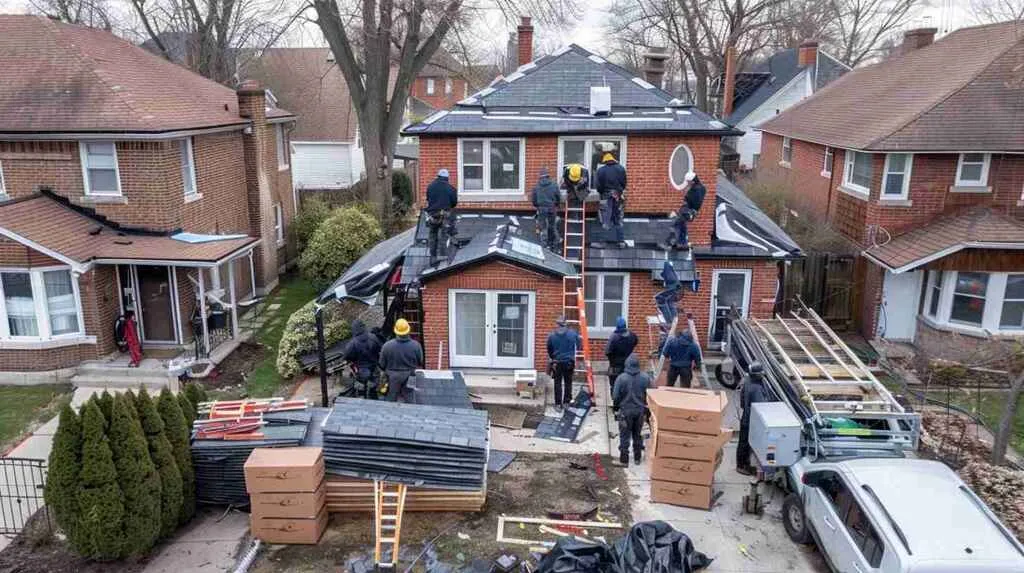
How Cold Is Too Cold to Shingle a Roof Queens NY? Real Limits | Free Quotes
Frostline? That’s the real issue-not the air temperature your phone shows. Around here in Queens, once shingle surface temps drop below 40°F, those adhesive strips stop bonding reliably, and that’s when you’re gambling with decades of roof life instead of building one that lasts.
How Cold Is Too Cold to Shingle a Roof in Queens, NY?
On my dash thermometer last February, pulling into a job in Jamaica, it read 29°F-and that number alone told me we were not shingling that day. One January morning in 2018, around 7:30 a.m. in Woodside, the thermometer on my truck read 17°F, but the homeowner was begging us to “just get it done before the next snow.” I laid three test shingles on the south side, checked them with my IR gun, and we watched together as the adhesive stayed stiff as a cracker even in direct sun. Two weeks later, after a minor thaw and a windstorm, I drove by out of curiosity and saw another contractor’s brand-new shingles lifting like playing cards-exactly what I’d warned her about. Here’s my honest opinion: if your roofer can’t tell you the manufacturer’s minimum install temp for your shingles, they shouldn’t be on your roof in January.
Now, here’s the part most people don’t think about: surface temp versus air temp. Your weather app might say 38°F, but if your roof’s on the north side of a tall building in Long Island City, or sitting in the shadow of row houses in Astoria all morning, that surface could still be hovering at 28°F even at noon. Winter sun in Queens is lower and weaker, wind off the East River steals warmth from exposed shingles, and damp cold from overnight frost lingers on dark roofs way longer than you’d guess. I’ve watched roofs in Jamaica warm up ten degrees faster than the same shingles on a windy, shaded drive in Bayside-that’s local microclimate doing the talking.
Think about your car engine in January: oil gets thick, rubber seals get stiff, and yeah, it starts, but you know deep down that cold start is wearing on the internals. Shingles work the same way. The asphalt gets brittle, the sealant strips refuse to activate, and nail holes don’t self-seal around the shank when temperatures drop below spec. Sure, you can hammer them down-physically, they’ll stay in place that day-but long-term? You’re gambling with 20 to 30 years of protection over your family and belongings because someone wanted to save a few weeks on the calendar.
Shingling when surface temps are below manufacturer minimum voids many warranties, risks shingles never fully sealing, and makes them prone to wind uplift and blow-offs within the first few years. Don’t let a rushed install rob you of coverage when you actually need it-those adhesive strips weren’t designed to activate in the cold, and once the damage is done, manufacturers won’t stand behind the failure.
What Really Happens to Shingles in Queens Cold (and Wind)
I’ll never forget a November job in Far Rockaway, cloudy day, about 34°F with a nasty damp breeze off the water. The customer was a retired NYPD officer who insisted cold was “all in your head.” I explained that his last roofer had nailed too high in cold weather, so when the sealant finally activated during a March warm spell, half the course never bonded correctly; we could literally peel sections up with two fingers. That roof taught him, and me, that “technically above freezing” doesn’t mean safe for shingles. That ocean breeze and the damp cold rolling off the water kept everything just cold enough to stay stiff, and months later, the shingles still hadn’t sealed properly-even after several warm days in between.
If you’ve ever tried to peel a sticker off your car window in the cold, you already understand why adhesive-backed shingles don’t like January in Queens. The chemistry changes: gaskets contract, seals stiffen, and just because your engine turns over doesn’t mean it’s going to make 200,000 miles without extra wear. Sealant strips on shingles behave the same way-they might lie flat today, but when that first big gust comes roaring up from Jamaica Bay or funneling between buildings in Woodhaven, nail pull-through and edge lift become real problems because the bond never truly formed.
Should You Shingle Now or Wait? A Simple Winter Decision Guide
Let me ask you the same question I ask every winter client: are you trying to solve a leak for this month, or buy yourself 20-30 years of not thinking about your roof? There was a Saturday in early December 2021 in Flushing, temp hovering around 30°F, when a property manager wanted us to rush a multifamily roof before year-end for tax reasons. They pushed hard, so I compromised: we did the tear-off and underlayment, but I stopped everyone from laying shingles after I pulled one from the bundle and it actually snapped at the corner when I flexed it. Three weeks later on a 42°F sunny day, we went back, same brand, same batch, and the shingles bent smoothly and sealed up perfectly-the property manager still jokes that I cost him three weeks and saved him 15 years. That’s the insider tip: split the job into winter prep-tear-off, ice and water barrier, solid underlayment-and come back for shingles when temps cooperate.
If my IR gun isn’t showing at least 40°F on your shingles for a few solid hours, we’re not roofing that day. No exceptions.
- Active ceiling leak or water stain spreading
- Wet insulation visible in attic
- Shingles missing after last windstorm
- Ice dam forcing water under shingles
- Soft or sagging deck spots when you walk roof
- Minor granule loss you just noticed
- Small drip only in extreme wind-driven rain
- Shingles curling but not missing
- Cosmetic moss or staining
- Planned full replacement with no current leakage
How We Handle Borderline Temperatures on Queens Roofs
Here’s the thing: I don’t trust the forecast alone. When I arrive at your house in Astoria, Jamaica, or out by the Rockaways, the first thing I do is pull out my infrared thermometer and start taking readings on different slopes and exposures. North-facing sections? Usually the coldest. South-facing in direct sun? Sometimes ten degrees warmer by 11 a.m. I’ll check the ridge, the eaves, and any valleys where cold air settles overnight. Then I compare those numbers to wind speed, the forecast for the next six hours, and whether we’ve got consistent sun or clouds rolling in off the bay. If the surface temps are borderline-say, 38°F to 42°F-I’ll decide between doing prep work today (tear-off, underlayment, flashing upgrades, ventilation fixes) and coming back to shingle when we hit a proper 45°F to 50°F window later in the week.
Blunt truth: cold makes asphalt shingles behave more like glass than rubber, and glass doesn’t like wind. Think about warming up your car on a January morning: you don’t just crank it and floor it onto the expressway-you let the engine get into its operating range so the oil flows, the seals expand, and everything works the way it was designed. Same logic applies to your roof. Sometimes I’ll stage materials at your house, upgrade ventilation baffles and ridge vents, replace old pipe boots, and install ice and water barrier on the vulnerable spots, then schedule the shingle install for the first solid weather window-usually within a week or two. That way you get real protection now and a roof that lasts decades, not a rushed job that starts peeling in the first spring gust.
-
✓
19+ years roofing in Queens & Brooklyn winters -
✓
Licensed & insured in NYC -
✓
We use infrared temp checks on every winter job -
✓
Follow manufacturer cold-weather guidelines, not just the forecast -
✓
Free on-roof assessments in Queens with written winter plan
Costs and Options if You Can’t Wait for Spring
I still remember a Tuesday afternoon on Astoria Boulevard when a homeowner asked me, “But my neighbor did his roof last week at 28 degrees, why can’t you?” The answer isn’t about my crew being slow or picky-it’s about what happens three, five, ten years down the line. Pricing can look different depending on what you’re actually solving: a quick emergency patch for a small leak might run $350 to $900, while a winter prep job-tear-off, ice and water shield, solid underlayment, and temporary cover-can range from $1,000 to $8,500 depending on your roof size and how many layers we’re removing. If we catch a legitimate safe weather window in January or February and do the full shingle install, you’re looking at $7,500 to $15,000+ for a complete reroof on a typical Queens home. Yeah, that sounds like a lot, but doing it right once costs way less than doing it twice because the first install failed in a spring windstorm.
Not gonna lie: every Queens roof is different. Rowhouses in Astoria with shared walls and tight access cost more per square than a detached ranch in Jamaica with a simple gable and a driveway for the dumpster. Steep pitch? More labor. Three layers of old shingles? More disposal fees. But here’s what doesn’t change: the cost to fix a roof that was rushed in the cold-peeling shingles, water damage inside, mold remediation, replacing soaked insulation-will always be higher than the cost to do it right the first time, even if that means waiting a few weeks for conditions to cooperate.
| Scenario | What It Includes | Typical Price Range in Queens |
|---|---|---|
| Emergency Leak Patch (1-2 problem areas) | Tarp, sealant, temporary flashing repair, limited shingle replacement around leak source | $350-$900 |
| Ice & Water Shield + Temporary Cover Over Bad Section | Tear off damaged section, install ice barrier and underlayment, secure edges for winter protection | $1,000-$2,500 |
| Tear-Off + Underlayment Now, Shingles Later (Small Queens Home) | Complete tear-off, new deck inspection/repair, full underlayment and ice barrier; return for shingle install in safe temps | $4,500-$8,500 total (both visits) |
| Full Winter-Window Reroof (Within Safe Temp Range) | Tear-off, deck inspection, underlayment, drip edge, ice barrier, ridge vent, complete shingle install when surface temps are safe | $7,500-$15,000+ |
| Ventilation & Flashing Upgrades Only (Prep for Spring Shingles) | Install or upgrade ridge vents, soffit vents, replace pipe boots, chimney flashing, skylight seals | $800-$2,000 |
Note: Ranges depend on roof size, pitch, number of old layers, access challenges, and whether structural repairs are needed. Every Queens home gets a custom quote after on-site inspection.
Waiting for the right conditions often adds decades to a roof’s life, and that’s not an exaggeration-it’s just how the materials are designed to work. If you’re sitting in Queens right now wondering whether to push ahead with a winter roof or hold off until March, call Shingle Masters for a free on-roof check and an honest winter game plan. I’ll bring my infrared gun, show you the actual surface temps, and walk you through every option without pressuring you into a rushed, too-cold install. Let’s build you a roof that lasts, not one that looks good for a month and starts failing when spring winds hit.