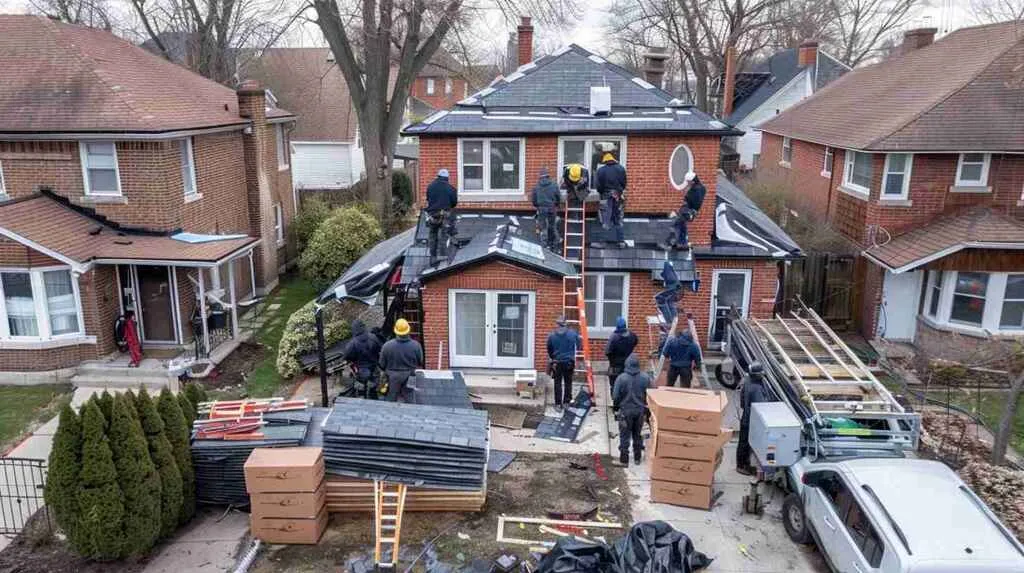
Residential Shingles Queens NY – Expert Selection and Install | Free Quotes
Blueprint first, then the pitch: in Queens, a solid residential shingle roof for a typical home usually runs between $7,800 and $14,500, and those numbers can land at opposite ends for two houses that look identical from the curb. The difference isn’t magic-it’s roof complexity, how many old layers need to come off, whether your attic breathes properly, how tight your driveway is for materials, and which shingle grade you choose. I’m Rafael Ortiz, and I’ve been installing and designing residential shingle systems here in Queens for 19 years, explaining every roof like it’s a small city plan for water so homeowners know exactly what they’re paying for and why.
What a Residential Shingle Roof Really Costs in Queens, NY
Here’s my honest take: most folks in Queens underestimate what our crazy freeze-thaw cycles do to cheap shingles. When I quote a roof, I’m not just multiplying square footage by a magic number-I’m solving a design problem. Your two-family in Forest Hills might need $9,200 because it’s a simple gable with one chimney, good attic ventilation, and only one layer of old shingles to strip. Your neighbor’s identical-looking house could hit $13,800 because there are three roof-overs stacked up, a skylight that was flashed wrong in 1997, and a back dormer that creates a tricky valley. It’s like cooking: same recipe, but if your kitchen is cramped and your oven runs cold, the job takes longer and costs more. I’d rather design a system I’d put on my own mother’s house than chase the lowest possible price, because in Queens, trying to save a few hundred bucks on bargain-bin shingles usually costs you more when the first nor’easter rips them off or summer heat curls them like potato chips.
One August afternoon in Woodside, it was about 3 PM and the humidity felt like a wet towel over the whole block. A homeowner wanted the cheapest shingles we could legally nail down, even though his roof had almost no shade and the attic was already like a sauna. I took a temperature gun, pointed it at his existing dark shingles, and then at a sample of the lighter, higher-grade shingles in my hand. When he saw the 27-degree difference on the display, he stopped arguing price and asked me to “just do whatever you’d put on your own mother’s house.” That was the day I realized hard numbers beat any sales pitch. Queens has everything from tight row houses in Elmhurst to detached brick colonials in Bayside, and every block has its own microclimate-wind off the water, shade from tall buildings, or full sun all day. Pricing is about designing around all of that, not just running a tape measure.
Typical Queens Residential Shingle Roof Scenarios
All prices are estimates for Queens, NY. Final quote requires on-site inspection of your specific roof, attic, and property access.
Fast Facts: Shingle Roofs in Queens
| Typical Price Range: | $7,800 – $14,500 for most Queens residential homes |
| Average Project Duration: | 2-4 days (depends on size, weather, and complexity) |
| Warranty Range: | 20-50 years manufacturer + 5-year workmanship guarantee |
| Service Area Focus: | All Queens neighborhoods – Astoria, Bayside, Corona, Elmhurst, Flushing, Forest Hills, Jackson Heights, Ridgewood, Woodside, and more |
How I Match Shingles to Queens Weather and Your Plans
I remember standing on a Ridgewood roof at 9 AM in February, watching the sun hit one side while the other stayed iced over, and thinking, “This is exactly why we pick shingles differently here.” Queens isn’t some steady-climate paradise-we get freeze-thaw cycles that crack cheap adhesive, summer heat that cooks shingles from below if your attic doesn’t breathe, and wind off the bay that’ll test every single nail pattern. Bare-minimum shingles might survive three years before they start looking like cardboard left in the rain. I’ll never forget a Sunday morning in early November in Bayside, when we got an emergency call from a couple hosting their daughter’s engagement party that afternoon. A section of their old three-tab shingles had ripped right off in the overnight wind, and water was dripping onto their dining room table where they planned to set up the cake. We had frost on the garage roof at 8 AM and full sun by 10, so I had to juggle timing the tear-off, underlayment, and shingle install around temperature changes so the seal strips would actually activate. We finished by 1 PM, the table was dry, and I stayed long enough to see the first guests walk in with balloons. That job taught me that installation timing and shingle choice both depend on reading Queens microclimates-whether you’re inland in Corona with full sun all day, tucked between tall buildings in Flushing, or close to the water in Bayside where wind is a constant factor.
When I sit at a kitchen table and ask, “How long are you planning to stay in this house?” I’m not being nosy-I’m choosing between three different shingle strategies. If you’re flipping the place in two years, a solid 3-tab with good underlayment and clean install will get you through inspection and look fine for the next owner. If you’re staying five to ten years, mid-grade architectural shingles with better wind ratings and a 30-year warranty give you peace of mind and some curb appeal without breaking the bank. If this is your forever home or you want to maximize resale in a competitive Queens market, premium architectural shingles with impact resistance, reflective granules to cut attic heat, and a transferable 50-year warranty are worth every penny. Shingle choice isn’t just about picking a color you like on a sample board-it’s about lifespan planning, and it also has to play nice with local codes and the common house types we see all over Queens: attached row houses that share fire walls, two-families with steep pitches and dormers, and older detached homes that sometimes have ventilation issues nobody thought about in 1952.
3-Tab Shingles
Pros for Queens Homeowners:
- Most budget-friendly option ($7,800-$9,500 range)
- Quick to install, less waste
- Clean, uniform look on simple gables
- Lighter weight for older roof decks
Cons / Tradeoffs:
- Shorter lifespan (15-20 years in Queens weather)
- Lower wind resistance (60-70 mph ratings)
- Less curb appeal on two-families or upscale blocks
- Fewer color and style options
Architectural Shingles
Pros for Queens Homeowners:
- Better wind resistance (110-130 mph ratings)
- Longer lifespan (25-50 years with good ventilation)
- Dimensional look boosts curb appeal and resale
- More colors, better warranty options
Cons / Tradeoffs:
- Higher upfront cost ($10,000-$14,500 typical)
- Heavier, may need deck reinforcement on very old homes
- Slightly longer install time
- More material waste on complex roofs with valleys
Common Queens Shingle Roof Myths
| Myth | Fact |
|---|---|
| “All shingle roofs cost about the same in Queens.” | Price swings $6,000+ based on layers to remove, roof complexity, ventilation fixes, and shingle grade. Two identical-looking houses can land at opposite ends of the range. |
| “Dark shingles make your house hotter no matter what.” | Color matters, but proper attic ventilation and reflective granules matter way more. I’ve seen light shingles cook an attic because there was zero airflow, and dark premium shingles stay cool with good ridge vents. |
| “You can’t install shingles in Queens winter.” | You absolutely can if the crew knows how to work around temperature for seal activation. I’ve done November and March jobs that are still watertight years later. Avoid the coldest weeks, plan around freeze, and you’re fine. |
| “DIY shingle install saves thousands and is easy.” | Nailing shingles isn’t hard. Designing the underlayment layers, flashing every penetration correctly, matching ventilation to code, and doing it safely on a steep Queens roof? That’s where the value is-and where DIY goes sideways fast. |
Designing Your Roof Like a City Plan for Water
On a typical two-family in Corona, the first thing I look at isn’t the color-it’s the way the roof planes break around chimneys, vents, and skylights. I think of every roof as a small city plan for water: the shingles are your streets, the valleys and ridges are your main intersections, the flashing around penetrations are your traffic signals, and the gutters are your highway exit ramps. If water doesn’t have a clear, predictable route from the ridge down to the ground, it’ll find detours-under a shingle, behind a vent pipe, into a soffit joint-and that’s when you get leaks. I imagine the path a raindrop takes from the moment it hits the roof until it’s safely in the downspout, and I design the whole shingle system so there are no dead ends, no bottlenecks, and no surprise shortcuts. There was a job in Astoria, middle of March, light drizzle on and off, where the customer insisted on doing part of the prep himself to “save money.” He’d already ripped up a section of old shingles but left the felt half-torn and a broken vent pipe just…sticking up like a periscope. When I walked the roof, I realized if we’d just laid new architectural shingles like he wanted, water would’ve followed that pipe right under the new system and ruined his bedroom ceiling in six months. I took photos from three angles, showed him how water would travel, and we redesigned the whole layout with new flashing and revised vent placement. He still jokes that I talk to rainwater like it’s a stubborn relative that needs to be redirected.
Think of your roof like a Queens Boulevard intersection-if traffic (water) has only one safe way to go, you don’t get accidents (leaks). Leak prevention is about giving water a predictable route: start at the shingle surface, funnel it down to the joints between shingles, guide it along the slope to the edges, catch it in the gutter, and send it away from the foundation. Sounds simple, but the devil is in the details most homeowners never see: properly sized and sealed pipe boots around plumbing vents, step flashing that’s woven into the shingle courses along chimneys and walls, continuous ridge vents that let hot air out without letting rain in, and starter courses at the eaves that create the first line of defense against wind-driven rain. Here’s a specific pro tip from 19 years of doing this: properly lapped underlayment, correctly sized pipe boots, and continuous ridge vents prevent about 80% of the leak calls I see from other contractors’ work, and I always mentally follow where water will try to sneak in at those details before I nail the first shingle. Small stuff like making sure the underlayment overlaps uphill, using ice-and-water shield in valleys and around chimneys, and extending drip edge past the fascia might add an extra $400 to the job, but it’s the difference between a roof that lasts 30 years and one that starts calling you back in year three.
How I “Trace the Storm” to Design Your Shingle System
Walk the Roof and Attic
I physically trace every plane, valley, and penetration from the ridge down, checking deck condition, existing ventilation, and how water flows now.
Why It Matters: Reveals hidden problems (rot, ventilation gaps, bad flashing) before shingles go on, so water can’t exploit weak spots later.
Map the “Intersections”
I sketch where chimneys, vents, skylights, and valleys create junctions-the spots where water changes direction or speed and leaks love to start.
Why It Matters: Proper flashing, ice-and-water shield placement, and shingle detailing at these “intersections” stops 90% of future leak calls.
Design the “Highway System”
I choose shingle type, underlayment layers, and ventilation to give water a fast, clear route from ridge to gutter, with no detours under the system.
Why It Matters: Water that can’t pool or sneak sideways means longer shingle life and zero surprise ceiling stains five years from now.
Install with Temperature in Mind
I time tear-off and shingle install around Queens weather so seal strips activate properly and underlayment doesn’t wrinkle or tear in wind or cold.
Why It Matters: Shingles installed in the wrong conditions won’t seal, and that’s an invitation for wind and water to get under them within a year.
Final Walkthrough and “Storm Test”
Before I leave, I trace the water path one more time from the ground and attic, checking that every shingle, flashing joint, and drip edge sends rain exactly where it should go.
Why It Matters: Catching a missed nail, a lifting edge, or a gap in the ridge vent now prevents an emergency call during the next big rain.
Key Leak Hotspots on Queens Shingle Roofs
What to Expect When Shingle Masters Re-Roofs Your Home
Let me be blunt: if a contractor can’t explain why they chose a specific underlayment under your shingles in under 60 seconds, they’re guessing, not designing. I explain everything face-to-face, usually with a Sharpie sketch right on a shingle wrapper or the back of my estimate sheet, so you can see exactly what’s going on your roof and why. Here’s the job experience from start to finish: I show up for the first visit, we walk your roof together if it’s safe, I go into the attic with a flashlight and check ventilation and deck condition, then we sit at your kitchen table and I draw the “recipe”-materials are the ingredients (shingles, underlayment, flashing, vents), my crew is the kitchen (experience, tools, safety), and Queens weather is the oven (timing the install so everything seals right). You get a written quote that breaks down every line item, not some vague “per square” number. If you don’t understand what’s going on your roof-why we’re ripping off two layers instead of one, why I want to add three ridge vents, why the flashing around your chimney is aluminum instead of the rusty steel that was there-then I haven’t done my job, and I’ll keep explaining until it clicks.
Logistics in Queens are their own animal: tight driveways, shared walls with neighbors, protecting bushes and cars, working around the 7 train schedule if you’re near the elevated tracks, and respecting noise rules in dense blocks where your next-door neighbor is six feet away. I grew up in Jackson Heights, noticing rooflines from the 7 train, and I know the quirks of Queens housing stock-tight alleys between row houses, shared driveways in two-families, and different neighborhood wind patterns like near the water in Bayside versus inland in Corona. Shingle Masters handles all of it: we stage materials so we’re not blocking your driveway for three days, we tarp and protect your landscaping, we do our noisiest work during reasonable hours, and we clean up every single nail and shingle scrap with magnets and tarps because nobody wants a flat tire in their own driveway. We’re licensed and insured in New York, we’ve been doing this in Queens for 19 years, and we offer service in English and Spanish so you can ask every question in the language you’re most comfortable with. You’ll get my cell number, a project timeline in writing, and daily updates if weather shifts the schedule.
Your Queens Shingle Roof Project, Step by Step
| Step | What We Do | What You See/Need to Do |
|---|---|---|
| 1 | Free Inspection & Quote We walk your roof and attic, measure, photograph problem areas, check ventilation and deck, then sit down and sketch the full system. |
You get a written estimate with every material and labor line item explained, plus a hand-drawn “recipe” of your roof plan. No pressure, no disappearing acts. |
| 2 | Scheduling & Permits We lock in dates that work with your schedule and Queens weather, pull any required permits, and coordinate material delivery. |
You pick the start date, we confirm it in writing. If permits are needed (attached homes, landmark areas), we handle the paperwork. |
| 3 | Tear-Off & Deck Prep We strip old shingles and underlayment, inspect and repair any soft or damaged deck boards, clean every surface, and haul debris to a dumpster same-day. |
Expect noise (especially if we hit nails or plywood). Your yard and driveway are protected with tarps. We update you if we find hidden rot or damage that needs fixing. |
| 4 | Underlayment, Flashing, Ventilation We install drip edge, ice-and-water shield in valleys and eaves, synthetic underlayment across the deck, all new flashing around chimneys/vents/skylights, and ridge vents. |
This is the “invisible” work that prevents leaks. You won’t see it once shingles go on, but it’s the most important day of the job. We’ll show you photos if you want proof it’s done right. |
| 5 | Shingle Installation We lay starter courses at eaves and rakes, then install shingles from bottom to top following manufacturer specs for nail placement, overlap, and seal activation. |
Your house starts looking finished. We work in sections, so you’re never exposed to weather overnight. Timing depends on roof size and complexity-usually 1-2 days for shingles alone. |
| 6 | Final Inspection, Cleanup, Warranty We walk the entire roof one last time, run magnets over your driveway and yard for stray nails, haul final debris, and hand you written warranties for materials and workmanship. |
You do a walkthrough with me, ask any last questions, and get a warranty packet plus care instructions. Your property looks exactly like it did before we arrived-except the roof is brand new. |
Why Queens Homeowners Choose Shingle Masters
| Licensed & Insured in NY: | Fully licensed, bonded, and insured for residential roofing work in New York City and Queens |
| 19+ Years in Queens: | Local experience in every neighborhood-we know Queens housing stock, weather patterns, and permit requirements |
| Fast Response Time: | Typical quote turnaround in 24-48 hours; emergency tarp and temporary repairs available same-day or next-day |
| Written Warranty: | 5-year workmanship guarantee on all installations, plus manufacturer warranties from 20-50 years depending on shingle grade |
| Bilingual Support: | All estimates, project explanations, and customer service available in English and Spanish |
Quick Checks, Red Flags, and Common Questions
$500 of early repair can save you from a $5,000 ceiling disaster. Before you call, take 60 seconds and look up at your roofline from the curb-do you see curling, cracked, or missing shingles, dark streaks, or shingle granules piling up in your gutters? Then go into your attic with a flashlight and check for water stains, daylight poking through the deck, or that musty smell that means something’s been damp for a while. If you spot any of that, you’re already past the “maybe soon” stage and into the “call now before the next rain” zone, and thinking like a city planner for water means understanding that small problems upstream turn into expensive floods downstream.
5-Minute Self-Check Before You Call Shingle Masters
| Item | How to Check | What It Might Mean |
|---|---|---|
| Visible Shingle Damage | Look from the street-curling edges, missing shingles, cracked or bald spots | Shingles at end of life or storm damage; water can get under edges and cause leaks soon |
| Attic Stains or Daylight | Go into attic with flashlight, look for water marks on rafters or deck, light showing through | Active or past leaks; deck or flashing failure; needs immediate inspection to prevent interior damage |
| Granules in Gutters | Check gutters and downspouts for sandy, gritty piles of colored granules | Shingles losing protective coating; if it’s heavy, shingles are breaking down and won’t last much longer |
| Drafts or Temperature Issues | Notice if attic is way hotter in summer or freezing in winter compared to rest of house | Poor ventilation; shingles cooking from below or ice dams forming in winter; both shorten shingle life dramatically |
| Age of Roof | Check your records or ask previous owner-most shingle roofs in Queens last 20-30 years depending on grade | If you’re at 20+ years, start budgeting for replacement even if it looks okay; waiting for a leak costs more in emergency rates and interior repairs |
⚠ WARNING Common Shingle Roof Mistakes in Queens to Avoid
| Multiple Roof-Overs on Old Layers | Each layer traps heat and moisture, weighs down the deck, and hides rot. In Queens, code usually allows two layers max, but one clean tear-off is always better for lifespan and leak prevention. |
| Unvented or Poorly Vented Attics | Queens summers cook shingles from below if hot air can’t escape; winters create ice dams if warm air melts snow unevenly. Proper ridge and soffit vents can add 10+ years to your shingle life. |
| Hiring Uninsured “Cheap” Contractors | If someone falls off your roof or their work causes a leak that ruins your ceiling, you’re liable if they’re not insured and licensed. Saving $1,500 upfront can cost you $20,000 in lawsuits or damage repairs. |
| Relying Only on Lowest Bid | The lowest price almost always means the cheapest materials, the fastest (sloppiest) install, or corners cut on underlayment and flashing. In Queens weather, that comes back to bite you in 3-5 years instead of 25. |
Queens Residential Shingle FAQs
How long does a typical shingle roof last in Queens?
Depends on the shingle grade and how well your attic ventilates. Basic 3-tab shingles usually give you 15-20 years here. Mid-grade architectural shingles with decent ventilation last 25-30 years. Premium architectural shingles with reflective granules, proper underlayment, and excellent ridge/soffit ventilation can hit 40-50 years. Queens freeze-thaw cycles and summer heat are harder on roofs than some climates, so ventilation and quality materials really matter.
Can you install shingles in winter in Queens?
Yes, but timing matters. Shingles need to reach a certain temperature for the seal strips to activate and bond properly. I avoid the coldest weeks (mid-January through early February), and I schedule installs on days forecast to hit at least 45-50°F with some sun. If we install on a warmer winter day and the shingles get a few hours of sunlight, they’ll seal just fine. I’ve done November and March jobs that are still watertight years later. What doesn’t work is rushing a job in freezing rain or sleet-that’s when mistakes happen.
How noisy is the job, and how long does it take?
Not gonna lie-tear-off day is loud. You’ll hear hammers, pry bars, and shingles sliding into the dumpster. Shingle installation is quieter (mostly pneumatic nail guns, which sound like quick taps). For a typical Queens two-family (1,500-2,000 sq ft roof), expect 2-4 days total depending on complexity, weather, and how many layers we’re removing. We do the noisiest work during reasonable daytime hours and keep you updated daily so you’re never surprised.
Will my homeowner’s insurance cover storm damage to shingles?
Often, yes-if a storm (wind, hail, falling tree) caused sudden damage to an otherwise well-maintained roof. Insurance usually won’t cover wear-and-tear or damage from deferred maintenance (like a 25-year-old roof that finally gave up). If you had storm damage, call me first for a free inspection and documentation with photos. I’ll give you a detailed report you can submit to your insurance adjuster, and I can work directly with them if your claim is approved. Many of my Queens customers have used insurance to offset most of the replacement cost after a big nor’easter or summer wind event.
How do I choose shingle color for heat and curb appeal in Queens?
Lighter colors (tans, grays, light browns) reflect more heat and can keep your attic a bit cooler in summer, which helps shingle longevity. Darker colors (charcoal, black, dark brown) absorb heat and can make attics hotter, but premium shingles now have reflective granules that offset some of that. For curb appeal, look at your neighborhood: row houses in Astoria and Ridgewood often go with darker, classic looks; detached homes in Bayside and Forest Hills sometimes lean toward varied earth tones or slate-look architecturals for a high-end appearance. I always bring samples to your house and hold them up in actual daylight so you see exactly how they’ll look, and I’ll tell you honestly if a color choice will cook your attic or clash with your brick.
Think of your Queens home’s roof as a small city plan for rainwater: every shingle, valley, flashing joint, and vent is a carefully designed route so water has one safe, predictable path from the ridge to the ground-no detours, no bottlenecks, no surprise floods in your ceiling. Let me walk your roof with you, sketch out a custom residential shingle “recipe” that matches your house, your budget, and how long you’re planning to stay, and give you a free written quote with every detail explained in plain English (or Spanish, if you prefer). Shingle Masters has been designing and installing leak-proof shingle systems all over Queens for nearly two decades, and I’d love to show you exactly what a well-planned roof looks like before you spend a dime. Call today or schedule a free inspection-your roof will thank you, and so will your attic.