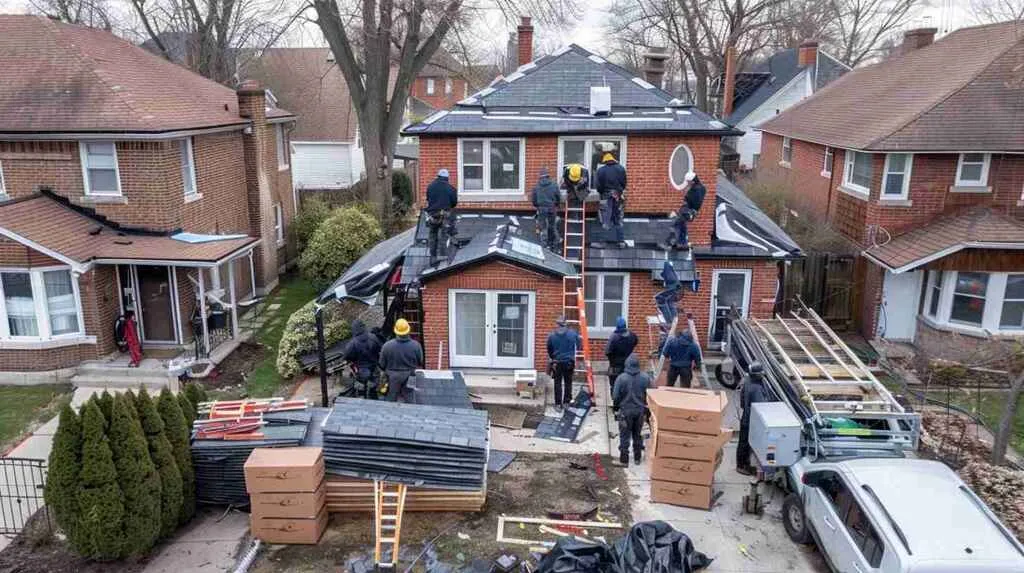
When to Replace a Shingle Roof Queens NY – Signs That Tell You | Call Today
Underneath what looks like a solid shingle roof from the sidewalk, Queens roofs are often three to five years past the point where replacement is cheaper than chasing leaks. On a typical block in Elmhurst, if you really study the roofs-not just glance-you’ll spot subtle sagging lines, worn edges, and valleys where shingles curl up like potato chips, all while most folks assume everything’s fine because there’s no ceiling stain yet.
Street View vs. Real Condition: Why Queens Shingle Roofs Fool You
On a typical block in Elmhurst, if you stand across the street and really stare at the roofs, you’ll notice three or four houses where the ridge looks straight but the eaves are wavy, or the shingles reflect light differently on the north slope-that’s end-of-life wear most people miss. One January morning around 6:30 a.m., still dark and about 18 degrees, I got a call from a retired MTA dispatcher in Woodhaven who woke up to water dripping straight onto his coffee maker. His shingles were only 13 years old, but when I got on that frosty roof I saw the whole north-facing slope was curling and brittle, with granules completely gone along the bottom three feet. He kept insisting it “looked fine from the street,” and that day really drove home how dangerous it is to judge roof life from curb appeal instead of what’s happening at the edges and in the valleys. Here’s my blunt take: judging a roof by what you see from the sidewalk is one of the most expensive mistakes Queens homeowners make, especially once roofs pass the mid-teen years.
Shingles age from the edges first-eaves, valleys, and north slopes that stay damp-and those spots are hidden from your driveway view. Judging a roof from the sidewalk is like buying a used car based only on the paint job or assuming a 7 train car is fine just because the outside looks clean-you need to look at the undercarriage, the attic, and the moving parts like flashings. The roof might throw a little granule dust in the gutters, maybe lose a shingle or two in a windstorm, but from street level it still reads as “okay.” Meanwhile, underlayment is cracking, decking’s getting damp around vents, and flashing along the chimney is quietly letting water into the wall.
Another way to think about it: your roof doesn’t collapse overnight. It slowly transitions from “working fine” to “working fine most of the time” to “patching every spring.” Now, here’s where it connects to what you actually see at your house-those specific, visible clues that tell you the roof isn’t just aging, it’s done.
| Myth | Fact (Queens Reality) |
|---|---|
| If the roof looks okay from the street, it’s fine. | Most of the damage starts where you can’t see it: eaves, valleys, and around flashings. Many roofs here are 3-5 years past due even though they look fine from the sidewalk. |
| You should wait until you see a big ceiling stain before replacing a roof. | By the time water shows inside, shingles, underlayment, and often decking are already compromised, making the job more expensive. |
| Architectural shingles automatically last 30 years in Queens. | UV, freeze-thaw, and wind in Queens usually cut that number; 18-22 years is common for a hard-worked shingle roof here, sometimes less with poor ventilation. |
| A small leak over the kitchen can be fixed with a quick patch forever. | Repeated patches are like duct-taping a muffler: each one buys a little time but lets hidden wood damage grow underneath. |
| If an inspector said you have “10 years left,” you don’t need to check the roof again. | Attic conditions, ventilation, and flashing quality can shorten that estimate; you need periodic on-roof and attic checks, not a one-time guess. |
Clear Signs Your Shingle Roof Is Past Its Prime in Queens
Here’s my blunt take: if your shingles are past 20 years in Queens and you’re waiting for a “big leak” before acting, you’re already late. The most obvious exterior signs include shingles curling up at the edges like burnt paper, cracked or missing tabs along the ridge and valleys, bald spots where all the granules have washed away-especially common on north-facing slopes that stay damp longer-and soft, spongy spots underfoot near the eaves when a pro walks the roof. Queens weather accelerates all this: north-facing slopes staying damp, LaGuardia and ocean winds peeling shingles back, and freeze-thaw cycles cracking tabs faster than in calmer areas. You’ll also see rusty flashing around chimneys and walls, moss or algae streaks that hold moisture, and daylight visible through the roof boards when you’re in the attic.
One summer, a Saturday in July during that brutal 95-degree heat wave, I went to a two-family house in Corona where the owner “just wanted a repair” because a few shingles had blown off near the ridge. When I lifted those shingles, the plywood underneath basically crumbled in my hand-years of slow leaks had rotted the decking between two poorly installed bathroom vents. I had to sit on the curb with the owner, sweat pouring down my face, and explain that spending a few hundred on a patch would be like taping over a cracked radiator hose on the Whitestone Bridge-it might get you a mile, but you’re still going to break down soon and pay more. That job taught me that what starts as “just a repair” often reveals end-of-life shingles the moment you touch them, and your own house might be in the same boat if you’re seeing even two or three of these warning signs at the same time.
Top Exterior Signs Your Queens Shingle Roof Needs Replacement
- ✓ Shingle tabs curling upward or edges cupping downward across multiple slopes
- ✓ Cracked, torn, or missing shingles concentrated along ridges, valleys, or eaves
- ✓ Heavy granule loss leaving bald, dark patches-check downspouts after rain
- ✓ Soft or spongy feel underfoot at eaves or near valleys when walked by a professional
- ✓ Rusty, lifted, or cracked flashing around chimneys, vents, and walls
- ✓ Thick moss or algae growth holding moisture on north-facing or shaded slopes
- ✓ Daylight visible through roof boards from inside the attic during the day
What Your Attic Is Telling You About Roof Replacement Time
When I’m on a first visit, one of the first questions I ask is, “Have you been in your attic during a heavy rain lately?” Most people haven’t, and that’s where the real evidence lives. In a Queens attic during or right after a storm, you want to look for rusty nail lines running in rows across the rafters-each nail driven through a shingle-because rust means repeated moisture. Brown halos around those nails or on the underside of the roof deck mean water’s been wicking through for months or years. Damp or compressed insulation near the eaves or around vents is another red flag, and if you see actual drips, shiny wet nail tips, or black mold on the wood, the roof is way past “thinking about it” territory. The one that still bugs me happened on a cloudy April afternoon in Bayside with a young couple who’d just bought their first house. The home inspector told them they had “at least ten years left” on the roof, but when I checked the attic, every nail line was rusted and there were brown halos around half the fasteners-classic sign of end-of-life shingles and poor ventilation. They chose to wait because of closing costs, and two years later I was back after a nor’easter, tearing out moldy insulation and warped sheathing.
Here’s an insider tip worth following: the best time to spot end-of-life shingles is by checking the attic during or right after a heavy rain or Nor’easter with a flashlight, watching for fresh drips, shiny nail tips, and damp insulation seams. Poor ventilation in Queens multifamily houses-especially older two- and three-families where soffits got blocked during renovations-accelerates shingle failure from the inside out, cooking the shingles in summer and trapping moisture in winter. That attic evidence often overrides rosy age estimates and turns the “when to replace” question into a “replace now or pay double later” answer.
Quick Attic Checks Before You Call
Safe observations you can make with just a flashlight-no tools required:
- Look for rusty nail rows on the underside of the roof deck-rust = repeated moisture.
- Check for brown or yellow halos around nail tips or on plywood-signs of slow leaks.
- Feel insulation near eaves and vents-damp or matted down means water’s been there.
- Shine your light up at the underside of the deck during rain-fresh drips or wet streaks are a clear red flag.
- Look for black mold or mildew on rafters, especially along north-facing slopes.
- Check if daylight is visible through cracks, gaps, or nail holes-means shingles or deck are failing.
Bayside Capes & Single-Family Homes
Typical cape-style homes in Bayside have accessible attics with good headroom. Look for rusty nail lines running parallel across the rafters, and check the north slope carefully-it stays damp longer. Poor ridge vents or blocked soffits will show up as dark streaks or compressed insulation near the eaves. If the home inspector said “years left” but you see brown halos, trust the attic over the estimate.
Jackson Heights Multifamily Buildings
Two- and three-family buildings in Jackson Heights often have tight, low attics or flat-roof sections with minimal ventilation. Water from end-of-life shingles pools along party walls and around shared chimneys. You’ll see damp insulation along the edges where units meet, and rusty nails concentrated near bathroom and kitchen vents that weren’t flashed properly during renovations.
Ridgewood Rowhouses
Rowhouses in Ridgewood share side walls, so leaks migrate sideways before dripping down. Check the attic along both side walls for brown streaks or damp spots-those usually mean flashing failure or shingles curling at the edges. Low-slope rear additions are trouble spots; look for sagging insulation and water stains near the junction where the main roof meets the extension.
Repair vs. Replace: Making the Call Like a Pro
Think of your roof like a winter coat you wear on the 7 train platform: it might not have a big rip, but if the lining is shot and the zipper’s gone, you’re cold no matter how good it looks. Queens roofs almost never die of old age across the whole surface at once-they fail at the edges, around penetrations, and wherever shortcuts were taken years ago, so the repair-versus-replace decision hinges on how widespread those failures are and whether the underlying structure is still solid.
| Scenario | Condition | Approx. Replacement Range |
|---|---|---|
| Small Ridgewood/Jackson Heights rowhouse (10-14 squares) | End-of-life shingles, minimal decking issues | $8,000 – $12,000 |
| Typical detached single-family in Bayside/Flushing (15-20 squares) | Aging shingles, a few soft spots at eaves | $11,000 – $16,000 |
| Two-family in Corona/Elmhurst with multiple slopes (20-26 squares) | Multiple leaks around vents and valleys | $15,000 – $22,000 |
| Older Woodhaven/Ozone Park home with bad decking in spots | Curled shingles, active leaks, visible deck rot | $18,000 – $28,000+ depending on wood repair |
How I Evaluate a Queens Shingle Roof (Step by Step) & What You Can Expect
The ugly truth about shingle roofs around Queens is they almost never die of old age; they die from the edges, the penetrations, and the shortcuts-so when Shingle Masters comes out to evaluate your roof, we check those spots first, then work inward. Here’s the process: I start on the roof itself, walking the ridges, valleys, and eaves to feel for soft spots and check shingle condition up close, looking at tabs, granule loss, and how the shingles lay flat (or don’t). Then I inspect every penetration-chimneys, vents, skylights, walls-because that’s where 80% of leaks start. Next, I go into the attic with a bright light, checking nail lines, underside of the deck, and insulation for moisture, rust, and rot. After that, I sketch a quick diagram on whatever’s handy-cardboard, receipt, pizza flyer-and walk you through what I found, why it matters, and whether you’re looking at a focused repair or full replacement. Think of it like taking your car in for a brake inspection and finding out the rotors are shot too-you want the whole picture before deciding whether to fix or replace. I still remember a Ridgewood homeowner who swore his roof was “solid” because the ceiling paint wasn’t bubbling yet, but when I pulled back a valley shingle, water literally dripped out from between the layers. That’s why the on-roof and attic check is the only way to know for sure, and why I never give a replacement estimate over the phone.
Once I’ve walked the roof and attic, I sit down with you-usually at the kitchen table-and give a written summary: what’s failing, what’s marginal, what can wait, and what the job will cost if we replace now versus patching and waiting. Timed roof replacement is like doing a scheduled overhaul on an aging 7 train car so it doesn’t fail in rush hour-you pick the season, control the budget, and avoid the panic of emergency tarps and ceiling damage. That’s the process, and it usually takes about 45 minutes to an hour from arrival to written recommendation, so you walk away knowing exactly where your roof stands and what makes sense for your house and your budget.
Shingle Masters Roof Replacement Evaluation Process
- Initial Call & Scheduling: You describe what you’re seeing (leaks, curling, age), and we book a visit within a few days-emergency situations get same-day or next-day response.
- On-Roof Inspection: I walk the entire roof, checking shingle condition, soft spots, valleys, ridges, and every penetration (chimneys, vents, walls) where leaks usually start.
- Attic Assessment: I go into the attic with a bright flashlight to check for rust on nail lines, brown halos, damp insulation, and any signs of hidden leaks or poor ventilation.
- Sketch & Explanation: I draw a quick side-view diagram of your roof on whatever’s around (cardboard, receipt, napkin) and walk you through what’s failing, why, and what it means for your timeline and budget.
- Written Recommendation: You get a clear, written summary of the roof’s condition, whether you need a repair or replacement, what it will cost, and how soon you should act-no pressure, just the facts.
How soon can you schedule a roof inspection in Queens?
For routine evaluations, usually within 3-5 days of your call. If you’re dealing with an active leak or storm damage, we prioritize same-day or next-day visits to assess the damage and get a tarp up if needed while we plan the replacement.
Will a roof replacement be noisy and disruptive?
Yes, tearing off old shingles and nailing down new ones is loud-expect hammering, compressor noise, and vibration for a few days. Most Queens single-family jobs take 2-4 days; we work 7:30 a.m. to around 4 p.m., keep the site clean each evening, and coordinate with you if you work from home or have young kids so you can plan around it.
Do I need a permit to replace a shingle roof in Queens?
Most shingle roof replacements in Queens require a building permit-we handle the filing, inspections, and paperwork as part of the job. The permit process usually adds 1-2 weeks to the timeline before we start work, but it protects you and ensures the job meets code.
Can you replace a shingle roof in winter in Queens?
Yes, as long as temperatures stay above freezing during install and for 24-48 hours after. Shingles need warmth to seal properly, so we avoid the coldest weeks (late December through mid-February), but November, March, and mild winter days are fine. Emergency winter replacements can be done with hand-sealing and careful timing.
How long does a roof inspection take?
About 45 minutes to an hour from arrival to written recommendation. That includes walking the roof, checking the attic, sketching the problem areas, and sitting down with you to explain what I found and what it’ll cost to fix or replace.
Why Queens Homeowners Call Shingle Masters
- 19 Years in Queens: I’ve worked on roofs in every neighborhood from Jackson Heights to Bayside, so I know how local weather, building styles, and shortcuts from prior contractors show up years later.
- Flashing Specialist: Other contractors call me when a roof keeps leaking and nobody can figure out why-chimneys, walls, valleys, and complex penetrations are where I spend most of my time.
- Licensed & Insured: Fully licensed New York roofer with liability and workers’ comp coverage, so you’re protected from day one through final inspection.
- Fast Response: Routine inspections scheduled within a few days; emergency leaks and storm damage get same-day or next-day visits with tarps and temporary fixes while we plan the full job.
You can’t judge roof life from the sidewalk; specific signs on the shingles, edges, and attic tell you when replacement is smarter and cheaper than chasing leaks, and a Queens shingle specialist like Shingle Masters can confirm it with an on-roof and attic check. Deciding when to replace a shingle roof is more like scheduling a major service on a subway car than waiting for a breakdown-you pick the season, control the cost, and avoid the panic of emergency tarps and ceiling stains. Call Shingle Masters today to have Lou walk your roof and attic, explain exactly what he sees, and give you a clear, written replacement plan for your Queens home.