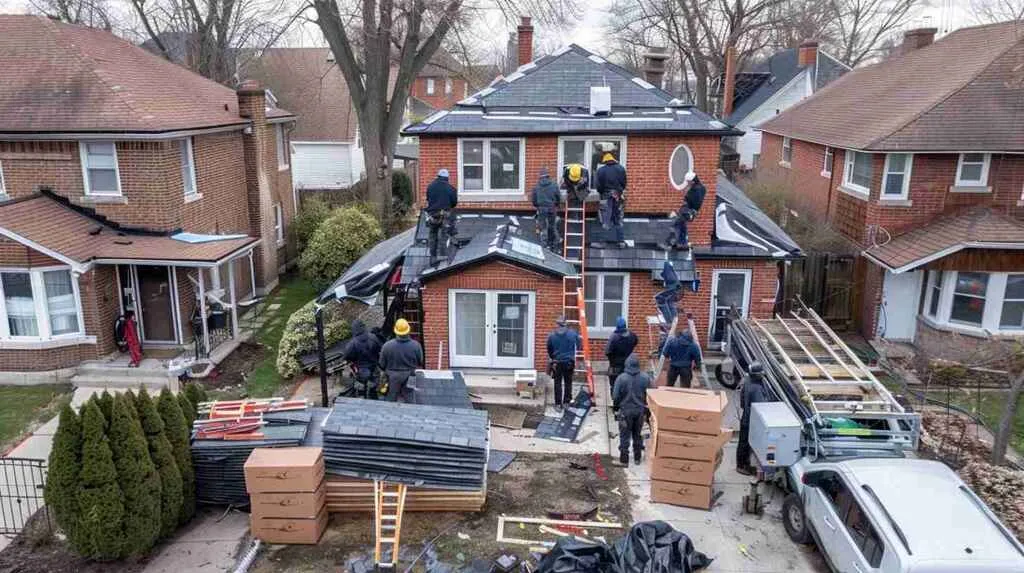
Replace Shingle Roof in Hot Weather Queens NY – Safe or Not? | Free Quotes
Molten is what I’d call it. At 1:00 p.m. on a July afternoon in Corona, I’ve measured roof surfaces over 150°F with a cheap infrared gun from Home Depot-and that’s a good 40-60°F hotter than the air temperature the weather app is telling you, which means we’re not just working in summer heat, we’re literally standing on a baking griddle that can overcook your shingles if we don’t time the job like a careful recipe. Let me be blunt: it’s not automatically wrong to replace shingles when it’s hot, but it is very easy to do it wrong if you ignore the roof temperature, rush the crew through peak sun, and treat asphalt like it doesn’t change behavior at 140°F versus 110°F.
Think of your roof like a tray of fresh-baked cookies: pull them too early or press on them while they’re still soft, and you ruin the shape even if the ingredients were perfect. One July afternoon in Woodhaven, it was 3:30 p.m., my phone said 96°F, and the shingle bundles we left in the sun felt like they’d just come out of an oven. The homeowner was rushing us, wanted everything done “today or forget it,” but I could see the shingles stretching as we laid them and the nails sinking too deep into the soft asphalt. Two weeks later he called about a shingle slipping by the ridge; when I went back, I showed him how the tar had basically melted around the nail. That was the day I made my “no full tear‑offs between noon and 3 p.m. in a heat wave” rule, no matter how impatient the customer is.
| Myth | Fact |
|---|---|
| “It’s wrong to replace a shingle roof anytime it’s over 85°F.” | Manufacturers allow installation in hot weather as long as the crew controls roof temperature, timing, and handling to avoid softening and scarring. |
| “If the shingles feel soft, that means they’re sealing better and will last longer.” | Over-soft shingles can stretch, scar, and let nails overdrive, which actually weakens the roof and can shorten its life. |
| “As long as the crew works fast, the heat won’t matter.” | Rushing is the worst thing in extreme heat-slow, careful fastening and timing around peak sun are what keep the roof from being overcooked. |
| “A hot-weather install voids the shingle warranty.” | Warranties usually only have temperature notes for cold-weather installs; what voids coverage is improper installation, not the date on the calendar. |
How Queens Heat Really Affects Shingles, Nails, and Your Warranty
Here’s what local Queens neighborhoods like Jamaica, Corona, and Jackson Heights actually see in summer: roof surface temps routinely over 140-150°F on dark or black shingle roofs, and at that temperature asphalt starts behaving differently-it softens, seal strips activate early, the surface scars easily from boots and tools, and the whole roof becomes fragile under direct pressure. In 2019, during that brutal heat wave, we started a job in Jamaica at 6 a.m. on a two‑family with a black shingle roof that had to be replaced before a refinance inspection. By 11 a.m., the roof surface was so hot that my digital thermometer read 154°F, and one of my guys’ boot soles literally started to curl at the edge. We shut it down, tarped half the roof, and came back at 6 p.m. to finish in the evening, working under floodlights. The owner thought we were being dramatic-until I let him touch the discarded shingles and he snatched his hand back.
Once shingles get that soft, nails behave differently too: pneumatic nail guns, even with the pressure adjusted, tend to overdrive, sinking the nail head too deep into the shingle and creating a weak spot that can let wind and water underneath. If the manufacturer inspects your roof after a claim and sees overdriven nails or scuffed, stretched shingles from hot-weather mishandling, that can void coverage even though the calendar date isn’t the problem-the problem is that the installer didn’t track roof temp, only air temp, and powered through the peak sun window instead of pausing and coming back when the surface dropped into a safe working range.
| Air Temp in Queens | Approx. Roof Surface Temp (asphalt shingles) | Risk Level for Installation | What a Pro Should Do |
|---|---|---|---|
| 80-85°F | 115-125°F | Low-Moderate | Normal install with good hydration breaks; monitor for minor softening on darker roofs. |
| 86-92°F | 125-140°F | Moderate-High | Avoid full tear‑offs at peak sun; start early, pause mid‑day if roof hits ~135-140°F, resume late afternoon. |
| 93-98°F | 140-155°F | High | Limit work to mornings and evenings; use tarps and staging; watch carefully for scarring and overdriven nails. |
| 99-100°F+ | 155-165°F+ | Very High / Unsafe | Emergency-only work; prioritize temporary protection and schedule full replacement during cooler windows. |
The Right Way to Replace a Shingle Roof in a Queens Heat Wave
I had a job in Astoria where a landlord insisted we keep pushing through a 95°F day because his new tenants were moving in that weekend. Mid-afternoon, we noticed the brand‑new shingles “scarring”-our footprints were printing into the surface because the asphalt was that soft. I stopped the job, documented everything with photos and a temperature reading, and made him sign a change order that we’d pause until the roof temp dropped below 120°F. Two summers later he actually thanked me, because during a windstorm his neighbor’s roof got torn up and his-done in cooler evening hours-didn’t lose a single tab. Here’s the thing: saying “no” or “pause” in the middle of a hot-weather job sometimes saves the entire roof.
My insider rule for heat-wave work is to treat the roof like you’re pulling a sheet of cookies out of the oven at exactly the right moment-tear-off and underlayment early while the deck is still relatively cool, let the surface “rest” a bit if it’s climbing past 135°F, then shingle in smaller controlled sections during morning or evening windows, and never press or walk heavily on shingles while they’re still soft enough to scar.
If you can see your footprints printing into fresh shingles, stop immediately. That roof is too hot.
I check the shingles straight from the bundle before my guys step on them-if the asphalt feels gummy or the tabs bend too easily, we adjust the nail gun pressure down a notch and shift our focus to shaded areas or detail work until the roof cools. That small pause is what separates a 20-year roof from one that starts slipping shingles in year three.
-
1
Early start (around sunrise): Strip old shingles, inspect decking, and get underlayment installed while the roof is still relatively cool. -
2
Mid-morning temperature check: Use an infrared thermometer to read roof surface; if it’s creeping toward 135-140°F, switch to detail work in shaded areas. -
3
Midday pause or slow-down: Between roughly noon and 3 p.m. on heat-wave days, focus on ground prep, clean-up, and loading materials instead of walking on soft shingles. -
4
Late afternoon/evening shingling: Once roof temp drops, start laying shingles in controlled sections, watching for scarring and adjusting nail gun pressure to prevent overdriving. -
5
Final evening checks: Inspect all high-heat risk areas-ridges, hips, and eaves-for footprints, slid tabs, or exposed nails before packing up.
⚠️ Hot-Weather Roofing Warning: If a contractor insists on tearing off and fully installing your shingle roof straight through a 95°F+ afternoon with no pauses, you risk soft shingles that scar, overdriven nails that lose holding power, premature granule loss from scuffing, and workers pushing past safe limits in extreme heat. That combo can cut years off your roof’s life and cause problems that won’t show until the next storm season.
Quick Self-Check: Is Your Hot-Weather Roof Job Being Done Safely?
Before you sign or let a crew rip into your roof during a Queens heat wave, run through this checklist and quick decision guide to see if they’re actually respecting temperature, safety, and manufacturer guidance-or just trying to power through because their schedule is packed and they don’t want to come back twice.
Before You Hire for Hot-Weather Shingle Replacement
- ✅ Ask if the contractor owns and uses an infrared thermometer to check roof surface temperature, not just air temp.
- ✅ Confirm they plan early-start and late-day work, not an 11 a.m. start on a 90°F forecast.
- ✅ Ask how they adjust nail gun pressure and hand-nailing in hot conditions to avoid overdriving.
- ✅ Check if they’ve worked through Queens heat waves before and can explain exactly how they protect shingles and crew.
- ✅ Make sure they’re licensed and insured in New York and can pull permits in your part of Queens.
- ✅ Have them point out where attic ventilation will be checked or improved to help the new roof run cooler long-term.
Should You Proceed with Your Shingle Replacement During This Heat Wave?
Start: Is your roof actively leaking or causing interior damage right now?
If YES: Ask the contractor: Will you tarp and stabilize first, then schedule most of the replacement for cooler hours?
- If they say YES and can explain their heat plan → Proceed, but insist on written scope and photos.
- If they say NO and want to do everything straight through mid-day → Stop and get a second opinion.
If NO (no active leak): Do you have a hard deadline (sale, refinance, tenant move-in) within 2-3 weeks?
- If YES → Schedule work with strict early/late shifts and written temperature guidelines.
- If NO → You can likely wait for a cooler stretch and schedule your replacement on milder days.
What to Expect Cost- and Time-Wise for Hot-Weather Roof Work in Queens
Smart hot-weather scheduling can slightly shift labor hours and how many days the crew is on-site, but in Queens it usually doesn’t double your price-it mostly affects when they’re up there and whether you’re looking at one long push or two shorter visits with a pause in between to let the roof cool down and keep everyone safe.
| Scenario | Home Type & Roof Size | Season & Heat Plan | Typical Time on Site | Relative Cost Impact |
|---|---|---|---|---|
| Standard summer replacement | Single-family, ~1,500 sq ft roof | June-August, early start, brief mid-day slow-down | 1-2 days | Baseline pricing; small allowance for extra breaks. |
| Heat-wave, no active leaks | Two-family, ~2,000 sq ft roof | Planned around cooler days, heavier morning/evening shifts | 2-3 days | Slightly higher labor due to stretched schedule. |
| Heat-wave emergency leak | Attached rowhouse, ~1,200 sq ft roof | Immediate tarp, then staged replacement in safe windows | Temporary fix same day; full replacement in 1-2 later visits | Higher total due to emergency response and return trips. |
| Cool-weather alternative | Single-family, ~1,800 sq ft roof | Spring or fall, full days possible | 1-2 days | Usually most cost-efficient; less heat-related downtime. |
Why Queens Homeowners Call Shingle Masters for Hot-Roof Work
- ✔️ 17+ years roofing experience in Queens heat, from Jackson Heights to Jamaica.
- ✔️ Fully licensed and insured in New York City for residential and small multi-family roofs.
- ✔️ Same-week inspections available during heat waves for active leaks.
- ✔️ Written scope that explains how we’ll work around high roof temperatures, not through them.
A hot-weather shingle install in Queens can absolutely be done safely and still last for decades-as long as it’s handled like a precise recipe with the right ingredients, exact timing, and careful attention to temperature instead of treating it like a race. If you’re staring at a roof that needs replacing during a heat wave and you’re not sure whether to push forward or wait it out, call Shingle Masters for a free quote or on-site inspection so we can plan the job around the heat instead of fighting it, and make sure your new roof goes on right the first time.