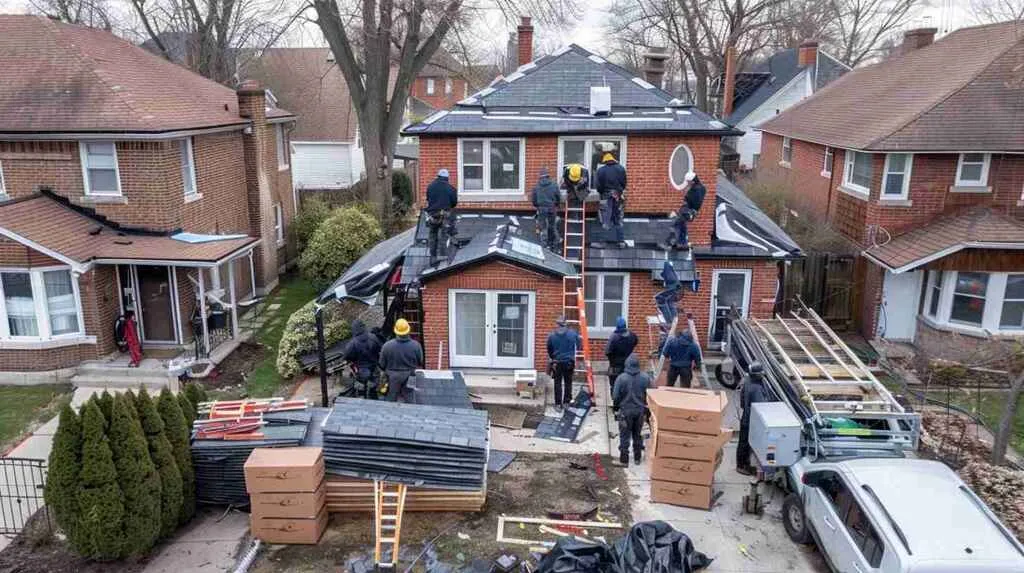
Roof Shingle Removal Queens NY – Right Tools and Technique | Free Estimates
Rhythm decides everything in the first 30 minutes of roof shingle removal in Queens – where you make your first pry, what tool you reach for, and how you control the falling shingles – because that opening stretch either keeps your decking rock-solid or turns a simple tear-off into a surprise carpentry nightmare. I’ve seen the difference a thousand times, and honestly, it comes down to tempo: move at the right “beat,” with the right roof shingle remover in hand, and your roof stays tight; rush it, or grab the wrong tool, and you’re punching through sheathing by lunchtime.
Setting the Right Rhythm for Roof Shingle Removal in Queens
On a typical two-story in Queens with two layers of shingles, the first thing I reach for isn’t the biggest tool – it’s the right one for the roof’s “tempo.” Around here, most of the homes we strip were built in the 1950s through 1970s, with thin 1x decking and a couple of re-roofs stacked on top, and that combination means every pry stroke has to have a rhythm to it. If you come in hard with a heavy tear-off shovel and just start ripping, you’ll hear bad notes right away – boards cracking, nails pulling crooked, deck edges bending where the last guy nailed into empty air near the chimney. The right roof shingle remover, matched to the section of roof you’re working, keeps the whole job “in tune”: short, controlled strokes across the open field, gentle pry-bar work around penetrations, and careful attention to where the sheathing starts to flex under your feet.
Let me be blunt: most of the expensive damage I repair in Queens started with someone using the wrong shingle remover in the wrong hands. I know the pressure to finish fast – the weather’s coming, the new shingles are already delivered, everyone wants their driveway back – but speed without rhythm is just noise. A clean tear-off guy, which is what people around Roosevelt Avenue and Astoria call me, moves like a drummer who’s done this set a thousand times: steady, predictable, listening for changes in sound and feel with every stroke. When a shingle pries up with that wrong “note” – too soft, too loud, too easy – that’s your cue to stop, switch tools, test the deck, and save yourself from breaking through into someone’s bedroom ceiling.
Queens Roof Shingle Removal At-a-Glance
Why Queens Homeowners Call Shingle Masters First
-
✓
19+ years hands-on shingle removal experience in Queens, NY -
✓
Licensed and insured for roofing in New York City -
✓
Specialized in multi-layer tear-offs without damaging sheathing -
✓
Known locally as the “clean tear-off” crew – magnet sweep and double clean-up on every job
The Right Roof Shingle Remover for the Job (And What Goes Wrong Without It)
Right after a cold November rain, we did a tear-off in Astoria for a young couple who’d just bought their first place. They were worried about cost, so they asked if we could “just go over” the old shingles. When I started using the shingle removal shovel near their chimney, ice-crusted granules slid off in sheets, and I saw a line of nails driven into thin air – literally missing the decking seam by almost an inch. The last crew had tried to “save time” with bigger ripper shovels and bent half the decking edges around the chimney and skylights, leaving gaps where wind-driven rain was already starting to rot the wood. I had to explain that careful, slower removal with claw hammers and flat bars around penetrations is the only reason we caught that before the new roof went on. Around older Queens neighborhoods – Astoria, Corona, parts of Jackson Heights – you’ve got layered-over roofs and sketchy chimney flashing everywhere, so tool choice and patience matter even more than usual.
Here’s the truth that surprises people: the cleanest, safest shingle removals don’t look dramatic – they look almost boring, like a steady drumbeat. You’ve got your standard tear-off shovel for the open field, your narrow-head shingle remover for edges and rakes where precision matters, a flat bar for prying around chimneys and vents without bending metal, and a claw hammer for pulling stubborn or misfired nails one by one. Each tool has its own tempo, and if you try to use the field shovel everywhere, you’ll gouge your fascia, crack boards near the drip edge, and leave behind bent flashing that’ll leak in the first hard rain. What you should notice, standing in your driveway watching us work, is clean, straight roof edges with the drip edge still intact, no pried-up boards around your chimney, and fewer leftover nails littering your yard and gutters.
| Tool | Best For | Avoid Using On | What Queens Homeowners Notice |
|---|---|---|---|
| Standard tear-off shovel | Open field of the roof with 1-2 layers of shingles | Near chimneys, valleys, skylights, and eaves | Fast, rhythmic shingle removal across big flat areas |
| Narrow-head shingle remover | Edges, rakes, and along drip edges and fascia | Soft or visibly wavy decking | Straight, undamaged roof edges with drip edge intact |
| Flat bar (pry bar) | Around chimneys, vents, and flashing details | Bulk tear-off on large fields | Neatly preserved flashing and fewer surprise leaks later |
| Claw hammer | Pulling stubborn or misfired nails one by one | Granule-heavy areas where hammer blows can crush shingles below | Fewer leftover nails in gutters, yards, and driveways |
| Specialty roof scraper with teeth | Removing brittle, older 3-tab shingles in layers | Thin decking or areas with suspected rot | More complete removal of old shingle fragments and felt |
⚠️ What Happens When the Wrong Tool Hits the Wrong Roof
- Cold, brittle shingles after rain or frost in Queens can snap and tear the decking surface when pried with a dull shovel.
- Oversized tear-off tools near chimneys often bend deck edges, leaving gaps where wind-driven rain will enter later.
- Improper leverage on older 1950s-1970s sheathing can crack boards and telegraph as ceiling damage inside.
- Dropped tools and stray nails become slip and puncture hazards on tight Queens driveways and walkways.
How a Clean Tear-Off Actually Works on a Queens Roof
One August afternoon, around 3 p.m., we were stripping a 1950s cape in Bellerose during a brutal heat wave – the shingles were practically melting under our feet. The homeowner, an older gentleman, swore the second roof layer “saved money” when it was added back in the 80s. As soon as we hit the third strip with the shingle remover, I heard that wrong “note” – the sheathing flexed, and the nails pulled out too easily. We stopped, peeled back a section gently instead of ripping, and found a whole panel of rotten decking someone had just roofed right over. If we had kept using brute force instead of the right pry-bar technique and shorter tear-off strokes, we would’ve punched right through his bedroom ceiling. That’s what I mean by listening to the rhythm: when the “beat” changes – when boards feel softer, nails pull sideways instead of straight, or you hear a creak where you shouldn’t – you stop and test the decking instead of powering through.
I still remember a cold, gray morning in Jamaica when a homeowner asked me why we were tearing off so “slowly” – right up until we uncovered a soft spot the size of a dishwasher. Here’s the insider tip pros use but almost never talk about: we read the roof’s rhythm by listening and feeling for changes in resistance and sound with every pry stroke as we move down a slope. Flexing sheathing, nails that resist too much or pull out too easy, the hollow thump instead of a solid one – all of that tells you what’s happening under the shingles before you see it. What you’ll notice at each phase, standing in your yard watching, is a controlled process: tarps protecting your landscaping and siding, plywood chutes or a dumpster positioned right, shingles peeling away in steady, overlapping passes across the open field, then a deliberate slow-down around chimneys and skylights where we switch to smaller tools and hand work. By the time we’re done, you should see every shingle fragment removed, the roof deck fully exposed and inspected, and your property magnet-swept and double-cleaned so there’s not a single nail left behind.
Our Step-by-Step Roof Shingle Removal Process in Queens
Is Your Roof Shingle Removal Urgent?
Call Right Away
- Active leaks in top-floor bedrooms or around chimneys
- Shingles missing after a Queens windstorm exposing black underlayment
- Sagging roof deck you can see from the street
- Granules washing out of downspouts with exposed fiberglass on shingles
Can Usually Wait a Few Weeks
- Curled shingles with no current leaks
- Minor granule loss but decking still feels solid underfoot
- Small, localized stains on ceilings that haven’t grown
- Planning a full roof replacement within the year and want an estimate now
Queens Roof Removal Costs and When a Full Tear-Off Beats a Layover
$500 saved by rushing a layover instead of doing a clean tear-off can easily turn into a $3,000 rot and interior repair bill down the line.
When I’m standing in your driveway, I always ask you one question first: do you want this done fast, or do you want it done so you never have to think about it again? A layover – installing new shingles right over the old ones – looks cheaper on paper, and sometimes it makes sense if you’ve only got one layer and solid decking. But around Queens, where most roofs already have two layers and sketchy underlayment from the 80s or 90s, a full tear-off wins every time for long-term savings. Proper shingle removal with the right tools protects the sheathing by exposing hidden rot, soft spots, and misfired nails before the new roof goes on; it keeps the weight down on older framing; it preserves manufacturer warranties that often require a clean deck; and it improves resale value because buyers and inspectors can see you did it right. Honestly, the peace of mind alone is worth skipping the shortcut.
Choosing Between Full Shingle Removal and Installing Over Existing Shingles
Full Tear-Off (Complete Shingle Removal)
-
✓
Exposes and fixes rotten or weak decking before it becomes a leak. -
✓
Keeps roof weight lower on older Queens framing. -
✓
Preserves manufacturer warranty for many modern shingle systems. -
✓
Improves resale value with documented full replacement.
Second Layer (Layover)
-
✗
Can hide existing leaks and soft spots until they get worse. -
✗
Adds extra weight, especially risky on older homes with multiple layers. -
✗
Often voids or limits warranties on new shingles. -
✗
Makes future tear-off more expensive and labor-intensive.
What to Check Before You Call for Shingle Removal in Queens
One windy March morning in Whitestone, I took a call from a panicked landlord who’d tried to DIY his own shingle removal over the weekend with a cheap, dull tear-off tool he bought online. By the time I showed up, he’d managed to tear big gouges into his fascia, crack three bundles’ worth of perfectly good shingles on a lower porch roof, and dent the metal drip edge all around. I remember standing there at 7:30 a.m., coffee in hand, watching granules swirl in the wind like confetti and thinking, “This is what happens when there’s no rhythm to the work.” We had to re-stage the whole job, switch to narrow-head shingle removers near edges, and pull every remaining nail by hand so his next tenants didn’t end up with leaks in their top-floor bedroom. The point is, before you call – or worse, before you try this yourself – it’s worth doing a quick five-minute check from the ground and inside to know what you’re really dealing with. What are you seeing right now on your own roof?
5-Minute Queens Roof Check from the Ground
-
1
Walk around your house and look for sagging or wavy lines along the roof edges. -
2
Check for shingles that look shiny, bald, or have missing granules in patches. -
3
Look at the base of chimneys and vents for dark stains or rust trails. -
4
Peek in the top-floor rooms or attic for fresh water stains or damp insulation. -
5
Note any spots where shingles are clearly missing or the black underlayment is visible. -
6
Check your driveway, walkways, and gutters for piles of granules or broken shingle pieces.
Queens Roof Shingle Removal Questions
Can you remove shingles in winter in Queens, NY?
Yes, but we’re careful. On very cold days, shingles become brittle and the roof deck can be stressed by aggressive tools. We schedule tear-offs on milder winter days and adjust our roof shingle remover choices and tempo so we’re not cracking boards or damaging structure.
How many layers of shingles can stay on my roof in Queens?
Building code usually allows up to two layers, but that doesn’t mean it’s smart. On many older Queens homes with 1x decking, a full tear-off is safer to keep weight down and to see what’s happening under the old roof before adding new shingles.
Will shingle removal damage my yard or siding?
Done right, no. We tarp, set up catch systems, and control where debris falls. The only thing you should notice afterward is a clean roof and a magnet-swept yard, not broken plants or dents in your siding.
How do I know if my decking is bad before you start?
From the ground, you usually can’t. We can sometimes spot dips from the street, but the real answer comes once the shingles are up. That’s why controlled removal with the right tools is so important-so we uncover problems without creating new ones.
Do you haul away all the old shingles and nails?
Yes. We handle all debris, load it into a dumpster or truck, and run magnets over the property multiple times. You won’t be bagging broken shingles or picking nails out of your driveway for weeks.
If you’ve ever tried to peel a sticker off glass, you already understand shingle removal – pull too hard, at the wrong angle, and you’re just scraping residue and cursing. Clean, on-beat shingle removal in Queens protects both your home and your budget by exposing hidden problems now instead of letting them turn into expensive surprises later. Call Shingle Masters today for a free, no-pressure roof shingle removal and replacement estimate anywhere in Queens, NY – we’re licensed, insured, and locally owned, and we’ll explain exactly what your roof needs before a single shingle comes up.