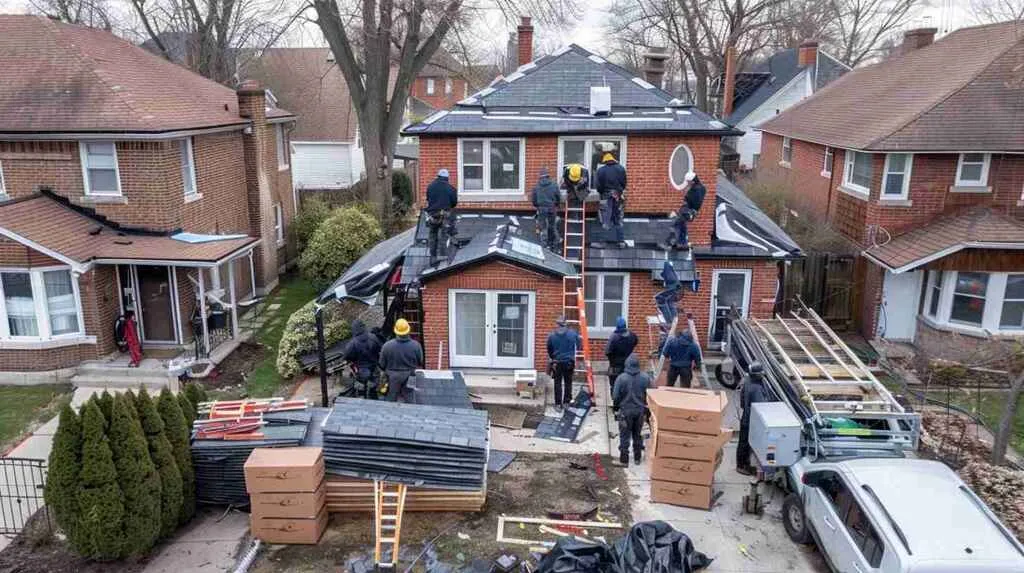
Replace Slate Roof with Shingles Queens NY – What’s Involved | Free Quotes
Ledger lines on a roof job tell the same story as ledger lines in accounting: if the numbers don’t match reality, someone’s hiding something. On a typical two-story detached in Queens, when I say “$22,000 to $38,000 to replace slate with shingles,” I’m not guessing-I’m pulling from jobs I’ve actually closed this year. That’s a wide band, and the spread comes from roof size (1,200 square feet versus 2,800), pitch (Cape Cod walkable versus steep Tudor), access (wide driveway versus tight row-house alley), and what we find when the slate comes off-because half the time, the deck under 80-year-old slate looks like the “surprise expenses” column in a bad quarterly report. My honest opinion is you need to think of this as a long-term asset decision, not a one-off expense; you’re essentially moving a liability off your balance sheet (aging slate, unpredictable leaks, expensive spot repairs) and replacing it with a predictable, maintainable roof system that won’t need major attention for 25 to 30 years if it’s done right.
Three cost drivers control that range like line items on a balance sheet. First, slate tear-off is labor-intensive and disposal is expensive-those tiles are heavy, brittle, and Queens transfer stations charge by the ton. Second, sheathing surprises: once the slate’s off, you might discover original 1×8 boards with gaps, rot patches, or someone’s creative 1970s “repair” involving tar paper and hope, and new plywood or OSB sheathing can add $3,000 to $8,000 depending on how much deck we replace. Third, your shingle system choice-basic three-tab versus architectural, ventilation upgrades, ice-and-water shield coverage, flashing details-each adds to the invoice but also determines your roof’s performance and warranty coverage. When contractors hide or skip those line items to lowball a bid, you’re basically taking on off-balance-sheet debt that’ll come due the first time wind-driven rain finds a gap.
Typical Queens Slate-to-Shingle Replacement Scenarios
| Scenario | Typical Home Type & Neighborhood | Approx. Roof Size | Complexity Notes | Estimated Price Range |
|---|---|---|---|---|
| Small Cape Cod | 1½-story Cape, Bayside or Whitestone | 1,200-1,500 sq ft | Moderate pitch, good driveway access, usually solid deck | $22,000-$28,000 |
| Tudor Two-Story | Classic Tudor, Forest Hills or Kew Gardens | 1,800-2,200 sq ft | Steep pitch, multiple dormers, detailed flashing | $28,000-$36,000 |
| Attached Row House | Prewar brick row, Astoria or Woodside | 1,000-1,300 sq ft | Tight alley access, shared party walls, narrow staging | $20,000-$26,000 |
| Large Colonial | Center-hall Colonial, Douglaston or Fresh Meadows | 2,400-2,800 sq ft | Complex valleys, garage roof tie-in, likely partial deck replacement | $32,000-$38,000 |
| Flushing Detached | 1950s detached two-story, Flushing or Murray Hill | 1,600-1,900 sq ft | Simple gable, good staging room, average access | $24,000-$30,000 |
All prices assume full tear-off to deck, proper underlayment, architectural shingles, and code-compliant ventilation. Estimates based on actual 2024 Queens jobs; your final price depends on findings during tear-off.
$14,000 sounds tempting when you see it on a postcard, but if it doesn’t include full tear-off, deck repairs, and proper ventilation, that number belongs in the “unrealistic” column of your roof balance sheet. Extremely low quotes usually mean corners cut on labor-untrained crew, no insurance-cheap disposal shortcuts, or bargain-bin shingles that void the manufacturer’s warranty the moment you try to file a claim.
Why You Can’t Just Shingle Over Slate
Here’s my honest opinion: if a roofer tells you they can just nail shingles over your old slate, you should politely walk them off your property. Slate sits on battens-horizontal wood strips spaced for the tile exposure-not on solid sheathing, and when you try to nail through a shingle into those gaps, your fastener either misses wood entirely or barely catches the edge of a 90-year-old batten that’s dry, cracked, or bug-eaten. In Queens housing stock-Tudors in Forest Hills, prewars in Kew Gardens and Flushing-the framing under slate was never designed to take the uniform nailing pattern modern shingles require, and you end up with a roof that looks fine from the street but has maybe 40% of its nails actually holding anything. I had a retired teacher in Forest Hills last January whose neighbor’s handyman pitched exactly this shortcut; when I showed her the batten spacing and explained how wind would lift those shingles like playing cards in a breeze, the relief on her face said it all-and six months later, during a thunderstorm, she called just to say she couldn’t hear the drips anymore.
Think of shingle-over-slate like buying junk bonds because the yield looks attractive on paper: high risk, low return, and the hidden liabilities show up fast. A proper tear-off to solid decking is the safer investment with predictable performance-you’re starting with a clean balance sheet, every fastener biting solid wood, proper underlayment protecting against ice dams and wind-driven rain, and a manufacturer’s warranty that actually means something when a storm hits. The alternative is essentially off-balance-sheet debt: trapped moisture rotting the deck you can’t see, nails popping free in high wind, and a warranty claim denied because the installation didn’t meet code.
Dangers of Nailing Shingles Over Existing Slate
- Fasteners miss solid substrate: Nails driven into open batten spacing or slate gaps have no holding power and pull out in moderate wind.
- Trapped moisture and rot: Any water that gets through the shingle layer sits on top of the slate, can’t drain or dry, and slowly rots the hidden deck and framing.
- Voided manufacturer warranties: Nearly every shingle warranty requires installation over code-compliant solid decking; layering over slate automatically voids coverage.
- Higher long-term repair costs: When leaks start, you can’t repair just the shingles-you end up tearing off both layers anyway, doubling labor and disposal expense.
Step-by-Step: How a Proper Slate-to-Shingle Replacement Works
I still remember one slate tear-off in Kew Gardens where the first sign of trouble wasn’t what we saw on the roof, but the sound of the sheathing flexing under my boots. That hollow, spongy feel is an early warning-like discovering a footnote buried in a financial statement that changes the whole picture-and when I pulled up a test section of slate, sure enough, the original 1×8 deck boards had rot patches and someone’s 1980s “fix” involving tar paper layered three deep. I stopped the crew, walked the homeowner through what we’d found, re-forecasted the cost to include 600 square feet of new plywood, and scheduled an emergency lumber delivery for the next morning. That’s the insider tip experienced roofers rely on: listen and feel during tear-off. If the deck sounds hollow or feels soft when you walk it, slow down, inspect closely, and plan for sheathing replacement before you lay a single shingle, because skipping that step is like ignoring a liability on your balance sheet-it’ll come back to bite you the moment you need the roof to perform.
Once you understand that foundation check, the whole process unfolds like a project plan where every stage is a box you have to tick. Site prep and protection come first-tarps for landscaping, plywood over AC units, magnetic sweeps for nails-because slate shards are sharp and cleanup matters. Then staged tear-off: we strip the slate in sections, never leaving more than a day’s worth of deck exposed to weather, and haul debris immediately to avoid overloading your driveway. Deck inspection happens in real time as the slate comes off; if we find rot, gaps, or creative repairs, we mark it, measure it, and replace it with code-grade plywood or OSB before moving forward. Next is underlayment and ice-and-water shield installation-synthetic felt over the whole field, rubberized membrane along eaves, valleys, and any penetration-because this layer is your real weather barrier. Shingle and flashing installation follows: every course checked for alignment, every valley cut and sealed, every chimney and vent pipe flashed with step and counter methods that’ll last 25 years. Ventilation comes next-ridge vent, soffit intake balanced to code so your attic breathes and your shingles don’t cook from underneath-and finally cleanup, a final magnetic sweep, and a top-down inspection. Skipping any one of those line items is like leaving a cost off your balance sheet: it might not show today, but it’ll surface the first time stress hits the system.
From Old Slate to New Shingles: The 7-Step Process
-
1
Site Prep & Protection
Tarp gardens and AC units, set up debris chutes or roof-to-dumpster slides, cover driveways and walkways, brief neighbors on timing and noise. -
2
Slate Tear-Off & Debris Management
Remove slate in controlled sections, watch and listen for deck flex or soft spots, haul debris same-day to keep the site safe and your driveway clear. -
3
Deck Inspection
Once slate is off, walk every square foot looking for rot, gaps, or previous “repairs” that hide problems; mark bad sections for replacement before any underlayment goes down. -
4
Sheathing Repair or Replacement
Install new plywood or OSB over rotten or missing sections, secure to rafters with ring-shank nails, and ensure a flat, solid nailing surface across the entire roof. -
5
Underlayment & Ice/Water Shield Installation
Roll synthetic underlayment over the whole deck, apply rubberized ice-and-water shield along eaves (at least two courses in Queens climate), valleys, and all penetrations for leak protection. -
6
Shingle & Flashing Installation
Lay starter strip, install architectural shingles per manufacturer specs (alignment, nailing, exposure), flash chimneys with step and counter methods, seal valleys, and detail every vent pipe and skylight. -
7
Final Ventilation Check & Cleanup
Install ridge vent and verify soffit intake for balanced airflow, magnetic-sweep the entire yard and driveway for stray nails, haul final debris, and walk the roof one last time for QC.
Choosing Shingles, Ventilation, and Warranties Like an Investment Profile
The first question I ask a homeowner thinking about ditching slate is simple: “What matters more to you-historic look, upfront savings, or long-term maintenance?” That’s not a sales tactic; it’s the same question a financial advisor asks before building a portfolio, because every roof choice has a risk-return profile. Budget-focused means basic architectural shingles, code-minimum ventilation, and a standard warranty-lower upfront cost, but you’ll revisit maintenance or replacement in 20 to 25 years instead of 30, and you might spend more on minor repairs along the way. The balanced profile, which I see most often in Queens, pairs mid-grade architectural shingles in a color that complements brick or siding, upgraded ice-and-water coverage, proper ridge and soffit ventilation, and a transferable warranty that adds resale value-it’s the diversified approach with reasonable risk and predictable return. Appearance-focused homeowners go for designer or multi-dimensional shingles that mimic the shadow lines of slate, extended warranties with algae resistance, and premium flashing details that you won’t see from the street but will notice every time you’re up in the attic during a rainstorm and hear nothing. Each profile reflects a different tolerance for recurring maintenance costs and upfront investment, and in my world, rotten sheathing or skipped flashing is off-balance-sheet debt that undermines any profile you choose.
Ventilation, flashing, and manufacturer warranties are the fine print of your roof investment: they don’t show from the curb, but they determine performance when stress hits and whether your claim gets approved or denied. I learned that the hard way three summers ago in Astoria on a 92°F afternoon when our dumpster company dropped off the wrong size container and blocked a shared driveway mid-job. We had to pause the tear-off, renegotiate a rush swap, and completely re-stage our debris plan so we didn’t litter slate shards into the neighbor’s yard-half a day lost, but we’d built contingency into the schedule and still sealed the roof before an overnight shower rolled in. Planning and contingency keep risk manageable even when logistics go sideways, and the same principle applies to your roof system: proper ventilation prevents premature shingle aging from heat buildup, step flashing around chimneys and walls stops the #1 leak source in Queens, and a manufacturer’s warranty only pays out if installation met their exact specs-which means your roofer’s attention to those invisible details is the difference between a covered claim and a denied one.
Before You Call for a Quote in Queens
Blunt truth: slate and shingles don’t play by the same rules, and trying to treat them the same is how you end up paying twice. Before you pick up the phone, gather a few pieces of information so our first conversation is more like reviewing a balance sheet together and less like guessing in the dark. Know your approximate roof size-if you don’t have blueprints, at least know the house footprint and how many stories, because a 1,200-square-foot Cape in Bayside prices very differently than a 2,400-square-foot Tudor in Forest Hills. Note any leaks or ceiling stains by room and when they happen (during heavy rain, after snow melt, only in wind-driven storms), because that tells me where to focus inspection and whether we’re dealing with flashing failure, valley issues, or widespread slate breakdown. If you’ve got old repair invoices or an inspection report from when you bought the house, have them handy-they’re like footnotes in a financial statement that can reveal hidden problems or confirm what the previous owner patched. Those three things-size, leak history, and past repair records-turn a vague “how much to replace my roof” question into a specific, numbers-based discussion where I can walk you through realistic scenarios, explain cost drivers, and flag risks before we ever lean a ladder.
✓
Before You Call Shingle Masters: Quick Prep Checklist
-
✓
Estimate your roof age or at least note the decade the house was built and whether you know of any major repairs -
✓
Take ground-level photos of all roof slopes, especially areas where you see missing or cracked slate -
✓
Document leak history-which rooms, what season, and whether leaks happen during rain, snow melt, or only high wind -
✓
Check attic access so we can inspect decking, ventilation, and insulation from below during the quote visit -
✓
Clarify your preferred timeframe-urgent (active leaks), this season, or planning for next year -
✓
Know your budget comfort band-even a rough range helps me recommend the right investment profile without wasting your time
Common Questions: Replacing Slate with Shingles in Queens
How long does a slate-to-shingle replacement usually take on a typical Queens two-story?
Most two-story detached homes in Queens take 3 to 5 days from tear-off to final cleanup, assuming good weather and no major deck surprises. A simple Cape with easy access might finish in 2 to 3 days; a steep Tudor with complex valleys and tight staging can stretch to a full week. Weather delays-rain, high wind-will pause the job, but we tarp and secure every night so your house stays dry.
Can any of the old slate be salvaged or sold to offset costs?
Occasionally, yes-if your slate is high-grade Pennsylvania or Vermont stock in good condition, architectural salvage yards will buy intact tiles, but you’re looking at maybe $200 to $600 credit, not thousands. Most 80- to 100-year-old Queens slate is too brittle or weathered to have resale value, and the logistics of carefully removing, sorting, and hauling it usually cost more than the salvage return.
What’s the noise and disruption level like for me and my neighbors?
Slate tear-off is loud-tiles hitting the dumpster or debris chute sound like breaking pottery-and there’s hammering during deck repair and shingle nailing. We work normal business hours (usually 7:30 a.m. to 5 p.m.) and brief neighbors beforehand. Expect noise similar to major construction for 3 to 5 days, then it’s done. We also magnetic-sweep daily to keep nails and debris out of driveways and yards.
Does it matter if I schedule the job in winter versus summer in Queens weather?
Shingle installation requires temps above 40°F so the adhesive strips activate, which rules out deep winter in Queens. Late spring, summer, and early fall are ideal-crews work faster, adhesive seals fully, and weather delays are less common. That said, mild winter days (January thaw, late March) are workable if you’re flexible on start dates and okay with potential weather holds.
How are deposits and payments typically structured for a slate-to-shingle job?
I usually ask for a deposit at contract signing to lock in the schedule and order materials-often 25% to 30% of the total-then a progress payment when tear-off and deck work are complete, and the final balance once you’ve walked the finished roof and you’re satisfied. I’ll spell out the payment schedule in writing so there are no surprises, and I’m happy to discuss timing if you’re coordinating with insurance or financing.
Why Queens Homeowners Choose Shingle Masters
Fully licensed and insured to work on residential roofs throughout New York City, including all Queens neighborhoods
Nearly two decades of hands-on roofing work, with deep knowledge of Queens housing stock and local building codes
Dozens of slate-to-shingle conversions completed in Forest Hills, Astoria, Bayside, Kew Gardens, Flushing, and beyond
Typical response time within 24-48 hours on business days; onsite estimates scheduled at your convenience
Think of your roof deck like the foundation of a financial plan-if it’s soft, rotted, or patched with “creative” repairs, everything you put on top is a bad investment. When Dennis and the Shingle Masters team take on a slate-to-shingle job in Queens, we’re not chasing quick sales or lowball bids; we’re treating it like a long-term capital project where every detail-tear-off method, deck inspection, ventilation balance, flashing precision-gets the same attention I used to give month-end reconciliations back in my accounting days. If you’re ready to talk real numbers, walk through your roof’s “balance sheet” line by line, and get a free quote that accounts for what we’ll actually find when the slate comes off, give us a call or reach out through the contact form and we’ll schedule a time to look at your roof, your attic, and your goals-no postcard prices, no shortcuts, just a calm, precise plan that makes sense for your home and your budget.