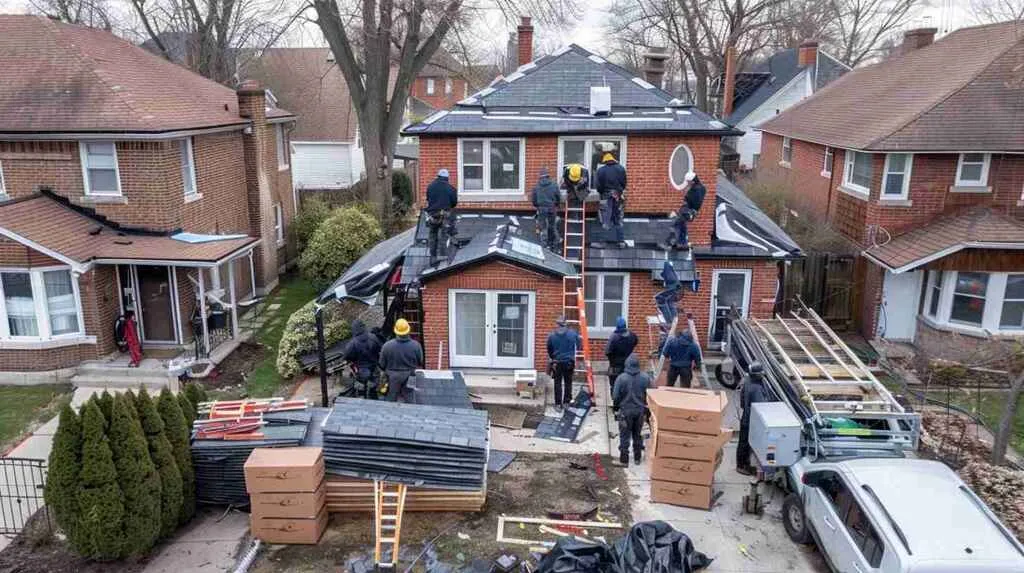
Removing a Shingle Roof Queens NYC – What Tearoff Really Involves
Underneath your shingles right now is somewhere between 5,000 and 8,000 pounds of material waiting to come off-that’s the reality of removing a typical 20-by-40 Queens roof, and it shocks people who think “tearoff” is like peeling a sticker. I’ll tell you straight: it’s heavy, messy structural work that involves reading what’s under there like opening a book, and most folks don’t realize just how much weight, hidden surprises, and planning is involved until we’re already halfway through dumping the first truckload.
What Removing a Shingle Roof in Queens Really Means
On a typical 20-by-40 Queens roof, you’re looking at a mountain of debris-5,000 to 8,000 pounds, maybe more if someone layered shingles over shingles three times over the last 60 years. I’ll be blunt: if you think tearoff is just “ripping it off and tossing it,” you’re missing 80% of the work. It’s not just shingles. It’s nails, tar paper, flashing, and whatever shortcuts the last crew took. And on old Queens houses? You’re gonna find generations of “fixes” piled on top of each other, hidden problems compressed under what looks like one simple layer from the street.
Think of your roof like a layered record collection-different decades stacked on top of each other-and my job during tearoff is to read those layers as we go. You’ve got your original layer from maybe the ’70s, then someone in ’93 slapped another one on top without tearing off, then the next owner did it again in 2009. Each layer is like a track on an album, and when they’re all playing at once, all you get is noise, weight, and a roof system that can’t breathe or flex the way it should. Tearoff strips all that back down to the clean deck-like pulling the needle back to silence so you can start fresh with one good recording.
I still remember one Richmond Hill job from a brutal August morning where the humidity felt like a wet blanket by 7:30 a.m. We started the tearoff thinking it’d be a straightforward single-day job, but by 9 a.m., as we peeled back that second layer of shingles, we uncovered a whole section of roof deck that had literally turned into compost-you could push your thumb right through it. The homeowner had been told “no need to tear off, just shingle over” eight years earlier, and I remember standing there in the blazing sun, showing her a handful of rotten wood and saying, “This is why we’re doing this the hardway today.” That’s the thing with tearoff: you don’t really know what you’ve got until the old stuff is gone, and skipping it just kicks the problem down the road until the wood underneath fails.
⚡ Quick Facts: Shingle Roof Tearoff Realities in Queens
| Roof Size (House Footprint) | Estimated Debris Weight (Single Layer) | Typical Tearoff Crew |
|---|---|---|
| Small 18×30 single-family | 3,000-4,000 lbs | 2-3 workers, half-day to full day |
| Standard 20×40 two-family | 5,000-6,500 lbs | 3-4 workers, full day |
| Larger 25×50 multi-family | 7,000-9,000 lbs | 4-5 workers, 1-2 days |
| Attached row house (20×40, 2-3 layers) | 8,000-12,000 lbs | 4 workers, 1.5-2 days with extra dump runs |
Step-by-Step: How a Shingle Roof Tearoff Happens on a Queens House
From first shovel to bare wood
Here’s the thing: when a crew shows up at your Queens house for a tearoff, we’re not just grabbing shovels and going to town. We start by protecting everything-tarps over the siding, plywood over lower windows if they’re close, and on attached homes like you’ve got all over Jackson Heights and Ridgewood, we’re making sure we don’t rain debris on your neighbor’s yard or AC units. Then comes the logistical puzzle of debris removal on these tight 20-by-40 or 18-by-50 lots where there’s no driveway, just a narrow alley between houses. We set up chutes or a careful hand-carry path to the dumpster or Bagster parked on the street. Once we’re set, tearoff starts at the ridge and works down in sections-remove the ridge caps, strip shingles and felt with tearoff shovels, expose the wood deck bit by bit, and run a magnet sweep as we go so you’re not finding nails in your grass three months later.
One December, just before Christmas, I was doing a tearoff in Astoria on a narrow attached row house with almost no yard, and it started snowing those heavy, wet flakes around 3 p.m. We had the old shingles halfway off when we uncovered an abandoned chimney chase that had been leaking into the cavity for who knows how long; steam was literally rising from the warm moist wood as the snow hit it. I had to make the call to tarp everything, explain to the owner under their tiny awning that the job just turned into a two-day project, and show them video on my phone so they’d understand why rushing the tearoff would have ruined their new roof. That’s the reality-weather in Queens changes fast, and a responsible contractor will pause, protect your open deck, and come back rather than gamble with an exposed roof just to say we finished on time.
📋 Exact Tearoff Process for a Queens Shingle Roof
-
Protect the property: Tarps over siding, plywood over windows, protect neighbors’ areas on attached homes -
Set up debris path: Chutes or hand-carry path to dumpster/Bagster in tight Queens lots -
Remove ridge and starter courses: Start at ridge, work down in sections -
Strip shingles, felt, and nails: Detail use of tearoff shovels, magnet sweeps as they go -
Expose and inspect wood deck: Check for rot, soft spots, previous patch jobs -
Replace bad decking or framing: Cut out composted or delaminated sheets, sister rafters if needed -
Prep clean deck for new roof: Sweep, renail loose sheathing, lay underlayment and flashings
Warning: Dangers of Rushing Tearoff Before Weather Hits in Queens
Starting a tearoff too late in the day or with questionable weather in the forecast is a gamble you don’t want to take. Sudden summer thunderstorms, Nor’easters rolling in off the coast, and wet snow in winter can soak exposed decking and insulation in minutes, causing damage that costs way more than the delay. A responsible contractor will sometimes pause, tarp everything tight, and return the next day rather than gamble with an open roof. You want someone who’s checking the hourly forecast before the first shingle comes off, not someone who just hopes for the best and leaves you with a soaked attic.
How Many Layers, How Much Work, and What It Really Costs
Tearoff jobs in Queens can run anywhere from $1,200 to $4,500+ just for removal and disposal, depending on how many layers you’ve got, what kind of shape the deck is in, and how much hidden junk we find once we peel it back. There was a Saturday in late May in Flushing where a landlord insisted his building only had “one old layer” and we’d be fine. The minute we started dumping shingles, I saw three different generations of nails and shingle types-turned out there were three layers plus a patched section over an old skylight someone had covered with plywood and shingled right over. It delayed us by almost five hours, and I remember sitting on the edge of the scaffolding at 6:30 p.m., sun going down, explaining to him that the extra dump fees and labor were the cost of everyone before him skipping a proper tearoff. That’s why honest assessment up front matters-because once we’re mid-job, the surprises aren’t free.
How to Know If You Actually Need a Tearoff on Your Queens Roof
When I come to your house to talk about removing a shingle roof, the first thing I’m going to ask you is what’s under your current roof-because most people don’t actually know. They think it’s just one layer because that’s what the seller told them 12 years ago, or because it “just looks old” from the street. Then I get up on the ladder and count edges, and we find two, sometimes three generations stacked on top of each other, nailed down through layers of felt and tar that have been cooking in the summer sun since the ’80s. Here’s an insider tip before you even call someone: if you can safely get into your attic, flip on a flashlight and look at the underside of your roof deck. Check for nail tips poking through, dark stains around them, or soft spots where you can press the wood and feel it give. If you see any of that, you’re looking at a tearoff, not an overlay.
Think of your roof like a layered record collection again-different decades stacked on top of each other-and each layer adds noise, weight, and stress to the system. A roof that’s been torn off and rebuilt plays clean: it flexes right, sheds water properly, and the warranty actually means something because the manufacturer knows it was installed on a solid base. From the street, look for wavy lines along the ridge or eaves, dips and sags, or shingles that look like they’re bubbling. Inside, check for ceiling stains, peeling paint near the roofline, or spots where you can see light peeking through cracks in the attic. Any of those signs point to hidden damage, and hidden damage means you need to strip it back and see what you’re really working with.
🔍 Should You Plan for a Full Tearoff or Not?
NO → You may not need tearoff yet, but get an inspection to verify layers
Confirmed single layer → Check condition questions below
NO → Continue to next question
NO → Continue to next question
NO → Overlay might be possible, but have layers verified on-site
If you answered YES to any condition question or have 2+ layers, plan for full tearoff. If everything checks clean and you have confirmed single layer, overlay may work-but always have a pro verify on-site before committing.
✅ What to Check Before Calling About Shingle Roof Removal in Queens
-
✓
Look up and note any visible sagging or waves in the roof line -
✓
Count from the edge if you can see more than one shingle layer -
✓
Check inside for ceiling stains or peeling paint under the roof -
✓
Peek in the attic (if safe) for dark stains, soft spots, or daylight between boards -
✓
Note access issues like shared driveways, no yard, or power lines close to the roof -
✓
Gather any old roofing permits or invoices you might have
Straight Answers for Queens Homeowners About Tearoff
Here’s the dirty little secret no one advertises: the hardest part of a new roof in Queens is getting rid of the old one safely and legally. When I sit down with someone across their kitchen table to talk about a roof replacement, I pull out a scrap of cardboard and sketch the whole thing-every layer, every nail line, every hidden surprise we might run into-so there’s zero confusion when we actually start the job. That’s how I work, and that’s what you deserve: someone who’ll explain it like you’re looking at a diagram together, not someone who just gives you a number and disappears until demo day.
🏆 Why Trust Shingle Masters for Queens Tearoffs
At the end of the day, removing a shingle roof in Queens isn’t something you want done by someone who’s just looking to “rip and replace”-you need a crew that understands the weight, the hidden layers, the code requirements, and the fact that what’s under those shingles can make or break the next 20 years of your roof’s life. I’ll walk you through every layer we find during tearoff, show you photos of the deck before we re-roof it, and make sure you understand exactly what we’re doing and why it matters. If you’re ready for an honest on-roof inspection and a tearoff plan that doesn’t hide anything, call Shingle Masters and let’s take a look at what you’re really working with up there.