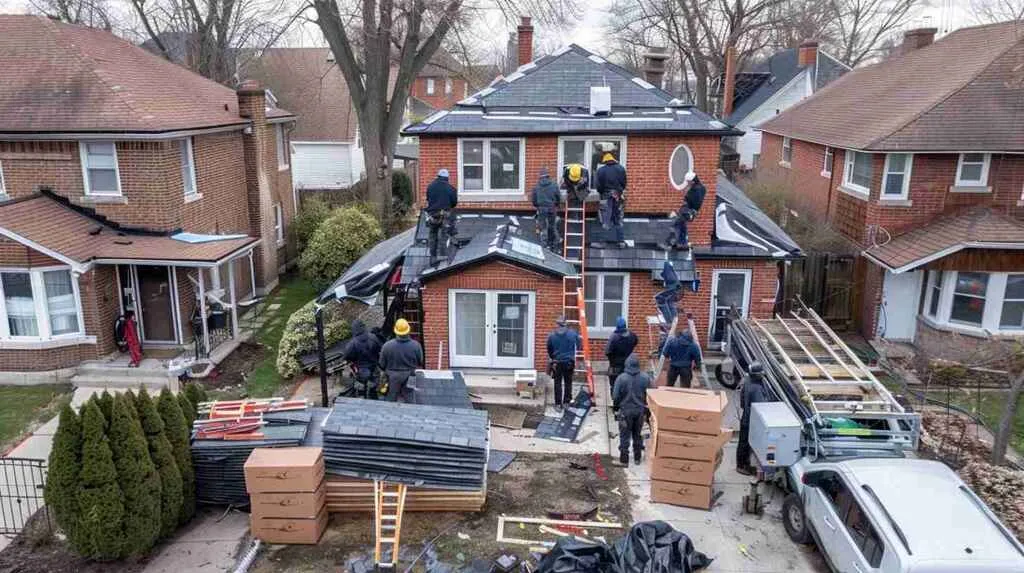
How to Tear Off a Shingle Roof Queens NY – What It Takes | Free Estimates
Blueprint first: on a typical Queens cape or colonial, I start the tear-off at the ridge, not the eaves, and when I pry back that first strip of shingles, I can already see how water tried to break in-brittle tabs, missing granules, nail-line rust stains. That first cut at the ridge isn’t just demolition; it’s opening a case file, and every strip I remove after that is evidence about what’s been happening to your roof for the last 10, 20, or even 30 years. Here’s the thing: in Queens, planning around layers, weather windows, and your neighbors’ driveways matters way more than how hard you can swing a shingle shovel, because the moment you expose bare deck on a Queens house, you’re racing water, wind, and unpredictable schedules-and water always has time on its side.
How a Proper Shingle Tear-Off in Queens Actually Starts
On a typical Queens cape or colonial, I start the tear-off at the ridge, not the eaves, and here’s why: when you cut that first clean strip at the peak, you immediately reveal how many layers you’re dealing with, and you control the downward flow of debris instead of letting gravity turn your gutters into a shingle graveyard. I treat the roof like a crime scene-water is the suspect, and every lifted shingle is testimony-so I want to read the ridge line first to see where the criminal tried to gain entry. Not gonna lie, I’ve watched amateur crews start at the eaves just to watch shingles slide straight into downspouts and landscaping, and it turns a controlled tear-off into a circus. Starting at the ridge means you pry a starter strip, fold it back, and if you find three layers instead of one, or old cedar shakes hiding under asphalt, you know it now, before you’ve promised the homeowner a timeline you can’t keep.
One August afternoon in Woodside, it was 93° and the shingles were basically goo. The homeowner swore there was only one layer to tear off, but once we started at the ridge, we found three layers and a sheet of old cedar shakes under everything. The tear-off went from a 1-day job to a 3-day puzzle, and we had to stage the removal in sections so we didn’t overload the driveway dumpster or expose the entire roof to a surprise thunderstorm. That job taught me to always probe the eaves and ridge before promising anyone a timeline for tearing off a shingle roof-and honestly, in Queens weather, you can’t promise a 1-day tear-off without probing the ridge, because water is the criminal you’re containing, and if you expose the whole roof and a thunderstorm rolls in from the bay, water wins and your interior becomes the next victim.
The investigative mindset is everything. Each strip you remove is evidence-nail patterns, staining, missing felt, soft spots-and in Queens you’re often dealing with multiple generations of roofs, sometimes going back to when that cape was first built in the ’50s or ’60s. The first 30 minutes at the ridge sets the entire job’s safety, schedule, and cost expectations, because that’s when you discover if you’re stripping simple asphalt tabs or peeling back decades of shortcuts, roof-overs, and hidden rot that nobody told you about.
✅ First 5 Things Lena Checks Before Cutting the First Strip at the Ridge
- 1) Condition of ridge shingles-are they brittle, curled, or soft enough to fall apart in your hand?
- 2) How many visible nail lines suggest multiple layers hiding underneath
- 3) Any sagging along the ridge line indicating rotten decking or missing support
- 4) Direction of prevailing wind that day in Queens so debris doesn’t blow into neighbor’s yards
- 5) Nearest safe drop zone for torn-off shingles-driveway, front yard, or dumpster placement
How Many Layers You Really Have & What That Means for Tear-Off
I’m going to be blunt: if you don’t know how many layers you’re sitting on, you have no business planning a tear-off yet. The quickest way I check is at the eaves, the ridge, and any open vents-pry back one shingle tab and count the lines of nails and felt. Around older Queens neighborhoods like Astoria, Jackson Heights, and Bayside, I routinely find homes hiding cedar shakes or two to three asphalt layers under what looks like a single roof from the street, because for decades, roofers just nailed new shingles over old ones to save time and money. That works fine until it doesn’t-and when you start tearing off, those hidden layers testify about every shortcut and storm that came before you.
I’ll never forget a December job in Bayside where we started tearing off at 7:30 a.m. and by 10 a.m. the wind had kicked up off the bay so hard it was peeling felt out of our hands. The previous roofer had nailed the shingles high and skipped half the underlayment, so when we pulled the shingles, there were rotten “potholes” in the deck every 4 feet. We ended up turning the tear-off into a rolling repair line-one guy stripping, one guy cutting out rotten plywood, one guy patching-so the interior never saw a drop of moisture, even with that brutal wind. Every layer you uncover is a witness statement about the roof’s history, and hidden problems-high-nailed shingles, missing underlayment, rotten plywood-turn a simple tear-off into a rolling repair line that affects time, budget, and how fast you can move before the next weather window closes.
| Existing Roof Situation | What Lena Usually Finds | Impact on Tear-Off Time | Risk Level to Roof Deck |
|---|---|---|---|
| 1 Layer (Original Roof) | Clean deck, maybe minor staining near old leak zones, usually straightforward felt removal | Fastest-typically 6-10 hours for a standard cape | Low |
| 2 Layers (Asphalt Over Asphalt) | Double nail lines, compressed felt between layers, some deck discoloration where water pooled | Moderate-adds 30-40% more debris weight and removal time | Medium |
| 3 Layers (Multiple Roof-Overs) | Deck sagging from weight, rotten plywood in high-traffic water zones, missing or rotted rafters | Slow-expect double the time, plus structural repairs mid-job | High |
| Cedar Shakes Under Asphalt | Rotted shake fragments stuck to deck, rusty nails punched through multiple times, surprise ventilation gaps | Very slow-old shakes splinter, require careful prying and deck inspection every 2 feet | Very High |
⚠ Risks of Miscounting Shingle Layers in Queens
Underestimating how many layers you have can overload your dumpster past the weight limit and blow your permit, expose too much roof before weather hits, and reveal hidden structural or decking damage with no plan-or budget-to fix it. In Queens, where storms roll in off the water with almost no notice, every extra layer you didn’t count is another half-day you’re racing the forecast, and water doesn’t care if you ran out of time or money.
Debris, Driveways, and Neighbors: Controlling the Tear-Off Mess
One morning in Jackson Heights, I watched a handyman crew shovel shingles straight into the neighbor’s rose garden because they never thought about debris control-and by lunchtime, the neighbor had called 311 and the whole job was shut down until they cleaned up and got a proper dumpster permit. There was this elderly couple in Flushing who tried to DIY a partial tear-off on a Saturday, got overwhelmed, and called us mid-job. By the time I got there, they had a blue tarp staple-gunned straight into their rafters and a half-stripped valley just sitting open. It was early evening, getting dark, and rain was due at midnight. We had to reverse-engineer their tear-off, strip just enough to make the valley safe, then build it back up properly before the storm hit. That night hammered home how dangerous an unplanned shingle tear-off is in Queens weather-you can’t just “start ripping” and hope for the best. Here’s my insider tip: I always plan my tear-off sequence over the most expensive or vulnerable rooms first-kitchen, kids’ bedrooms, finished attics-so those areas are never left open if a Queens storm blows in early, because if water finds its way into a nursery or a brand-new kitchen, the repair bill is ten times what the roof cost.
✅ What to Line Up at Your Queens Home Before Starting a Shingle Tear-Off
- 1) Confirm where a dumpster or truck can legally park without blocking driveways, crosswalks, or hydrants
- 2) Clear vehicles, grills, patio furniture, and kids’ toys away from eave lines and potential drop zones
- 3) Talk to your immediate neighbors about noise, debris schedule, and when trucks will arrive
- 4) Identify fragile landscaping-roses, shrubs, flower beds-that need plywood or tarps for protection
- 5) Plan where workers can safely carry debris if direct drops from the roof aren’t possible
- 6) Check building or HOA rules if you’re in a semi-attached, townhouse, or condo situation
Step-by-Step: How Shingle Masters Tears Off a Roof in Queens, NY
The ugly truth about tearing off a shingle roof in Queens is that the roof is only half the job-the other half is logistics. I treat every tear-off like a crime scene where water is the criminal and time is its accomplice, so before I cut a single shingle, I’m staging materials, checking the weather every two hours, protecting driveways and landscaping with plywood and tarps, and then planning a controlled tear-off in sections prioritized over the most expensive rooms in the house. If your kitchen or finished attic sits under the back slope, that’s where I start-because if a storm rolls in halfway through, I want your valuables covered first, not last.
From first cut to clean deck
When we repair instead of just replace
Mid-tear-off deck inspections drive real-time decisions on every job. When I see soft plywood, discoloration, or old patch jobs, I don’t just mark it and keep moving-I replace it immediately, nailing new sheathing to code before the next section comes off, because leaving rotten deck exposed is like leaving a door unlocked for water to walk right back in. If you’ve had interior leaks in the past-ceiling stains, attic mold, water marks on drywall-that history guides how I pace the tear-off, how much deck I expose at once, and where I keep tarps staged in case weather turns faster than the forecast promised.
Shingle Masters’ Queens Tear-Off Process: Driveway to Bare Deck
💰 Typical Queens Tear-Off Scenarios & Rough Cost Impact
(Labor + disposal only; does not include new roofing material or unexpected deck repairs)
| Scenario | Roof Size & Access | Complexity Level | Approx. Tear-Off Cost Range in Queens |
|---|---|---|---|
| Small 1-layer cape, easy access | ~1,200 sq ft, open driveway, one-story | Low | $1,200 – $1,800 |
| Medium 2-layer colonial, standard access | ~2,000 sq ft, two-story, side driveway | Medium | $2,500 – $3,800 |
| Large 2-layer with several rotten deck spots | ~2,400 sq ft, two-story, tight access, repairs needed | Medium-High | $3,800 – $5,500 |
| 3-layer tear-off with cedar shakes underneath | ~1,800 sq ft, complex valleys, slow work | High | $4,500 – $6,800 |
| Emergency partial tear-off and patch before storm | ~600 sq ft, urgent timeline, tarp and temporary fix | Urgent | $1,800 – $3,200 |
DIY vs. Hiring a Pro for Your Queens Shingle Tear-Off
Four hours. That’s how long it takes inexperienced DIYers to get in over their heads once shingles start flying-I’ve rescued half-finished DIY tear-offs where the homeowner thought they’d save a few grand, got one section stripped, found rot and three layers they didn’t know existed, and then called me on a Friday night with their roof half-open and a forecast full of rain.
So let me ask you directly: do you honestly have a plan for weather, debris, and hidden rot? Because knowing how to tear off a shingle roof on paper isn’t the same as managing it on a real Queens house with neighbors one driveway over, a thunderstorm one subway stop away, and water looking for any excuse to walk through your ceiling. If you’re not confident you can handle surprise layers, rotten deck patches, and keeping your interior bone-dry while debris piles up, you’re better off hiring someone who treats your roof like a crime scene and has a real plan to win against water and time.
❓ Common Questions About Shingle Tear-Offs in Queens, NY
Do I have to tear off all layers, or can you roof over?
In New York, code allows a maximum of two layers of asphalt shingles. If you already have two layers, you must tear off. Even if you only have one layer, I recommend tearing off instead of roofing over, because it lets me inspect the deck for rot, ensures the new roof lays flat, and gives you a clean warranty. Roof-overs hide problems and add weight-tear-offs solve them.
How long will my house be exposed during a tear-off?
On a typical Queens cape or colonial, I never expose more than one section at a time, and that section is usually open for 2-4 hours before underlayment goes down. If weather looks threatening, I stage tarps and can cover the entire roof in under 20 minutes. Your interior should never see daylight through the ceiling unless something goes catastrophically wrong-and that’s why planning and weather monitoring matter so much.
Can you do a tear-off in winter in Queens?
Yes, but it’s trickier. Shingles get brittle in freezing temps, adhesive strips don’t seal until spring, and you need to watch for ice on the deck. I’ve done December and January tear-offs in Queens when the forecast gives us a 3-4 day dry window with temps above 35°F. If it’s truly urgent-active leaks, failing tarp-we’ll make it work, but I’ll always tell you the risks and adjust the timeline to protect your interior.
How messy is it really, and who handles the dumpster and permits?
Tear-offs are messy-there’s no way around it. But Shingle Masters handles dumpster rental, placement permits, weight limits, and final magnet sweeps so your driveway and landscaping are clean when we’re done. We tarp fragile areas, sweep twice a day, and make sure you’re not finding roofing nails in your yard for the next six months. If you’re in a tight Queens neighborhood with parking restrictions, we coordinate with the city and your neighbors so trucks and dumpsters don’t cause problems.
Every shingle tear-off in Queens is a crime scene where water has been trying to break in, and Shingle Masters treats it that way-with planning, protection, and clean execution from the first ridge cut to the final magnet sweep. If you’re ready to stop wondering how many layers are hiding up there and get a real, no-pressure tear-off and replacement estimate tailored to your Queens home, give us a call. We’ll walk your roof, check your attic, explain exactly what we find, and give you a fair price with no shortcuts and no surprises-because the only thing worse than an old roof is a new roof done wrong.